 comparison
Sportfishing Yacht Maintenance Costs vs Charter Expenses
Last Updated: October 25, 2026
Quick Summary
Sportfishing yacht maintenance costs vary dramatically based on vessel size, age, engine type, usage patterns, and regional labor rates, with expenses ranging from moderate for center consoles under 40 feet to high for offshore yachts over 50 feet that may require six-figure refit cycles every 10-15 years.
- A 40-50 foot sportfish with dual engines typically costs more to maintain than smaller vessels due to increased system complexity and larger hull surface area.
- Full-day offshore fishing charters in South Florida cost $1,500-$3,000, making ten annual trips comparable to ownership costs for a well-maintained 40-foot sportfish.
- Engine service represents the largest controllable maintenance expense, with preventive care like regular oil changes and winterization preventing catastrophic failures costing $15,000 or more.
- Annual bottom paint haul-outs, deck maintenance, and electronics protection are non-negotiable preventive expenses that separate owners facing surprises from those with predictable budgets.
- Building a refit reserve fund for major work occurring every 5-10 years prevents planned expenses from becoming financial crises.
Table of Contents
- Sportfishing Yacht Maintenance Costs at a Glance
- Sportfishing Yacht Ownership Costs by Size
- Sportfishing Yacht Engine Service Costs and Repower Strategy
- Routine Maintenance, Hull Upkeep, and Preventive Care
- Boat Maintenance Budget Template by Vessel Length and Age
- Sportfishing Yacht vs Fishing Charter Costs
- Storage, Mooring, Insurance, and Hidden Ownership Costs
- Frequently Asked Questions
Sportfishing Yacht Maintenance Costs at a Glance
Comparing sportfishing yacht maintenance costs reveals a critical reality: ownership expenses extend far beyond the purchase price. At Primo Yachts, we provide expert guidance for those seeking premium vessels. The true cost of keeping a sportfishing yacht operational depends on vessel size, age, engine type, usage patterns, and regional labor rates.
The core challenge is that maintenance percentages, often cited as a fixed percentage of vessel value, vary dramatically based on boat condition and individual circumstances. A well-maintained 40-foot sportfish in prime condition requires different spending than a 15-year-old hull with deferred maintenance. This guide breaks down the actual costs by vessel size, engine service needs, preventive care requirements, and total ownership economics so you can budget accurately.
Quick Comparison Table
| Vessel Type | Typical Length | Annual Maintenance Range | Key Cost Drivers | Best For |
|---|---|---|---|---|
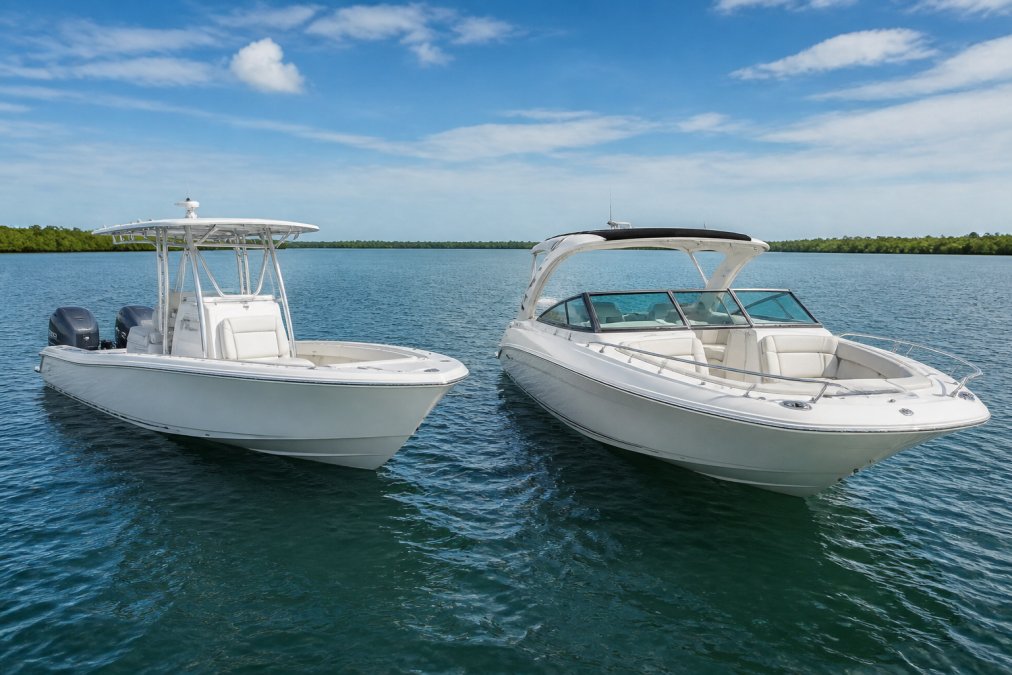
| Center Console | Under 40 ft | Moderate | Engine service, bottom paint, electronics | Coastal fishing, day trips |
| Sportfish Yacht | 40-50 ft | Moderate to High | Dual engines, cabin systems, refit reserve | Extended offshore trips |
| Offshore Fishing Yacht | 50+ ft | High | Complex systems, fuel consumption, major refit cycles | Blue-water expeditions, charter potential |
Sportfishing Yacht Ownership Costs by Size
The relationship between vessel length and annual maintenance is not linear. A 50-foot sportfish doesn't cost twice as much to maintain as a 40-footer; it often costs three times more due to increased system complexity, larger engines, and more extensive hull surface area requiring upkeep.
Center Console Vessels Under 40 Feet
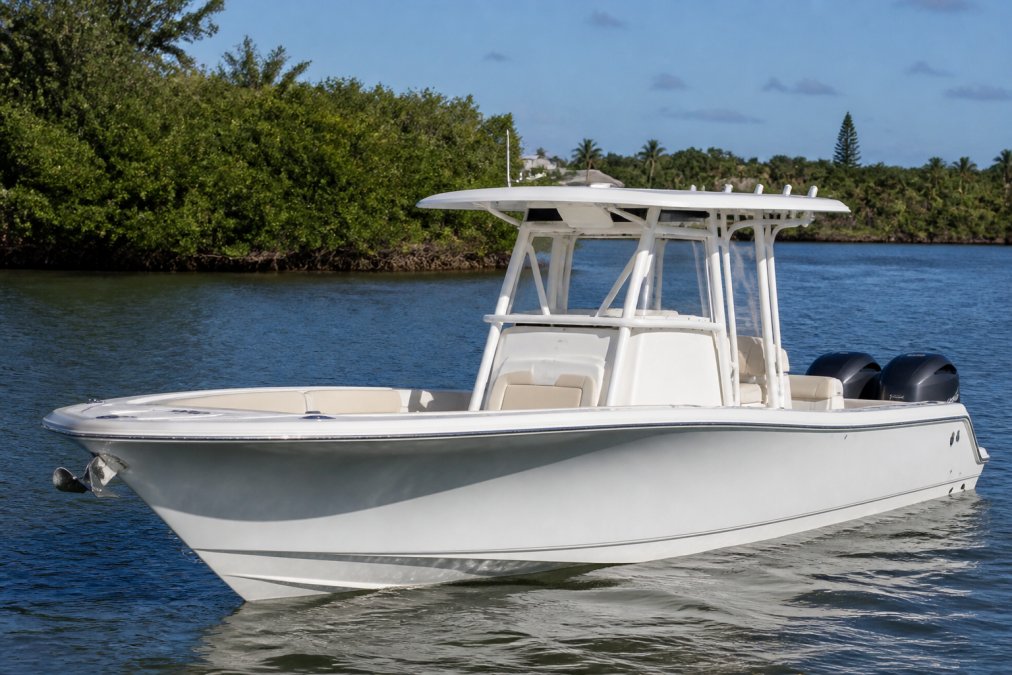
Center consoles under 40 feet represent the entry point for serious offshore anglers. These boats offer genuine offshore capability without the cabin complexity of larger vessels. Annual maintenance focuses on engine service, bottom paint, and electronics protection from salt spray.
Routine costs include regular oil changes, fuel system inspection, and propeller maintenance. Deck cleaning and hardware polishing are ongoing needs in the marine environment. Electronics, GPS, fishfinders, autopilot systems, require annual inspection and occasional replacement.
The advantage of this size category is predictability. Costs remain manageable when you stay on top of preventive maintenance schedules. The risk comes from deferred maintenance: skipping a haul-out or delaying engine service compounds problems and inflates future repair costs significantly.
40-Foot to 50-Foot Sportfish Yachts
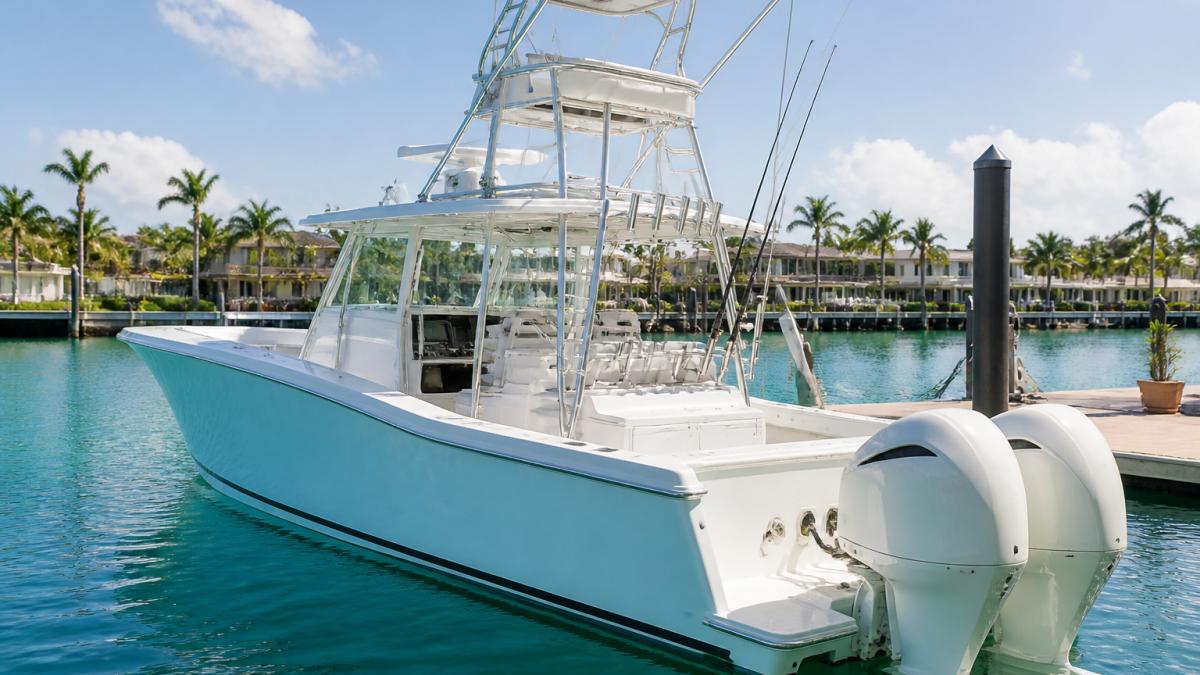
This is where sportfishing yacht ownership becomes genuinely complex. At 40-50 feet, you're managing dual engines, cabin systems, air conditioning, generator power, and more sophisticated electronics. These boats deliver authentic blue-water capability and extended range for serious anglers.
Engine service becomes the largest line item. Dual outboards or twin inboards require coordinated maintenance schedules. Winterization, fuel stabilization, and seasonal preparation demand attention. Cabin systems, plumbing, HVAC, electrical panel upgrades, begin to rival engine costs in older vessels.
Hull maintenance intensifies. The larger surface area means more bottom paint, more topsides to protect, and more complex refit cycles. Structural inspections become critical.
Offshore Fishing Yachts Over 50 Feet
Vessels over 50 feet enter a different ownership category entirely. These are serious offshore platforms with complex systems, significant fuel consumption, and major refit cycles that can exceed six figures.
At this size, you're managing multiple engine types, sophisticated navigation and fish-finding systems, potential generator failure points, and extensive structural maintenance.
The hidden cost at this size is downtime. When a 55-foot sportfish goes into the yard for a refit, it's out of commission for weeks or months. Scheduling around fishing seasons and family commitments requires planning.
Sportfishing Yacht Engine Service Costs and Repower Strategy
Engine service represents the single largest controllable maintenance expense. Outboard engines require seasonal preparation, regular oil changes, fuel system maintenance, and periodic impeller replacement. Inboard engines demand more intensive service but often deliver better long-term economics.
Preventive maintenance costs far less than emergency repairs. A regular service schedule, oil changes every 100 hours, fuel filter replacement annually, and winterization before storage, prevents catastrophic failures.
Repower decisions define long-term ownership economics. Repowering a 40-foot sportfish with modern outboards costs significantly more upfront but delivers better fuel efficiency, reliability, and resale value.
How Do You Prevent Corrosion on Outboard Engine Components? provides detailed guidance on protecting your investment from salt-water corrosion, the primary cause of premature engine failure in offshore vessels.
Routine Maintenance, Hull Upkeep, and Preventive Care
Preventive maintenance separates owners who enjoy their boats from those who constantly face surprises. A structured maintenance schedule prevents small problems from becoming expensive failures.
Deck Cleaning and Electronics Maintenance
Saltwater exposure degrades everything exposed to the elements. Deck hardware corrodes, electronics connectors fail, and paint chalks. Monthly freshwater rinsing removes salt residue. Quarterly deep cleaning prevents algae growth and staining. Annual protective coating application extends the life of gelcoat and paint.
Electronics require climate-controlled storage when the boat sits idle. Battery systems demand regular charging cycles. Fishfinder transducers need annual inspection for corrosion. Navigation systems benefit from software updates and antenna checks. Neglecting electronics maintenance leads to failures at critical moments, often when you're miles offshore.
Hull Painting and Refit Reserves
Bottom paint prevents marine growth and protects the hull from osmotic blistering. Most owners haul annually for inspection and paint refresh. The cost varies by vessel size and paint system selected, but it's a non-negotiable expense.
Structural refit work, deck sealing, through-hull replacement, cabin sole restoration, cannot be deferred indefinitely. A boat showing signs of water intrusion, soft spots in the deck, or failing through-hulls needs immediate attention. These repairs demand specialized expertise; How to Choose a Yacht Refit Shipyard: 7 Steps walks you through selecting a qualified facility.
Boat Maintenance Budget Template by Vessel Length and Age
Creating a realistic maintenance budget requires honest assessment of your boat's condition and your usage patterns. A new 40-foot sportfish requires different spending than a 20-year-old hull of the same size.
Reach out now to see how we can help with your boating needs! →
Start with engine hours and service history. High-hour engines approaching major overhaul thresholds need larger reserve funds. Age of the hull determines likelihood of structural issues.
A practical approach: track actual spending for the first year of ownership. Document every service, part replacement, and maintenance activity. This baseline reveals your boat's true cost profile.
Build a refit reserve, money set aside annually for major work that occurs every 5-10 years. Without this reserve, a necessary $25,000 refit project becomes a financial crisis instead of a planned expense.
Sportfishing Yacht vs Fishing Charter Costs
The ownership versus chartering decision hinges on frequency of use, desired flexibility, and true cost of capital. Many prospective buyers underestimate charter costs while overestimating their usage frequency.
Full-Day Trip Economics
A full-day offshore fishing charter in South Florida typically costs between $1,500 and $3,000 depending on boat size, captain expertise, and distance traveled. This includes the vessel, fuel, captain, mate, and basic tackle. You bring your own gear or rent additional equipment.
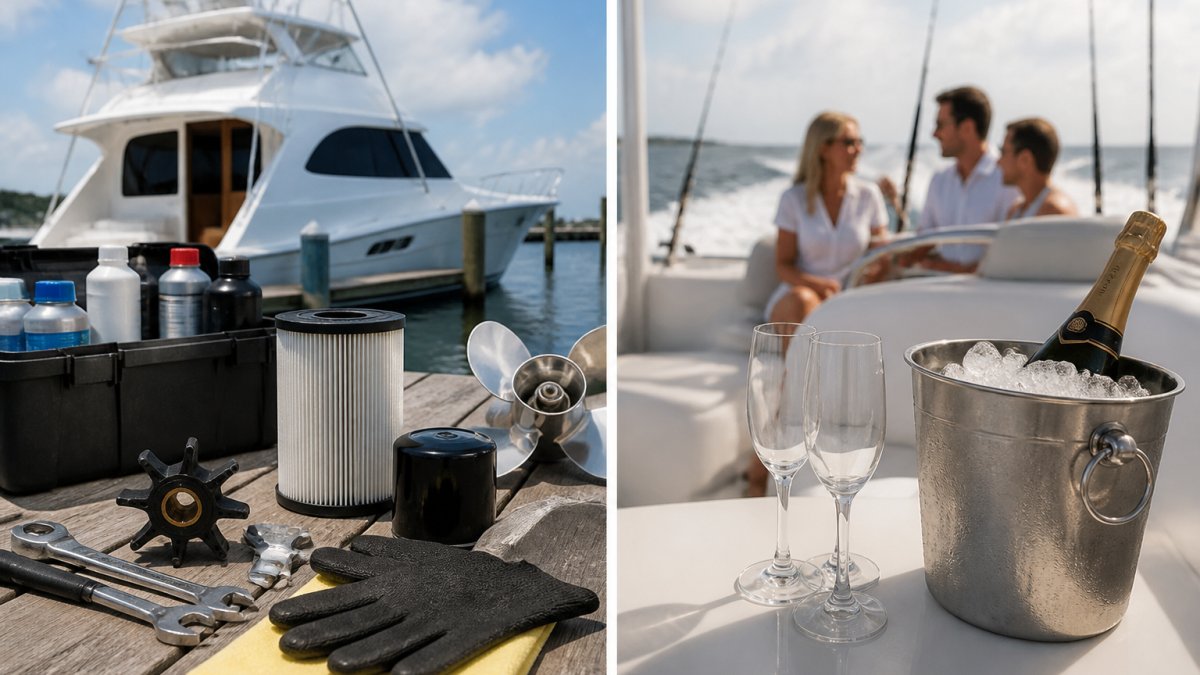
Charter costs scale with frequency. Ten trips annually runs $15,000-$30,000. That's comparable to ownership costs for a well-maintained 40-foot sportfish, except you have zero capital tied up, no storage expenses, and no responsibility for repairs or maintenance.
The charter advantage is flexibility. You fish when you want without managing a vessel. The disadvantage is availability; popular boats book weeks in advance during peak season. You cannot customize the boat to your preferences or fish on your schedule.
Long-Term Value and Owner Experience
Ownership delivers intangible value that charters cannot match. Your boat becomes a floating headquarters for fishing adventures. You control the schedule, invite whomever you choose, and develop familiarity with specific fishing grounds.
But ownership requires commitment. You're responsible for maintenance, insurance, storage, and repairs. Bad weather can strand your boat unexpectedly, creating scheduling chaos. Equipment failures happen at inconvenient times.
For serious anglers planning 20+ trips annually, ownership makes financial sense. For casual fishers or those with unpredictable schedules, chartering delivers better economics and less stress.
Center Console vs Sportfish: 2026 Comparison Guide provides detailed analysis of these vessel types to help clarify which platform matches your fishing style and budget.
Storage, Mooring, Insurance, and Hidden Ownership Costs
Ownership costs extend far beyond maintenance and repairs. Storage, mooring, insurance, and other recurring expenses add up quickly.
Marina mooring fees in South Florida range widely based on location and amenities. A prime spot at a full-service facility costs more than a simple mooring field.
Insurance requirements vary by lender and usage. Comprehensive marine insurance covering liability, physical damage, and medical payments is essential.
Managing Yacht Insurance During Closing: A Step-by-Step Guide explains how to navigate insurance requirements during purchase and ownership transitions.
Fuel costs deserve attention. A 40-foot sportfish burning 20+ gallons per hour for 100 annual hours consumes 2,000+ gallons yearly.
Winterization, haul-out scheduling, registration renewal, and miscellaneous repairs create a steady stream of expenses.
Sportfishing yacht ownership delivers genuine value for serious anglers who commit to the responsibility. We help you evaluate whether a particular vessel matches your fishing goals and budget. Reach out now to see how we can help with your boating needs!
Frequently Asked Questions
How much does it cost to maintain a sportfishing yacht each year?
Actual costs vary significantly by boat condition, location, and whether you operate offshore frequently. Consulting a specialist yacht broker can help ensure your budget reflects your specific vessel and fishing patterns.
What is included in an annual sportfishing yacht maintenance budget?
A comprehensive maintenance budget covers engine service and oil changes, routine inspections, deck cleaning and hardware maintenance, hull painting and antifouling, electronics and navigation system updates, mooring or storage fees, insurance premiums, and a refit reserve fund. Many owners also budget separately for unexpected repairs and parts replacement. Establishing a boat maintenance budget template tailored to your yacht's length and age helps prioritize spending. Preventive maintenance schedules reduce emergency repair costs and extend vessel longevity, making disciplined budgeting essential for long-term ownership satisfaction.
Is owning a sportfishing yacht more expensive than booking fishing charters?
For casual anglers taking a few full-day trips annually, charter costs may be lower initially. However, serious offshore fishermen who fish 20+ days per year typically find ownership more economical long-term. A full-day charter varies depending on location and vessel type, while ownership spreads fixed costs across many trips. Charter eliminates maintenance responsibility but limits customization and scheduling flexibility. Ownership builds equity, allows year-round availability, and rewards frequent users. Your choice depends on fishing frequency, preference for vessel control, and long-term financial commitment.
How do maintenance costs compare for different sportfishing yacht sizes?
Maintenance costs scale with vessel length and complexity. Larger yachts have bigger engines, more complex electronics, larger hull areas requiring painting, and higher mooring fees. Older vessels in all size categories cost more due to increased repair frequency and parts replacement. Sportfishing yacht ownership costs by size should factor in your intended usage, offshore versus inshore operation, and regional labor and parts pricing when budgeting.
What are the highest maintenance costs for a sportfishing yacht?
Engine service and major repairs typically represent the largest annual expense, especially for twin-engine or high-performance powerboats. Repower projects vary in cost depending on engine type and installation complexity. Hull painting, antifouling, and structural repairs are a significant category. Electronics upgrades, mooring fees, and insurance round out major costs. Preventive maintenance schedules reduce catastrophic engine failures and emergency repairs, making routine service investments worthwhile. Consulting a specialist helps identify which systems warrant priority funding in your annual budget.