 how-to
How to Choose a Yacht Refit Shipyard: 7 Steps
Table of Contents
- Step 1: Define Your Refit Scope and Document the Work List
- Step 2: Create a Yacht Refit Shipyard Checklist for Evaluation
- Step 3: Assess Shipyard Capabilities Against Your Vessel and Project
- Step 4: Review Track Record and Experience with Similar Refits
- Step 5: Ask Key Questions to Ask a Yacht Refit Shipyard
- Step 6: How to Compare Shipyard Quotes and Timelines
- Step 7: Verify Protections Before Signing the Contract
- Frequently Asked Questions
Last Updated: October 8, 2026
Step 1: Define Your Refit Scope and Document the Work List
Before contacting a shipyard, define your refit scope, the foundation of every decision that follows.
List every system, component, and area needing attention. Instead of "update the engine room," specify: replace fuel filters, inspect injectors, service the transmission cooler, repaint the compartment.
Walk the vessel with a captain or surveyor. Check the hull, deck, cabin systems, electrical panels, plumbing, HVAC, navigation equipment, and safety gear. Ask: What's worn, outdated, or failed last season?
Document everything in writing with photos of problem areas and the age and condition of major systems.
Owners sometimes skip this step and receive wildly different quotes, not from pricing strategy, but from different interpretations of "refit." A detailed scope eliminates that confusion.
Step 2: Create a Yacht Refit Shipyard Checklist for Evaluation
A yacht refit shipyard checklist helps you score each candidate fairly and catch red flags before you commit. Include these categories:
- Vessel size and type capability: Can they handle your boat's length, beam, and draft?
- Project complexity: Do they have experience with your specific systems?
- Workforce: Do they employ in-house trades or rely on subcontractors?
- Facility condition: Is the yard well-maintained and organized?
- Safety standards: Do they follow industry protocols?
- Communication: Will they assign a dedicated project manager?
- Schedule reliability: Do they deliver on time?
- Cost transparency: Will they provide detailed, itemized estimates?
- References: Can they provide contact information for recent clients?
Score each category 1-5 or pass/fail to evaluate objectively instead of making a gut call on the first yard that returns your call. The checklist doubles as your interview guide, walk through these points on each call and you'll quickly spot which yards take the evaluation seriously.
Step 3: Assess Shipyard Capabilities Against Your Vessel and Project
Not every shipyard can handle every boat. Size, complexity, and specialization matter enormously.
Start with vessel size. A 40-foot center console requires different infrastructure than a 100-foot motor yacht. Dry dock, crane, and workshop capacity must match your boat's dimensions.
Next, evaluate project complexity. Custom fabrication, specialized marine engineering, or rare system upgrades demand relevant experience, a yard great at routine maintenance may struggle with complex modifications.
Check in-house trades and subcontractor networks.
Assess infrastructure: is the facility organized, equipment maintained, climate-controlled work areas available? Poor facility conditions often signal poor project management.
Step 4: Review Track Record and Experience with Similar Refits
A shipyard's track record is your best predictor of performance. Verify their history with actual work, not marketing claims.
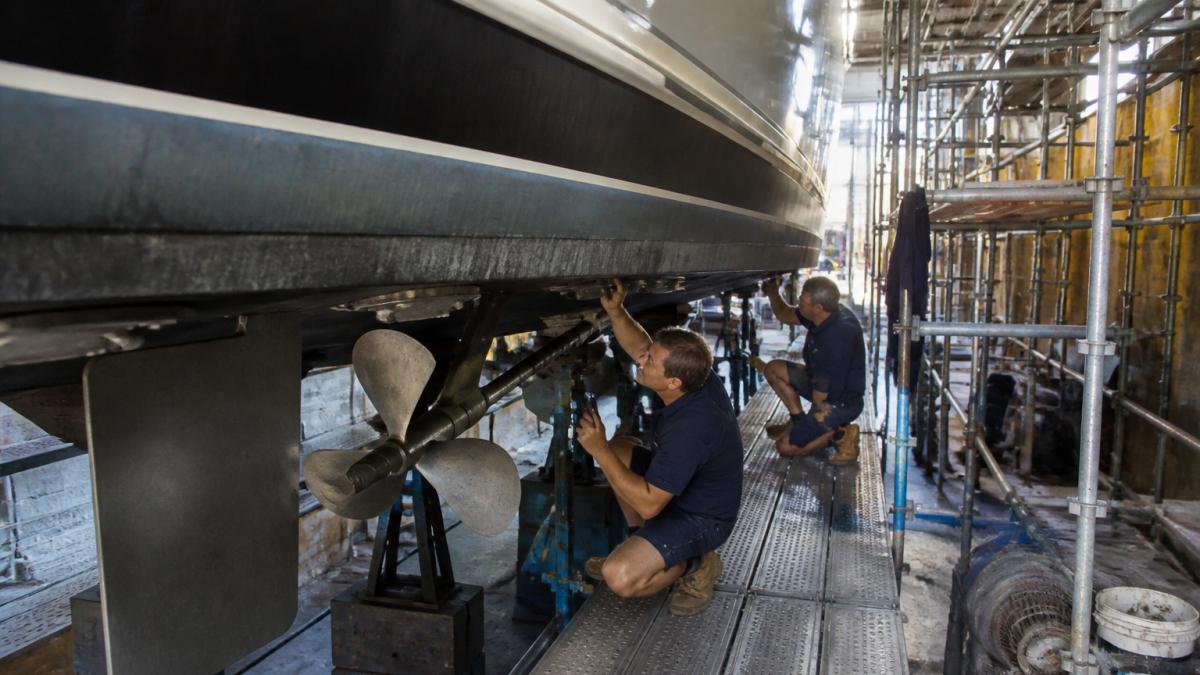
Ask for at least three references from owners who completed similar refits within the last two years. Ask: Did the yard meet schedule and budget? Were there surprise change orders? How was workmanship?
Request a portfolio with before-and-after photos, not glossy marketing shots. Look for clean welds, neat electrical runs, proper paint finish, and organized work areas.
Pay attention to project complexity: a yard with ten 50-foot center console refits has more relevant experience than one with two 100-foot motor yachts and fifty small repairs.
Ask about experience with the specific systems you're upgrading.
Step 5: Ask Key Questions to Ask a Yacht Refit Shipyard
The right questions reveal how a shipyard operates and whether they'll prioritize your project.
Ask these essential questions:
- Who will manage my project day-to-day? You need a single point of contact, not rotating staff members.
- How do you handle change orders? Changes will happen. Ask their process: written approval? How long for pricing? How do they prevent scope creep?
- What's your communication schedule? How often will you receive updates? Weekly calls? Photo updates? Progress reports?
- What happens if you discover hidden damage during the refit? This is critical. Ask their process for identifying additional work and getting your approval before proceeding.
- What quality standards do you follow? Ask about safety protocols, workmanship standards, and testing procedures.
- How do you manage subcontractors? Who vets them? Who oversees their work? Who's accountable if they underperform?
- What warranty do you provide on completed work? Most yards warranty their labor for 90 days to one year. Understand what's covered.
- Can you provide a detailed timeline? Ask for a written schedule showing major milestones, not just a start and end date.
Listen to how they answer. Clear, detailed responses signal a professional yard; vague or defensive answers are warning signs.
Step 6: How to Compare Shipyard Quotes and Timelines
Quotes will differ in line items, labor rates, and timelines. The goal isn't the cheapest number, it's finding the quote built on a realistic plan.
Request itemized quotes. "Total refit cost: $150,000" tells you nothing, you need labor hours by trade, material costs, subcontractor fees, overhead, and contingency. This reveals where yards differ and whether they understood your scope.
Check whether contingency is included. Most yards add 10-15% for unexpected work; some hide it in labor rates.
Compare labor rates, not just hours. One yard quotes 500 hours at $75/hour; another 600 at $65/hour. Totals differ by thousands, but the gap may just be efficiency or accounting. Ask why the hours differ.
How to Verify the Numbers Before You Trust Them
A quote is a set of assumptions. Test them before you sign, the yard has every incentive to present an optimistic version.
Ask what's excluded. Quotes often look competitive by omitting haul-out and blocking, scaffolding, disposal fees, re-commissioning, dockage, and cleanup.
Confirm the workforce is available. Ask how many technicians will be assigned, whether in-house or subcontracted, and what other projects run during your window.
Pressure-test the schedule. Ask for the critical path, then what happens if a step slips.
Check parts and materials sourcing. Ask whether materials are quoted at current prices or estimated, and who absorbs increases between signing and delivery.
Understanding the Yacht Refit Timeline
Timelines vary because yards schedule differently. Some work sequentially, engine room, then deck. Others run trades in parallel across different areas.
Ask how they'll sequence your work. Parallel work compresses the timeline but needs more coordination and can cost more if trades interfere. Sequential work takes longer but suits smaller crews.
Clarify what "yard period" means, calendar or working days? Ask if they work year-round, shut down seasonally, or lose days to weather affecting painting and fiberglass.
Request a written schedule with milestones: haul-out, start of major work, system testing, launch. A yard that can't provide this hasn't planned your project seriously.
Red Flags in a Quote or Schedule
- A total price with no labor-hour breakdown.
- Contingency that's "included" but never quantified.
- A completion date with no milestone schedule behind it.
- No named project manager or assigned crew.
- Reluctance to put exclusions, escalation terms, or long-lead order dates in writing.
- A schedule that assumes every trade finishes exactly on time with no buffer.
Any one of these is worth a follow-up question. Two or more together usually means the quote is a sales document, not a plan.
Step 7: Verify Protections Before Signing the Contract
Your contract is your only protection if things go wrong, and this is where you have the most leverage, the yard wants the job. Lock in the protections below before work starts.
Have a marine surveyor or attorney review the contract before you commit. Key protections:
- Scope of work: The contract must reference your detailed work list. Any ambiguity will be interpreted in the yard's favor.
- Price cap: Ensure the quote is a fixed price, not an estimate. If change orders are unavoidable, the contract should specify how they're approved and priced.
- Timeline and penalties: The contract should state the completion date. Some yards include liquidated damages clauses: if they miss the date, you receive a daily credit. This incentivizes on-time delivery.
- Payment schedule: Understand when payments are due. Most yards require a deposit (25-50%), progress payments as work advances, and final payment at completion. Never pay in full upfront.
- Warranty: The contract should specify what work is warranted and for how long. Labor warranties typically run 90 days to one year.
- Change order process: The contract must detail how changes are requested, approved, and priced. This prevents surprise bills.
- Insurance and liability: Verify the yard carries general liability insurance and workers' compensation. Ask for certificates of insurance.
- Dispute resolution: Does the contract specify mediation, arbitration, or court proceedings if disputes arise?
Structuring Payments So They Track Progress
The most effective protection is tying money to completed, verified work rather than the calendar.
A common pattern: a deposit to reserve the slot and order materials, progress payments tied to defined milestones, and a final payment held until punch-list items close. Milestones should be inspectable, hull stripped and prepped, engine room mechanicals complete, systems commissioned, sea trial passed. "Thirty percent at project start" is a gift, not a milestone.
Consider retainage: holding back a percentage of each progress payment, released after final acceptance, gives the yard a reason to finish the punch list promptly. Without it, the last 5%, the part that makes the boat usable, drags.
Change Orders: The Real Budget Risk
Most refit overruns come from change orders, not the original quote. Hidden damage, corrosion, failed systems behind bulkheads, and owner upgrades all generate changes, the contract should make the process predictable.
Insist on written change orders with a description, price, and schedule impact, approved before work proceeds. No verbal approvals.
Agree on how hidden damage is handled. A reasonable process: the yard documents the finding with photos, provides a written estimate, and pauses that portion until you approve. The contract should bar the yard from proceeding on unapproved work and billing you later.
Warranties, Acceptance, and Dispute Terms
Warranty terms should specify what's covered, for how long, and how claims are handled. Labor warranties commonly run 90 days to one year; equipment warranties usually pass through from the manufacturer.
Define acceptance before signing: the project isn't complete until a sea trial and inspection pass and the punch list closes. Tie final payment to that acceptance.
For disputes, mediation or arbitration is usually faster and cheaper than court, but confirm the process and location.
Don't skip legal review to save money, a modest consultation now prevents a far larger problem later. Protections negotiated before signing are worth more than any argument won after the work goes sideways.
Frequently Asked Questions
What should you look for in a yacht refit shipyard?
Prioritize yards with documented experience on vessels similar to yours, transparent cost estimates, and proven project management. Verify their workforce capacity, access to specialist trades, and ability to handle your specific systems, whether engines, electrical, or structural work. Request references from completed refits and inspect their safety standards and quality control processes. A reputable yard should provide detailed scope documentation and clear communication channels throughout the project.
How long does a yacht refit usually take?
Refit duration depends heavily on scope and vessel size. A minor maintenance refit may take 2-4 weeks, while a comprehensive overhaul can extend 6-12 months or longer. The shipyard should provide a detailed timeline broken into phases during the planning stage. Always build in contingency time, unexpected structural or system issues often emerge once work begins. Ask yards about their typical schedule reliability and how they manage change orders that extend timelines.
How do you compare yacht refit shipyard estimates?
Request detailed line-item quotes from at least three yards, ensuring each covers the same scope of work. Compare labor rates, material costs, overhead, and contingency percentages. Watch for vague estimates, reputable yards itemize costs by trade and system. Verify that quotes include project management, quality control, and warranty provisions. Don't automatically choose the lowest bid; evaluate the yard's capacity, experience, and communication alongside price. Ask how change orders are priced and approved.
What questions should you ask a shipyard before a yacht refit?
Ask about their experience with your vessel type and size, current workforce capacity, and ability to handle all trades in-house versus subcontracting. Request their project schedule methodology, communication protocols, and how they manage unexpected issues. Inquire about payment terms, change-order procedures, and warranty coverage. Ask for references from recent comparable refits and details on their safety record. Confirm their familiarity with your vessel's systems and whether they can source parts or recommend upgrades during the refit.