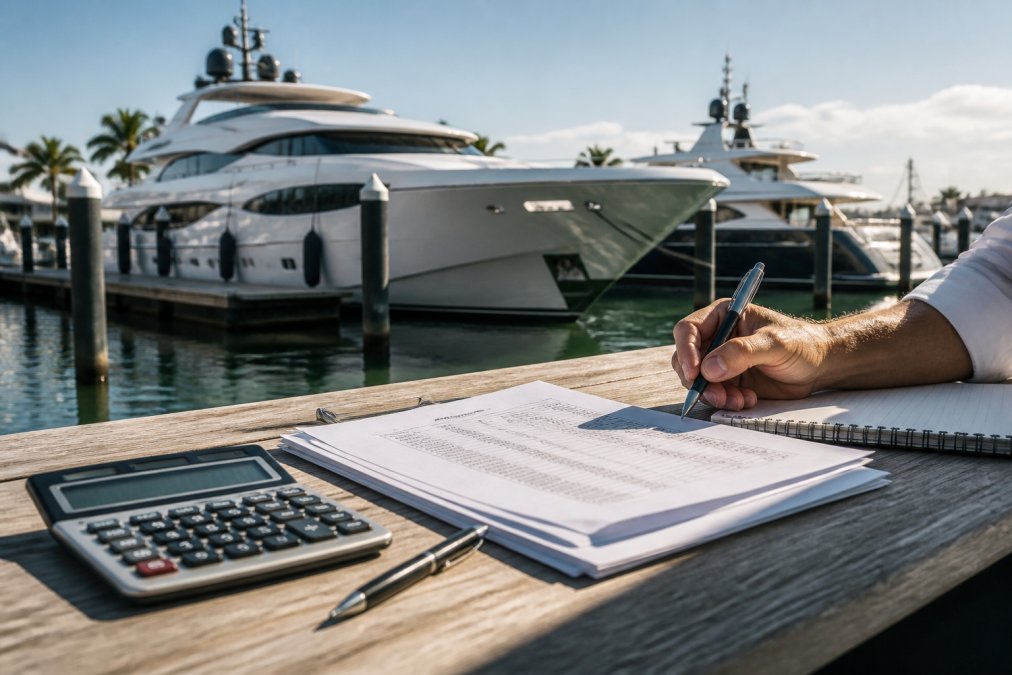
 ultimate-guide
Mega Yacht Operating Costs in Florida: A 2026 Guide
Table of Contents
- What Mega Yacht Operating Costs Actually Include
- Yacht Crew Salary Benchmarks and Payroll Structure
- Fuel Consumption, Bunkering, and Energy Costs
- Yacht Dockage Fees South Florida and Marina Slip Expenses
- Annual Yacht Maintenance Budget and Dry-Dock Expenses
- Insurance, Registration, and Compliance Costs
- Total Cost of Ownership: 5-Year and 10-Year Projections
- Operational Efficiency Strategies to Reduce Expenses
- Frequently Asked Questions
Last Updated: September 24, 2026
What Mega Yacht Operating Costs Actually Include
Understanding mega yacht operating costs in Florida requires looking beyond the purchase price. Ownership involves crew salaries, insurance premiums, maintenance budgets, regulatory compliance, and hidden operational expenses that most prospective buyers underestimate.
The breakdown includes five major categories: personnel costs, fuel and energy expenses, maintenance and repairs, insurance and compliance, and dockage and marina fees. Understanding where your money goes is essential for informed ownership decisions.
Yacht Crew Salary Benchmarks and Payroll Structure
Professional yacht crew salary benchmarks vary significantly based on vessel size, crew rank, and experience level. Captains on 100+ foot superyachts command salaries reflecting responsibility for vessel safety and crew management, with first officers, engineers, stewards, and deck crew each having established industry ranges.
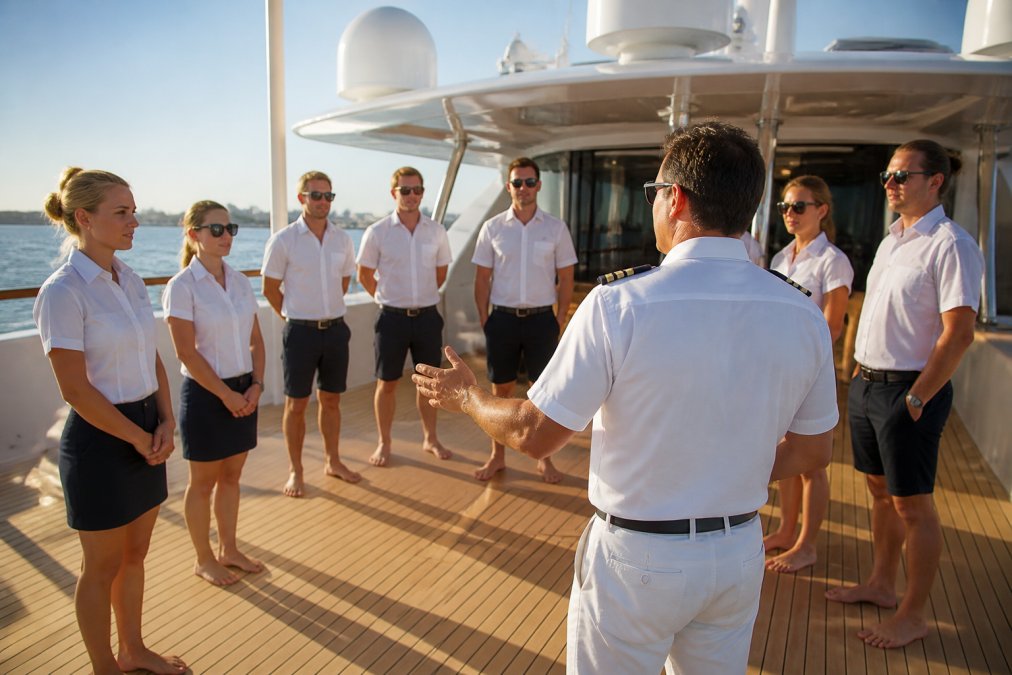
Crew payroll represents the single largest operating expense. Beyond base salary, budget for benefits, payroll taxes, accommodations, meals, and training costs. Most owners allocate 3-5% annual increases to retain experienced personnel. Crew structure depends on operational needs, skeleton crews for occasional use versus full teams for year-round operations.
Crew changes introduce significant costs: training, background checks, and maritime certifications add thousands per transition. Experienced captains and chief engineers command premium salaries because replacing them is costly and time-consuming. Yacht crew salary benchmarks in South Florida reflect higher compensation due to the competitive superyacht market.
Fuel Consumption, Bunkering, and Energy Costs
Fuel consumption depends on vessel size, engine type, and cruising speed. A 100-foot superyacht burns 50-100 gallons per hour at cruising speed; larger vessels consume 150+ gallons hourly. Bunkering costs vary with marine diesel prices and location, with South Florida marinas charging premium rates.
Energy costs extend beyond fuel. Modern superyachts operate sophisticated electrical systems, water desalination, air conditioning, and entertainment equipment requiring continuous generator support. Battery systems, inverters, and backup power supplies add operational complexity and cost.
Fuel efficiency strategies reduce bunkering expenses: operating at optimal cruising speeds, regular engine maintenance, hull cleaning, and propeller maintenance all contribute. Some owners invest in hybrid systems, though these remain relatively new in the superyacht market.
Yacht Dockage Fees South Florida and Marina Slip Expenses
Dockage and marina slip fees in South Florida vary dramatically by location and facility quality. A 100-foot superyacht slip at a top-tier South Florida marina costs several thousand dollars monthly, totaling tens of thousands annually.
Dockage fees typically include utilities, water, electricity, and waste disposal, but premium marinas charge additional fees for security, concierge services, fuel delivery, and maintenance facilities. Hurricane-season considerations affect costs, as storm-rated facilities command premium pricing.
Alternative mooring options can lower costs, though they present challenges regarding vessel security, weather protection, and shore access. Yacht dockage fees South Florida reflect the regional premium for world-class facilities and security infrastructure.
Annual Yacht Maintenance Budget and Dry-Dock Expenses
Annual maintenance budgets typically represent 5-7% of vessel market value, increasing for older vessels. Preventive maintenance costs less than emergency repairs, making scheduled service critical.
Dry-docking represents the largest single maintenance expense. Most superyachts require hauling every 12-24 months for hull inspection, antifouling paint, and underwater systems maintenance. A dry-dock period for a 100+ foot superyacht easily exceeds five figures when accounting for labor, materials, and facility fees. Reducing the frequency of these intensive yard visits often involves upgrading to durable deck coverings like woven vinyl for yachts that resist degradation and minimize the need for recurring cosmetic repairs.
Specialized systems require expert technicians. Navigation equipment, stabilization systems, water treatment plants, and entertainment systems demand professional service. The annual yacht maintenance budget must be treated as a non-negotiable operational cost.
Refit projects, engine repowers, interior refurbishments, and technology upgrades, occur periodically and can dwarf routine maintenance costs. Planning requires multi-year financial forecasting.
Insurance, Registration, and Compliance Costs
Marine insurance involves hull coverage, liability protection, crew coverage, and pollution liability. Premiums depend on vessel value, age, construction type, and operational profile. A $10 million mega yacht can require $50,000-$150,000 annually depending on claims history and coverage limits.
Hurricane-season surcharges apply June-November, increasing premiums 15-25%. Vessels with storm-rated slips at National Hurricane Center-compliant facilities pay lower premiums than those on open-water moorings. Florida's coastal exposure means stricter underwriting standards and higher deductibles ($25,000-$50,000 typical).
Vessels documented with the U.S. Coast Guard must comply with specific construction and operational standards. Florida offers a critical tax advantage: vessels registered for commercial charter operations may qualify for sales tax exemptions on fuel under Florida Statute 212.06, potentially saving 6-7% on annual fuel costs. This requires proper documentation of charter activity and income reporting.
Vessels documented under federal Coast Guard registry and actively engaged in interstate or international commerce may qualify for exemptions under 46 U.S.C. § 12107, eliminating local property tax liability. Determining your vessel's tax classification requires consultation with a marine tax specialist to avoid unexpected assessments and penalties.
Classification surveys cost $15,000-$35,000 for a 100+ foot superyacht. Environmental regulations require proper waste management systems, fuel handling protocols, and pollution prevention equipment. EPA and Florida DEP enforce strict regulations on marine sanitation devices, oily water separators, and ballast water management. Non-compliance results in fines ($5,000-$25,000 per violation) and operational restrictions.
Crew must maintain current U.S. Coast Guard licenses appropriate to rank and vessel size. Professional crew must pass TSA background checks and maintain valid TWIC cards (approximately $130 per crew member every five years). Annual recertification courses cost $500-$2,000 per crew member depending on specialty certifications.
Florida requires vessels to maintain crew training logs documenting safety drills and competency assessments. Charter vessels must comply with Coast Guard regulations under 46 CFR Part 120, including passenger capacity certifications and stability testing. Violations result in operational shut-downs and substantial penalties.
Total Cost of Ownership: 5-Year and 10-Year Projections
Evaluating mega yacht operational costs over extended periods reveals the true financial commitment. A 5-year projection should account for annual operating expenses, planned maintenance cycles, and anticipated capital improvements.
Over 10 years, cumulative financial commitment often exceeds the original purchase price by a factor of 2-3 times when accounting for annual operating expenses, dry-dock costs, and potential refits.
Superyachts depreciate based on age, condition, market demand, and technological obsolescence. A $10 million vessel might be worth $6-7 million after 10 years. This depreciation must factor into total cost of ownership calculations.
Charter revenue can offset operating costs, generating income that partially covers annual expenses. However, charter operations introduce additional compliance requirements, insurance considerations, and crew management complexities that significantly affect financial projections.
| Time Horizon | Annual Operating Costs | Maintenance Reserve | Depreciation Impact | Total 5-Year Cost |
|---|---|---|---|---|
| Year 1 | Baseline | Routine | Highest | Foundation |
| Year 3 | +3-5% inflation | Increased | Moderate | Cumulative |
| Year 5 | +8-12% cumulative | Major dry-dock | Stabilizing | Significant |
| Year 10 | +15-20% cumulative | Multiple refits | Lowest | Substantial |
Operational Efficiency Strategies to Reduce Expenses
Strategic operational decisions reduce annual mega yacht operating costs. Seasonal operation, intensive winter cruising (December-April), reduced summer operations (June-November), reduces fuel costs by 20-30% and insurance surcharges by 15-25%. Positioning at hurricane-rated facilities during peak season reduces dockage costs from $120,000 to $60,000-$80,000 annually.
Rotating crew schedules reduce payroll without compromising safety.
Frequently Asked Questions
What is the estimated annual operating cost for a mega yacht?
Annual mega yacht operating costs typically range from 8-12% of the vessel's market value annually, though this varies significantly based on size, age, and usage patterns. A superyacht valued at $10 million might incur $800,000 to $1.2 million in yearly operating expenses. Costs include crew payroll, fuel, insurance, maintenance, dockage, and provisioning. Charter revenue can offset some expenses, while older vessels or those requiring major refits will exceed these benchmarks substantially.
How do yacht crew salary benchmarks affect total operating budgets?
Crew payroll typically represents 25-35% of total annual operating costs for a superyacht. A captain earns $60,000-$150,000 annually depending on vessel size and experience, while deckhands, engineers, and stewards each command $30,000-$75,000. A full crew of 8-12 people can total $400,000-$800,000 yearly in salaries and benefits alone. Crew housing, training, and benefits add another 20-30% to base salary costs, making personnel management one of the largest controllable expenses in yacht operations.
What is the 10% rule for annual yacht maintenance costs?
The 10% rule is a general industry guideline suggesting that annual maintenance and repair budgets should equal approximately 10% of a vessel's market value. For a $5 million superyacht, this translates to $500,000 per year set aside for routine maintenance, surveys, equipment replacement, and unexpected repairs. However, this rule applies more conservatively to newer vessels; older superyachts or those with deferred maintenance may require 12-15% annually. Dry-docking every 2-3 years for hull inspection and coating adds significant capital expenditure beyond routine operating budgets.
How do Florida-specific factors impact mega yacht operating expenses?
Florida's marine environment and regulatory landscape create unique cost pressures. Hurricane preparedness and specialized insurance for Atlantic region vessels increase marine insurance premiums by 15-25% compared to other regions. Dockage fees at premium marinas in South Florida range higher than national averages due to demand and infrastructure costs. Salt-water corrosion requires accelerated maintenance schedules and specialty materials, increasing annual maintenance budgets by 10-20%. Additionally, Florida's vessel registration and flag state compliance requirements add administrative overhead that varies by ownership structure and intended use.