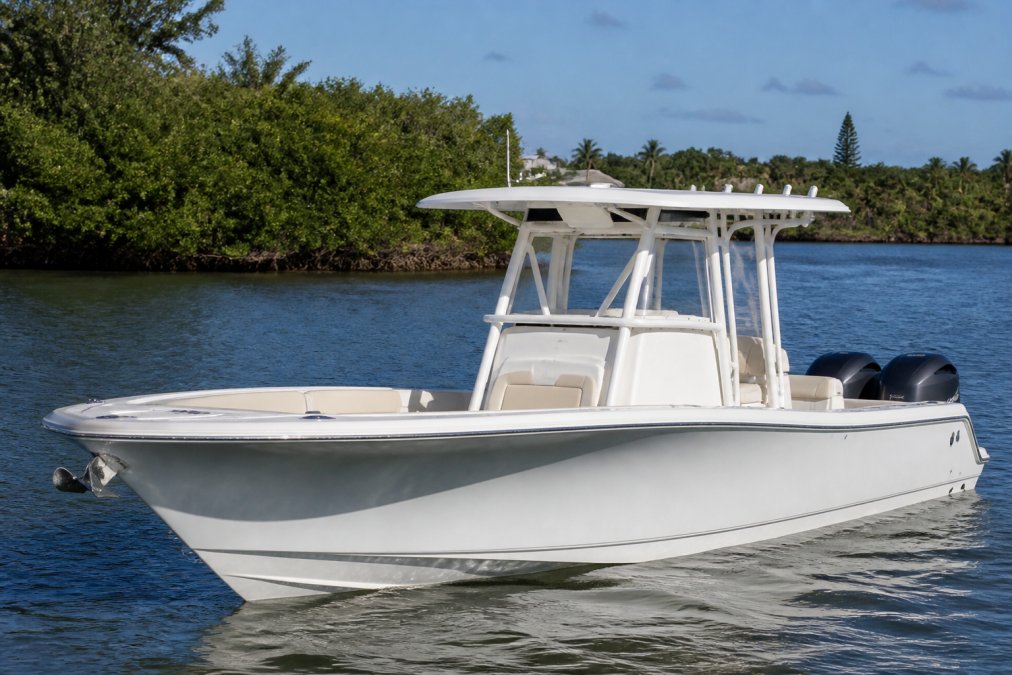
 comparison
Is Buying a Preowned Center Console Worth It?
Table of Contents
- The Financial Case for Preowned Center Consoles
- Depreciation and Resale Value: What to Expect
- Marine Survey Importance for Used Boats
- Used Center Console Boat Inspection Checklist
- Cost of Repowering a Used Center Console
- Hidden Costs and Total Cost of Ownership
- Preowned vs. New: When Each Makes Sense
- Frequently Asked Questions
Last Updated: September 18, 2026
Is buying a preowned center console worth it? The answer depends entirely on what you're willing to accept in terms of risk, maintenance, and total cost of ownership. A quality used center console can deliver 70% of the value of a new boat at 50% of the price, but only if you know what to inspect, what repairs cost, and how to calculate whether the savings justify the unknowns.
At Primo Yachts of Palm Beach, we provide expert guidance for those seeking premium vessels. The difference between a smart purchase and a costly mistake comes down to diligence: understanding depreciation curves, conducting a marine survey, and budgeting for hidden repairs that every older hull carries.
The Financial Case for Preowned Center Consoles
Buying used makes financial sense when you approach it strategically. A preowned center console depreciates less steeply than a new one in the first few years, meaning you're not absorbing the steepest value loss if you resell. The real question isn't whether used boats are cheaper, they obviously are, it's whether the discount compensates for the risks.
New boats lose significant value the moment you leave the dock. Used boats have already absorbed that initial hit. If you buy a five-year-old center console, you're purchasing a vessel that's already settled into its depreciation curve. The second-owner typically sees slower value decline than the first owner, provided the boat was maintained.
However, this advantage evaporates if you ignore condition. A poorly maintained used center console isn't a bargain, it's a liability. The savings disappear quickly when you're replacing corroded through-hulls, rewiring an electrical system, or pulling an engine that's reached the end of its service life.
The financial case works when three conditions align: the boat was well-maintained, you have a realistic budget for repairs, and you plan to keep it long enough to recoup inspection and refurbishment costs.
Depreciation and Resale Value: What to Expect
Understanding how center consoles hold value is essential to the decision. A new boat loses roughly 20% of its value in the first year, another 10-15% in year two, and then settles into a slower decline. By year five, the rate of depreciation slows considerably.
This means a used center console purchased in year three or four of its life experiences much gentler value decline than a new purchase. You're buying after the steepest depreciation has already occurred.
The resale value of a preowned center console depends heavily on brand reputation, condition, engine hours, and maintenance records. Boats with documented service history command premiums over those with spotty or missing maintenance logs. A five-year-old center console with full service records might retain 65-70% of its original purchase price, while one with unknown history could be worth only 50-55%.
Market conditions also matter. During strong fishing seasons or when new inventory is tight, used boats appreciate slightly. During downturns, depreciation accelerates. The brand matters too, some manufacturers hold value significantly better than others due to reputation for durability and resale demand.
Marine Survey Importance for Used Boats
A professional marine survey is non-negotiable when evaluating a preowned center console. This isn't an optional step, it's the foundation of every sound used boat purchase decision.
A qualified marine surveyor conducts a comprehensive inspection of hull integrity, engine condition, electrical systems, plumbing, and structural components. They identify soft spots in the hull, delamination in the fiberglass, corrosion in through-hulls, and wear in critical systems. They'll perform a compression test on the engine, check the condition of the bilge pump, and verify that all electronics and navigation systems function properly.
The survey report gives you negotiating power. If the surveyor finds a corroded transom, engine issues, or electrical problems, you can use those findings to reduce the asking price or request that the seller make repairs before closing. Many buyers skip the survey to save money, then discover thousands in repairs after purchase.
A reputable marine surveyor costs between $1,500 and $3,500 depending on boat size and the depth of inspection. It's the best investment you can make in a preowned purchase. The surveyor's report becomes your roadmap for repairs, your negotiating tool, and your insurance against catastrophic hidden damage.
Used Center Console Boat Inspection Checklist
Before you commit to a preowned center console, use this systematic inspection approach. Walk through the boat methodically and document everything. Take photos and video. Ask the seller direct questions about maintenance history and any repairs performed.
Hull Integrity and Structural Assessment
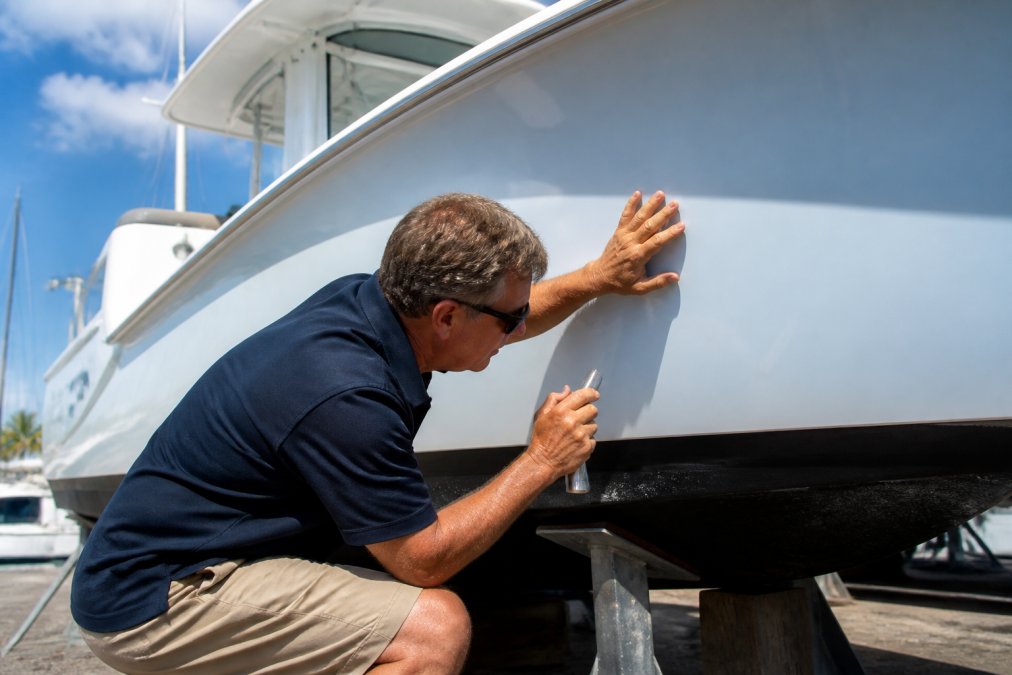
Start with the hull. Look for soft spots by pressing firmly on the fiberglass with your hand, a solid hull feels rigid and unyielding. Soft spots indicate water intrusion or delamination and signal serious structural problems. Check the gelcoat for cracks, crazing (fine spider-web patterns), and fading. Minor cosmetic issues are acceptable; structural cracks are not.
Inspect the transom carefully. This is where the engine mounts, and transom failure is expensive to repair. Press the area around the engine mounting points, any flex or softness here is a red flag.
Engine Condition and Service History
The engine is the most expensive component to replace on a center console. Request the complete service history and engine hour logs. Outboard engines typically have a useful service life of 1,500-2,000 hours. If the boat shows 1,800 hours and the seller has no maintenance records, assume the engine is near the end of its service life.
Electrical, Plumbing, and Systems Check
Turn on all electrical systems: lights, pumps, navigation equipment, and electronics. Everything should function smoothly. Check the battery bank for corrosion on terminals and cables. Corroded electrical connections can fail suddenly and are common in older boats.
| Inspection Area | What to Check | Red Flags |
|---|---|---|
| Hull | Soft spots, cracks, gelcoat condition | Structural damage, water intrusion, delamination |
| Transom | Flex, corrosion, engine mount integrity | Soft spots, cracks, engine mounting damage |
| Engine | Service records, compression, visual condition | Low compression, corrosion, no maintenance history |
| Electrical | Lights, pumps, battery terminals, connections | Corrosion, non-functional systems, loose connections |
| Plumbing | Water flow, seacocks, bilge condition | Leaks, stuck valves, wet bilge, corroded through-hulls |
| Electronics | Navigation systems, displays, connectivity | Non-functional equipment, outdated systems |
Cost of Repowering a Used Center Console
If you're considering an older center console, factor in the possibility of repowering. Replacing an outboard engine is one of the largest expenses in boat ownership. A quality replacement outboard costs $15,000-$40,000 depending on horsepower and brand. Installation and labor add another $2,000-$5,000.
Hidden Costs and Total Cost of Ownership
Beyond the purchase price, owning a preowned center console carries ongoing costs that catch many buyers off guard. Dockage fees, insurance, maintenance, fuel, and repairs add up quickly. A realistic annual budget for a 35-foot center console runs $8,000-$15,000 depending on usage and condition.
Many buyers overlook dockage costs when calculating total cost of ownership. Monthly dockage at a quality facility can run $1,500-$3,000 depending on location and boat size. Over five years, dockage alone can exceed $90,000. Factor this into your budget before purchasing.
Preowned vs. New: When Each Makes Sense
A preowned center console makes sense if you're budget-conscious, willing to accept some cosmetic wear, and committed to proper maintenance. Used boats offer real value when purchased with a marine survey and full maintenance documentation.
Frequently Asked Questions
Do center console boats hold their value?
Preowned center consoles typically retain 50-60% of their original value after five years, depending on brand, maintenance history, and engine hours. Premium brands with strong service records hold value better than entry-level models. Engine condition and hull integrity are the primary factors affecting resale value. A well-maintained preowned center console can be a sound investment if purchased at the right price point.
What should I look for in a used center console boat inspection checklist?
A thorough inspection covers hull integrity (checking for soft spots, fiberglass delamination, and gelcoat cracks), engine compression and service records, transom condition, bilge pump functionality, electrical harness condition, steering system responsiveness, and trim tabs operation. Sea trials should test acceleration, fuel consumption, and handling in various conditions. Request maintenance records and verify the engine hours against the boat's age to identify potential hidden wear.
Why is a marine survey important for used boats?
A professional marine survey identifies structural damage, hidden corrosion, engine wear, and system failures that casual inspection misses. Surveyors assess hull integrity, evaluate depreciation factors, and document the vessel's true condition. This protects your investment by preventing costly surprises after purchase and provides leverage for price negotiation. For preowned center consoles, a survey is essential to verify that the asking price reflects actual condition and remaining useful life.
What is the cost of repowering a used center console?
Repowering costs depend on engine type, horsepower, and whether you retain existing controls and fuel systems. Outboard engine replacement typically ranges significantly based on brand and specifications. Labor, installation, and any required structural modifications add to the total. Request quotes from marine service providers and factor repowering into your total cost of ownership if the current engines exceed 2,000+ hours or show compression issues.
Is it smart to buy a used boat?
Buying a preowned center console makes sense if you prioritize lower entry cost, have the expertise to evaluate condition, and budget for maintenance and potential repairs. Used boats depreciate slower than new ones, and you avoid the steepest value loss in the first few years. However, used boats require thorough inspection, professional marine surveys, and realistic expectations about hidden costs. Success depends on selecting a well-maintained vessel with complete service records and transparent ownership history.