 how-to
Do Saltwater Fishing Boats Hold Their Value?
Last Updated: October 30, 2026
Quick Summary
Saltwater fishing boats hold their value better than most recreational boats because demand stays steady, layouts stay useful for decades, and buyers shop for capability rather than fashion. Depreciation still happens, but a well-kept saltwater fishing boat slides slowly while a neglected one drops hard and then sits. Buyers pay for condition, hours, and proof, so fixing what a surveyor would flag and documenting everything is the fastest way to increase boat resale value.
- Buyers pay for clean, dry structure, documented engine service, working electronics, and honest cosmetics.
- Flush and rinse engines, livewell pumps, and raw-water washdown systems before anything else.
- Replace corroded fittings rather than cleaning them, since surveyors flag pitted stainless and swollen connectors.
- Late winter into spring is the best time to sell a boat in South Florida, when inventory is thin.
- Cleaning, detailing, corrosion repair, and engine service usually return more than custom upgrades do.
Table of Contents
- Why Saltwater Fishing Boats Hold Value Better Than Most
- How to Increase Boat Resale Value: The Work That Pays Back
- Your Boat Pre-Sale Checklist, Start to Finish
- The Best Time to Sell a Boat in the South Florida Market
- Boat Broker Commission: What You Pay and What You Get
- Pre-Sale Survey, Documentation, and the Paper Trail Buyers Trust
- Cost Versus Return: Which Pre-Sale Work Is Worth Doing
- Talk to a Center Console Specialist Before You List
- Frequently Asked Questions
Why Saltwater Fishing Boats Hold Value Better Than Most
Saltwater fishing boats hold value better than most recreational boats because demand stays steady, layouts stay useful for decades, and buyers shop for capability rather than fashion.
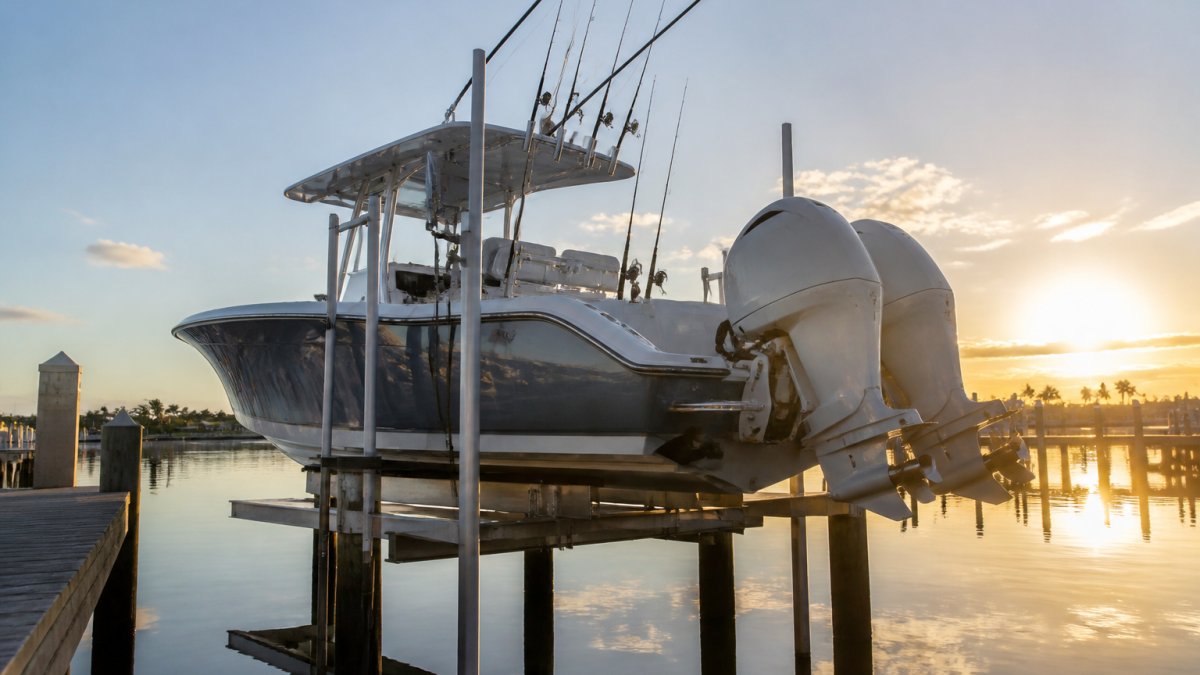
The boats that sell fast are rarely the flashiest; they are the ones a buyer can inspect, trust, and use on day one.
Depreciation still happens. The difference is the slope: a well-kept saltwater fishing boat slides slowly, while a neglected one drops hard and then sits.
What Buyers Actually Pay For
Buyers pay for condition, hours, and proof: a hull that surveys clean, engines with documented service, and electronics that work. Brand and model matter, but paperwork and upkeep decide the asking price.
- Engine hours and service history. Low hours with records beat low hours alone.
- Clean, dry structure. No soft spots, no stress cracks, no mystery leaks.
- Working electronics. A fish finder and chartplotter that power up and hold a signal.
Boating Industry's 2026 fishing boat trends report notes that marine businesses see shifting buyer preferences driving fishing boat growth. In practice, that means buyers are pickier about condition and ready-to-fish setups.
How to Increase Boat Resale Value: The Work That Pays Back
The fastest way to increase boat resale value is to fix what a surveyor would flag, then document everything. Buyers pay for certainty, and every receipt and photo lowers their risk, which supports a higher offer.
- Address corrosion first. Saltwater attacks wiring, fittings, and hardware. Clean and protect what you can, replace what you cannot.
- Service the engines and keep the invoices. A recent full service relaxes a buyer.
- Refresh the exterior finish. A wash, compound, and wax changes the first impression in minutes.
- Fix small broken things. Latches, pumps, lights, and hatches read as neglect.
- Organize the paper trail. Titles, registrations, service records, and manuals in one folder.
Your Boat Pre-Sale Checklist, Start to Finish
A boat pre-sale checklist turns a vague cleanup into a plan you can finish in a few weekends. Work from the hull up, and photograph each stage for sales material later.
A saltwater fishing boat has specific systems that salt attacks first, and those are exactly what a surveyor and serious buyer will inspect. This checklist is ordered by priority: fix what scares buyers most before spending on cosmetics.
Priority 1: Saltwater Systems Flush and Rinse
Salt left sitting in an engine, a livewell pump, or a washdown line is the most common cause of expensive pre-sale surprises. Flush and rinse these systems before anything else:
- Outboard or inboard engines. Run fresh water through the flush port per the manufacturer's procedure. On four-stroke outboards, that usually means a hose adapter on the cowling and 10 to 15 minutes of idle running. Skip fogging unless the boat will sit.
- Livewell and baitwell pumps. Fill the well with fresh water, run the pump, and drain until the discharge runs clear. Pull the pump cartridge and inspect the impeller for salt buildup or cracks.
- Raw-water washdown. Run fresh water through the hose and nozzle. Salt crystals clog the strainer and shorten pump life.
Priority 2: Corrosion Inspection, Top to Bottom
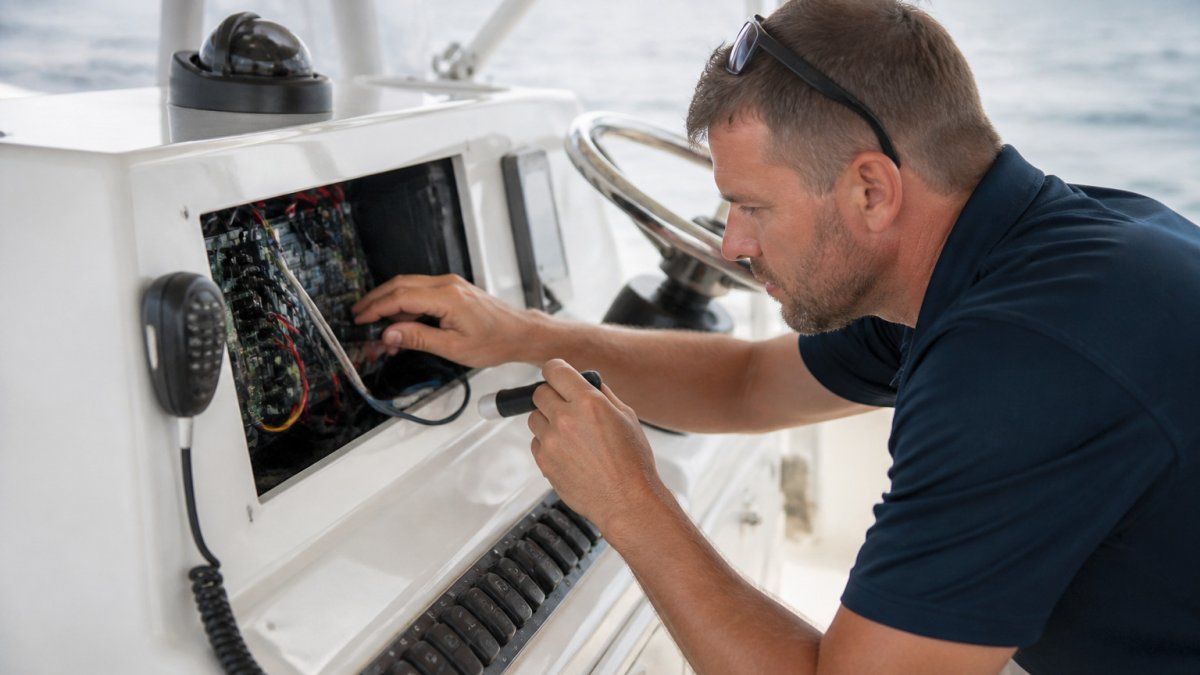
Walk the boat with a flashlight and look for the white, chalky bloom of aluminum corrosion and the green fuzz of copper corrosion. Check these locations in order:
- Battery terminals, grounds, and the main negative bus
- Wire connectors behind the console and in the bilge
- Through-hull fittings, seacocks, and hose clamps
Replace corroded fittings rather than cleaning them. A surveyor will flag pitted stainless and swollen connectors, and a buyer will use them to negotiate. New terminals and heat-shrink connectors are inexpensive and photograph well.
Priority 3: Hull, Deck, and Exterior Finish
Wash the hull, deck, and hardtop with a boat soap that does not strip wax. Clean the bilges, lockers, and livewells. Polish the exterior finish and treat the vinyl.
Focus on the spots buyers inspect:
- Bilge and engine cowlings
- Anchor locker and through-hull fittings
- Console wiring and battery compartments
Presentation is not vanity. A clean boat tells a buyer the owner cared, and that story carries into the negotiation.
Priority 4: Fishing-Specific Equipment
Saltwater fishing boats carry gear that general checklists ignore, and that gear affects both buyer confidence and asking price:
- Livewells and pumps. Verify the livewell fills, aerates, and drains. A dead pump is a small fix that reads as a big one.
- Trolling motor. Check the shaft, prop, and mounting bracket for corrosion. Test the foot pedal and GPS anchor function if equipped.
- Outriggers and rod holders. Inspect bases and welds for stress cracks. Replace missing caps and gaskets.
Priority 5: Engine Hours and Service Records
Pull the engine hours and match them to service records. If records are thin, get a professional service before listing. A documented engine condition is worth more than a low hour count with no proof.
Work the priorities in order. If you run out of weekends, you will have fixed what matters most to a surveyor and a buyer, and you can hand over a boat that inspects clean.
The Best Time to Sell a Boat in the South Florida Market
The best time to sell a boat in South Florida is late winter into spring, when buyers are planning the season and inventory is thin.
Seasonality is real, but condition still wins. A clean, documented saltwater fishing boat sells in any month. A rough one waits, no matter the calendar.
If you are selling into a soft stretch, read our strategies for selling a yacht in a slow market before you set the asking price.
Reach out now to see how we can help with your boating needs! →
Boat Broker Commission: What You Pay and What You Get
Boat broker commission is a percentage of the sale price, agreed in writing before you list. Rates vary by broker and boat, so ask for the full structure up front, then ask what the fee covers.
A good broker brings:
- Pricing guidance based on comparable sales
- Professional photography and listing reach
- A vetted buyer pool, not just web traffic
Watch out: vague fee language is the most common source of disputes. If the timeline matters to you, see how long it takes to sell a yacht with a broker so you can weigh cost against speed.
Pre-Sale Survey, Documentation, and the Paper Trail Buyers Trust
A pre-sale survey is an inspection you commission before listing, and it is the strongest trust signal you can offer. It surfaces problems on your terms, while you still have time to fix them. Buyers read a clean survey as proof, not a promise.
Build a simple document file:
- Title and registration
- Engine service invoices and hour readings
- Electronics manuals and warranty papers
This paper trail separates your boat from the listings buyers scroll past and speeds up the sale, because the buyer's inspector has less to question.
Cost Versus Return: Which Pre-Sale Work Is Worth Doing
Spend where a buyer looks and a surveyor checks. Cleaning, detailing, corrosion repair, and engine service usually return more than they cost, because they remove doubt. Custom upgrades rarely do. Buyers pay for condition, not your taste.
Use this rule before you spend:
| Work | Effort | Typical Return |
|---|---|---|
| Wash, compound, and wax | Low | High, strong first impression |
| Full interior and bilge detail | Low | High, signals care |
| Corrosion repair and new fittings | Medium | High, removes survey flags |
| Engine service with records | Medium | High, supports asking price |
| Electronics repair | Medium | Medium, depends on buyer |
| Cosmetic upgrades and custom touches | High | Low, rarely recouped |
Skip the big-ticket extras unless something is broken. Fix function first, then presentation.
The Three-Question Test Before You Spend
Before you authorize any pre-sale work, ask three questions. If the answer to any is no, the work probably will not pay back.
- Would a surveyor flag it if I left it alone? Safety items, structural issues, and inoperable systems get flagged. A faded cushion usually does not. Fix what gets flagged.
- Can I document it? A receipt and a photo turn a repair into proof. Work you cannot document still helps, but it does not support a higher asking price the way documented work does.
- Does it make the boat more usable on day one? A working livewell, a functioning chartplotter, and a clean bilge all shorten the buyer's to-do list. A custom teak console insert does not.
Where the Money Usually Comes Back
These categories tend to remove a buyer's reason to negotiate:
- Engine service with records. A recent full service, with invoices and hour readings, is the single strongest support for an asking price.
- Corrosion repair. Replacing terminals, grounds, and pitted fittings addresses a frequent survey finding on saltwater boats.
- Pump and livewell repair. Small parts, high visibility. A buyer who sees a working livewell stops worrying about the rest of the plumbing.
Where the Money Usually Does Not Come Back
Custom upgrades and cosmetic personalization rarely recover their cost at resale, because the next owner has different tastes and different fishing plans:
- Custom electronics packages beyond what the boat originally carried
- Tower or T-top additions and fabrications
- Upholstery in a non-original color or pattern
A common pattern is for owners to spend on the items they enjoy rather than the items a buyer inspects. If you plan to keep the boat for several seasons, spend on what you enjoy. If you plan to sell within a year, spend on what a surveyor checks.
Set a Budget Before You Start
Decide on a pre-sale budget before you begin, and hold a reserve for whatever the survey turns up. Fund the priority items first, then decide on optional work once you have a survey in hand, so you respond to a professional's findings with a documented fix.
If the survey finds an issue you cannot afford to fix, disclose it and price accordingly. A disclosed problem with a written estimate is easier for a buyer to accept than a surprise found during their own inspection.
Talk to a Center Console Specialist Before You List
A specialist can see your boat from a buyer's perspective, which is often a useful outside view. If you are hiring help, learn how to find a trustworthy yacht broker before you sign a listing agreement.
We focus on the center console because that is what our buyers want. If you are weighing a preowned purchase, see whether a preowned center console is worth it, and if you want to position your boat at the top of the market, read what makes a center console yacht premium.
Frequently Asked Questions
Do saltwater fishing boats hold their value?
They hold value better than most general recreational boats, but not forever. Center consoles built by established brands keep a stronger resale price because demand from offshore anglers stays steady and the boats are built for heavy use. Saltwater exposure still drives depreciation, so condition decides the number. A well-maintained boat with documented service records and low engine hours will hold far more of its original market value than an identical model with corroded wiring and missing maintenance history.
What maintenance helps a fishing boat retain its resale value?
Focus on the systems buyers inspect first. Flush and service the engines on schedule, wash and wax the hull after every offshore trip, and rinse the deck hardware to slow corrosion. Keep a written log of oil changes, impeller replacements, and electronics work. Replace worn pumps, hoses, and batteries before listing rather than negotiating over them. A clean bilge and dry compartments signal careful ownership, and that presentation directly supports a higher asking price when the boat goes to market.
What's the average commission for selling a boat?
Brokerage fees vary by vessel value, brand, and the level of service included, so there is no single standard number to plan around. Ask any broker to explain the commission structure in writing before you sign, including whether haul-out, photography, listing fees, and closing costs are covered or billed separately. Ask what the rate covers in terms of buyer access, marketing, and negotiation before you agree to it.
Is it better to sell a boat privately or through a broker?
Private sales can save on commission but put the survey, sea trial, paperwork, and buyer screening on you. A broker can handle pricing, buyer qualification, and the inspection process. For a high-value saltwater fishing boat, specialist knowledge of center consoles can matter as much as the fee.
Selling a saltwater fishing boat rewards owners who prepare early and document everything. Primo Yachts brings specialized center console expertise, a focus on the South Florida market since 2009, and discreet brokerage support for high-value vessels. Get started with Primo Yachts and list your boat with a team that knows exactly what offshore buyers inspect first.