 how-to
Selling a Yacht in a Slow Market: 7 Strategies That Work
Table of Contents
- Understand the Current Market and Why Yachts Aren't Moving
- How to Price a Yacht for Sale in a Cooling Market
- Preparing a Yacht for Sale Checklist: What Buyers Actually Inspect
- Professional Presentation and Staging to Stand Out
- Average Time to Sell a Yacht: What to Expect and How to Accelerate It
- Negotiate the Yacht Central Agency Agreement for Maximum Exposure
- Alternative Exit Strategies When Traditional Sales Stall
- When to Pivot: The Six-Month Decision Point
- Trade-In Programs: Speed vs. Value
- Lease or Charter Programs: Converting Liability to Income
- Auction Sales: Speed at a Cost
- Private Sales to Operators: The Network Advantage
- Wholesale to Other Brokers: The Last Resort
- Decision Framework: Which Alternative to Choose
- Frequently Asked Questions
Last Updated: September 19, 2026
Understand the Current Market and Why Yachts Aren't Moving
The yacht market has fundamentally shifted. Inventory is high, buyer demand is low, and vessels that would have sold in months now languish for a year or longer. Rising interest rates have tightened financing, economic uncertainty has made affluent buyers cautious, and the market has become saturated with listings competing for a smaller pool of serious purchasers.
When selling a yacht in a slow market, every month unsold drains resources. The longer a yacht remains on the market, the more buyers perceive it as overpriced or problematic. A boat listed for six months signals weakness, triggering harder negotiation and lower offers.
Most sellers approach this market with outdated strategies: pricing high and waiting, relying on generic brokers with massive inventories, and presenting vessels poorly, missing the psychological triggers that move serious buyers to action.
What makes the difference in a slow market: aggressive pricing from day one, professional presentation, targeted marketing to qualified buyers, transparent condition communication, and strategic negotiation. Execution matters more than ever.
How to Price a Yacht for Sale in a Cooling Market
Most sellers anchor to what they paid or think their boat is worth, then wait for offers. The correct strategy: price to market reality, not aspirational value. Research what similar vessels actually sold for in the last 90 days, not listing prices. Listing price and selling price are two different numbers in a cooling market.
Psychological Pricing: The Anchoring Effect in Yacht Sales
When selling a yacht in a slow market, psychological pricing matters more than raw discount percentage. The anchoring effect, where buyers fixate on the first number they see, shapes their entire negotiation posture. A $500,000 yacht priced at $485,000 signals confidence and attracts more showings than the same boat at $525,000 by breaking psychological thresholds.
Pricing at $399,500 instead of $405,000 moves your boat into a lower tier, competing against fewer vessels and reaching a broader buyer pool. Specific pricing like $487,500 instead of $500,000 suggests market analysis, building buyer confidence.
The psychological threshold effect is strongest in the first 30 days. If you price at $485,000 on day one then drop to $450,000, buyers perceive weakness and delay offers. Pricing aggressively from day one prevents this downward spiral.
Calculate Your Holding-Cost Breakeven Point
Most sellers ignore the financial math of holding an unsold yacht. Calculate your monthly holding costs: moorage ($1,500-$5,000), insurance ($200-$800), maintenance ($500-$2,000), fuel ($200-$500), and taxes ($100-$500). Total: $2,500-$8,800 monthly.
Assume $4,000 monthly holding costs. If your boat is listed at $520,000 but comparable sales suggest $485,000, you're holding out for a $35,000 premium. You break even after 8.75 months. If it doesn't sell in nine months, you've paid $36,000 in holding costs to avoid a $35,000 price cut, a net loss. Pricing $30,000-$40,000 lower and selling in three months often costs less than holding at a higher price for nine months.
Pricing tactics that work: Price 10-15% below comparable sales to stand out. Avoid round numbers ($487,500 feels more researched than $500,000). Calculate your holding-cost breakeven before listing; use this as your floor. Adjust price every 30 days if showings stall. Use price as a marketing tool, not an ego anchor. Niche vessels tolerate higher prices; mainstream center consoles must price aggressively.
Avoid the Listing-Price Trap
Listing high backfires in slow markets. Buyers assume the boat is overpriced or has hidden problems. Price to market reality from day one to generate immediate showings and early momentum. A boat with three offers in week two has more negotiating power than one with one lowball offer in month four.
Preparing a Yacht for Sale Checklist: What Buyers Actually Inspect
Buyers inspecting a yacht hunt for problems that justify negotiation. A preparing a yacht for sale checklist must address what marine surveyors and serious buyers actually examine, systematic preparation that prevents deal-killing discoveries during the sea trial or survey.
Critical inspection points: engine room and maintenance records, hull integrity, electrical systems, plumbing, deck hardware, cabin condition, navigation electronics, fuel system, and through-hull fittings. Complete the preparing a yacht for sale checklist 60 days before listing. Address mechanical issues before listing, not during negotiations, a failed engine room inspection kills deals fastest.
Hire a marine surveyor to conduct a formal survey report before listing ($1,500-$3,000). This prevents surprises that cost tens of thousands in lost sales or forced price cuts. Transparency builds buyer confidence. Document all repairs and maintenance, service records, receipts, and captain's logs become negotiating assets.
Professional Presentation and Staging to Stand Out
Professional presentation determines whether serious buyers schedule a showing. Start with photography: most yacht listings feature mediocre photos, but professional photos ($800-$2,000) generate 5x more qualified showings. Hire a marine specialist, shoot at sunrise or sunset, and show the boat clean and detailed.
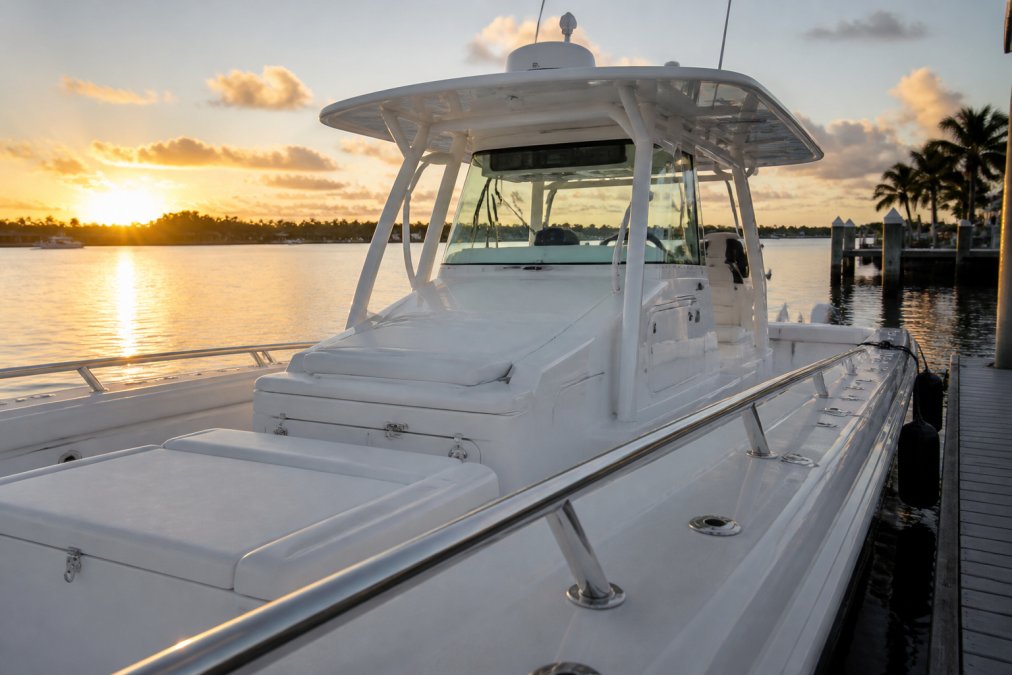
Stage thoroughly: clean deck, polish stainless steel, remove personal items, organize engine room.
Average Time to Sell a Yacht: What to Expect and How to Accelerate It
Average time to sell ranges from 6 to 18 months depending on price, condition, and market segment. Correctly priced yachts sell 40% faster than those requiring multiple price reductions. Professional photos, video, and condition reports compress the showing-to-offer timeline. Niche segments have smaller buyer pools and longer timelines; mainstream center consoles move faster.
Negotiate the Yacht Central Agency Agreement for Maximum Exposure
A yacht central agency agreement grants the broker exclusive listing rights and defines commission, marketing obligations, and contract terms. Most sellers sign standard agreements without negotiating, a mistake. Key terms directly impact how aggressively your broker markets your vessel.
Alternative Exit Strategies When Traditional Sales Stall
If traditional sales aren't moving your yacht after six months, alternative exit strategies deserve serious consideration. The key is recognizing when traditional sales aren't working and evaluating alternatives rationally.
When to Pivot: The Six-Month Decision Point
If your boat hasn't generated serious offers (within 10% of asking price) after four months or hasn't sold after six months, the market is signaling misalignment. Diagnose the stall: no showings (pricing/marketing problem), showings but no offers (condition/presentation problem), offers far below asking (market reality), or slow closing (financing/survey issues). If you've addressed these and the boat still hasn't sold after six months, alternatives become rational.
Trade-In Programs: Speed vs. Value
Trade-in programs allow you to exchange your vessel for another boat with a dealer or broker. Typical discount: 10-20% below market value. Timeline: 2-4 weeks. Example: Your $400,000 boat trades for $360,000 (10% discount). You lose $40,000 but save $24,000 in holding costs (6 months × $4,000). Net cost: $16,000 to exit immediately. Trade-ins work best if you're upgrading or downgrading, or need to exit quickly.
Lease or Charter Programs: Converting Liability to Income
Charter programs convert your yacht into income-producing assets. Charter revenue: $2,000-$8,000 per week. After 30-50% charter company commission, your net is $1,000-$4,000 weekly, or $52,000-$208,000 annually (26 weeks booked), typically covering 50-100% of holding costs. Timeline to exit: 2-3 years. Works best for boats in popular cruising destinations and owners who don't need immediate liquidity. Downside: your boat becomes a commercial asset with higher insurance and wear.
Auction Sales: Speed at a Cost
Auction sales compress the timeline dramatically. Auctions typically sell within 30-60 days, but buyers know they're bidding in a competitive environment.
Financial trade-off:
- Auction house commission: 15-20% of sale price
- Reserve price: You set a minimum; if bids don't reach it, the boat doesn't sell
- Final price: Often 5-15% below market value due to auction dynamics
- Timeline: 30-60 days from listing to sale
Private Sales to Operators: The Network Advantage
Private sales to experienced captains, fishing guides, charter operators, or corporate buyers bypass traditional brokerage entirely. These buyers often have cash or quick financing. They understand boat condition and don't require extensive negotiation.
Advantages:
- Faster closing: 2-4 weeks vs. 6+ months
- Lower commission: 5-8% vs. 10% traditional brokerage
- Fewer contingencies: Operators often waive surveys or accept condition as-is
- Cash or quick financing: Less financing risk
Disadvantages:
- Lower final price: Operators expect 10-15% discount for quick closing and reduced contingencies
- Limited buyer pool: Requires existing network or broker relationships
Wholesale to Other Brokers: The Last Resort
Wholesale to another brokerage is a last resort. You sell the boat to another brokerage at a discount, and they handle resale. You lose margin but eliminate carrying costs.
Financial trade-off:
- Wholesale discount: 15-25% below market value
- Timeline: Immediate exit; broker handles resale
- Your net: Typically 75-85% of market value
Decision Framework: Which Alternative to Choose
If you need to exit in 2-4 weeks: Auction or wholesale. Accept 10-20% discount to eliminate carrying costs.
Frequently Asked Questions
What is the average time to sell a yacht in a slow market?
Selling a yacht in a slow market typically takes 6-18 months, depending on price, condition, and location. Premium center consoles with strong maintenance records and competitive pricing can sell within 4-8 months. Unrealistic asking prices and deferred maintenance extend timelines significantly. Working with a specialist broker and implementing the strategies in this guide can reduce time on market by 30-40%.
How does a central agency agreement help sell a yacht in a slow market?
A yacht central agency agreement gives one broker exclusive listing rights while allowing them to collaborate with other brokers to reach a wider buyer pool. This structure increases market liquidity and exposure without flooding the market with competing listings. In a slow market, this approach generates more qualified leads and negotiation leverage, often resulting in faster sales at better prices than open listings alone.
What should be on a preparing a yacht for sale checklist?
A comprehensive checklist includes: engine and mechanical systems inspection, hull and structural integrity survey, interior detailing and repairs, navigation and safety equipment verification, documentation and title review, and professional photography. Deferred maintenance is the #1 reason yachts fail to sell. Address all survey findings before listing. Include a recent marine surveyor report to build buyer confidence and reduce negotiation delays.
How should I price a yacht for sale in a cooling market?
Price a yacht for sale based on comparable sales (not asking prices), current market valuation, vessel condition, and age. In slow markets, psychological pricing tactics matter: price slightly below round numbers ($489,000 vs $500,000) to signal urgency and attract more offers. Get a professional appraisal and adjust within 30-45 days if you don't receive qualified inquiries. Overpricing is the #1 reason vessels languish, market sentiment favors buyers, so realistic pricing accelerates sales.