 how-to
How to Optimize Yacht Brokerage Websites for Affluent Buyers
Last Updated: October 29, 2026
Quick Summary
Optimizing yacht brokerage websites for high-net-worth clients means treating visitors as buyers who are screening you, not shopping. Serve quiet browsers with large unedited photography, plain specs, named brokers, visible credentials, and fast mobile load, then build each listing page as a conversion path with a hero gallery, spec strip, full photo set, video walkthrough, brochure, and a four-field inquiry form.
- Map four buyer stages first: quiet browsing, shortlisting, verification, and contact.
- Keep hero images under roughly 300 KB and serve responsive sizes for fast mobile load.
- Build listing pages in sequence from hero gallery to named broker block.
- Keep inquiry forms to four visible fields and add optional qualifiers on the thank-you page.
- Review KPIs monthly and refresh the three listings with the lowest inquiry rate first.
Table of Contents
- What High-Net-Worth Clients Demand From a Yacht Brokerage Website
- Yacht Broker Website Design Choices That Signal Credibility
- Yacht Listing Website Best Practices for Converting Browsers Into Buyers
- Yacht Broker Lead Generation Without the Spam-Folder Feel
- Building a High-Net-Worth Client Experience Online
- A Practical Website Optimization Workflow for Yacht Brokerages
- Talk Through Your Listing or Search With Primo Yachts
- Frequently Asked Questions
What High-Net-Worth Clients Demand From a Yacht Brokerage Website
Affluent buyers judge a yacht brokerage in seconds, and they judge it online first. Optimizing yacht brokerage websites for high-net-worth clients starts with one truth: these buyers are not shopping. They are screening you.
A serious buyer wants proof before they ever call. They want discretion, speed, and detail. Most brokerage sites deliver none of the three.
The listings that move fastest are rarely the cheapest. They sit on sites that respect the buyer's time and privacy.
Here is what we cover below: how to map the buyer journey, what design signals credibility, how to convert browsers into buyers, and a workflow you can run this quarter.
Mapping the Affluent Buyer Journey Before You Touch the Design
Design decisions made before research are guesses. Map the journey first, then build.
Most high-net-worth buyers move through four stages:
- Quiet browsing: They research alone and never fill out a form.
- Shortlisting: They compare three to five vessels against each other.
- Verification: They check your credentials, your photos, and your track record.
- Contact: They reach out only when trust is already earned.
What most guides miss is stage one. A large share of your traffic will never identify itself. Your site has to serve that silent majority, not just the people who call.
Yacht Broker Website Design Choices That Signal Credibility
Credibility on a yacht broker website comes from restraint. Cluttered pages read as desperation. Clean pages read as confidence.
Start with these choices:
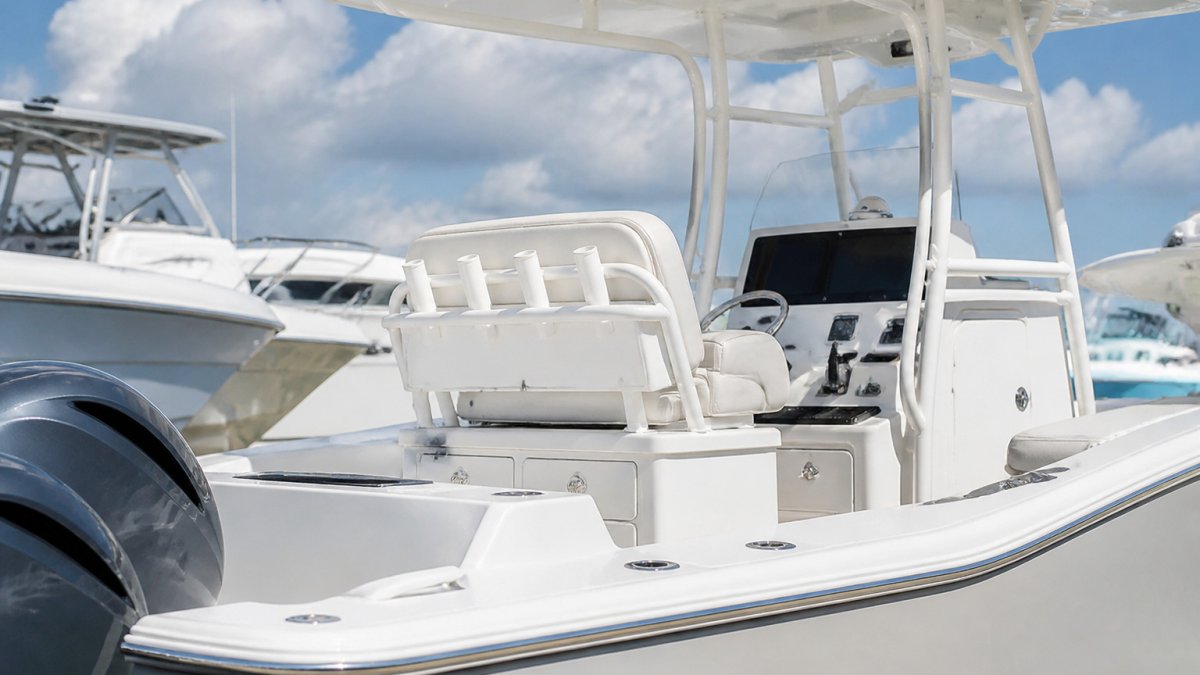
- Large, unedited photography. One honest wide shot beats ten polished angles.
- Plain, readable specs. Year, hours, engine, and hull material up front.
- Named brokers with real bios. Buyers want to know who answers the phone.
- Visible credentials. Licensing, affiliations, and years in business.
- Fast mobile load. Affluent buyers browse on phones between meetings.
Heavy sliders and auto-playing video can slow a page and look dated on a mobile screen.
Yacht Listing Website Best Practices for Converting Browsers Into Buyers

A listing page has one job: move a browser one step closer to an inquiry. Every element should serve that job. A listing page works best when it is built as a conversion path rather than a digital brochure.
The listing page anatomy that converts
Build every vessel page to this sequence, top to bottom:
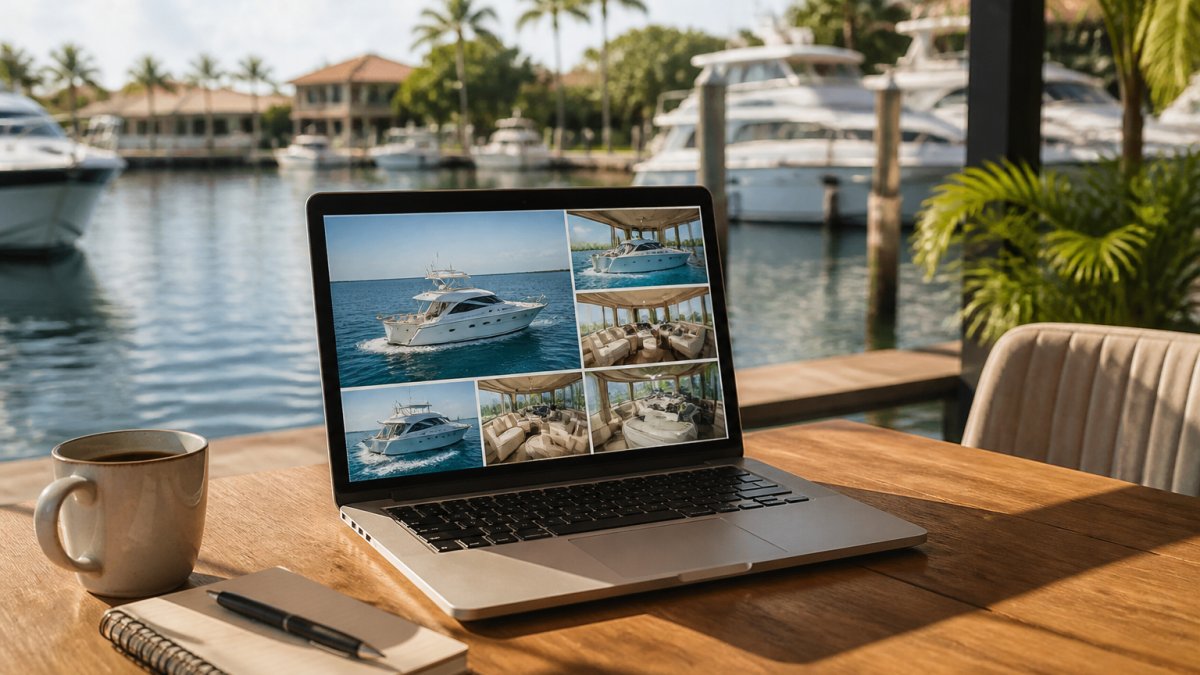
- Hero gallery above the fold. Lead with the strongest exterior three-quarter shot, not a logo or a brand banner. The vessel is the hero.
- One-line positioning statement. A single sentence on the use case, for example, "A 65-foot sport yacht set up for offshore fishing and weekend cruising." This is the "why this boat" paragraph, kept to two sentences maximum.
- At-a-glance spec strip. Year, length, beam, engine make and hours, hull material, fuel capacity, and location. Buyers screen on these fields before they read prose.
- Full photo set, no login wall. Hidden photos kill trust. Load the gallery progressively so the page stays fast on mobile.
- Video walkthrough. A two-to-four minute narrated walkthrough outperforms a music-only montage because it answers layout and condition questions before the call.
- Downloadable brochure. A PDF spec sheet with photos, dimensions, and equipment list gives serious buyers something to share internally.
- Inquiry form with qualification fields. Keep the visible fields to four, name, email, phone, message, but add optional qualifiers such as timeline, budget range, and whether they are working with a broker.
- Named broker block. Photo, direct phone, and email for the person who will answer. Buyers want to know who picks up.
Photography and video standards
Honest, well-lit shots of the actual vessel are generally preferred over heavily retouched images. A practical standard:
- Shoot in consistent light and avoid heavy HDR or sky replacement.
- Include engine room, bilge, helm, and head photos. Serious buyers look for what is missing.
- Label photos by area so buyers can jump to the engine room or the cockpit.
- Keep hero images under roughly 300 KB after compression and serve responsive sizes so mobile load stays fast.
Inquiry forms and qualified-lead handling
A short inquiry form keeps friction low, while optional follow-up questions on a thank-you page can help qualify leads. Routing inquiries to the broker who knows the vessel helps replies come from someone informed about that boat.
Common listing-page mistakes
- Burying the price or hiding it entirely. Silence looks evasive; use a clear "inquire for price" line if the seller requires it.
- Auto-playing video with sound. It slows the page and looks dated on mobile.
- Gating the gallery behind registration. If buyers cannot see the boat, they assume something is wrong with it.
- Stock or outdated photos. One honest wide shot beats ten polished angles from a previous listing.
For a deeper look at why presentation drives sales, read how professional photography impacts yacht sales.
Yacht Broker Lead Generation Without the Spam-Folder Feel
Lead generation on a luxury site should feel like an invitation, not a trap. Aggressive pop-ups and countdown timers read as cheap, and affluent buyers bounce.
Better approaches:
Reach out now to see how we can help with your boating needs! →
- Offer a private inventory list in exchange for an email.
- Use a two-step form. Ask for the email first, then the details.
- Add a "request a walkthrough video" option. Low commitment, high intent.
- Keep follow-up human. One personal email beats five automated ones.
A common mistake is gating everything. If buyers cannot see the boat, they assume something is wrong with it.
Building a High-Net-Worth Client Experience Online
Discretion matters to affluent sellers and buyers, and a site can reflect it through clear privacy language on its forms.
Sellers also want a realistic timeline before they begin a sale.
A Practical Website Optimization Workflow for Yacht Brokerages
Most guides treat design, SEO, and marketing as separate projects. The gap is a single sequence that takes a brokerage from audit through launch and measurement. Here is a workflow a small brokerage could run, in order, to improve its site.
Phase 1: Audit (week 1)
- Pull the top listing pages by traffic and score each on load time, broken forms, missing specs, and photo count.
- Run a mobile page-speed check on those same pages. Note hero image sizes and any auto-playing media.
- Inventory every inquiry form and confirm where submissions land.
- Document current analytics goals. If none exist, that becomes the first fix.
Deliverable: a one-page audit with the 10 worst pages ranked by revenue risk.
Phase 2: Template and content rebuild (weeks 2-3)
- Rewrite the listing template to the anatomy in the previous section: hero gallery, spec strip, full photo set, video, brochure, four-field form, named broker.
- Reshoot or recompress photos. Target hero images under roughly 300 KB and serve responsive sizes.
- Simplify inquiry forms to four visible fields and add the optional qualifier step on the thank-you page.
- Add private listing pages for sellers who require discretion, shared by direct link and excluded from search indexing.
Deliverable: a staging listing page that passes the audit criteria before it goes live.
Phase 3: Measurement and iteration (week 4 and ongoing)
Set up analytics goals before launch, not after. Measure brokerage-specific KPIs rather than vanity metrics:
| KPI | What it tells you |
|---|---|
| Listing page views per vessel | Which boats attract attention |
| Inquiry rate per listing | Whether the page converts browsers |
| Qualified inquiry rate | Whether leads match the vessel |
| Appointment or walkthrough requests | Buyer intent depth |
| Lead-to-sale progression | Whether the site feeds the pipeline |
| Mobile load speed | Whether the premium experience holds up |
Ignore total sessions. A thousand silent browsers are worth less than five qualified inquiries.
Phase 4: Monthly review
Review the KPI table monthly, flag the three listings with the lowest inquiry rate, and refresh their photos or copy first. Stale content is the most common cause of declining engagement.
One more alignment point: your site should speak to what buyers need after the sale too. Our marine survey guide for buyers is the kind of content that keeps a client engaged long after the inquiry.
Talk Through Your Listing or Search With Primo Yachts
A website gets you noticed. A specialist brokerage gets the boat sold.
Primo Yachts has focused on the center console market since 2009. If you are buying or selling a center console, reach out to discuss how we can help.
Ready to move? Reach out now to see how we can help with your boating needs.
Frequently Asked Questions
What should a yacht brokerage website include?
A yacht brokerage website needs clear listing pages with large, unedited photos, full specifications, and honest condition notes. Beyond listings, include a visible point of contact, a discreet inquiry form, and content that shows your specialty. For a center console specialist, that means pages explaining offshore capability and fishing setup rather than generic luxury language. Mobile performance and fast load times matter too, since many buyers browse from a phone before ever calling.
How can yacht brokers attract qualified buyers online?
Qualified buyers arrive through specific, informative content rather than broad advertising. Publish listing pages built around the terms serious buyers search, such as model names, hull configurations, and fishing setups. Pair that with a lead capture process that asks the right qualifying questions up front, like intended use and timeline. Tracking which pages produce inquiries, rather than just traffic, tells you where yacht broker lead generation is actually working.
How do you build trust with high-net-worth yacht buyers?
Trust comes from consistency and discretion. Show real photos instead of heavily edited ones, state your experience plainly, and respond to inquiries quickly. Offer a private path for sellers who do not want their vessel public, and explain how you handle their information. A high-net-worth client experience is built on the same fundamentals as any relationship: say what you will do, then do it, and keep the details confidential.
What makes a yacht listing website effective?
An effective listing page answers the buyer's real questions before they ask. That means accurate specs, engine hours, refit history, and clear photos of the areas buyers inspect first, like the helm and deck layout. Load speed matters as well; pages that stall on mobile lose viewers. Finally, every listing needs one obvious next step, such as a short inquiry form or a direct line to the broker handling that vessel.
The gap between a brokerage that looks expensive and one that actually sells comes down to discipline: honest listings, fast pages, and real privacy. Primo Yachts brings specialist center console expertise, discreet handling of high-value transactions, and guidance built around serious buyers. Get started with Primo Yachts and put your vessel in front of the right people.