 how-to
How Long Does It Take to Sell a Yacht With a Broker?
Table of Contents
- What Determines How Long It Takes to Sell a Yacht With a Broker
- The Yacht Central Agency Agreement: What It Means for Your Timeline
- Preparing a Yacht for Sale Checklist: Steps That Speed Up the Process
- How to Price a Yacht for a Quick Sale Without Leaving Money Behind
- The Yacht Survey and Sea Trial Process: What Buyers Expect
- Private Sale vs. Broker Representation: Which Sells Faster?
- Seasonal Demand and Regional Market Variance
- Conclusion
- Frequently Asked Questions
Last Updated: September 16, 2026
What Determines How Long It Takes to Sell a Yacht With a Broker
Most owners want a straight answer to how long does it take to sell a yacht with a broker, and the honest range is broad: a well-priced, well-presented vessel in an active market can move in a few weeks, while a niche boat with condition issues can sit for many months. At Primo Yachts of Palm Beach, we've handled center console sales since 2009, and the pattern is consistent. Vessel type, condition, and asking price drive the timeline more than anything else. Brokers track time-on-market obsessively because it's the clearest signal of whether a listing is working.
Vessel Type, Size, and Condition
Popular, in-demand models sell faster than rare ones. A clean, low-hours center console in a sought-after size band attracts multiple buyers quickly; a highly customized vessel narrows the pool. Condition matters just as much: boats needing a repower or major refit take longer because buyers price in the work. BoatUS guidance on buying and selling used boats notes that documented maintenance history helps buyers commit with confidence.
Market Demand and Economic Conditions
Demand shifts with the economy, fuel prices, and buyer financing costs. When credit is cheap and confidence is high, listings move faster. When financing tightens, buyers pause and time-on-market stretches. The post-pandemic surge in boat demand has largely normalized, which means sellers now compete on price and presentation again rather than riding a wave of easy buyers.
The Yacht Central Agency Agreement: What It Means for Your Timeline
A yacht central agency agreement is an exclusive listing contract that gives one brokerage the right to market and sell your vessel for a set period. It's the standard structure in professional brokerage, and it affects your timeline in two ways. First, it commits the broker to serious marketing spend and buyer outreach, which tends to shorten time-on-market. Second, it sets a defined listing window, so both sides agree on how long the boat stays on the market before terms are revisited. A clear agreement with realistic pricing and a marketing plan is one of the strongest predictors of a faster sale.
Preparing a Yacht for Sale Checklist: Steps That Speed Up the Process
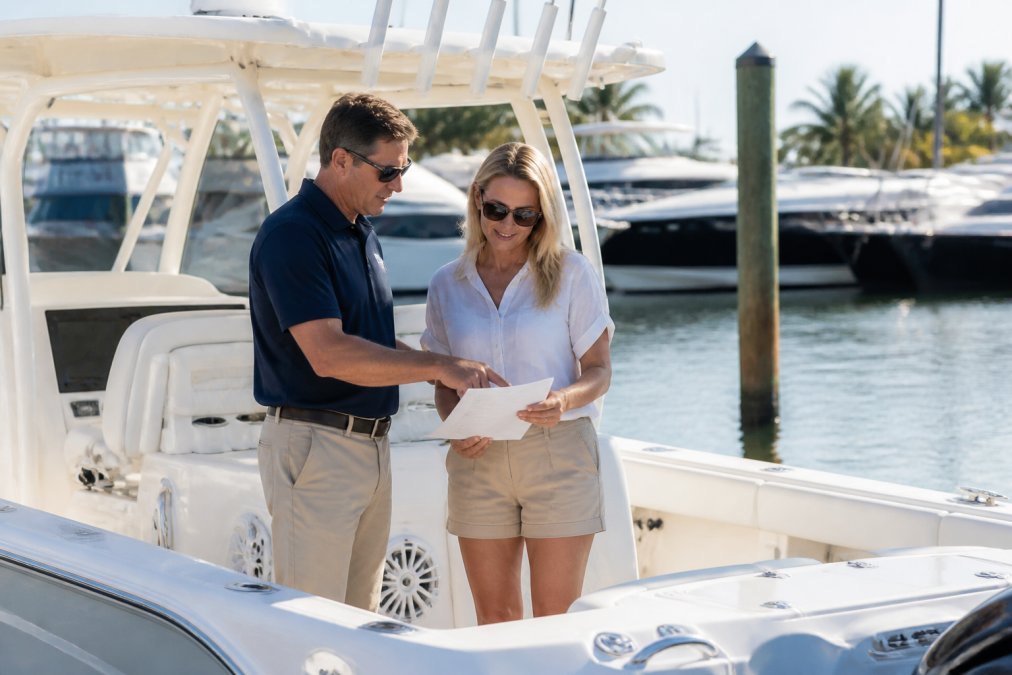
Preparation is where most sellers gain or lose weeks. A boat that shows well and has clean paperwork attracts offers faster and survives the survey stage with fewer delays.
- Wash, wax, and detail the hull, deck, and upholstery
- Clear personal items and declutter lockers and cabin
- Service the engine and fix minor issues before listing
- Gather service records and maintenance history
- Confirm title, registration, and lien status
- Take professional photos and video
- Set a realistic asking price based on comparable sales
Gather Documentation and Service Records
Buyers and lenders want proof of care. Service records, engine hours, and receipts for recent work reduce uncertainty and speed up the survey and financing stages. Missing paperwork is one of the most common causes of a deal stalling late in the process.
How to Price a Yacht for a Quick Sale Without Leaving Money Behind
Pricing is the single biggest lever on how long a boat sits, and it is the one variable a seller fully controls. Overpricing is the most common mistake: it kills early interest during the critical first weeks, the listing goes stale, and the boat becomes the one buyers assume has something wrong with it. Underpricing leaves money on the table and can even raise suspicion. The right approach is to price at market value based on recent comparable sales, condition, and equipment, then adjust on a schedule if showings are slow.
Asking Price vs. Sold Price: The Gap That Decides Your Timeline
A broker's yacht valuation pulls real transaction data, not asking prices, which is what separates a fast sale from a long wait. The distinction matters because listed prices and closed prices are not the same number. A common pattern in brokerage is that boats which sell quickly are the ones priced at or slightly below the most recent comparable sold prices, while boats priced off the highest current asking price tend to sit. When you and your broker build the valuation, ask to see the closed comparables, same model or close, similar year, similar engine hours, similar equipment, and note how long each took to sell. That time-on-market figure is as useful as the price itself.
The Price-Reduction Cadence
Most practitioners find that a listing gets its strongest traffic in the first two to three weeks. If qualified showings are not happening in that window, the market is telling you the price is above where buyers see value. Rather than waiting months for a single lowball offer, a disciplined cadence works better: hold the launch price for a set period, then make one meaningful reduction rather than a series of small ones. Small, frequent cuts train buyers to wait for the next drop.
Commission Structure and Marketing Effort
Commission is negotiable in the United States, and the structure you agree to can influence how aggressively your boat is marketed, which in turn affects time-on-market.
BoatUS guidance on buying and selling used boats
The Yacht Survey and Sea Trial Process: What Buyers Expect
Once an offer is accepted, the yacht survey and sea trial process begins, and this is where a surprising number of deals stall.
What the Survey Actually Covers
A pre-purchase survey is not a quick walkthrough.
The Sea Trial
The sea trial usually happens on the same day as the haul-out or shortly after.
Renegotiation, Financing, and Closing
If the survey or sea trial turns up issues, the buyer typically responds in one of three ways: request a price reduction, ask the seller to complete repairs before closing, or walk away.
The Ready-to-Sell Checklist That Prevents Closing Delays
- Current title in hand, with no unresolved liens or encumbrances
- Registration and documentation current, and hull identification number verified
- Engine and generator service records organized by date and hours
- Recent receipts for repairs, refits, and major components
- Known issues disclosed in writing, with repair estimates if available
- Safety equipment current and within its inspection dates
- Batteries, bilge pumps, and through-hulls functional
- Boat clean and accessible for surveyor and haul-out
- Spare parts, manuals, and keys gathered in one place
- Agreed-upon personal items removed before the survey
National Marine Manufacturers Association industry data
Private Sale vs. Broker Representation: Which Sells Faster?
Broker representation generally sells faster because it brings marketing exposure, buyer vetting, and transaction management that a private seller can't easily replicate.
| Factor | Private Sale | Broker Representation |
|---|---|---|
| Marketing exposure | Limited to owner's network | Broad, multi-channel reach |
| Buyer vetting | Owner-managed | Broker screens serious buyers |
| Time-on-market | Typically longer | Typically shorter |
| Escrow and closing | Owner coordinates | Broker and closing agent handle |
| Commission | None | Commission structure applies |
Seasonal Demand and Regional Market Variance
Timing and location both move the needle.
Conclusion
Selling a yacht quickly comes down to three things: realistic pricing, strong preparation, and reaching the right buyers.
Frequently Asked Questions
What factors influence how quickly a yacht sells?
Vessel condition, asking price relative to market value, brand demand, and seasonal timing all affect how long it takes to sell a yacht with a broker. Center consoles in the 34-foot-and-up range tend to move faster when they are survey-ready and priced competitively. Economic conditions and buyer financing availability also play a role. A broker who knows your specific market segment can give you a realistic timeline based on current inventory and recent comparable sales.
Is it faster to sell a yacht privately or through a broker?
A broker typically shortens time-on-market because they bring qualified buyers, handle marketing exposure, and manage the survey and sea trial process. Private sales can work for niche vessels, but they often take longer because the seller must vet buyers, negotiate, and coordinate the closing process alone. A central agency agreement with a specialized brokerage also prevents your listing from being diluted across multiple sites, which keeps buyer attention focused on your vessel.
Does the time of year impact how long it takes to sell a boat?
Yes. Seasonal demand shifts how long it takes to sell a yacht with a broker. In South Florida, listings tend to move faster in fall and early winter as buyers prepare for the upcoming boating season. Summer can slow down because many potential buyers are traveling. Listing in late summer or early fall often positions your vessel in front of buyers who are ready to act before the season starts, rather than competing with a crowded spring inventory.
What steps can I take to speed up the yacht sale process?
Start with a preparing a yacht for sale checklist: gather service records, fix minor cosmetic issues, and get a pre-listing marine survey so there are no surprises during the buyer's inspection. Price the vessel based on recent comparable sales, not on what you hope to get. Choose a broker with direct experience in your vessel type, and sign a central agency agreement so your listing gets focused marketing exposure. These steps reduce negotiation friction and help you reach the closing process faster.