 Ultimate guide
New Yachts for Sale: A Buyer's Guide to New Yacht Ownership
Last Updated: November 9, 2026
Quick Summary
New yachts for sale are vessels never titled to a private owner, offered either as an unbuilt new construction order or as unsold current-model inventory. The choice changes your timeline, negotiating position, and how much of the specification you control. New builds deliver exactly what you want; inventory puts you on the water this season.
- A new build is a construction project where you agree on a build slot and specification before launch.
- Unsold inventory means the boat exists, the asking price is set, and a sea trial can happen next week.
- Commissioning runs from defining requirements through pre-delivery inspection, sea trial, and final acceptance.
- A new vessel still deserves an independent survey because build defects and commissioning errors do not disappear.
- The 10% rule of thumb for annual costs is a starting point, not a ceiling.
Table of Contents
- What New Yachts for Sale Actually Include
- Motor Yachts, Sailing Yachts, and Center Consoles: Matching the Vessel to the Use Case
- New vs. Pre-Owned: What Changes on the Water
- The New Yacht Commissioning Process, Step by Step
- The Yacht Survey and Inspection Checklist for a New Vessel
- Yacht Maintenance Costs to Budget Before You Sign
- Working With a Specialist Broker on New Yachts for Sale
- Start Your Search With Primo Yachts
- Frequently Asked Questions
What New Yachts for Sale Actually Include
Shopping for new yachts for sale means choosing between two very different products: a vessel built to your specification, or a new model sitting in dealer or broker inventory. Most buyers assume "new" means one thing. It means two.
New yachts for sale are vessels that have never been titled to a private owner, offered either as an unbuilt new construction order or as unsold current-model inventory. The distinction matters because it changes your timeline, your negotiating position, and how much of the specification you actually control.
New Builds vs. Unsold Inventory
A new build is a construction project. You sign with a builder or through a broker, agree on a build slot, and work through specification sheets covering hull, propulsion, interior, and deck layout before launch and delivery. You wait, and you pay for the privilege of getting exactly what you want.
Unsold inventory is the opposite. The boat exists, the asking price is set, and a sea trial can happen next week. What you see is what you get, including design choices someone else made. For buyers who want to be on the water this season, inventory wins. For buyers with firm opinions about range, displacement, and onboard features, a build slot is worth the wait.
Motor Yachts, Sailing Yachts, and Center Consoles: Matching the Vessel to the Use Case
The right vessel type follows from how you actually use the boat, not from what looks best at the dock. Start there and the shortlist builds itself.
Motor yachts and power yachts prioritize speed, range, and interior volume. They suit cruising with guests, overnighting, and running long distances on a schedule.
Sailing yachts trade engine dependency for wind, with displacement hulls tuned for passage-making and a very different rhythm on the water.
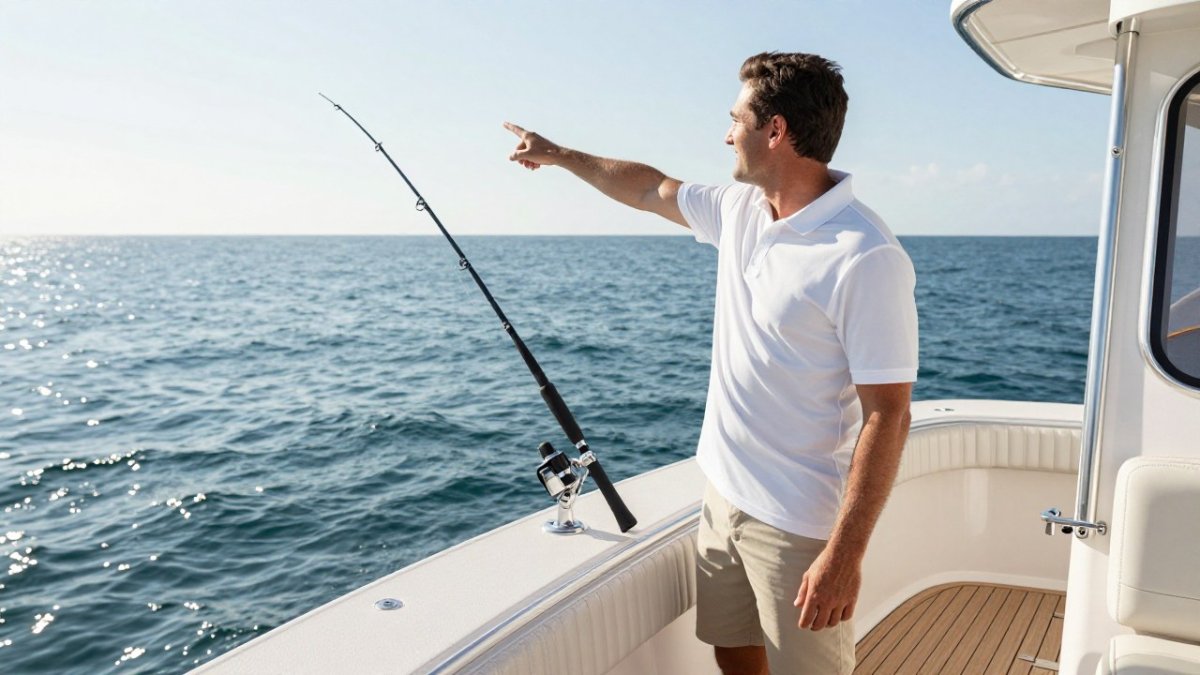
Center consoles are the fishing-first platform: open deck, outboard propulsion, and the performance to run offshore and back in a day. For serious anglers, that layout is not a compromise, it is the point. If you are weighing a luxury center console against a cabin cruiser, our comparison of luxury center consoles versus cabin cruisers lays out the trade-offs directly.
Ask one question before anything else: is this boat for fishing, for cruising, or for both?
New vs. Pre-Owned: What Changes on the Water
New buys certainty about history. No prior owner, no unknown groundings, no service records to reconstruct. You get the full warranty chain and a vessel configured to the current model year.
Pre-owned buys value and immediate availability. Depreciation has already been absorbed by someone else, and the boat is ready now.
What most guides miss is the middle ground. Late-model inventory that has never been titled gives you a near-new vessel without the new-build wait, and it is often the sharpest position in the market. The trade-off is selection: you are choosing from what exists, not from what could be built.
The New Yacht Commissioning Process, Step by Step
Commissioning is the structured handover between purchase and first real use, but it is the last stage of a longer process. Understanding the full sequence, from defining requirements to signing acceptance, is what separates a controlled purchase from an expensive lesson.
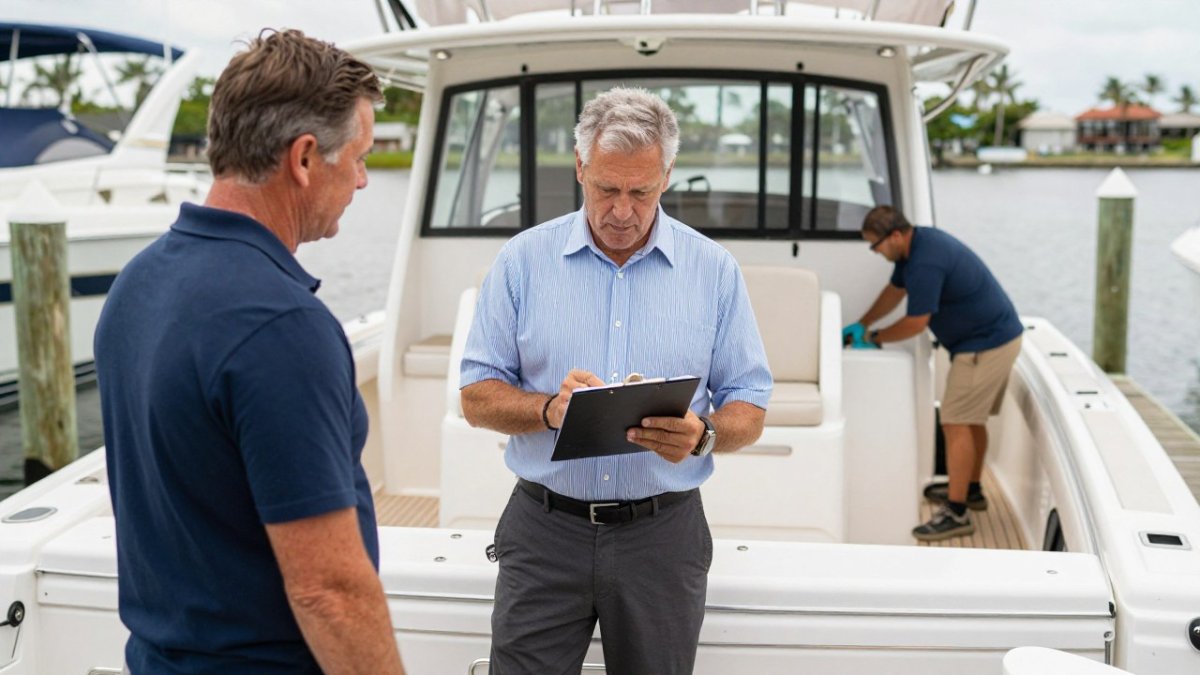
1. Define requirements before you shop. Write down how you will use the boat: fishing, cruising, entertaining, long-range travel, or a mix. That translates into vessel type, size range, range and fuel capacity, layout, and propulsion.
2. Shortlist models and builders. Compare specifications, build quality, warranty terms, and dealer support. For a new build, ask about build slots and current lead times; for inventory, confirm what is physically available and where it is located.
3. Negotiate and contract. A new-build contract should spell out the specification, price, payment schedule, delivery window, warranty terms, and what happens if the build runs late.
4. Monitor the build or inspect the inventory. On a new build, ask for progress reports and photos at each milestone. On inventory, inspect the vessel against its build sheet before you commit.
5. Pre-delivery inspection. Walk the vessel against the specification and build sheet before systems are commissioned. Document every discrepancy.
6. Systems commissioning. Engines, electronics, plumbing, and electrical systems are run and verified. This is where build defects surface.
7. Sea trial. The vessel is operated under load, at speed, and through its full range of systems. A sea trial is not a joyride, it is a test, and it should be run at cruise and at wide-open throttle.
8. Deficiency list. Every fault found is documented and corrected before acceptance. Expect the deficiency list to be longer on a new build than on inventory. That is normal, and it is exactly why the sea trial happens before you sign.
9. Final acceptance and delivery. You sign, the vessel transfers, and warranty registration begins. Confirm in writing what warranty coverage starts on delivery and what is covered by the builder versus the dealer.
Watch out: progress payments on a new build are only as safe as the contract behind them. Clear milestone protections are one part of managing risk, and the custom yacht build process also depends on agreeing how specifications, changes, and delivery will be handled.
For buyers preparing for a formal survey, our marine survey guide for Florida yachts explains how the inspection process is structured.
The Yacht Survey and Inspection Checklist for a New Vessel
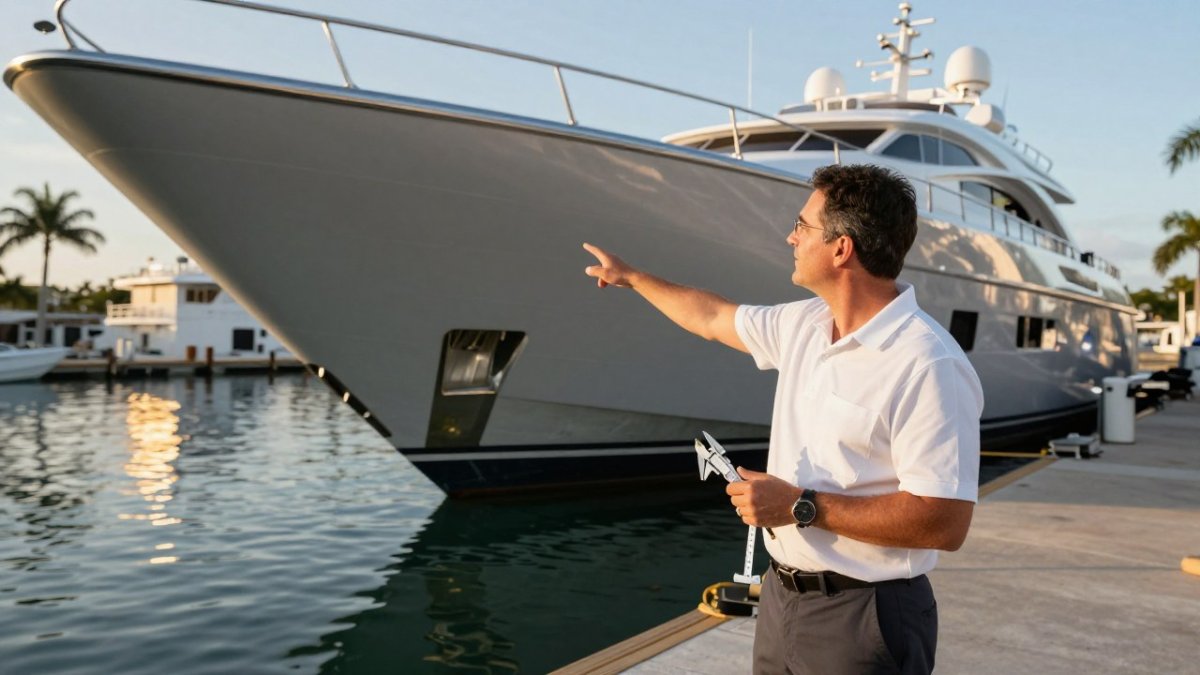
A new vessel still deserves an independent survey. It is a common mistake to skip it because the boat has never been owned, but build defects and commissioning errors do not disappear because the hull is new.
- Engine history and hour meters verified against build records
- Hull inspected for blistering, osmosis, and structural defects
- Through-hulls, seacocks, and below-waterline fittings checked
- Electrical systems and battery banks load-tested
- Electronics and navigation equipment function-tested
- Deck hardware, rails, and hatches inspected for bedding and sealant failures
- Sea trial performed at cruise and wide-open throttle
- Warranty documentation and coverage terms confirmed in writing
If you want the full method for verifying a vessel's mechanical past, our guide to inspecting yacht engine history before purchase walks through it. Buyers preparing for a formal survey will also find our marine survey guide for Florida yachts useful for understanding how the process is structured.
Yacht Maintenance Costs to Budget Before You Sign
Purchase price is the entry fee, not the cost of ownership. The annual number is what determines whether the boat fits your life, and it is the figure most buyers underestimate. Purchase price is only part of the picture.
Here is how the annual budget breaks down, line by line.
Dockage and moorage. Slip rates vary by region and by the type of slip you choose. A liveaboard slip, a mooring, or dry stack storage each changes the math. Factor in electricity, water, and any marina minimums.
Insurance. Marine insurance rates depend on vessel type, age, cruising area, and your experience and claims history. Agreed-value policies cost more than actual-cash-value policies but pay a defined amount after a total loss.
Engine and systems service. Outboards, inboards, and pod drives have different service intervals and different costs. Annual engine service, oil and filter changes, impeller and belt replacement, and scheduled maintenance per the manufacturer's manual are non-negotiable. Electronics, plumbing, and electrical systems also need periodic attention.
Haul-out and bottom work. Bottom paint, zinc anode replacement, running-gear inspection, and hull cleaning are recurring costs. Vessels kept in saltwater generally need more frequent attention to anodes, running gear, and finishes than freshwater-kept boats.
Fuel. Fuel is the most variable line item and the one buyers most often underestimate. It scales with engine hours, cruise speed, and range. A center console run hard offshore burns far more per hour than a displacement cruiser at hull speed.
Crew or management. On larger vessels, captain, mate, and management fees sit on top of everything else. Even on a mid-size boat, a part-time captain for deliveries and a management contract for maintenance coordination can be worth the cost.
Contingency reserve. Set aside a reserve for the repairs you cannot predict, a failed charger, a prop strike, a leaking seal.
Watch out: the 10% rule of thumb is a starting point, not a ceiling. Vessels with complex systems, older equipment, or heavy use routinely run higher, and a boat that sits unused still incurs dockage, insurance, and minimum maintenance.
If you are weighing ownership against chartering, our breakdown of sportfishing yacht maintenance costs versus charter expenses puts the two side by side.
Working With a Specialist Broker on New Yachts for Sale
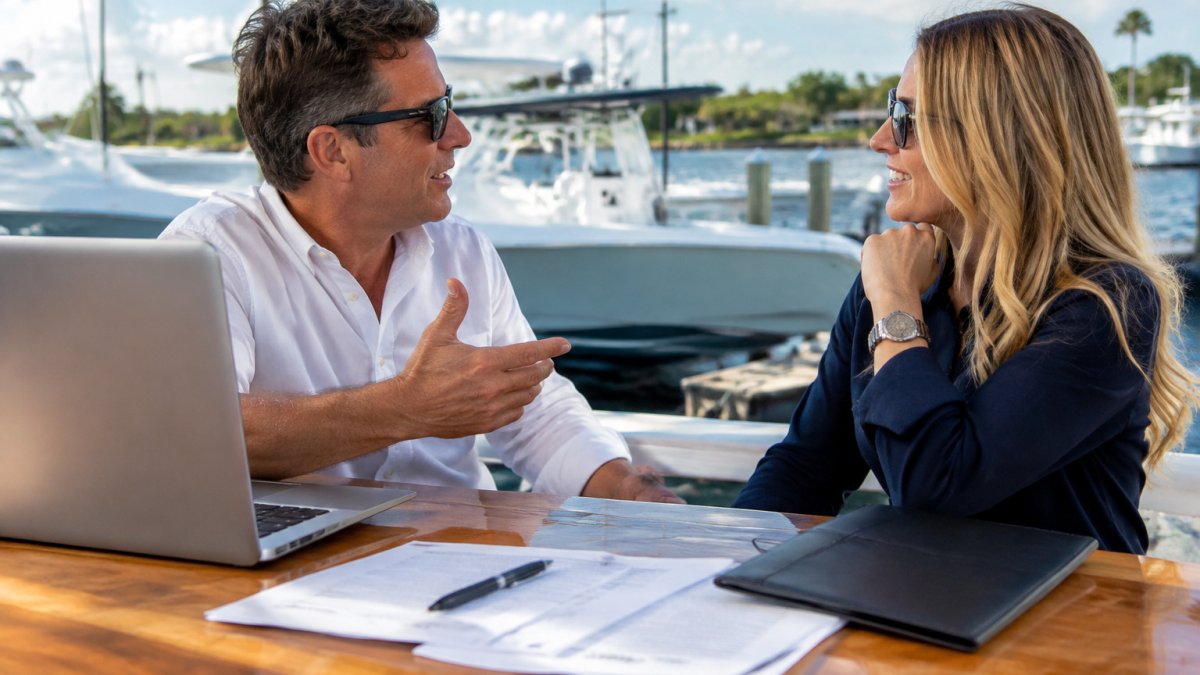
A specialist broker changes what you see and what you avoid. General brokerage covers everything from runabouts to superyachts; specialist brokerage covers one category deeply.
At Primo Yachts, we have focused on the center console since 2009, which means buyer representation built around how these boats are actually fished and run.
The question worth asking any broker is simple. Do they know this category, or do they know brokerage? On a premium purchase, the difference is the whole game.
Start Your Search With Primo Yachts
The gap between a good purchase and an expensive lesson usually comes down to preparation: knowing which vessel type fits, what commissioning and ownership really cost, and who is representing you at the table.
Primo Yachts works with buyers across South Florida on premium center console acquisitions. Browse the motor yacht listings available through Primo Yachts to see current inventory, or reach out and tell us how you fish and where you run. We will build the shortlist around that.
Finding the right vessel is a search problem before it is a price problem. Primo Yachts brings specialist center console expertise, buyer representation, and access to inventory beyond public listings to every acquisition. Get started with Primo Yachts and search with a broker who knows the category.
Frequently Asked Questions
Are there brand new yachts available for sale right now?
Yes. New yachts for sale fall into two groups: unsold inventory already built and sitting with dealers, and new-build slots where you contract a builder to construct a vessel to your specification. Inventory availability shifts constantly, and larger vessels in particular move quickly when priced well. A specialist broker can tell you which builders have open build slots and which vessels are available for immediate delivery, so you are not limited to what appears on public listing sites.
What is the typical cost of a new yacht?
Pricing depends on length, propulsion, builder, and outfitting, so there is no single figure. Beyond the purchase price, budget for sales tax and registration, commissioning, insurance, dockage, fuel, and annual maintenance. Ask your broker for a written total cost of ownership estimate before you commit, and get current pricing directly from the builder or dealer rather than relying on listing headlines.
What is the 10% rule for yachts?
The 10% rule is a rough planning guideline: many owners budget around 10% of the vessel's value each year for operating costs, covering dockage, insurance, fuel, maintenance, and crew if applicable. It is a starting point, not a guarantee. A center console used heavily for offshore fishing will have a different cost profile than a lightly used cruising yacht, so build your own estimate around how many hours you actually run the boat.
How does commissioning a new yacht differ from buying off the shelf?
Commissioning a new build means the vessel is finished, rigged, and sea-trialed to your specification before delivery, and you typically have input on electronics, tower configuration, and interior layout. Buying off the shelf means the boat is already built, so you inspect what exists and take delivery sooner. Commissioning takes longer but gives you a vessel matched to how you actually fish or cruise.