 Ultimate guide
Boat for Sea: Choosing an Offshore Center Console
Quick Summary
A boat for sea needs a seaworthy hull, a length that suits your range, and a boat type matched to your conditions and fishing style. Deep-V hulls with good freeboard handle open-water chop best, and offshore center consoles suit distance and rough weather. Check the capacity plate and test the boat at a near-real loaded weight.
- A deep-V hull with pronounced entry cuts through head seas instead of pounding.
- Check the transom capacity plate and never exceed the rated horsepower and load.
- Calculate fuel from the engine's gallons-per-hour chart and keep one third of the tank in reserve.
- Test the boat at a loaded weight close to real use before assuming it is adequate.
- Rinse saltwater residue from hull, engines and electronics after every trip.
Table of Contents
- What Makes a Boat Suitable for Sea Use
- Matching Boat Type to Your Sea Conditions and Fishing Style
- Offshore Fishing Boat Requirements
- New vs Used Center Console Boats
- Operating Costs, Range and Fuel Planning
- Saltwater Boat Maintenance Tips
- Booking a Sea-Ready Boat Consultation with Primo Yachts
- Frequently Asked Questions
What Makes a Boat Suitable for Sea Use
A boat for sea has to handle more than flat water and a pleasant afternoon. Open-water boats face wind-driven chop, long swells, spray, and the risk of a sudden weather shift miles from the ramp. The same questions come up with nearly every buyer: how the hull behaves, how big the boat should be, and whether it will stay composed when conditions turn. The answers below cover the factors that matter most before you commit to a purchase.
Hull Design and Seaworthiness
Hull shape does most of the work offshore. A deep-V hull with a pronounced entry cuts through head seas instead of pounding over them, and a modest transom deadrise helps the boat track straight in quartering conditions. Freeboard and bow flare matter too, because they keep spray off the cockpit when you are running into a building sea.
Seaworthiness is not a marketing term you can judge from a brochure. Look at how the hull was built, the quality of the stringers and bulkheads, and how the boat has been used by owners in conditions similar to yours.
Length and Size Ranges for Open Water
Length is a proxy for stability, fuel capacity, and the margin you have when the wind picks up. Length guidance varies by design and conditions, so review specifications against your intended use. Smaller boats can be capable offshore in good weather but leave less room for error.
Matching Boat Type to Your Sea Conditions and Fishing Style
Boat type should follow where you actually run. A bay boat is built for shallow inshore water and calm days, while a true offshore center console is designed for distance and rough conditions. Buyers who plan to run beyond the reef in mixed weather usually need the second category, even if they only fish a few times a month.
Your fishing style narrows the choice further. Serious offshore anglers who work trolling spreads, kite fishing, or bottom fishing need deck space, livewell capacity, and a helm layout that keeps the captain in control while crew work the rail. Family owners who cruise to sandbars need comfortable seating and shade more than a fighting chair. Be honest about which mission dominates.
Offshore Fishing Boat Requirements
A fishing-focused offshore boat is judged by how well its deck layout, load capacity, and transom work together under a full load. Each requirement below is easier to evaluate if you check it in person with your actual gear and crew.
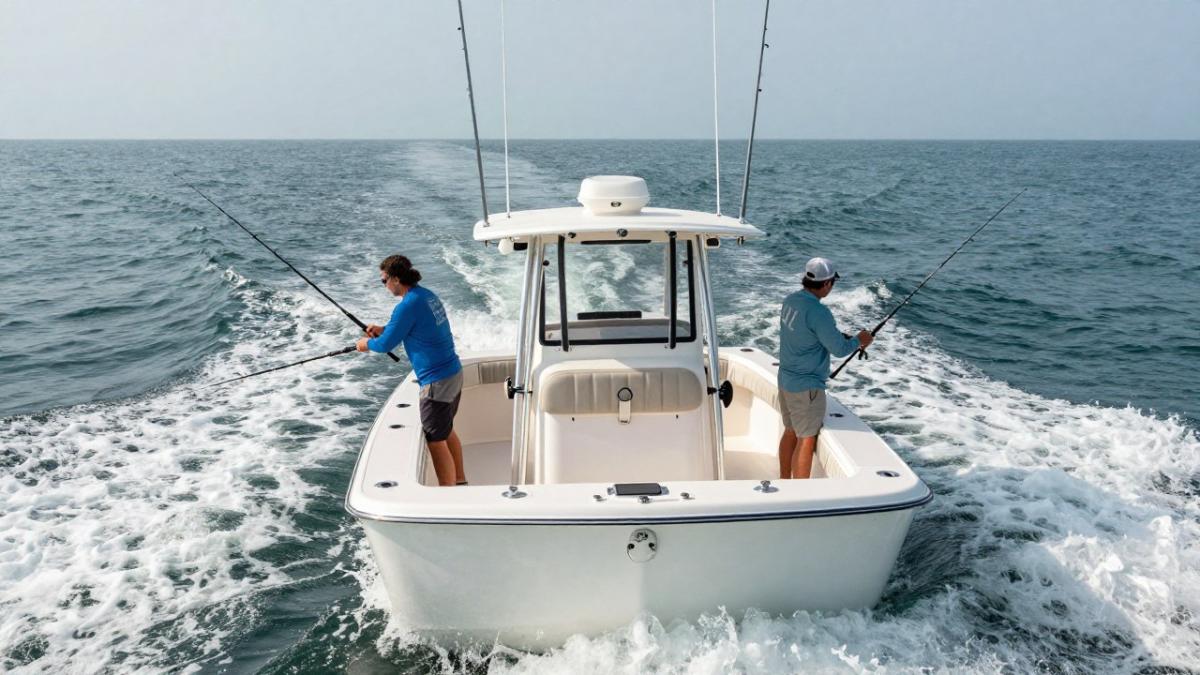
Start with the transom. It should carry the rated horsepower of the engines you plan to run, and the builder's capacity plate lists the maximum horsepower and total load. Exceeding that rating stresses the transom and the engine mounts, and it is a common cause of premature transom damage on heavily loaded center consoles. Ask to see the capacity plate and compare it against your intended engine package and expected load.
Fuel capacity should cover your typical round trip plus a reserve. Tank size is listed on the spec sheet, but confirm whether it is the usable volume or the nominal volume, since some builders quote figures differently. Plan for the reserve described in the range section above.
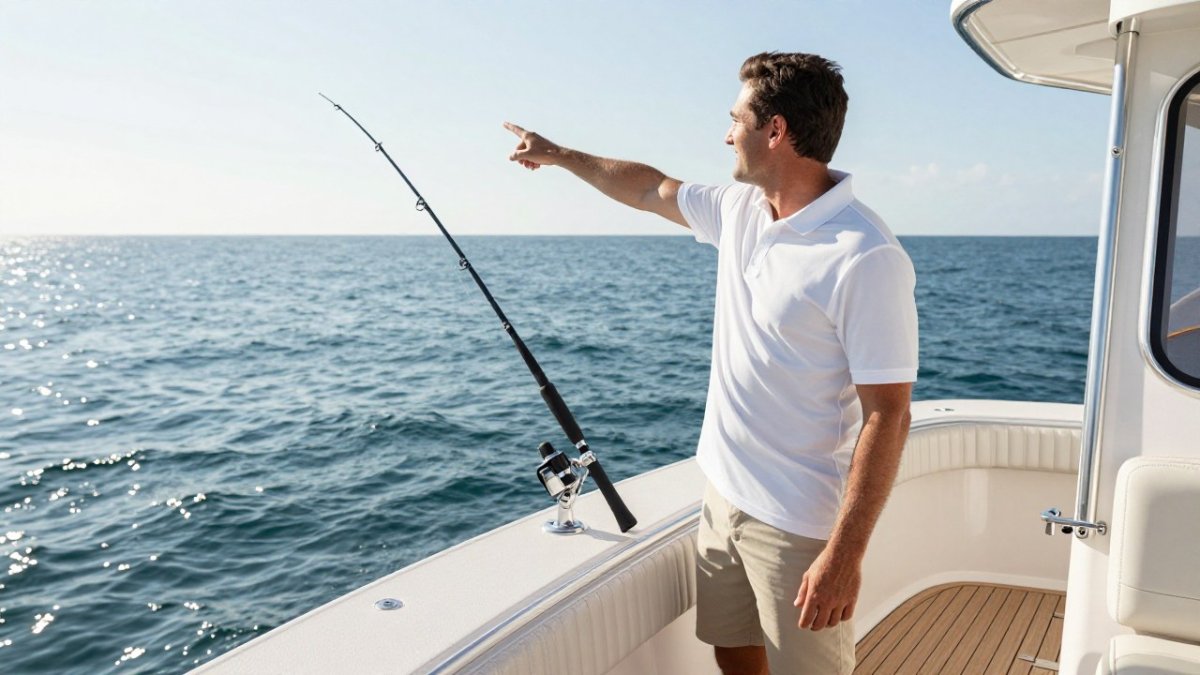
Rod storage and deck space determine how well a crew can work. Count the rod holders you need for your spread, and confirm that rod storage does not block the walkway or the helm-to-cockpit path. Two or three anglers working a fighting chair and a livewell need clear footing, so measure the cockpit with your crew standing in the positions they will fish from.
Livewell and fish-box capacity should match the species you target and how long you stay out. Check that the livewell pump and aeration work at speed and at idle, and that the insulated fish box drains cleanly.
Helm placement affects control. The captain should be able to see the cockpit and the bow while keeping a hand on the throttle, and the crew should be able to reach the gaff and bait station without climbing over gear.
Watch out: an engine package that looks adequate on paper can struggle once a full fuel load, ice, gear, and passengers are aboard. Test the boat at a loaded weight close to your real use, and confirm its loaded performance before you assume it will reach your fishing grounds comfortably.
The article's key requirements for an offshore fishing boat can be checked side by side.
| Requirement | What to check | Why it matters |
|---|---|---|
| Transom | Capacity plate horsepower and total load | Exceeding the rating stresses transom and engine mounts |
| Fuel capacity | Usable vs nominal volume | Must cover round trip plus a reserve |
| Rod storage | Rod holders vs walkway clearance | Crew need clear footing while fishing |
| Livewell | Pump and aeration at speed and idle | Keeps catch alive during long outings |
| Helm placement | View of cockpit and bow | Captain keeps control while crew work the rail |
| Loaded performance | Test at near-real weight | Engine package can struggle with full load |
New vs Used Center Console Boats
New and used center consoles serve different buyers. A new boat gives you the latest hull and electronics, a full warranty, and a clean maintenance history. A well-maintained used boat can deliver the same offshore capability at a lower entry point, and the depreciation curve has already taken its first large hit.
Whichever route you take, order a pre-purchase survey. For used boats, check engine hours against the service record, inspect the transom and stringers for moisture or cracking, and run the boat in a chop before you sign. The right answer depends on your budget and how soon you plan to use the boat.
Operating Costs, Range and Fuel Planning
Ownership cost for an offshore center console is easiest to understand as several separate categories, including fuel, routine maintenance, insurance, storage, and equipment replacement. Buyers who budget only for the purchase price and a single annual service often find the first full season costs far more than expected.
Fuel is usually the largest recurring expense. To estimate it, start with the engine manufacturer's published fuel-flow chart for your engine package and look up gallons per hour at the RPM you actually cruise at, not at wide-open throttle. Multiply that burn rate by the hours you expect to run per outing, then add a reserve of at least one third of your tank for the return leg. A useful planning habit is to write down the burn rate at three speeds, such as idle-to-plane, a economical cruise, and a fast run, so you can choose the right speed for the conditions rather than guessing.
Range is not a fixed number on the spec sheet. Real-world range depends on load, sea state, and speed. Adding a full fuel load, ice, gear, and passengers can noticeably increase consumption, and a head sea can raise burn rate sharply compared with flat water at the same RPM. Trip planning works best when you calculate a round-trip distance, apply your loaded burn rate, and then reduce the usable range by the reserve. If the result leaves little margin for a weather change or a headwind on the way back, shorten the run or pick a closer fishing ground.
Maintenance intervals are the second major recurring cost. Oil and filter changes, impeller replacement, zinc anode checks, and winterization or storage prep all follow the engine and drive manufacturer's schedule, and labor rates at marine service shops vary by region. Insurance and slip or storage fees are set by your location and the boat's value, so request written quotes before you commit to a purchase. Protecting your investment from the elements also requires careful consideration of long-term storage solutions, such as those provided by A to Z Awnings & Marine Canvas, to minimize the degradation of upholstery and electronics that often necessitates premature replacement.
Watch out: a fuel gauge reading half-full can be misleading after a rough run, because fuel can slosh away from the pickup and sensor readings lag in heavy sea states. Calculate remaining fuel from hours run at your known burn rate as a cross-check.
Because these figures change with configuration, model year, and local rates, request a current written quote and a service estimate from your dealer before budgeting for the season.
Saltwater Boat Maintenance Tips
Saltwater is hard on boats. Rinse the hull, deck hardware, engines, and electronics with fresh water after every trip, and flush engine cooling systems according to the manufacturer's schedule. Salt residue left in fittings and connectors accelerates corrosion, and it is one of the most common causes of expensive electrical failures.
Inspect the transom, through-hull fittings, and gelcoat regularly for signs of water intrusion. Keep the bilge clean and check the battery terminals for corrosion. A simple maintenance log that records service dates, engine hours, and any repairs will also help you spot patterns early and protect resale value.
Booking a Sea-Ready Boat Consultation with Primo Yachts
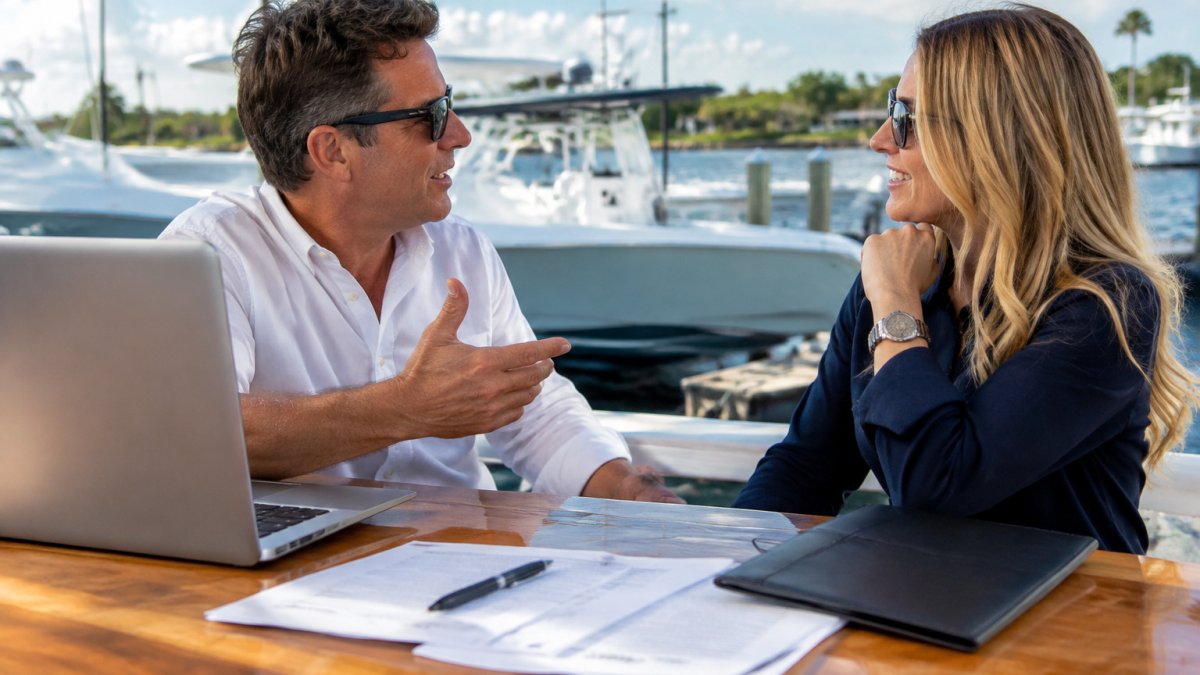
Choosing a boat for sea is easier when you talk through the specifics with someone who works with center consoles every day. Primo Yachts of Palm Beach can help you match hull design, length, and engine package to the conditions you actually run in. To discuss your mission and see vessels that fit it, reach out to Primo Yachts for a consultation.
Frequently Asked Questions
What is a sea boat called?
A boat built for open water is usually called a sea boat, offshore boat or blue water boat. In South Florida, the term most often used for a high-performance vessel that handles offshore conditions is an offshore center console. Sea boats are built with deeper V-hulls, higher freeboard and more fuel capacity than bay boats, which lets them hold course and carry on in choppy seas. When shopping, look for documented offshore capability rather than the label alone, and ask a broker to walk you through the hull specifications and the conditions the boat was designed for.
What kind of boat do I need for the ocean?
The right boat depends on the distance you travel, the sea conditions you face and what you do once you get there. For offshore fishing in the Palm Beach area, most serious anglers choose a center console with a deep-V hull, a length that suits their crew size and a fuel capacity that covers the round trip with a reserve. A bay boat or small skiff can work for calm inshore water, but it is generally not built for sustained open-ocean operation. Pricing varies widely by size, equipment and condition, so request a current quote from Primo Yachts for the models that match your plans.
What type of boat is best for salt water?
Boats with fiberglass hulls, sealed electrical systems and corrosion-resistant hardware handle salt water best. Center consoles and dual consoles are popular because they are built to be hosed down after each trip and offer open deck space for fishing. Look for hulls with a proven saltwater track record, through-hull fittings made for marine use and outboard engines designed for salt exposure. Regular rinsing with fresh water and a documented maintenance schedule matter as much as the initial choice of boat.
What is the minimum size boat recommended for offshore sea conditions?
There is no single minimum, because conditions, crew and trip length all matter. Longer runs and rougher seas generally call for larger hulls, so match the boat to your conditions. Length alone is not the best guide; check the hull design, freeboard, fuel range and engine power rating against the conditions you plan to fish. A broker can help you match a specific model to your intended routes.