 blog
blog
Luxury Center Console vs Cabin Cruiser: Which Fits Your Needs
Table of Contents
- Center Console vs Cabin Cruiser: Core Differences
- Fishing Capabilities and Deck Space
- Best Offshore Fishing Center Consoles for Performance
- Sleeping Accommodations: Overnighting on a Center Console vs Cabin Cruiser
- Comfort, Weather Protection, and Family-Friendly Features
- Maintenance Costs for Offshore Boats: What to Budget
- Performance, Handling, and Total Cost of Ownership
- Which Vessel Type Is Right for You
- Frequently Asked Questions
Last Updated: September 23, 2026
Center Console vs Cabin Cruiser: Core Differences
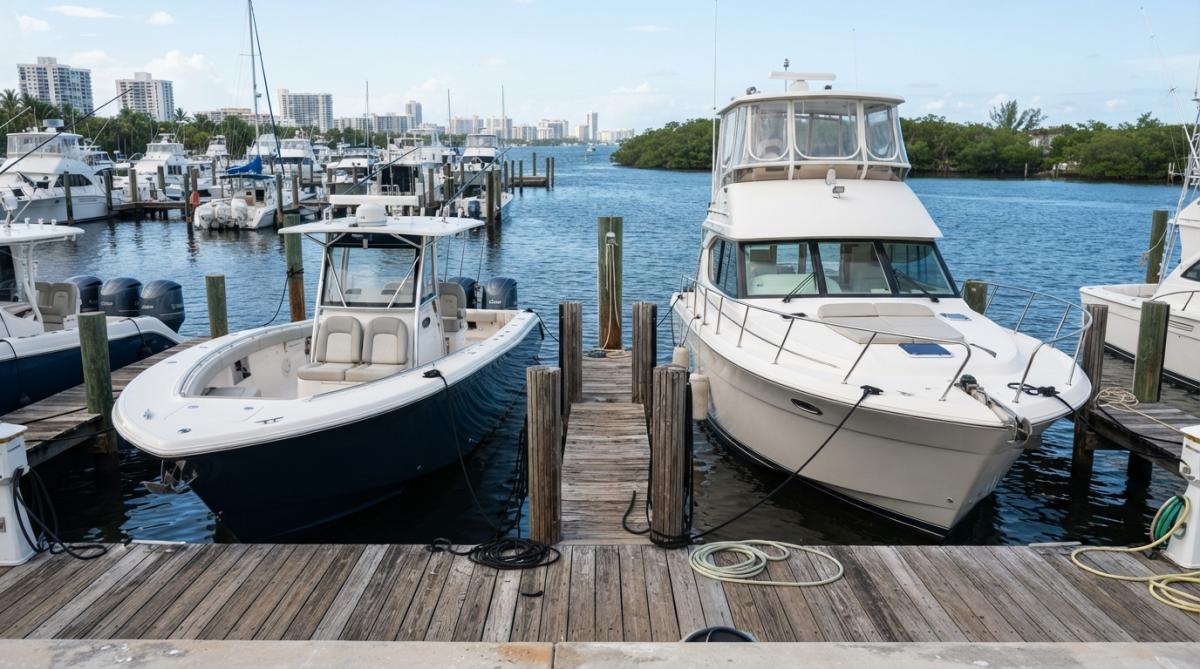
A center console vs cabin cruiser represents two fundamentally different approaches to offshore boating. The center console is an open-water platform built for fishing and performance, while a cabin cruiser prioritizes comfort, overnight accommodation, and family cruising. The choice hinges on how you'll actually use the boat.
A center console features an open cockpit with a helm station in the middle, surrounded by unobstructed deck space for casting and movement. A cabin cruiser encloses the forward area with a cabin containing sleeping berths, a galley, and a head, trading open deck for living space. This structural difference determines how you fish, where you sleep, what weather you can handle, and maintenance costs.
Fishing Capabilities and Deck Space
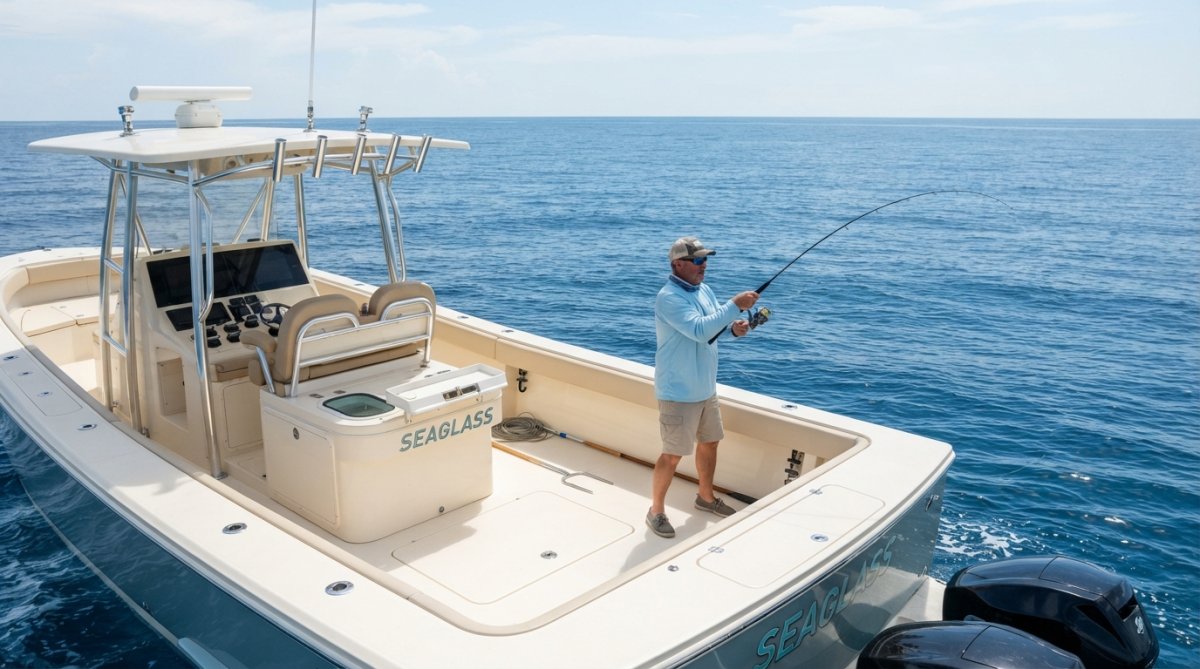
The center console dominates offshore fishing with 360-degree fishability. You can cast from any angle and land fish without obstacles, with no cabin structure blocking sightlines or movement.
Best Offshore Fishing Center Consoles for Performance
Performance-focused center consoles deliver superior speed and fuel efficiency. A 42-foot performance center console cruises at 25-30 knots while a comparable cabin cruiser cruises at 18-22 knots, thanks to lighter hulls and reduced wind resistance.
Sleeping Accommodations: Overnighting on a Center Console vs Cabin Cruiser
A cabin cruiser provides dedicated sleeping berths, climate control, and privacy for overnight trips. Most 40-50 foot models offer a master stateroom, guest cabin, air-conditioning, galley, and head. Center consoles feature a small cuddy cabin that sleeps two, tight and hot, suitable only for short naps. Some premium center consoles offer hardtop cabins with air-conditioning, but these are expensive and reduce performance.
Comfort, Weather Protection, and Family-Friendly Features
A cabin cruiser's enclosed cabin shields occupants from wind, spray, and sun, with galley and head facilities. Center consoles offer basic protection via hardtop or t-top but remain exposed to elements. Family-friendly features favor cabin cruisers, kids need shade, shelter, and bathroom access. Premium center consoles increasingly add spacious hardtops and sun lounges, closing the gap for day-trip families but not replacing true cabin accommodations for extended trips.
Maintenance Costs for Offshore Boats: What to Budget
Maintenance costs depend on design complexity, exposure, and operational intensity. A detailed breakdown by category and regional climate provides more useful guidance than blanket percentages.
Center Console Maintenance Breakdown (Annual, 40-45 ft luxury vessel)
Center consoles, being simpler open platforms, typically cost less to maintain:
- Engine service (outboard or inboard-outboard): $1,200-$2,500 per year
- Bottom paint and haul-out: $2,000-$4,000 every 2-3 years
- Gel coat and topside repair: $800-$1,500 annually
- Hardtop/t-top inspection and sealant refresh: $400-$800 yearly
- Electrical and navigation systems: $500-$1,000 annually
- Trailer maintenance (if trailerable): $300-$600 annually
Total estimated annual center console maintenance: $5,200-$10,400
Cabin Cruiser Maintenance Breakdown (Annual, 40-45 ft luxury vessel)
Cabin cruisers demand more attention due to system complexity:
- Engine service (inboard diesel or gas): $2,000-$4,500 per year
- Bottom paint and haul-out: $3,000-$6,000 every 2-3 years
- Air-conditioning system service and refrigerant: $800-$1,500 annually
- Galley and head plumbing maintenance: $600-$1,200 yearly
- Interior upholstery, cabinetry, and wood varnish: $1,000-$2,500 annually
- Cabin structural inspection (osmotic blistering, delamination): $400-$1,000 yearly
- Electrical and navigation systems: $700-$1,500 annually
- Gel coat and topside repair: $1,000-$2,000 annually
Total estimated annual cabin cruiser maintenance: $9,500-$20,200
Regional Climate Impact on Maintenance Costs
System-Specific Cost Drivers
10-Year Total Cost of Ownership Comparison
Performance, Handling, and Total Cost of Ownership
A 42-foot center console cruises at 25-30 knots with 400-600 nautical mile range and 2-4 gallons per nautical mile fuel consumption. A comparable cabin cruiser cruises at 18-22 knots with 300-500 nautical mile range and 4-6 gallons per nautical mile consumption. Center consoles handle 4-6 foot seas; cabin cruisers become uncomfortable above 3-4 feet. Center consoles cost less to operate; cabin cruisers cost more annually but offer features that justify higher costs for cruising-focused owners.
Which Vessel Type Is Right for You
The choice depends on your primary use case, crew size, docking and trailering capability, and regional water conditions.
Primary Use Case Framework
Solo vs. Crew Operation: A Critical Overlooked Factor
Center Console for Solo Operation:
- Single-helm design allows one captain to manage the boat from a centralized station with 360-degree visibility
- Easier docking and maneuvering in tight slips; outboard or jet drive power provides superior maneuverability
- Trailerable models (up to 35 feet) can be launched and recovered by one person with a truck and trailer
- Autopilot and modern navigation systems reduce fatigue on long runs
- Minimal cabin systems mean fewer things to monitor or troubleshoot solo
- Weakness: Solo overnight trips require sleeping in a cramped cuddy; no one to share watch duties on extended cruises
Cabin Cruiser for Solo Operation:
- Inboard engines and larger displacement hulls are harder to maneuver in tight spaces; docking requires precision or a second set of hands
- Not typically trailerable; requires marina slip or mooring field access
- Cabin systems (A/C, galley, head) add complexity that one person must manage
- Larger crew quarters make solo overnight trips more comfortable
- Weakness: Single-handed operation is exhausting; many owners hire captains or avoid solo cruising
Center Console with Crew (2-4 people):
- Deck space allows crew to fish, spot wildlife, or simply move around safely
- One person helms while others enjoy the experience
- Faster transit times mean less time underway for day trips
- Weakness: Limited sleeping and bathroom facilities for multi-day trips with crew
Cabin Cruiser with Crew (2-4 people):
- Separate cabins and head facilities provide privacy and comfort
- Galley allows crew to prepare meals and socialize below deck during rough weather
- Slower cruising speed means more time on the water but less fatigue from high-speed running
- Strength: Ideal for family cruising and multi-day trips with multiple people
The Hybrid/Crossover Segment: The Fastest-Growing Market
Hybrid Characteristics:
- Performance center console with cabin upgrade: A 38-45 foot center console with an enclosed hardtop cabin, air-conditioning, a galley galley, and a head. Examples include models from Yellowfin, Contender, and Grady-White that add cabin comfort without sacrificing open deck space or performance.
- Compact cabin cruiser with open cockpit: A 35-42 foot cabin cruiser with a smaller cabin footprint and an extended open cockpit for fishing or lounging. Brands like Pursuit and Everglades offer this configuration.
- Dual-console hybrid: A center console with a forward cabin pod and a traditional helm console, combining fishing capability with overnight accommodation.
Why Hybrids Are Gaining Traction:
- Buyers increasingly want versatility: fishing capability plus family comfort, without committing fully to either type
- Hardtop cabins with air-conditioning and sleeping berths address the "cuddy cabin is too small" complaint
- Open cockpit designs preserve fishing functionality while adding weather protection
- Price premium (typically 15-25% above a comparable pure center console) is justified for owners who use both features
Hybrid Trade-Offs:
- Slightly reduced fuel efficiency compared to a pure center console (due to added weight and cabin structure)
- Slightly reduced cabin comfort compared to a full cabin cruiser (smaller cabin, less headroom)
- Higher maintenance complexity than a pure center console (more systems to service)
- Premium pricing limits the buyer pool
Regional Suitability Matrix
| Region | Best Choice | Reasoning |
|---|---|---|
| Florida / Gulf Coast | Cabin cruiser or hybrid | Year-round boating, frequent multi-day trips, warm water supports extended cruising. Cabin comfort justifies maintenance costs. |
| Northeast / Great Lakes | Center console or hybrid | Seasonal use (May-October), shorter cruising season favors day trips and occasional overnights. Trailerable center consoles reduce storage costs. |
| Pacific Northwest | Center console | Cooler water, longer cruising distances, rougher conditions favor performance and seaworthiness. Cabin cruisers less common in this market. |
| Inland Lakes / Rivers | Center console | Protected waters, day-trip focus, trailerable models ideal. Cabin cruisers overkill for calm-water cruising. |
| Coastal Cruising (CA, HI) | Cabin cruiser or hybrid | Extended coastal passages, warm water, established cruising culture support multi-day trips and cabin comfort. |
Decision Checklist
Before committing to either type, answer these questions:
- How often will you take multi-day trips? (More than 10 annually = cabin cruiser; fewer = center console)
- Will you operate solo or with crew? (Solo = center console; crew = cabin cruiser)
- What's your primary activity? (Fishing = center console; cruising = cabin cruiser)
- Can you trailer and store the boat seasonally? (Yes = center console; no = cabin cruiser)
- How important is fuel efficiency to your budget? (Critical = center console; secondary = cabin cruiser)
- Do you need overnight accommodation regularly? (Yes = cabin cruiser; occasionally = hybrid)
- What's your regional water type? (Offshore/rough = center console; protected/coastal = cabin cruiser)
Frequently Asked Questions
What are the primary performance differences between a luxury center console and a cabin cruiser?
Center consoles prioritize speed, agility, and open-water fishing with minimal weight and maximum deck exposure. They typically handle 30-40+ knots with outboard power and excel in rough offshore conditions. Cabin cruisers sacrifice raw speed for stability and comfort, cruising at 20-30 knots with inboard engines. Center consoles offer superior maneuverability and a dry ride in chop; cabin cruisers provide smoother, more forgiving motion at cruise speeds but require more fuel and deeper drafts.
Do luxury center consoles offer enough overnight accommodations for weekend trips?
High-end center consoles with cuddy cabins or integrated berths can sleep two to four people comfortably, making weekend overnighting feasible. However, space is compact compared to cabin cruisers. A luxury center console typically offers a V-berth, head, and galley, while a cabin cruiser provides multiple cabins, full-size berths, and dedicated head compartments. If overnight comfort and privacy are priorities, a cabin cruiser is the stronger choice; center consoles work best for anglers who prioritize fishing and occasional overnight stays.
Which boat type is better suited for offshore fishing and family cruising?
Center consoles dominate offshore fishing due to 360-degree fishability, rod storage, and livewell systems optimized for performance. They excel with experienced crews in good conditions. Cabin cruisers serve mixed-use families better, combining moderate fishing capability with sleeping berths, air-conditioning, and weather protection for multi-day cruises. Choose a center console if fishing is your primary mission; select a cabin cruiser if you need versatility for family relaxation, overnighting, and casual fishing.
How do maintenance costs for offshore boats compare between these two types?
Center consoles with outboard engines typically cost less to maintain annually due to simpler systems and easier access. Routine service, oil changes, and winterization run lower. Cabin cruisers with inboard engines, complex galley systems, air-conditioning, and multiple cabins incur higher annual maintenance. Factor in haul-out costs, bottom paint, and mechanical complexity. Total cost of ownership over five years often favors center consoles, though luxury finishes on either type can escalate expenses significantly.