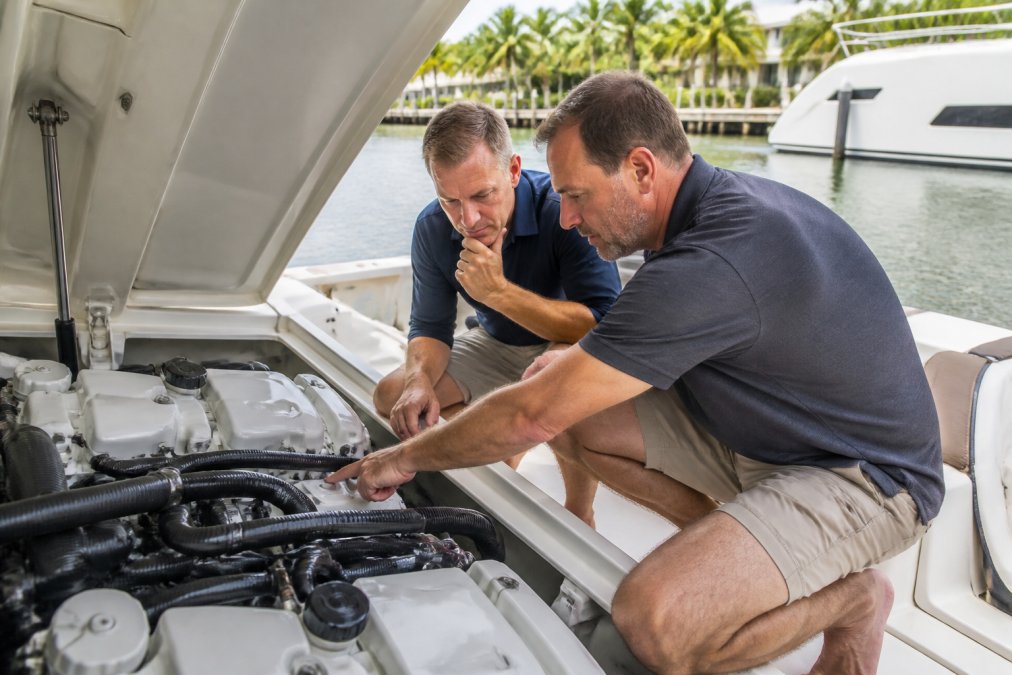
 how-to
How to Inspect Yacht Engine History Before Purchase
Table of Contents
- Why Engine History Matters When Buying a Yacht
- Marine Engine Survey Checklist for Pre-Purchase Inspection
- How to Read Yacht Service Records and Maintenance Logs
- Engine Oil Analysis for Boat Buyers
- Conducting a Sea Trial to Verify Engine Performance
- Red Flags and Fraud Detection in Engine History
- Diesel vs. Gasoline Engine History Verification
- Working with a Certified Marine Technician
- Frequently Asked Questions
Last Updated: September 25, 2026
Why Engine History Matters When Buying a Yacht
The engine is the heart of your yacht, which is why you must inspect yacht engine history before purchase. A worn-out or poorly maintained engine can cost you tens of thousands in repairs.
Marine Engine Survey Checklist for Pre-Purchase Inspection
A professional pre-purchase survey is non-negotiable. This isn't optional if you're serious about buying a quality vessel. The survey includes visual inspection, compression testing, and diagnostic scanning to verify the engine's true condition.
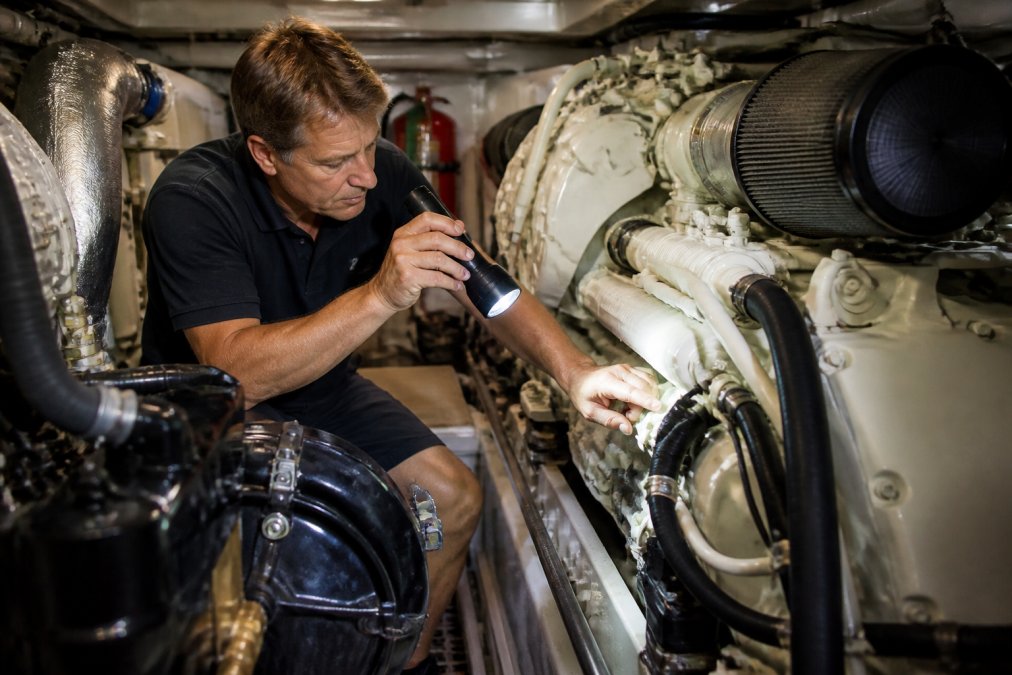
Visual Engine Room Assessment
Start with what you can see. Open the engine room hatch and look around before the technician arrives. Check for obvious signs of neglect or damage.
Look for these specific items:
- Corrosion on metal parts, Saltwater exposure causes rust on exhaust manifolds, alternators, and belts. Heavy corrosion means poor maintenance.
- Oil leaks or residue, Clean engine rooms have dry floors. Stains indicate slow leaks that add up over time.
- Cracked or brittle belts and hoses, These should be flexible, not hard. Brittleness means age and poor storage conditions.
- Coolant system condition, Check the heat exchanger for mineral buildup or discoloration. This indicates overheating history.
- Propeller shaft alignment, Misalignment causes vibration and accelerates wear on the engine.
- Strainer condition, A clogged strainer restricts water flow and causes overheating. It's an easy fix but signals neglect.
Compression Testing and Diagnostic Scanning
Compression testing measures the health of your engine's internal components. This test reveals cylinder wear that visual inspection cannot detect.
- Engine hours logged in the system
- Temperature spikes indicating overheating events
- Fault codes showing past problems
- Fuel consumption patterns revealing efficiency loss
How to Read Yacht Service Records and Maintenance Logs
Service records are your most valuable source of truth. They document what was done, when it was done, and who did it. A well-maintained yacht has detailed logs going back years.
- Oil change logs, Oil changes should happen every 100-200 hours depending on the engine. Gaps longer than 250 hours indicate neglect.
- Coolant flushes, The cooling system needs annual maintenance in saltwater environments. Missing flushes mean corrosion buildup.
- Fuel system servicing, Fuel filters should be replaced regularly. Neglected fuel systems cause starting problems and poor performance.
- Impeller replacements, Water pump impellers wear out and need replacement every 3-5 years. Records show if this was done.
- Haul-outs and inspections, Professional haul-outs reveal underwater damage and propeller shaft issues. Regular haul-outs show responsible ownership.
Engine Oil Analysis for Boat Buyers
Oil analysis reveals what's happening inside the engine. A simple lab test of engine oil can detect metal particles, water contamination, and fuel dilution. These indicators show internal wear before major failure occurs.
- Iron content, High iron means cylinder or bearing wear. Elevated levels indicate accelerated internal degradation.
- Copper content, Copper comes from bearings and cooling system components. Rising copper levels signal bearing wear or heat exchanger failure.
- Water content, Water in oil means coolant leaks into the combustion chamber or condensation buildup. This causes rust and sludge.
- Fuel dilution, Unburned fuel in the oil indicates incomplete combustion or fuel injector problems. This thins the oil and reduces protection.
- Viscosity, Oil thickens or thins over time. Abnormal viscosity shows the oil has been stressed or contaminated.
Conducting a Sea Trial to Verify Engine Performance
The sea trial is where theory meets reality. This is your chance to run the engine under load and listen for problems. Never skip this step.
During the sea trial, verify these specific performance metrics:
- Startup behavior, The engine should start smoothly without excessive cranking. Hard starting indicates fuel system or ignition problems.
- Idle stability, RPM should hold steady at idle without hunting or surging. Unstable idle suggests carburetor or fuel injection issues.
- Acceleration response, Throttle response should be immediate and smooth. Hesitation or stumbling indicates fuel delivery problems.
- Temperature stability, Engine temperature should rise gradually to operating range and hold steady. Rapid temperature spikes indicate cooling system problems.
- Pressure readings, Oil pressure and fuel pressure should stay within normal ranges. Fluctuating pressures signal pump wear or filter restriction.
- Exhaust smoke, Clear exhaust is normal. Blue smoke indicates oil burning. Black smoke indicates rich fuel mixture or incomplete combustion. White smoke suggests coolant in the combustion chamber.
- Vibration levels, Excessive vibration at certain RPM ranges indicates misalignment, worn bearings, or propeller imbalance.
Red Flags and Fraud Detection in Engine History
Some sellers misrepresent engine condition. Knowing the warning signs protects you from fraud.
Watch for these major red flags:
- Engine hours don't match DEMS data, If the seller claims 1,500 hours but the engine management system shows 3,000, the hours have been rolled back. This is deliberate fraud.
- No service records available, "I lost the records" is a common excuse. Legitimate owners keep documentation. Missing records mean you can't verify maintenance.
- Service records from unknown shops, Records from a cousin's garage aren't verifiable. Demand records from authorized dealers or certified technicians.
- Recent oil changes before showing, A freshly changed oil hides internal problems temporarily. Request oil analysis from before the recent change if possible.
- Engine replaced but not documented, If the engine was replaced, it should be clearly noted in ownership history. Undisclosed engine replacements are a major concern.
- Overheating history, Ask directly about overheating events. Repeated overheating causes internal damage that shortens engine life.
- Saltwater corrosion damage, Excessive corrosion indicates poor storage or neglect. Compare corrosion levels to similar boats of the same age.
- Mismatched engine and boat age, If the boat is 20 years old but the engine is only 5 years old, verify the replacement. Original engines are worth more than replacements.
Diesel vs. Gasoline Engine History Verification
Diesel and gasoline engines have different maintenance requirements. Your inspection process should account for these differences.
Diesel engines require specific attention:
- Oil analysis is more critical because diesel engines run hotter and stress oil more
- Fuel system maintenance is essential, diesel fuel can accumulate water and sediment
- Compression testing is standard, diesel engines rely on compression for ignition
- Engine hours matter more because diesel engines typically run longer than gasoline engines
- Turbocharger condition is important, turbos add complexity and cost to repair
Gasoline engines have different concerns:
- Spark plug condition indicates maintenance frequency, fouled plugs suggest poor fuel quality or incomplete combustion
- Carburetor or fuel injection system maintenance is critical, fuel system problems are common in gasoline engines
- Cooling system maintenance is essential, gasoline engines run hotter than diesels and are more prone to overheating
- Alternator and electrical system condition matters more, gasoline engines depend on reliable electrical systems
- Engine hours are less critical because gasoline engines typically don't last as long as diesels
Working with a Certified Marine Technician
Hire a certified marine technician to inspect yacht engine history during your pre-purchase inspection. This is the single most important investment you can make.
What a certified marine technician brings to your inspection:
- Expert interpretation, They read compression tests, oil analysis, and diagnostic data correctly. They know what numbers are acceptable and what numbers are concerning.
- Problem detection, They find problems that untrained eyes miss. They hear sounds that indicate specific issues.
- Negotiation support, Their written report gives you documentation for price negotiations. Documented problems justify lower offers.
- Long-term perspective, They advise on upcoming maintenance costs. They identify problems that will become expensive soon.
- Liability protection, A professional inspection protects you legally. If major problems emerge after purchase, you have documentation that you inspected properly.
| Inspection Element | What It Reveals | Time Required | Cost Range |
|---|---|---|---|
| Visual engine room assessment | Maintenance history, corrosion, obvious damage | 30 minutes | Included in full survey |
| Compression testing | Internal cylinder wear, valve condition | 45 minutes | $300-600 |
| Diagnostic scanning | Engine hours, fault codes, operating history | 30 minutes | $150-300 |
| Oil analysis | Internal wear particles, contamination | 1 week (lab) | $100-200 |
| Sea trial observation | Real-world performance, noise, vibration | 1-2 hours | $400-800 |
| Full pre-purchase survey | Complete assessment with written report | 4-6 hours | $1,500-3,500 |
Frequently Asked Questions
What should I look for in a yacht's engine maintenance log?
Look for regular, documented service intervals (typically every 100-200 hours), oil and filter changes, fluid top-ups, and major repairs with dates and technician names. Gaps in records, missing service dates, or vague descriptions like 'engine work done' are warning signs. Service records should reference specific components: heat exchanger cleaning, belt replacement, spark plug service, and coolant system flushes. Consistent maintenance from a single marina or technician adds credibility. Handwritten entries should be legible and dated. Missing records for the first few years of ownership or sudden gaps before sale are common fraud indicators.
How can I verify the authenticity of engine service records?
Contact the marina or service facility directly using information from the maintenance log to confirm the work was performed and the dates match. Request original invoices and work orders, not photocopies. Cross-reference engine hours listed in service records against the current hour meter reading, they should align logically with the time elapsed. Check if the technician who signed off is still employed at the facility. Digital Engine Management System (DEMS) data can reveal actual operating hours and alert codes, which you can compare against claimed service history. A certified marine surveyor can extract this data and flag inconsistencies. Be cautious of records that lack specific details or come from facilities that no longer exist.
Why is a professional marine engine survey essential before purchase?
A certified marine technician or engine surveyor can perform compression testing, diagnostic scanning, and fluid analysis that reveal internal wear you cannot see visually. They extract DEMS data to verify actual engine hours and operating conditions, detect overheating history, and identify previous fault codes. A professional survey costs significantly less than engine repairs or replacement after purchase. Surveyors have tools to measure corrosion, test electrical systems, and assess the integrity of critical components like the exhaust manifold, propeller shaft, and cooling system. Their written report documents the engine's condition and supports your negotiating position. Many insurance companies and lenders require a survey before financing.
What are the main differences between diesel and gasoline engine history checks?
Diesel engines typically accumulate higher operating hours over their lifetime and are generally more robust, but they require consistent maintenance of fuel systems and injectors. Check fuel filter change intervals and water separator service in diesel records, neglect here causes serious damage. Gasoline engines are more sensitive to ethanol fuel degradation and spark plug fouling; look for seasonal fuel stabilizer use and spark plug replacement records. Diesel compression ratios are higher, so compression testing is critical for diesel engines to detect internal wear. Both require oil analysis, but diesel oil analysis more clearly shows fuel contamination and wear metals. Saltwater corrosion affects both equally, but diesel's fuel system is more vulnerable to microbial growth if the tank sits unused. Review the operating environment: diesel engines in commercial or charter use often have more detailed maintenance logs than recreational gasoline engines.