 Ultimate guide
Benefits of Custom Superyacht Construction for Owners
Quick Summary
Custom superyacht construction gives an owner control over layout, interior finishes, machinery and onboard systems, all specified before the first hull is cut. The trade-offs are longer build times, higher costs, and potentially narrower resale appeal.
- Layouts, finishes, machinery and systems are all specified before construction begins.
- A custom yacht starts from the owner's brief, while a production yacht follows the builder's design.
- Changing the general arrangement late can ripple through structural, electrical and plumbing work.
- Owner-specific layouts can narrow the buyer pool and affect resale.
- Tie payments to verifiable progress such as keel laying, hull completion and sea trials.
Table of Contents
- What Custom Superyacht Construction Actually Gives You
- Custom Yacht vs. Production Yacht: Where the Real Differences Lie
- Personalized Layouts, Interiors and Onboard Systems
- Matching the Yacht to Your Lifestyle and Cruising Use
- The Custom Yacht Build Process From Concept to Delivery
- Custom Yacht Construction Cost, Build Time and Resale Trade-Offs
- Planning Your Next Step Toward a Custom Build
- Frequently Asked Questions
What Custom Superyacht Construction Actually Gives You
Last Updated: November 6, 2026
Primo Yachts works with owners who want a vessel that fits how they actually live, not a catalog model adjusted at the margins, and custom superyacht construction is where that approach is taken furthest. A custom superyacht is built around one owner's requirements from the first sketch, and that is the core of its appeal. According to The Superyacht Group's study of global superyacht economic impact, new-vessel construction accounts for 37% of the industry's total economic impact. That figure describes the industry as a whole, not the return an individual owner will see, but it shows how much of the sector's activity sits in building new hulls.
The practical benefit for an owner is control. Layouts, interior finishes, machinery choices, and onboard systems can all be specified before the first hull is cut. A custom build can address that gap, although it also introduces decisions that must be made deliberately and early.
The trade-off is time and cost, which are discussed in more detail below.
Custom Yacht vs. Production Yacht: Where the Real Differences Lie
The difference between a custom and a production yacht is less about finish quality and more about who makes the decisions. A production yacht is built on a proven design, and the builder sets the layout, machinery package, and specification. A custom yacht starts with the owner's brief, and the naval architect and shipyard work backward from it.
That distinction shapes everything downstream. A production model offers a clear resale comparison against similar boats. A custom vessel offers a layout that may suit only its original owner, which can complicate resale.
A common mistake is treating semi-custom as a cheap substitute for a full build. In practice it is a deliberate middle path: you keep a proven technical platform and change the parts that matter most to you.
Personalized Layouts, Interiors and Onboard Systems
The most visible advantage of a custom build is the layout. Owners can decide where the galley sits relative to the owner's suite, how the crew areas are separated from guest spaces, and how much deck area is given to tenders and toys.
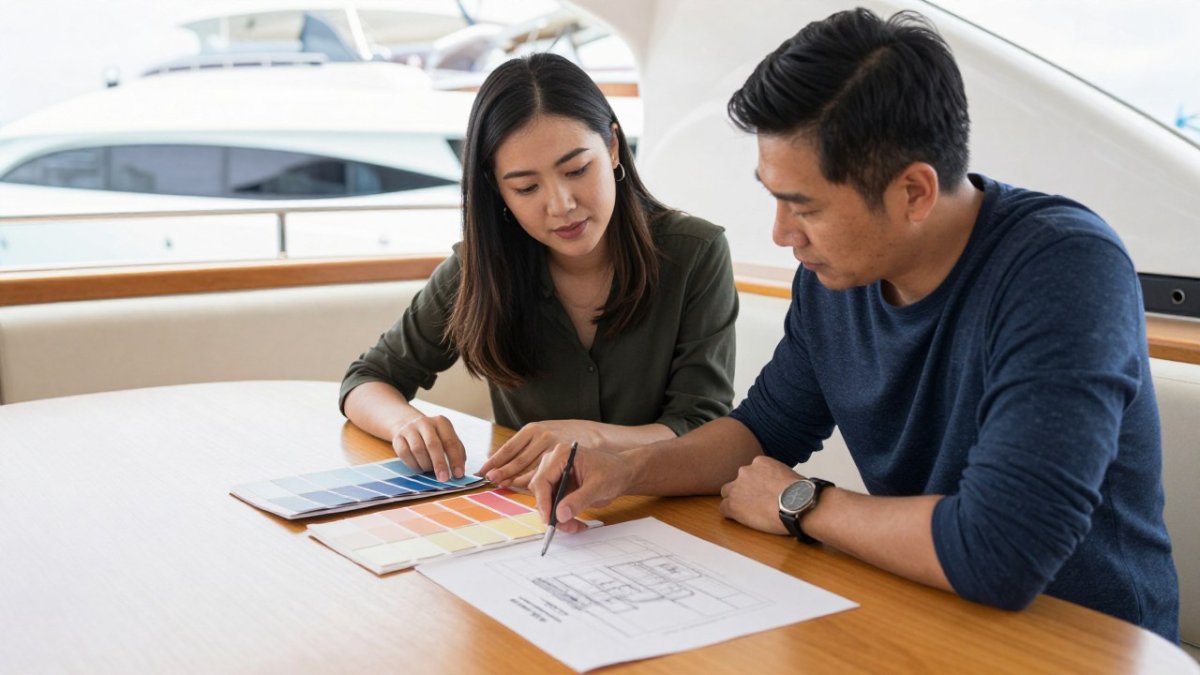
Interior specification follows the same logic. Materials, finishes, and craftsmanship can be selected to match a personal aesthetic rather than a standard catalog. Electrical and propulsion systems can also be specified with future upgrades in mind. For owners considering newer technologies, Modernizing Yacht Electrical and Propulsion Systems explains how those choices are evaluated during the planning stage.
Watch out: changing a layout late in construction can ripple through structural, electrical, and plumbing work. Lock the general arrangement early and treat later changes as costed change orders.
Matching the Yacht to Your Lifestyle and Cruising Use
Start with how the boat will actually be used. A yacht for weekend cruising in the Bahamas has different needs from one that spends summers in the Mediterranean and winters in the Caribbean. Range, fuel capacity, stabilization, and guest count all follow from that answer.
Ask concrete questions before any drawing begins. How many guests stay overnight? How often will the crew be aboard without owners? Will the vessel be used for fishing, diving, or entertaining? Each answer narrows the choice of size, configuration, and onboard features.
Matching the boat to real use helps avoid a vessel that looks right on paper but underperforms in practice.
The Custom Yacht Build Process From Concept to Delivery
A custom build moves through clear stages, and the owner's leverage is highest at the beginning and during outfitting.
Concept and brief. The owner's requirements, intended cruising regions, guest profile, and crew plan are documented in plain language. This brief becomes the reference document against which every later change is judged.
Naval architecture and general arrangement. The naval architect develops hull form, layout, tankage, and structural concept.
Engineering and specification. Machinery, propulsion, electrical distribution, stabilization, and hotel systems are specified.
Shipyard contract and class review. Contract terms, payment milestones, warranties, and the classification plan review are set. With the specification frozen, marine construction planning can keep design intent, class requirements, and change control aligned as the build proceeds.
Construction. Keel laying, hull completion, and systems installation proceed under class survey and yard quality control. Stage inspections are the owner's main visibility into build quality.
Outfitting and interior. Finishes, furniture, and systems commissioning. This is the stage where owner involvement is highest and where late changes are most expensive, because interior work sits on top of completed systems.
Sea trials and delivery. Performance and systems are verified, insurance and documentation are finalized, and delivery is accepted. Managing Yacht Insurance During Closing covers the insurance and documentation questions that arise at delivery, which is the stage many first-time custom buyers underestimate.
The process rewards a single point of accountability. Build management, whether handled by an owner's representative or a dedicated project manager, keeps specifications, schedules, and payments aligned, and see how insurance and documentation are handled at closing.
Custom Yacht Construction Cost, Build Time and Resale Trade-Offs
Cost is the variable that most often surprises first-time custom buyers, and the surprise is rarely the hull price. It is the accumulation of design fees, engineering hours, owner-supplied equipment, and change orders that were never priced into the initial budget.
A practical budget framework separates the following components. Most practitioners find that presenting these as line items, rather than a lump sum, is what keeps a project out of dispute:
- Naval architecture and design fees. Concept design, exterior styling, interior design, and the engineering package are usually billed separately from construction and are often paid in stages as drawings are approved.
- Classification and flag-state costs. Plan review, survey attendance, and statutory certification are real line items, not overhead absorbed by the yard.
- Construction contract price. The shipyard's price for hull, machinery installation, and outfitting, typically tied to a specification that must be frozen before signing.
- Owner-supplied and specialty items. Tenders, toys, AV and IT, art, and loose furniture are frequently outside the yard contract and are easy to underestimate.
- Project management and owner's representation. Build oversight, either in-house or through an owner's representative, carries a fee but is the control that keeps the other lines honest.
- Contingency and owner-change allowance. A contingency reserve and a separate allowance for owner-requested changes are standard; the allowance is what absorbs scope changes without reopening the whole contract.
- Delivery, commissioning, and insurance. Sea trials, delivery crew, first-year insurance, and initial spares all land at the end of the project.
Change orders are where budgets fail. Every change after specification freeze ripples through structural, electrical, and plumbing work, and each one should be priced and approved in writing before work proceeds.
Payment milestones should track verifiable progress, not calendar dates: contract signing, design approval, keel laying, hull completion, outfitting milestones, sea trials, and delivery. Tying payments to inspected milestones protects the owner and gives the yard a predictable cash flow.
On resale, custom vessels behave differently from production models. A production yacht has a clear comparable set, so its value is easy to benchmark.
Pricing depends on specification, size, shipyard, and delivery terms, so request a current quote from Primo Yachts. The same discipline applies to the timeline, which is covered next.
Superyacht Build Time: Setting Realistic Milestones
Build time depends on the level of customization, the shipyard's schedule, and how quickly decisions are made. Fully custom builds generally take longer than semi-custom ones. That contrast is the right starting point, but the more useful planning tool is a stage-by-stage schedule tied to decision milestones rather than calendar dates.
A realistic custom schedule moves through these stages, each with a decision that gates the next:
- Concept and brief. Owner requirements, intended cruising regions, and guest profile are documented. Decision: brief approved.
- Naval architecture and general arrangement. Hull form, layout, and tankage are developed. Decision: general arrangement frozen.
- Engineering and specification. Machinery, propulsion, electrical, and systems are specified. Decision: specification freeze.
- Shipyard contract and class review. Contract terms, payment milestones, and classification plan review are set. Decision: contract signed and class plan approved.
- Construction. Keel laying, hull completion, and systems installation. Decision: stage inspections passed.
- Outfitting and interior. Finishes, furniture, and systems commissioning. Decision: interior finishes locked and commissioning complete.
- Sea trials and delivery. Performance and systems are verified, insurance and documentation are finalized. Decision: sea trials accepted and delivery accepted.
Missed decisions, not construction speed, are the most common cause of delay. A specification freeze that slips by weeks pushes every downstream stage, and the yard's schedule slot may not wait. Build management, whether handled by an owner's representative or a dedicated project manager, is what keeps specifications, schedules, and payments aligned.
Managing Yacht Insurance During Closing covers the insurance and documentation questions that arise at delivery, which is the stage many first-time custom buyers underestimate.
The article breaks down the main budget and schedule components of a custom build, summarized below.
| Cost or schedule item | What it covers | Key note |
|---|---|---|
| Naval architecture and design fees | Concept, exterior, interior and engineering design | Billed separately and often paid in stages |
| Classification and flag-state costs | Plan review, survey attendance, statutory certification | Real line items, not yard overhead |
| Construction contract price | Hull, machinery installation and outfitting | Tied to a specification frozen before signing |
| Owner-supplied and specialty items | Tenders, toys, AV and IT, art, furniture | Often outside the yard contract and easily underestimated |
| Project management | Build oversight by in-house or owner's representative | Fee that keeps the other lines honest |
| Contingency and owner-change allowance | Reserve and budget for owner-requested changes | Absorbs scope changes without reopening the contract |
| Specification freeze | Line between design and construction | Later changes become costed change orders |
| Missed decisions | Slipped general arrangement or specification freeze | Most common cause of delay, not construction speed |
Planning Your Next Step Toward a Custom Build
The right next step depends on how much of the design you want to control and how soon you need the vessel. A fully custom build offers the most freedom and the longest timeline. A semi-custom build can shorten both time and cost while still allowing meaningful personalization.
Begin by writing your lifestyle and cruising requirements in plain language, then share them with a brokerage team that understands the specialist market. Primo Yachts has served the South Florida market since 2009, and our team can help you compare custom, semi-custom, and production options against your actual use.
Frequently Asked Questions
Is it cheaper to build or buy a yacht?
Buying a pre-owned yacht usually requires less upfront capital and a shorter wait, while a custom build commits more money before the boat is in the water. Neither path is cheaper across the board. Pricing depends on size, specification, timing and market conditions, so request a current quote from Primo Yachts and compare total cost of ownership, including maintenance, insurance, crew and expected resale value, before deciding which route fits your budget.
How long does it take to build a custom superyacht?
Build time for a fully custom superyacht is typically longer than for a semi-custom or production model, because design, engineering and owner-requested changes all add decision points. Timelines depend on size, shipyard schedule and how quickly specifications are finalized. A realistic plan sets milestones for concept approval, engineering sign-off, structural build, outfitting and sea trials, and treats owner changes as schedule events rather than surprises.
What can owners customize when building a superyacht?
Owners commonly specify the hull and superstructure profile, deck and cabin layout, interior materials and finishes, entertainment and technology systems, and the machinery package. Some changes are cheap to make early and expensive to make late. Clarify your priorities with your broker and builder before engineering begins, because structural and systems decisions are hard to reverse once construction has started.
How does custom superyacht construction affect resale value?
Custom yachts can be harder to resell than production models because their layouts and features suit one owner's preferences, which narrows the pool of likely buyers. Strong build quality, well-documented systems and a recognized shipyard help offset that. Discuss resale considerations during the design phase so that personal features do not undermine future marketability.