 how-to
Marine Survey for Florida Yachts: A Buyer's Guide
Table of Contents
- What Is a Marine Survey and Why It Matters for Yacht Buyers
- Types of Marine Surveys: Pre-Purchase vs. Insurance
- Marine Survey Checklist for Buyers
- How Long Does a Marine Survey Take
- Average Cost of Marine Survey and Budget Planning
- Finding and Vetting a Qualified Marine Surveyor
- Preparing Your Boat for the Survey
- Understanding Your Survey Report and Next Steps
- Frequently Asked Questions
Last Updated: September 28, 2026
What Is a Marine Survey and Why It Matters for Yacht Buyers
A marine survey is a professional inspection of a vessel's condition, safety, and value, and marine survey florida yachts are a critical step for buyers in the region. The surveyor examines the hull, engine, electrical systems, safety equipment, and overall seaworthiness to give buyers a clear picture of what they're purchasing.
For yacht buyers, a thorough marine survey protects your investment by uncovering problems before you commit to the purchase.
The survey serves three main purposes:
- Identifies structural damage, corrosion, or hidden defects
- Verifies the vessel meets safety standards and regulations
- Provides documentation for insurance and financing approval
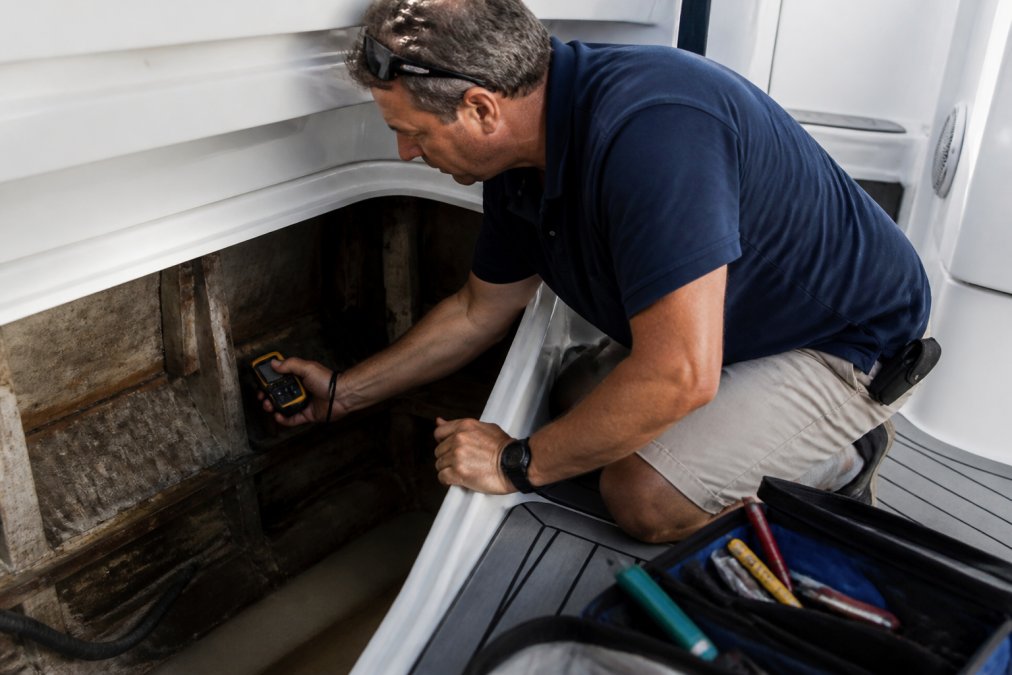
Professional surveyors use specialized equipment like moisture meters and ultrasonic thickness testing to detect problems invisible to the naked eye, which is why a marine survey checklist for buyers ensures nothing gets missed.
Types of Marine Surveys: Pre-Purchase vs. Insurance
Pre-purchase surveys evaluate the vessel's condition, safety systems, and market value before you buy. Insurance surveys are required by insurers before coverage begins. A pre-purchase survey protects your buying decision; an insurance survey protects the insurer's liability. Many buyers conduct both: a pre-purchase survey before making an offer, then an insurance survey if they proceed with the purchase.
Marine Survey Checklist for Buyers
A comprehensive inspection covers multiple systems and structural elements. Here's what a qualified surveyor evaluates.
Hull and Structural Integrity
Surveyors inspect the hull for cracks, delamination, osmotic blistering, and corrosion using ultrasonic thickness testing. A haul-out (lifting the boat out of water) is standard to examine the bottom, keel, and running gear.
Electrical and Propulsion Systems
The surveyor tests batteries, alternators, wiring, and distribution panels; verifies engine performance; and checks for fuel leaks, oil pressure issues, and corrosion.
Safety Equipment and Documentation
The surveyor verifies all safety gear (life jackets, fire extinguishers, flares, first aid kits, navigation lights) is present and functional, checks proper documentation (registration, title, liens), and confirms ABYC (American Boat and Yacht Council) compliance.
How Long Does a Marine Survey Take
Most surveys take 4 to 8 hours for a typical center console or cruising yacht; larger vessels may take longer. A sea trial adds 2 to 3 hours. Plan for the process to span several days to allow for inspection, compilation, and reporting.
Average Cost of Marine Survey and Budget Planning
Survey costs vary significantly based on vessel size, age, complexity, and surveyor credentials. Understanding the cost structure helps you budget for due diligence and avoid sticker shock.
Cost Breakdown by Vessel Size
Pre-purchase surveys, sea trial fees, haul-out charges, travel expenses, rush fees, and specialized diagnostics all contribute to the total cost. These costs vary significantly based on vessel size, age, complexity, and surveyor credentials.
Why Surveyor Credentials Affect Price
Accredited surveyors (S.A.M.S. or I.A.M.I. members) charge more but carry liability insurance and follow professional standards. Their reports carry more weight with insurers and lenders, and financing often requires accreditation.
Bundled Packages and Negotiation
Many surveyors offer package pricing combining inspection, sea trial, and report at 10-15% discounts. Ask about discounts for multiple surveys or referrals.
Budget as Part of Total Due Diligence
Total due-diligence costs vary, but this investment protects against hidden defects and undisclosed liens.
When to Negotiate Survey Costs
Ask dealers or brokers if they'll cover survey costs; in private sales, the buyer typically pays. If the seller insists on their preferred surveyor, hire your own independent surveyor. Never skip the survey to save money.
Finding and Vetting a Qualified Marine Surveyor
A qualified marine surveyor holds accreditation from S.A.M.S. (Society of Accredited Marine Surveyors) or I.A.M.I. (International Association of Marine Investigators), carries liability insurance, and follows professional standards. Verify credentials, request references, confirm experience with your vessel type, and ask about their process (sea trials, moisture meters, ultrasonic testing, report detail). Seek surveyors specializing in your vessel type to avoid missing performance-specific issues.
Preparing Your Boat for the Survey
If you're selling a boat, prepare it for inspection. Clean the engine compartment, organize documentation, and ensure all systems function properly. A well-maintained presentation doesn't hide problems, it shows respect for the process.
Buyers should prepare differently. Arrange access to the vessel well in advance. Confirm the surveyor can conduct a sea trial if needed. Provide the current owner with a list of known issues so the surveyor can investigate them specifically.
Have documentation ready:
- Service records and maintenance logs
- Engine hours and fuel consumption data
- Previous survey reports
- Insurance history and claims
- Title and registration documents
The more information the surveyor has, the more thorough their analysis becomes.
Understanding Your Survey Report and Next Steps
The surveyor's report is not just a document, it's your negotiation roadmap. Understanding how to read it, categorize findings, and convert them into concrete leverage determines whether you buy at fair value or overpay for hidden problems.
Report Structure and Severity Categories
A professional marine survey report typically organizes findings into three severity tiers:
Critical deficiencies are safety risks or structural failures that make the vessel unsafe or unseaworthy. Examples include:
- Cracks in the hull or keel
- Corroded through-hull fittings or seacocks
- Failed electrical grounding or fire hazards
- Engine that won't start or run reliably
- Missing or non-functional safety equipment (life jackets, fire extinguishers, flares)
Critical items are usually deal-breakers. If the surveyor flags critical deficiencies, you have three options: (1) walk away, (2) demand the seller repair the items before closing, or (3) request a price reduction large enough to cover repairs yourself.
Major deficiencies are significant repair costs or performance issues that don't pose immediate safety risks but will require attention within months. Examples include:
- Osmotic blistering on the hull (requires haul-out and repainting)
- Corroded engine components or worn impellers
- Failing through-hull fittings or seacocks
- Outdated electrical panels or wiring
- Soft spots in the cabin sole or deck (indicates water intrusion and rot)
Major items are negotiable.
Minor deficiencies are cosmetic issues, routine maintenance, or wear items that don't affect safety or function. Examples include:
- Faded gel coat or minor scratches
- Worn upholstery or cabin trim
- Routine maintenance due (oil changes, filter replacements)
- Non-functional cabin amenities (galley appliances, entertainment systems)
How to Read the Report: Key Sections
Beyond the severity categories, a thorough report includes:
Executive summary: A one-page overview of the vessel's overall condition, major findings, and whether the surveyor recommends the purchase. This is the section your lender and insurance company will focus on.
Converting Survey Findings into Negotiation Leverage
Once you receive the report, use it strategically:
Step 1: Quantify repair costs. For each major deficiency, get repair estimates from marine contractors or yards. A surveyor's report identifies the problem; a contractor's quote quantifies the cost. Use these quotes to support your negotiation requests.
Common Negotiation Scenarios
Scenario 1: Engine issues. If the surveyor flags engine problems (won't start, low compression, fuel leaks), request either a full engine overhaul by a certified marine mechanic or a price reduction. Engine work is expensive and specialized; most buyers prefer a price reduction and the option to choose their own mechanic.
Insurance and Financing Implications
Your lender and insurance company will receive a copy of the survey report. If the report flags critical deficiencies, the lender may refuse to finance the purchase until repairs are completed. The insurance company may refuse coverage or require repairs as a condition of the policy.
Keeping the Report for Future Reference
Store the survey report permanently. It documents the vessel's condition at a specific point in time. When you eventually sell the boat, this baseline helps establish what was pre-existing versus what deteriorated under your ownership. Insurance companies may also request the report if you file a claim.
Frequently Asked Questions
What is included in a marine survey checklist for buyers?
A comprehensive marine survey checklist covers hull integrity, propulsion systems, electrical systems, plumbing, safety equipment, rigging inspection, and vessel documentation. Surveyors use moisture meters and ultrasonic thickness testing to detect corrosion and osmotic blistering. They also verify ABYC compliance, examine engine diagnostics, and assess structural analysis. The checklist ensures you understand the vessel's seaworthiness before purchase and identifies deficiencies that may affect valuation or require negotiation.
How long does a marine survey take?
A typical marine survey for a center console or offshore fishing vessel takes 4 to 8 hours, depending on the vessel's size, age, and complexity. Larger yachts with multiple systems may require a full day. The timeline includes haul-out time for bottom inspection, sea trial evaluation, and detailed documentation. Plan additional time if the surveyor needs to access hard-to-reach areas or if deficiencies require deeper investigation.
What is the average cost of a marine survey?
Marine survey costs vary based on vessel size, age, and type. Pricing depends on the surveyor's experience level, accreditation status (S.A.M.S. or I.A.M.I. certified surveyors typically charge more), and regional demand. Pre-purchase surveys are generally more thorough and costly than insurance surveys. Contact a qualified surveyor for a quote based on your specific vessel. This investment protects you from costly repairs and ensures you're making an informed purchase decision.
Can I do my own boat survey?
While you can perform a basic visual inspection, a professional marine survey is essential for insurance and financing purposes. Accredited surveyors have specialized equipment like moisture meters and ultrasonic thickness testers that detect hidden damage. They understand structural analysis, safety standards, and ABYC compliance requirements that untrained inspectors miss. For a significant purchase, professional expertise protects your investment and provides documentation lenders and insurers require.