 How-to
How to Prepare a Yacht for a Professional Photoshoot
Quick Summary
To learn how to prepare a yacht for a professional photoshoot, start with a shot list built around your likely buyer, then schedule a full washdown, staging and interior lighting before the photographer arrives. Assign clear crew roles and plan a backup date, since weather, tide and glare all affect the best shots.
- Write a shot list based on buyer type, covering hero exterior, cockpit, interior spaces and details.
- Schedule a full interior and exterior cleaning 5 to 7 days before the shoot.
- Wash the deck from bow to stern and polish stainless steel before any shot.
- Clear every surface, make beds with crisp linens and turn on all interior lights.
- Pick a backup date within the same week and watch the tide and wind forecast.
Table of Contents
- Start With a Clear Shot List and Photo Goals
- Yacht Photoshoot Preparation Checklist: Timing and Crew Roles
- Exterior Washdown, Deck Preparation and Brightwork
- How to Stage a Yacht for Photography Interior Spaces
- Yacht Interior Photography Tips: Lighting, Windows and Upholstery
- Weather, Tide, Safety and Contingency Planning
- Booking Your Yacht Photoshoot With Primo Yachts
- Frequently Asked Questions
Start With a Clear Shot List and Photo Goals
Last Updated: November 12, 2026
Learning how to prepare a yacht for a professional photoshoot starts before anyone cleans a window. A vessel photographed with a clear plan is easier to present to buyers than one shot on the fly. See how professional photography impacts yacht sales for the outcomes a well-planned shoot can drive. A shot list tells the photographer which angles matter, which rooms need attention, and what the final images must prove to a buyer.
Think about who will see the photos. A serious offshore angler wants to see the console, the rod storage, and the cockpit layout. A family buyer wants the salon, the staterooms, and the galley. Write down the buyer type first, then list the images that answer their questions.
Set clear photo goals for the shoot:
- Hero shot: The best exterior angle that shows the hull lines and overall profile
- Cockpit and helm: Shows the working layout a fishing buyer will judge first
- Interior spaces: Salon, galley, staterooms, and heads, shot in a set order
- Detail shots: Stainless steel, upholstery, and deck hardware up close
- Context shots: The vessel at the dock or underway, if conditions allow
Share the list with your photographer before the shoot day. Ask them to confirm which lenses, lighting, and camera angles they plan to use.
Watch out: a shot list that only covers the exterior often leaves buyers asking about the interior. Plan both from the start so the listing feels complete.
Yacht Photoshoot Preparation Checklist: Timing and Crew Roles
A good yacht photoshoot preparation checklist works backward from the shoot date, but the part most owners underestimate is shoot-day logistics. Cleaning is the easy half. The half that decides whether the photographer gets the hero shot is who handles lines, fenders, tenders, guest belongings, and access while the camera is running.
Use this timeline as a starting point:
| Timing | Task | Owner |
|---|---|---|
| 1 to 2 weeks before | Finalize shot list, confirm photographer, and agree on image delivery and usage | Owner or broker |
| 5 to 7 days before | Schedule a full interior and exterior cleaning; confirm dock or marina access rules | Captain or detailer |
| 2 to 3 days before | Complete washdown, polish, and declutter; test all interior and exterior lights | Deck crew |
| Day before | Recheck cabins, heads, and galley; stage linens and towels; charge batteries and clear memory cards | Crew lead |
| Shoot morning | Turn on lights, open windows, confirm weather and tide, and walk the shot list with the photographer | Captain and photographer |
Assign clear roles so no one is guessing on shoot day:
- Owner or broker: Approves the shot list, confirms how images may be used in listings and marketing, and handles access and scheduling
- Captain: Positions the vessel, manages the dock, watches tide and weather, and decides when engines or generator can run without spoiling audio or exhaust shots
- Deck crew: Handles washdown, polishing, line management, and fender placement so fenders are out of frame when the hull is shot
- Interior crew: Cleans, stages cabins, removes personal items, and collects guest belongings into a single locked locker before the photographer boards
- Photographer: Sets the order of shots, controls lighting and lenses, and confirms which areas are safe to stand in
Shoot-day logistics deserve their own line on the checklist. A common pattern is for the photographer to arrive while the deck crew is still coiling lines, which wastes the best light.
Plan access before the shoot day. Confirm with the marina which gates, ramps, and dock sections the photographer and any lighting equipment can use, and whether a vehicle can stage near the slip.
Watch out: when you learn how to prepare a yacht for a professional photoshoot, remember that guest belongings left in a locker the photographer opens for a detail shot will end up in the final images, so label the locker and tell the photographer which compartments are off-limits.
Exterior Washdown, Deck Preparation and Brightwork
Exterior preparation shapes the first impression in every listing photo. Buyers notice water spots, dull paint, and cluttered decks quickly, so start with a full washdown.
Work in this order to avoid re-soiling clean surfaces:
- Rinse the hull and superstructure from top to bottom with fresh water.
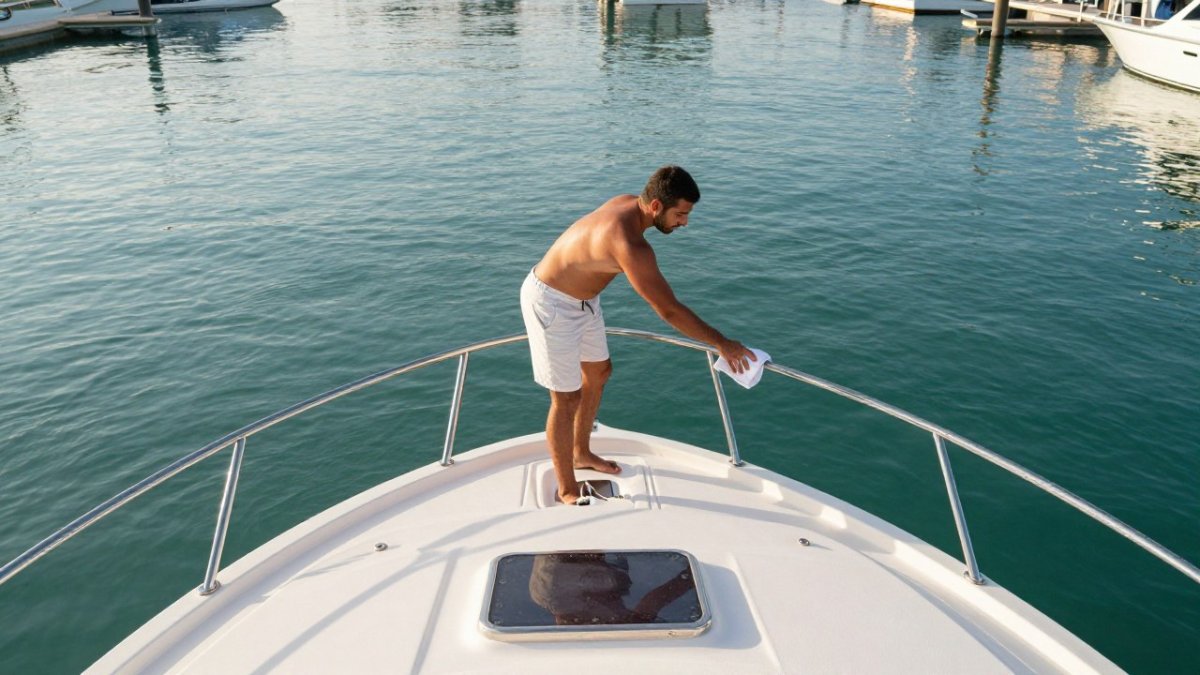
- Wash the deck, starting at the bow and working aft.
- Polish stainless steel rails, cleats, and fittings until they reflect light evenly.
- Clean windows and glass inside and out, since glare shows up in photos.
- Coil lines neatly, store fishing gear out of sight, and remove loose items.
Stainless steel and brightwork need extra attention. Wipe off salt residue and fingerprints, then polish with a product made for marine metals. Dull or streaked fittings look worse in close-up detail shots than they do in person.
Remove personal items and dock clutter. Fishing gear, empty bait containers, and loose hoses distract from the vessel itself. Move them out of the frame before the photographer sets up.
How to Stage a Yacht for Photography Interior Spaces
Staging turns an empty, clean cabin into a space buyers want to imagine living in. Explore current yacht interior design trends for refits to see which looks shape how spaces read on camera. Many sellers clean well but forget to style the room, so the photos feel cold.
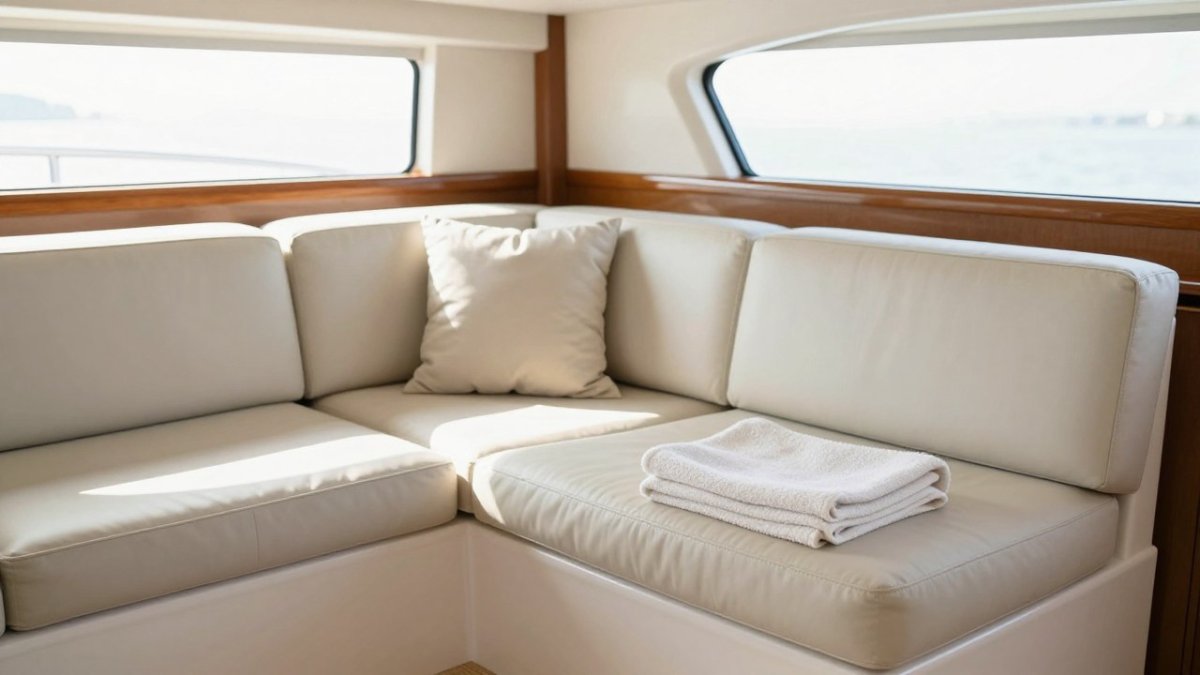
!A bright, freshly cleaned yacht salon with cushions neatly arranged, a folded throw on a settee and sunlight coming through open windows
Start by clearing every surface. Remove toiletries, electronics chargers, and personal mail from the salon, staterooms, and heads. Then add a few simple touches:
- Arrange cushions squarely on settees and fold a light throw over one arm
- Place a single fresh flower arrangement or bowl of fruit on the salon table
- Make beds with crisp white linens, pulled tight with no wrinkles
- Set a small towel and hand soap in each head, fresh and folded
Turn on every interior light before the shoot, including reading lights and under-cabinet lamps. Mixed color temperatures can make cabins look yellow or blue, so check them together in the room.
Yacht Interior Photography Tips: Lighting, Windows and Upholstery
Interior lighting makes or breaks a yacht photo. For more detail, read how to light yacht photos for brokerage listings. Plan the shoot around natural light, then fill with interior lamps where the light falls short.
Keep these tips in mind during the shoot:
- Time of day: Mid-morning and late afternoon give softer light than midday glare
- Window glare: Close blinds on sun-facing windows, or shoot when the sun is on the other side
- Upholstery: Vacuum seats and carpets before the shoot, and brush out pile so it looks even
- Interior lights: Switch on all lamps so the cabin reads warm and inviting
- Reflections: Watch for reflections in glass cabinets and polished surfaces, which can show the photographer or equipment
A wide-angle lens helps capture a full salon, but it can distort edges. Ask your photographer to keep vertical lines straight, since bent walls make a cabin look smaller and less well kept.
The thing nobody tells you is that upholstery shows dust and water rings more than anything else inside. Spend extra time on settees and cushions, because close-up shots of worn fabric will hurt the listing.
Weather, Tide, Safety and Contingency Planning
Weather and tide decide when the vessel can be photographed, but the useful part of contingency planning is deciding in advance what you will do when conditions change. If the vessel is also heading into major work, see preparing your yacht for a major refit. Check the forecast several days ahead and again the morning of the shoot.
Build a contingency plan before the shoot day:
- Backup date: Pick a backup date within the same week in case weather turns, and confirm the photographer holds it
- Tide schedule: Confirm the tide so the vessel sits at the right height at the dock; a falling tide can leave the hull low against the dock and change the angle of every exterior shot
- Wind plan: Identify a sheltered side of the dock or a nearby slip where the vessel can be moved if chop builds
- Rain plan: Decide which interior shots can be captured first if a squall passes, and keep towels and a squeegee staged to dry surfaces between frames
- Glare plan: Note which windows face the sun at each hour so the photographer can shoot those rooms before or after the glare window
- Light-change plan: Agree on a shooting order that moves from exterior hero shots in soft light to interior shots when the sun is high, then back outside for late-afternoon context shots
Safety matters during the shoot. Photographers often climb onto the bow, the flybridge, or the swim platform, so set clear rules for where they can stand and assign one crew member to watch the photographer at every elevated or wet location.
Coordinate with the captain on engine and generator noise. Running the generator for interior lights or air conditioning can be necessary, but it can also spoil audio, create exhaust haze in exterior shots, and vibrate surfaces during long exposures. Decide in advance when systems run and when they are shut down.
Watch out: a contingency plan that only covers the weather and not the shooting order will still cost you the best light, because the photographer will be repositioning while the sun moves.
Booking Your Yacht Photoshoot With Primo Yachts
Preparing a yacht for a professional photoshoot takes planning, a clear shot list, and careful crew coordination. If you are selling a center console or another premium vessel, Primo Yachts of Palm Beach can help you prepare the boat and present it to serious buyers. Browse South Florida's specialist brokerage for the world's finest vessels to see the company's offering.
Reach out to talk through your vessel, your buyer type, and your photo goals before the shoot date is set.
Frequently Asked Questions
What should you clean before a yacht photoshoot?
Start with the exterior: wash down the hull, superstructure and deck, then polish stainless steel and brightwork so they reflect cleanly. Inside, vacuum upholstery and carpets, wipe glass and windows, and clean heads and galley surfaces. Water spots, fingerprints and salt residue are the details that show most in close-up images, so give windows and polished metal extra attention. Plan cleaning to finish a day before the shoot so surfaces have time to dry and dust settles out of the air.
What should you remove from a yacht before taking photos?
Remove personal items, fishing gear, loose lines, tackle, bait, and anything stored on the deck or dock that does not belong to the boat's design. Clear countertops, bookshelves and cabin floors, and take down clutter from the helm. Stow cords, hoses and cleaning supplies out of frame. A decluttered vessel photographs as a clean, desirable product, and the photographer can then focus on lighting and composition rather than working around objects.
What is the best time of day to photograph a yacht?
Many yacht photographers prefer the hours near sunrise and sunset, when natural light is softer and produces less glare on water and polished surfaces. Midday sun creates harsh shadows and strong reflections. Plan the shot list around the time of day, scheduling exterior hero shots at the best light and interior shots when windows provide even illumination. Confirm the timing with the photographer, because the ideal window depends on the boat's orientation and the season.
How long does it take to prepare a yacht for a photoshoot?
Preparation time depends on the size of the vessel, its current condition and how much detailing is needed. Allow at least one full day for exterior washdown and polishing and a separate day for interior decluttering, cleaning and staging. A larger yacht or one that has been used heavily will need more time. Schedule preparation to finish the day before the shoot so the crew can do a final walkthrough. Contact Primo Yachts for guidance tailored to your vessel.