 How-to
Can a Broker Really Help You Sell Your Yacht Faster?
Last Updated: November 17, 2026
Quick Summary
To sell yacht faster with a broker, focus on exposure: a brokerage listing reaches active buyers plus the buyers a broker already knows by name, while a private listing only reaches people who happen to find it. Pricing against sold comps rather than asking prices and preparing the boat before photos also shorten days on market.
- A brokerage sale reaches a wider buyer pool, while a private sale saves commission but shifts every task and risk onto you.
- Price against sold prices, not asking prices, because asking prices are wishes and sold prices are facts.
- Set a 30-day price-review trigger before listing: no showings suggests price, showings without offers suggests presentation.
- Gather title, registration or documentation, lien release, equipment inventory, and service records before the first showing.
- Ask brokers how they market, which comps support the price, and how often they report, then verify the answers.
Table of Contents
- Why Selling a Yacht Faster Usually Starts With Brokerage Exposure
- Private Sale vs. Brokerage Sale: A Side-by-Side Comparison
- How to Price a Yacht for Sale Without Leaving Money on the Table
- How to Prepare a Yacht for Sale: The Checklist That Shortens Days on Market
- Boat Broker Commission and What It Actually Buys You
- What Paperwork Do I Need to Sell a Boat?
- Choosing a Broker You Can Hold to a Timeline
- Start Your Sale With a Brokerage That Knows Center Consoles
- Frequently Asked Questions
Why Selling a Yacht Faster Usually Starts With Brokerage Exposure
To sell yacht faster with a broker comes down to one thing above all else: how many qualified buyers actually see your boat. Exposure drives offers, offers drive negotiation, and negotiation drives time on market.
Here's the uncomfortable truth most sellers learn late. A private listing reaches the people who happen to find it.
That distinction matters more than any single marketing tactic.
Below, we'll walk through pricing, preparation, paperwork, and how to judge whether a broker is actually earning their commission.
Private Sale vs. Brokerage Sale: A Side-by-Side Comparison
A brokerage sale can reach a wider buyer pool, while a private sale saves commission but shifts every task and risk onto the seller. Neither is automatically faster. The difference is who carries the workload and the buyer pool.
| Factor | Private Sale | Brokerage Sale |
|---|---|---|
| Buyer reach | Your own network and online listings | Broker network plus online listings |
| Pricing accuracy | Your own research | Comparable sales data from the trade |
| Paperwork | You handle every document | Broker manages the transaction |
| Negotiation | You negotiate directly | Broker negotiates on your behalf |
| Cost | No commission, but real time cost | Commission on the sale price |
| Typical risk | Buyer financing and survey surprises | Reduced, but not eliminated |
If you're weighing going it alone, our breakdown of alternatives to selling a yacht privately shows what a structured sale actually looks like in practice.
How to Price a Yacht for Sale Without Leaving Money on the Table
Pricing a yacht for sale is the single decision that most affects how long it sits. Price too high and qualified buyers may scroll past. Price too low and you can give away money you didn't need to. The workable method is comparable sales, not gut feel: pull recent sold prices for the same model, year range, engine hours, and equipment level, then adjust for condition and options.
Watch out: the most common mistake we see is pricing against asking prices rather than sold prices. Asking prices are wishes. Sold prices are facts.
Price to Net Proceeds, Not to Asking Price
The number that matters is what lands in your account after commission, preparation, and negotiated repairs. Most sellers fixate on the asking price and are surprised at closing. Run the math before you list, using your own figures:
- Net proceeds = sale price − broker commission − preparation and repair costs − closing and documentation fees − any loan payoff or lien release.
Work an illustrative example with round numbers you can replace with your own. Suppose you list at $150,000 and accept $140,000. A 10% commission is $14,000. You spent $3,000 on detailing, photography, and small cosmetic fixes, and the survey turns up $2,500 in repairs you agree to cover. Your net before any loan payoff is $140,000 − $14,000 − $3,000 − $2,500 = $120,500. That net calculation also shows why it pays to distinguish worthwhile boat detailing for resale from cosmetic spending that may not be recovered in the final price.
Set a Price-Review Trigger in Advance
Decide before you list how you will respond if there is no serious inquiry within a set window. One common approach is a 30-day review: if you have showings but no offers, the presentation or terms may need work; if you have no showings at all, the price may be the issue. Sellers who plan that review up front avoid the slow, demoralizing drip of repeated reductions, which itself lengthens days on market because buyers learn to wait for the next cut.
Know What the Market Is Doing
BOAT International's reporting on brokerage market activity shows buyer demand moves in waves. A price that was competitive in a strong spring can be stale by fall. Review sold comps again at each price-review date rather than setting a number once and hoping. If you are weighing going it alone, our breakdown of alternatives to selling a yacht privately shows what a structured sale actually looks like in practice, and our guide to yacht broker commission and fees explains how the commission line in the math above is actually structured.
How to Prepare a Yacht for Sale: The Checklist That Shortens Days on Market
Preparation is where days on market get won or lost. Buyers form an opinion in the first few minutes aboard, and a boat that shows well shortens the gap between viewing and offer.
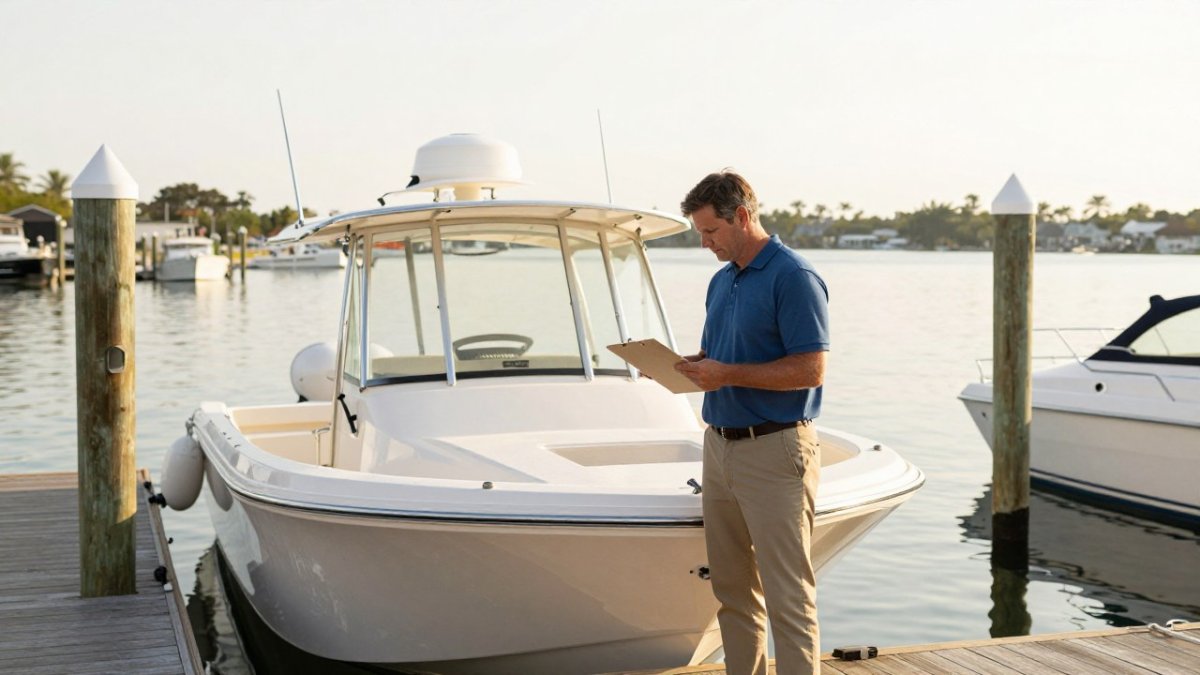
- Wash, wax, and detail the hull, decks, and interior
- Clear all personal gear and clutter from lockers and cabins
- Organize maintenance records and service invoices
- Build an equipment inventory with model numbers and install dates
- Fix small cosmetic issues before photos, not after
- Commission professional photography and video
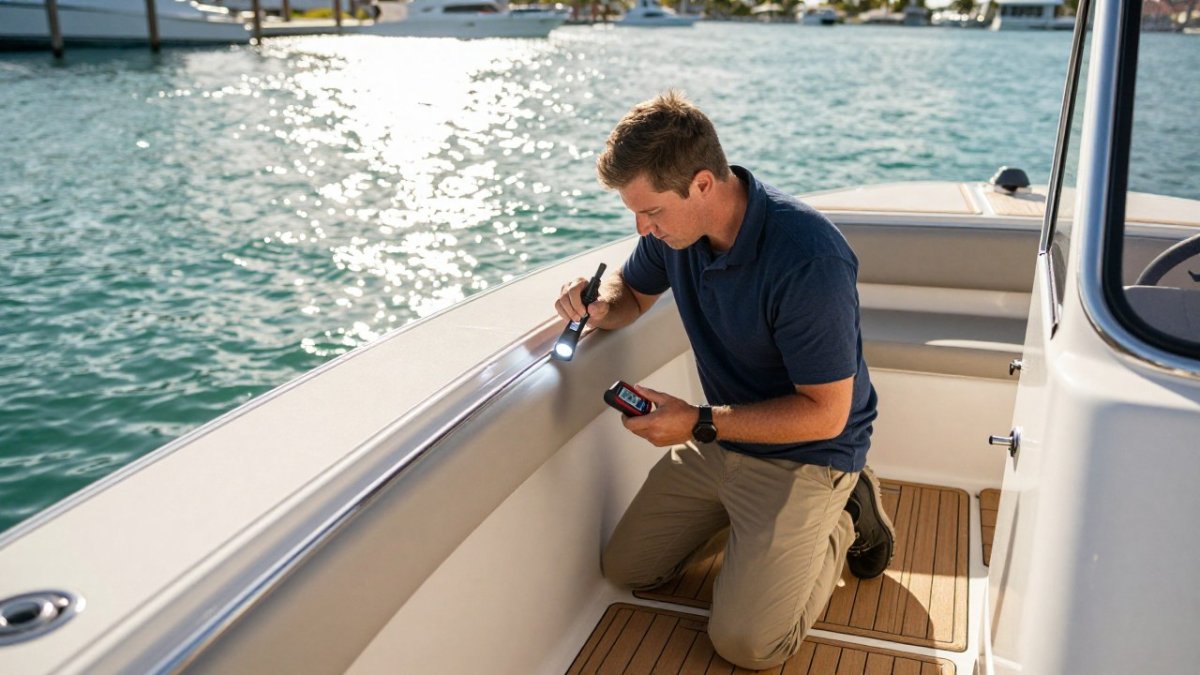
- Confirm the boat is ready for survey and sea trial on short notice
Vessel condition and documentation can help a boat sell faster. A buyer who sees a tidy engine room and a complete maintenance file trusts the rest of the boat more.
Boat Broker Commission and What It Actually Buys You
Boat broker commission is a percentage of the sale price, and it buys a specific set of services: buyer exposure, pricing guidance, negotiation, and transaction management through closing. Whether that's worth it depends on what you'd otherwise do yourself.
Commission structures vary by brokerage and by vessel, so ask for the full breakdown in writing before you sign.
For a complete breakdown of how these structures work, see our guide to yacht broker commission and fees.
A common mistake is comparing commission percentages alone.
What Paperwork Do I Need to Sell a Boat?
The paperwork to sell a boat typically includes a listing agreement, a purchase agreement, a title or documentation transfer, a bill of sale, and any lien releases. Missing documents can stall closings.
Transaction readiness is one of the most overlooked speed factors. Gather your title, registration or documentation, lien release if applicable, equipment inventory, and service records before the first showing.
Our boat sale paperwork checklist covers the documents sellers need to prepare before closing.
Choosing a Broker You Can Hold to a Timeline
A broker you can hold to a timeline is one who puts the plan in writing: exposure strategy, review dates, and reporting intervals. Ask every candidate the same questions and compare answers side by side, then verify the answers rather than accepting them at face value.
Questions to Ask, and How to Verify the Answers
- "How will you market this boat, and where?" Ask for the actual channels and a sample listing. Verify by searching the broker's current listings and confirming they appear where the broker says they will.
- "What comparable sales support your suggested asking price?" Ask to see the comps, not just the conclusion. A broker who can walk you through sold prices, dates, and adjustments is working from data; one who quotes a number without support is guessing.
- "How often will you report on inquiries and viewings?" Get a cadence in writing, such as a weekly summary. Verify by asking what the report will contain: inquiry counts, showing counts, and buyer feedback.
- "What happens if there's no serious interest in the first 30 days?" The answer should be a specific plan, not "we'll revisit." A broker who has thought about the price-review trigger is managing the timeline rather than waiting on it.
- "What are the terms of the listing agreement, and how do I exit?" This is the question that protects you. Understand the central agency agreement before signing.
Listing Agreement Terms That Protect the Seller
Many brokerage listings are exclusive: one broker represents you for a set term, often measured in months, and earns commission if the boat sells during that term, including to buyers the broker introduced. The terms matter. Read for four things:
- Duration. A term long enough for a real marketing cycle but short enough that a non-performing broker can be replaced. Ask what happens at the end of the term and whether there is an automatic renewal.
- Cancellation. Ask whether you can terminate early, on what notice, and whether any fee applies. A broker who resists putting cancellation terms in writing is telling you something.
- Marketing commitments. The agreement should state what the broker will actually do: photography, listing placements, showing coordination, and reporting. Vague commitments are hard to enforce.
- Division of responsibilities. Confirm who handles survey scheduling, sea trial logistics, document collection, and closing coordination, so nothing falls between you.
Hold the Broker to a Timeline
A realistic sale has stages: valuation and listing, active marketing and showings, offer and negotiation, survey and sea trial, and closing. Ask each candidate to map those stages to your boat and to say what they will report at each one. Then compare the answers against the written agreement. A broker who welcomes these questions, and whose answers hold up under verification, may be worth considering. If you are ready to list, our guide to choosing a Palm Beach center console broker walks through what to look for in a specialist.
Start Your Sale With a Brokerage That Knows Center Consoles
Center console owners have a specific problem: generalist brokers don't always understand the fishing market, the repower question, or what offshore buyers actually value. That gap costs time.
At Primo Yachts, we've specialized in center consoles since 2009, serving South Florida sellers who want a brokerage that speaks the same language they do. Our focus is narrow on purpose.
The challenge is simple: a boat that isn't priced right, prepared well, and exposed to the right buyers will sit, no matter how good it is.
Frequently Asked Questions
How much does a boat broker charge to sell your boat?
Commission is typically a percentage of the final sale price, agreed in the listing agreement before anything goes live. Ask for the exact rate in writing, then confirm what it covers: professional photography, online listing placement, buyer outreach, showings, and negotiation support. Also ask whether the rate changes if the broker brings the buyer versus another brokerage.
How long does it usually take to sell a yacht with a broker?
There is no fixed number, and any broker who promises one is guessing. Time to sell depends on asking price versus market value, vessel condition, documentation readiness, and how many qualified buyers are active in your size and style. What a broker can control is the inputs: competitive pricing, strong listing exposure, a clean survey-ready boat, and fast response to buyer inquiries. Ask your broker to set review checkpoints, such as 30 and 60 days, where you look at inquiry volume and adjust.
What is the fastest way to sell a boat?
Price it correctly from day one and make it easy to inspect. Boats that sit usually have one of three problems: an asking price above comparable sales, weak presentation, or incomplete paperwork that stalls a buyer's survey and sea trial. A broker helps on all three by pulling comparable sales data, arranging professional photography, and assembling title, registration, and maintenance records before the first showing. Serious buyers move quickly when nothing blocks the inspection.
How do I choose the right yacht broker?
Look for specific market knowledge rather than a big name. Ask how many comparable vessels the broker has sold, what its buyer network looks like, and how it will market your boat beyond a standard online listing. Get the listing term, commission, and cancellation terms in writing. A specialist who knows your hull type, such as center consoles, can speak credibly to the buyers most likely to make an offer, which shortens the gap between listing and closing.