 ultimate-guide
Yacht Interior Design Trends for Refits in 2026
Table of Contents
- Modernizing Yacht Interiors: What's Driving Change
- Minimalist Design Trends Taking Hold
- Soft Textures and Fabrics: The New Standard
- Smart Layout Optimization and Functional Elegance
- Customizable Marine Lighting and Ambiance
- Sustainable Yacht Interior Materials for Modern Owners
- Understanding Yacht Interior Refit Cost and ROI
- Timeline, Project Management, and Regulatory Compliance
- Frequently Asked Questions
Last Updated: September 29, 2026
Modernizing Yacht Interiors: What's Driving Change
Yacht interior design trends for refits in 2026 reflect a fundamental shift: owners now demand interiors that balance sophistication with practicality, driven by changing expectations about space function, material performance, and what "premium" means in a modern context.
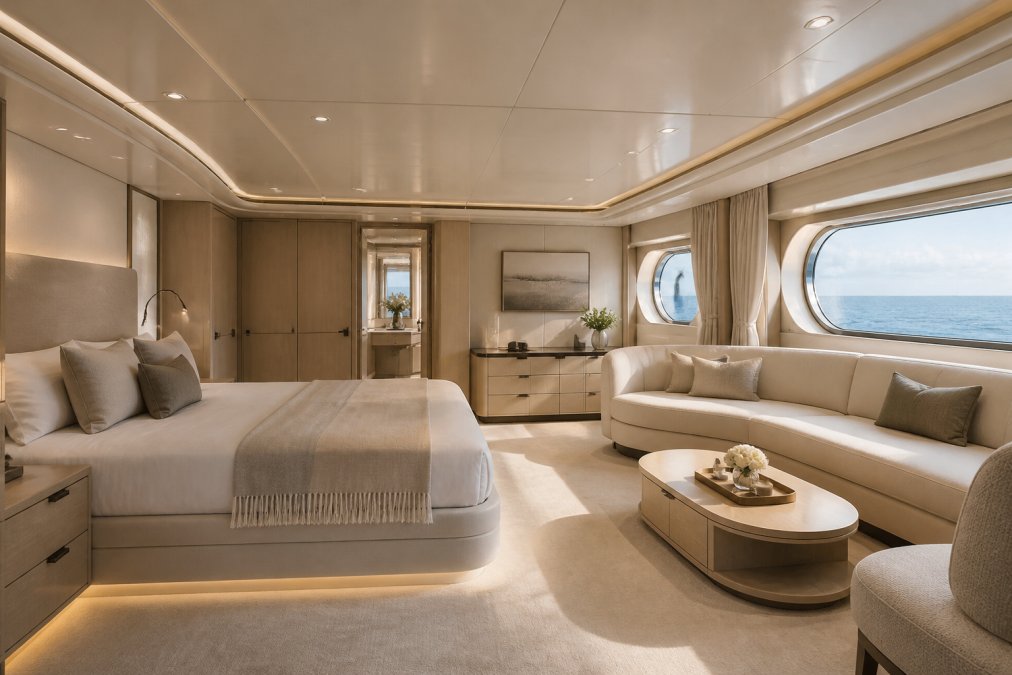
Owners investing in yacht interior design trends for refits increasingly focus on vessels that work harder. Instead of static, gallery-like cabins, they want interiors that adapt to their lifestyle, transitioning seamlessly from entertaining to fishing to quiet retreats, through rethought layouts, reconsidered materials, and technologies that enhance comfort without compromising performance.
Minimalism, sustainable materials, and functional elegance are now baseline expectations. Thoughtful design reduces maintenance, improves resale value, and creates genuinely livable environments, paying dividends in both immediate enjoyment and long-term asset preservation.
Minimalist Design Trends Taking Hold
Minimalism in yacht interior design trends for refits means removing visual noise while preserving functionality, intentional choices where every element earns its place. Clean lines, neutral palettes, and strategic storage eliminate clutter that accumulates naturally in finite spaces.
Open sightlines make cabins feel larger, fewer objects reduce securing needs during rough seas, and neutral backgrounds create calm environments. Materials with minimal texture are easier to maintain in marine environments with constant salt spray and humidity.
Integrated storage solutions that disappear into walls and cabinetry maximize usable space while maintaining clean lines. Owners report this approach makes vessels feel less cramped, even when square footage remains unchanged, translating visual simplicity into more enjoyable time aboard.
Color palettes have shifted toward warm neutrals, soft grays, creams, and natural wood tones. A single accent color or material, like natural teak, provides visual interest without overwhelming the space.
Soft Textures and Fabrics: The New Standard
Soft textures and fabrics have become central to yacht interior design trends for refits, replacing harsh traditional materials with refined upholstery and textiles that meet marine performance standards.
Modern marine-grade fabrics offer residential softness combined with resistance to salt spray, UV exposure, and mildew. Microfiber and performance fabrics provide comfort without the maintenance burden, allowing genuinely comfortable seating for extended periods.
Area rugs, throw pillows, and wall treatments add warmth and break up hard surfaces, creating residential rather than industrial environments that significantly impact how owners and guests experience time aboard.
Foam replacement with modern marine-grade options provides better support and durability. Combined with quality upholstery, new foam transforms seating from functional to genuinely inviting, one of the most noticeable improvements owners report.
Textiles absorb engine noise and water sounds, creating quieter cabins that allow owners to relax more fully and spend more time enjoying the vessel.
Smart Layout Optimization and Functional Elegance
Smart layout optimization in yacht interior design trends for refits maximizes usability in confined spaces by treating the interior as a system where every element supports overall function.
Functional elegance emerges from thoughtful problem-solving: convertible seating, efficient galley designs, and cabin layouts that create distinct zones represent intelligent design that looks refined while serving practical purposes.
Designers now map how owners and guests move through spaces, identifying friction points and opportunities for improvement. Relocating galley entrances, adjusting doorways, or reconfiguring seating creates intuitive circulation patterns that make moving through the vessel effortless.
Modular furnishings allow spaces to adapt to different uses, adjustable dining tables, reconfigurable seating, extending functional range without structural changes.
Storage integration into every available surface, vertical cabinetry, under-seat storage, wall-mounted solutions, creates interiors that feel spacious while containing all necessary equipment and supplies.
Customizable Marine Lighting and Ambiance
Customizable marine lighting has transformed from technical requirement into design element. LED systems adjust color temperature and intensity, allowing owners to create different moods for various activities.
Dimmable systems allow subtle adjustments that transform formal entertaining spaces into intimate retreats. Color temperature control shifts from cool white for tasks to warm amber for relaxation, affecting both visual appearance and psychological experience.
Accent lighting highlights design elements, indirect lighting creates depth, task lighting ensures functionality, and ambient lighting creates cohesive atmosphere. Layered light sources allow owners to adjust environments to match mood and activity.
Light fixtures should feel like intentional design elements. Custom fixtures complement aesthetics while providing illumination, becoming part of the visual story.
Smart controls have become standard in refits. Rather than multiple switches, integrated systems allow owners to adjust lighting throughout the vessel from a central panel or mobile app. Scenes can be programmed, "entertaining mode," "sleeping mode," "fishing mode", that automatically set lighting, music, and climate control. This level of customization enhances the experience of living aboard while requiring minimal effort to adjust.
Sustainable Yacht Interior Materials for Modern Owners
Sustainable yacht interior materials reflect a growing awareness among affluent owners about environmental impact and long-term material performance. Modern refits increasingly incorporate materials that perform well in marine environments while minimizing environmental footprint.
Reclaimed and responsibly sourced wood has become popular for yacht interior design trends for refits. Rather than rare tropical hardwoods, contemporary designs often feature sustainably harvested materials or reclaimed wood with character and history. These choices provide visual warmth and authenticity while aligning with environmental values.
Marine-grade composites and engineered materials have improved dramatically. Modern alternatives to traditional materials offer superior durability, lower maintenance requirements, and reduced environmental impact during production. Some composites are now manufactured with recycled content, providing performance benefits while supporting circular economy principles.
Natural fibers and bio-based materials are appearing in upholstery, area rugs, and accent elements. While these require more maintenance than synthetic alternatives in marine environments, owners who prioritize sustainability often accept this trade-off. The aesthetic warmth and environmental alignment outweigh the additional care requirements for many contemporary yacht owners.
Finishes and adhesives have evolved to reduce volatile organic compounds. Modern marine paints and varnishes provide protection and aesthetic appeal without the harsh chemical profiles of older products. This matters both for air quality aboard the vessel and for environmental responsibility during application and maintenance.
The concept of material longevity has shifted from "how long until replacement" to "how well does this age and can it be maintained indefinitely." Owners increasingly prefer materials that develop patina and character over time rather than those that deteriorate. This shift toward materials that improve with age represents a fundamental change in how yacht interior design trends for refits approach material selection.
Understanding Yacht Interior Refit Cost and ROI
The financial dimension of yacht interior design trends for refits requires careful consideration. Refit costs vary dramatically based on scope, materials, and complexity, but understanding the relationship between investment and return matters for decision-making.
A comprehensive refit addressing multiple systems simultaneously, upholstery replacement, lighting modernization, layout optimization, and sustainable material upgrades, represents substantial investment. However, coordinating these elements during a single project often costs less than addressing them separately over time. Project management efficiency and contractor continuity reduce overall expenses.
ROI considerations extend beyond resale value, though that's certainly relevant. The immediate return comes from increased enjoyment and functionality. An owner who uses their vessel significantly more because the interior now works better has achieved ROI through enhanced lifestyle. Extended cruising seasons become possible when climate control and comfort systems are upgraded. Entertaining becomes easier with optimized layouts and modern amenities.
Resale value improvements from quality refits are well-documented within the yacht market. Vessels with thoughtfully modernized interiors command premiums over comparable vessels with dated designs. Buyers recognize that investing in quality refits reduces their future maintenance burden and extends the vessel's functional lifespan. This market recognition translates directly into resale value.
Maintenance cost reduction is an often-overlooked ROI component. Modern materials and systems require less frequent maintenance than older alternatives. A refit incorporating sustainable materials, updated climate control, and integrated systems typically results in lower annual operating costs.
Timeline, Project Management, and Regulatory Compliance
Successful yacht interior design trends for refits require realistic timelines and disciplined project management. The duration of a refit depends on scope, but comprehensive interior modernizations typically require three to six months at a professional shipyard.
Frequently Asked Questions
What are the most popular yacht interior design trends for refits right now?
Current yacht interior design trends emphasize minimalist aesthetics, soft textures, and smart layout optimization. Owners are moving away from heavy ornamentation toward functional elegance with clean lines. Customizable marine lighting, sustainable materials, and residential-inspired design elements dominate modern refits. Contemporary color palettes featuring neutral tones with accent features create a sophisticated, timeless look that maintains resale value while improving daily comfort aboard.
How much does a yacht interior refit typically cost?
Yacht interior refit costs vary significantly based on vessel size, scope of work, and material selections. A partial refresh focusing on upholstery and soft furnishings requires different investment than a complete interior rejuvenation including structural changes and custom cabinetry. Factors like marine-grade material upgrades, smart lighting systems, and foam replacement affect pricing substantially. Contact us for a detailed consultation to understand costs specific to your vessel and refit goals.
What sustainable materials should I consider for my yacht interior refit?
Sustainable yacht interior materials include low-VOC marine-grade paints, recycled composite cabinetry, eco-friendly upholstery fabrics, and responsibly sourced teak alternatives. These materials maintain the durability and aesthetic standards required in marine environments while reducing environmental impact. Sustainable options now match traditional marine materials in performance and longevity. Many yacht owners find that eco-conscious choices enhance both vessel value and personal satisfaction without compromising luxury or functionality.
How long does a full yacht interior refit typically take?
Timeline depends on refit scope, vessel size, and shipyard capacity. A focused refresh addressing upholstery and soft textures may take 2-4 weeks, while comprehensive interior rejuvenation involving structural work, custom cabinetry, and smart systems can require 8-16 weeks or longer. Project management and detailed planning upfront prevent delays. Weather, material availability, and regulatory compliance inspections also affect scheduling.