 how-to
Yacht Central Agency Agreement: A Complete Guide
Table of Contents
- What Is a Yacht Central Agency Agreement
- The Role of the Central Agent in Your Yacht Sale
- Yacht Brokerage Commission Rates and How They Work
- Exclusive vs Non-Exclusive Yacht Listing: What Owners Need to Know
- How to Choose a Yacht Central Agent
- Contract Review Checklist for Vessel Owners
- Dispute Resolution and Termination Rights
- Conclusion
Last Updated: August 30, 2026
What Is a Yacht Central Agency Agreement
A yacht central agency agreement is an exclusive contract between a vessel owner and a single yacht broker, the central agent, who gains the right to market and sell the yacht on behalf of the owner. Under this arrangement, the central agent becomes the sole representative authorized to list the vessel, negotiate with potential buyers, and coordinate the sale process.
The central agent agreement differs fundamentally from open listings. In an exclusive mandate, the owner commits to working with one broker and agrees not to list the vessel with competing brokers during the contract term. This exclusivity gives the central agent strong incentive to invest marketing resources, conduct professional vessel valuations, and develop targeted buyer networks. In return, the owner receives focused attention and coordinated marketing strategy rather than competing broker efforts that dilute market exposure.
At Primo Yachts of Palm Beach, we've guided vessel owners through these agreements since 2009. Understanding the legal obligations, commission structures, and contractual terms upfront prevents disputes and ensures both parties have aligned expectations throughout the sale process.
The Role of the Central Agent in Your Yacht Sale
The central agent acts as your primary intermediary in the yacht sale process, managing every phase from initial listing through closing. They handle vessel marketing, buyer qualification, negotiation coordination, and documentation while maintaining fiduciary duty to act in your best interest and preserve confidentiality.
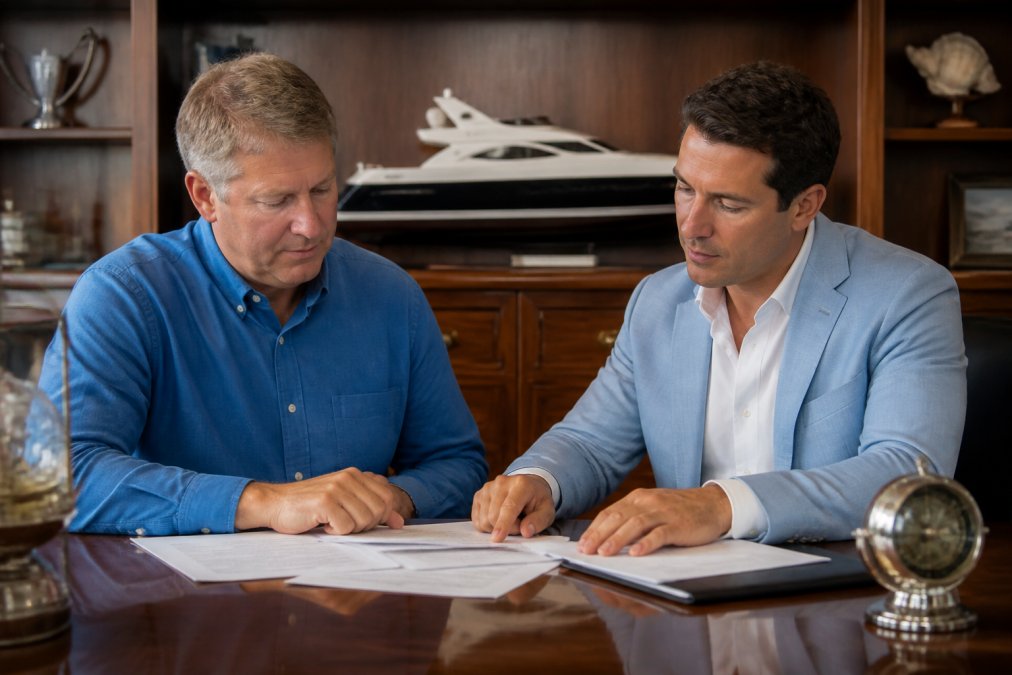
Core responsibilities include conducting professional vessel valuation to establish realistic market pricing, developing targeted marketing strategy, and creating compelling listing materials with high-quality photography and video walkthroughs. They maintain relationships with co-brokerage networks to expand buyer access beyond their direct client base and qualify potential buyers to ensure serious interest before scheduling sea trials.
During negotiation, the central agent represents your interests, presents offers, counters proposals, and communicates terms clearly. They coordinate with selling brokers representing buyers, manage the closing process, work with maritime attorneys, and ensure all contractual obligations are met before final handover. A professional central agent also manages expectations transparently about realistic timelines, market conditions, and necessary pricing adjustments if initial buyer interest is weak.
Yacht Brokerage Commission Rates and How They Work
Yacht brokerage commissions typically follow industry-standard structures as a percentage of the final sale price, paid at closing from proceeds. Commission is usually split between the selling broker (representing the buyer) and the listing broker (your central agent), with variations depending on whether the listing broker brings their own buyer or another broker brings the buyer.
Most central agency agreements specify that commission is only due upon successful sale and closing, aligning the broker's incentive with yours. Some agreements address what happens if the owner accepts an offer but the sale fails to close due to buyer default, typically allowing the broker to retain commission if the offer was accepted.
Understanding commission structure matters because it affects the broker's motivation and your net proceeds. Clear contractual language about commission timing, exact percentage, and conditions such as reserve pricing prevents disputes later. Industry practice also includes potential adjustments for cash versus financed transactions or sales to existing brokerage clients, which should be explicitly stated before signing.
Exclusive vs Non-Exclusive Yacht Listing: What Owners Need to Know
An exclusive mandate gives one central agent sole rights to market and sell your vessel. During the agreement term, you cannot list with other brokers or sell directly without triggering the broker's commission. This exclusivity incentivizes heavy investment in marketing, professional photography, yacht show booths, and targeted buyer outreach. Exclusive agreements typically include a defined term of 90 to 180 days with renewal or termination options, and should include a performance clause allowing termination without penalty if the broker hasn't generated meaningful buyer interest by a certain date.
A non-exclusive or open listing allows you to work with multiple brokers simultaneously. Each broker can show your vessel to their buyers, and whichever broker brings the actual buyer earns a commission, typically at a smaller percentage than exclusive arrangements. Open listings cast a wider net but create coordination challenges: different brokers may show at conflicting times, present inconsistent information, and fragment marketing effort since each broker invests minimally knowing they only earn commission if their specific buyer closes.
For premium center console yachts and offshore fishing vessels, exclusive central agency agreements tend to produce faster sales and better final prices because serious buyers appreciate working with a single knowledgeable agent who understands the vessel's specifications and can speak authoritatively about its condition and capabilities.
How to Choose a Yacht Central Agent
Selecting the right central agent is the most important decision in your vessel sale. Start by evaluating the broker's specialization and market focus. A broker specializing in center console yachts and offshore fishing vessels understands the specific features, buyer profiles, and market dynamics that matter for your boat.
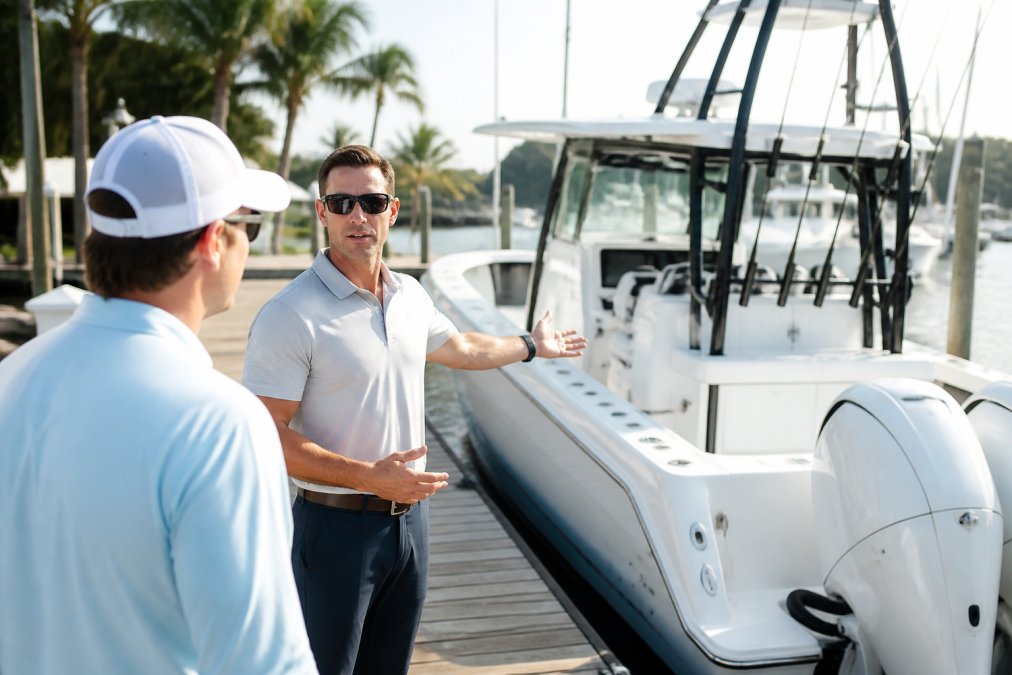
Ask about track record: how many vessels in your price range and category have they sold in the past 12 months? What was average time on market and percentage of asking price achieved? Assess their marketing approach, do they invest in professional video, drone photography, and yacht show presence? Evaluate communication style and responsiveness, and request references from recent clients, including those whose vessels didn't sell.
Consider the broker's local market presence and reputation. Brokers active in the boating community, sponsoring fishing tournaments and maintaining relationships with captains and crew members have deeper buyer networks. A common mistake is choosing a broker based solely on willingness to list at your asking price. The best central agent will conduct thorough market analysis, explain comparable sales, and recommend pricing that balances your expectations with market reality.
Finally, review the proposed central agency agreement carefully before signing. Ensure the term is reasonable, performance expectations are clear, and termination rights are defined.
Contract Review Checklist for Vessel Owners
Before signing a central agency agreement, systematically review these critical contract elements:
Exclusivity and Term
- Does the agreement grant exclusive listing rights?
- What is the contract term (typically 90-180 days)?
- What are the termination rights if unsatisfied with performance?
Pricing and Valuation
- Has the broker conducted professional vessel valuation?
- What is the listing price and how was it determined?
- Are there provisions for price adjustments if no buyer interest emerges?
- Does the agreement specify a minimum acceptable offer price (reserve)?
Commission Structure
- What is the exact commission percentage?
- When is commission due, at closing or when an offer is accepted?
- How is commission split if another broker brings the buyer?
- What happens to commission if the sale fails to close due to buyer default?
Marketing and Promotion
- What specific marketing activities will the broker undertake?
- Will the broker pay for professional photography?
- How frequently will the listing be updated?
- Does the agreement specify yacht show participation?
Listing Materials and Confidentiality
- Who owns the photographs, video, and listing descriptions?
- What information will be disclosed publicly versus kept confidential?
- Can the broker use your vessel's images for marketing other properties?
Buyer Qualification and Showings
- Will the broker screen potential buyers before scheduling sea trials?
- What notice period is required before a showing?
- Who is responsible for vessel security and insurance during showings?
Communication and Reporting
- How often will the broker provide updates on buyer interest?
- What is the preferred communication method?
- Will the broker provide written monthly activity reports?
Dispute Resolution and Legal Terms
- What law governs the agreement?
- Are there provisions for mediation or arbitration?
- Who pays legal fees if disputes arise?
Termination and Exit
- Can either party terminate without cause, and what notice is required?
- Are there termination fees or penalties?
- If you terminate early, are you liable for commission if the vessel sells within a specified period?
A thorough contract review prevents misunderstandings and gives you clear recourse if the broker fails to perform.
Dispute Resolution and Termination Rights
Despite best intentions, disputes sometimes arise between vessel owners and central agents. Common disputes include disagreement over pricing or marketing strategy, commission calculation disputes, claims that the broker failed to actively market the vessel, or disagreements about buyer qualification.
Mediation is often the first step, with a neutral third party helping both sides reach resolution. Arbitration involves submitting the dispute to an arbitrator with industry expertise, who hears evidence and makes a binding decision, faster and more private than litigation. Litigation is the last resort, pursued in court if mediation and arbitration fail.
Your termination rights depend on contract language. A well-drafted agreement should allow termination without cause if the broker fails to perform, for example, if they haven't generated meaningful buyer interest within 60 days. Some agreements include a "tail clause" or "carve-out" provision: if the vessel sells within a specified period after termination to a buyer the broker introduced, the broker may still be entitled to commission.
Understand your state's maritime law regarding broker agreements. An attorney familiar with maritime transactions can review your agreement and explain your rights before you sign. The best dispute resolution is prevention through a clear, detailed central agency agreement with specific performance expectations and transparent pricing discussion.
Selling a premium yacht requires partnering with a broker who understands your vessel and the market. A well-structured central agency agreement protects your interests while giving your broker the incentive to market your vessel aggressively. At Primo Yachts of Palm Beach, we've managed this process for owners seeking to sell center consoles and offshore fishing vessels. We conduct professional vessel valuations, develop targeted marketing strategies, and coordinate with qualified buyers, ensuring your sale moves efficiently and achieves the best possible price. Contact us to discuss your vessel's market position and how a central agency agreement can accelerate your sale timeline.
Frequently Asked Questions
Q: What is the primary purpose of a yacht central agency agreement?
A: A yacht central agency agreement grants one broker exclusive rights to represent your vessel for sale. The central agent acts as the sole intermediary between you and potential buyers, controlling all marketing, showings, and negotiations. This exclusivity allows the broker to invest more heavily in marketing your yacht and gives buyers confidence they're working with the authorized representative. The agreement defines the agent's duties, commission structure, and the term of representation.
Q: How does a central agency agreement differ from an open listing?
A: A central agency agreement gives one broker exclusive rights to sell your yacht and earn commission. An open listing allows you to work with multiple brokers simultaneously, and only the broker who brings the buyer receives commission. Central agency agreements typically result in stronger market exposure and more dedicated marketing effort, but they restrict your flexibility. Open listings preserve your freedom but may result in less aggressive promotion since brokers know they're competing with others.
Q: What should I look for when choosing a yacht central agent?
A: Evaluate brokers on their experience with your vessel type, their track record of sales in your market segment, and their marketing strategy. Ask about their broker network reach, how they price vessels, and their average time-on-market. Request references from recent sellers. Verify they understand your specific goals, whether you're prioritizing speed of sale, maximum price, or discretion. A specialized broker familiar with center consoles or your specific yacht category will typically outperform a generalist.
Q: Can I terminate a yacht central agency agreement early if I'm unhappy?
A: Termination rights depend on the contract language. Most agreements include a termination clause specifying notice periods and any penalties. Some allow termination for cause if the broker fails to perform marketing duties or meet agreed-upon benchmarks. Others require completing the full term. Before signing, negotiate clear termination conditions, including what happens if the yacht doesn't sell within a specified timeframe. Review the exact language with a maritime attorney to understand your exit options and any financial obligations.
This article was written using GrandRanker