 How-to
7 Steps to Hiring a Professional Yacht Photographer
Quick Summary
To hire a professional yacht photographer in Palm Beach, look for proven marine experience, verify a portfolio of recent vessels, and ask about chase-boat work and usage rights. Request an itemized written quote before booking, so the scope, editing, and license terms are clear.
- Ask how many distinct vessels the photographer has shot in the past 12 months.
- Check that the portfolio includes interiors, details, and on-water evidence, not just hero exteriors.
- Request two full galleries and unedited RAW files from a recent shoot to judge honesty.
- Get itemized quotes covering day rate, travel, editing, deliverables, and usage license terms.
- Confirm usage license media, territory, duration, and exclusivity before the shoot.
Table of Contents
- Why a Yacht Photographer Needs Marine Experience
- Evaluating a Yacht Photography Portfolio
- Questions to Ask a Yacht Photographer Before Booking
- Understanding Pricing, Packages, and Usage Rights
- Yacht Photography Shoot Checklist and On-Water Logistics
- Yacht Photography Turnaround Time and Delivery
- Booking Your Palm Beach Yacht Shoot With Primo Yachts
- Frequently Asked Questions
Why a Yacht Photographer Needs Marine Experience
Hiring a yacht photographer is not the same as hiring a wedding or portrait shooter. Yacht photography happens on moving decks, over water, with changing light and tight spaces. A photographer without marine experience can produce images that look fine on a screen but fail to show the vessel accurately.
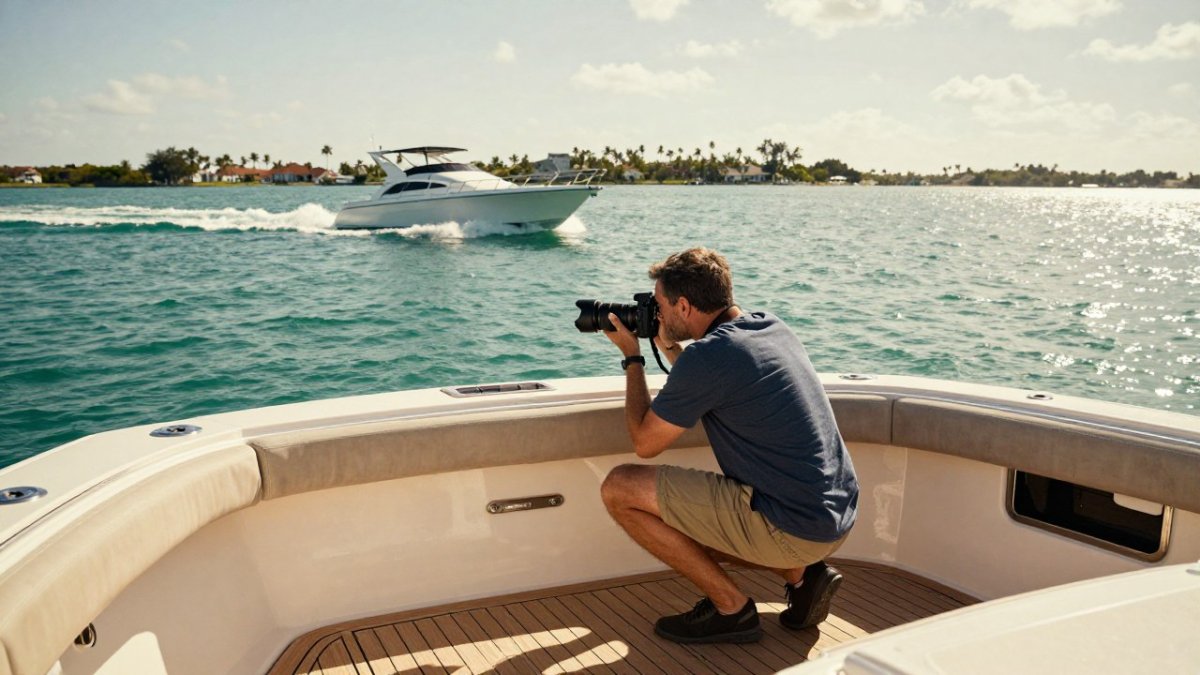
Marine experience matters for three practical reasons. First, the photographer should understand how to work safely on or near a boat, including staying aware of the crew and the vessel's motion. Second, they should know how to shoot from a chase boat or support vessel without disrupting the captain's plans. Third, they need to handle water glare, spray, and quickly shifting light. These problems are specific to the water, and general studio skills rarely solve them.
Ask directly about past work on vessels. A strong candidate can describe shoots they have completed on the water, the vessel types they have photographed, and how they coordinated with captains and crew.
Evaluating a Yacht Photography Portfolio
Most yacht photography portfolios look impressive at thumbnail size. The job is to find out whether the images are real, recent, and shot by the person you are hiring. Use a structured review instead of a gut check.
1. Count vessels, not images. Ask how many distinct hulls appear in the portfolio and how many were shot in the last 12 months. A working marine photographer typically has a rolling set of recent vessels; a thin portfolio padded with the same boat from ten angles is a warning sign. Request the vessel name and approximate length for three recent shoots so you can verify the work is current.
2. Check marine-specific coverage. A complete yacht set usually includes: full-profile exterior at the waterline, bow and stern three-quarter angles, flybridge or helm, salon and stateroom interiors, engine room or tender garage if relevant to the listing, and detail shots of hardware, teak, and finishes. If the portfolio only shows hero exteriors against a sunset, the photographer may not have access to interiors or the skill to light them.
3. Look for on-water evidence. Reflections, wake, dock lines, neighboring hulls, and horizon lines reveal whether the photographer actually worked from a chase boat or dock. Images that crop out the water or hide the hull often mean the shooter lacked access or confidence on the water.
4. Separate the photographer's work from the team's. Many yacht shoots involve a videographer, drone pilot, and editor. Ask which frames the photographer personally captured and who performed the retouching. Request two full galleries, not a highlight reel, so you can judge consistency across a whole shoot.
5. Screen for heavy manipulation and synthetic images. Replaced skies, reshaped hulls, and removed fittings misrepresent a vessel and create liability when the images are used in a listing or charter ad. Ask whether edits were limited to color, exposure, and cleanup. Request the unedited RAW files from one recent shoot. A professional who shoots honestly will usually agree without hesitation.
6. Score the portfolio against your own vessel. Before the call, write down the five shots your listing or campaign cannot do without. Then check whether the portfolio contains a comparable example of each. A photographer who is strong on exteriors but weak on interiors may still be the right hire if you pair them with a second shooter, but you need to know that before you book.
Watch out: a polished website can hide a thin body of work. If the photographer cannot name the vessels, dates, or captains behind recent shoots, treat the portfolio as unverified.
Questions to Ask a Yacht Photographer Before Booking
Before you commit, put these questions to every candidate:
- How many yacht or large-vessel shoots have you completed in Palm Beach?
- Do you have experience shooting from a chase boat or support vessel?
- What is your process for coordinating with the captain and crew?
- How do you handle changing light and water glare?
- What insurance do you carry, and do you hold a valid marine safety or water-work certification?
- Who owns the image rights, and how can I use the images?
- What is your edit policy, and do you retouch hulls or skies?
Clear, specific answers signal experience. Vague answers or reluctance to discuss logistics are a warning sign.
Understanding Pricing, Packages, and Usage Rights
Yacht photography is typically quoted as commercial production rather than a portrait session. The quote should be built from line items you can compare across providers. Ask every candidate to break the estimate into the categories below.
Typical line items in a yacht photography quote:
- Creative or day rate, the photographer's time for the shoot day, often quoted as a half-day or full-day rate. Half-day versus full-day coverage depends on the vessel's size, layout and the shot list, so confirm the duration in your written quote.
- Pre-production, shot list development, location scouting, and coordination calls with the captain or broker. Some photographers include this; others bill it separately.
- Travel and dockage, mileage or drive time to the marina, plus any fee for the photographer's access to the dock or a chase boat. Chase boat charter, where needed, should be quoted separately in your estimate.
- Editing and retouching, color correction, exposure balancing, and cleanup. Heavy retouching (sky replacement, hull reshaping, object removal) is often billed separately from the base edit, so confirm the terms in your quote.
- Deliverables, the number of final images, resolution, and file formats. Confirm whether web-sized, print-ready, and RAW files are included or priced as add-ons.
- Video and drone add-ons, aerial footage, walkthrough video, and social cuts are usually quoted as separate packages with their own edit time.
- Usage license, the right to publish the images, priced by media, territory, and duration (see below).
Because these variables differ widely, request a written quote that lists exactly what is included. Avoid providers who will not itemize.
Usage rights are a separate negotiation. In the United States, copyright in the images belongs to the photographer unless it is transferred in writing. What you typically buy is a license, and the license terms matter as much as the fee. Confirm:
- Media, online listing, website, print brochure, social media, paid advertising, and out-of-home. A license for a boat listing is not the same as a license for a national ad campaign.
- Territory, local, national, or worldwide.
- Duration, a defined term (for example, 12 months) versus perpetual use. Perpetual, worldwide, all-media licenses cost more and should be priced accordingly.
- Exclusivity, whether the photographer can license the same images to other parties, such as a broker or charter operator.
- Model and property releases, if guests, crew, or identifiable private property appear in the frames, confirm who is responsible for releases before the shoot.
- Privacy, ask how the photographer handles images of guests and crew, and whether they will avoid publishing identifiable people without consent.
Compare providers on the same terms. Build a simple grid with the line items above as rows and each quote as a column. A lower headline price that excludes editing, licensing, travel, or chase boat can cost more in the end. Ask each photographer to quote the same scope, same vessel, same number of final images, same license term, so the comparison is real.
Watch out: a quote that bundles "full rights" without stating media, territory, and duration is not a license you can rely on. Get the terms in writing before the shoot.
Yacht Photography Shoot Checklist and On-Water Logistics
Plan the shoot in advance so the time on the water is used well. Read how to get the vessel ready for a professional photoshoot before the session. Use this checklist:
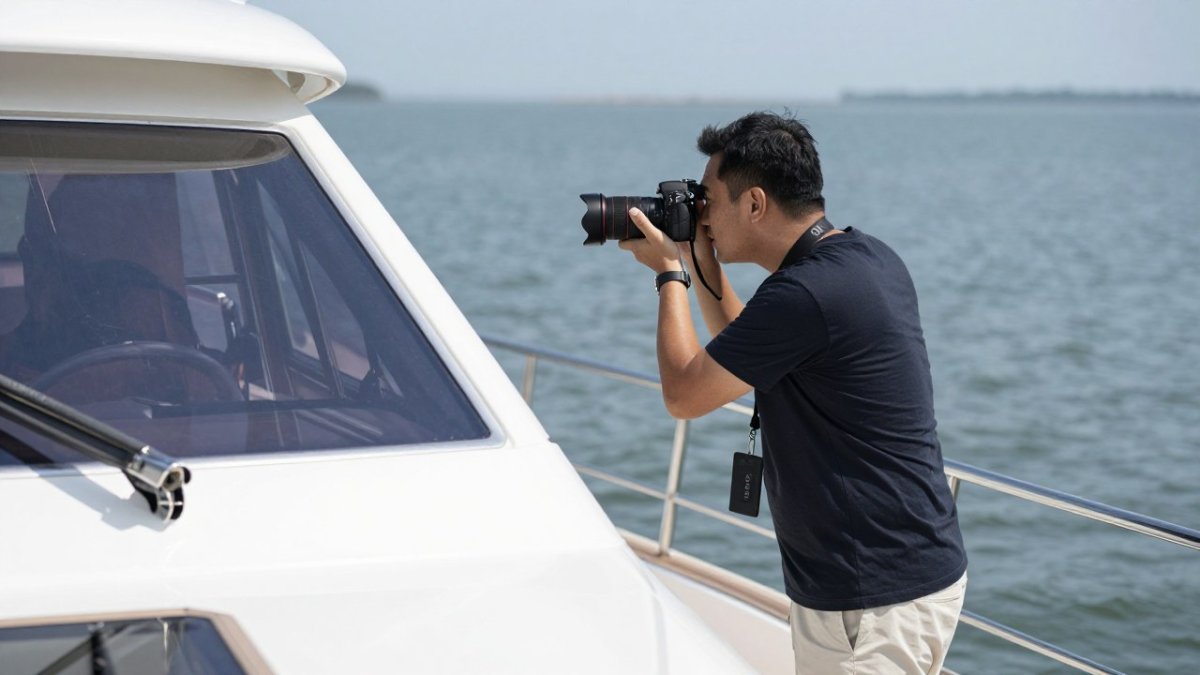
- Confirm the vessel's departure time, dock location, and captain's contact
- Agree on a shot list covering exteriors, interiors, and details
- Check the forecast for wind, swell, and cloud cover
- Clean the hull, deck, and interior before the shoot
- Clear personal items and remove unnecessary clutter from view
- Confirm chase boat or support vessel availability if needed
- Review safety briefings and life-jacket requirements with everyone on board
- Schedule the shoot around the best light, typically early morning or late afternoon
On-water logistics add complexity. Confirm who is responsible for safety on the water and how communication will work between the photographer, the captain, and any chase boat. Learn how crew logistics are handled during shipyard and prep periods. A well-run shoot keeps the vessel's schedule intact and keeps everyone safe.
Careful planning keeps the time on the water productive and safe, and the checklist below covers the essentials.
| Step | What to do | Timing |
|---|---|---|
| Confirm logistics | Vessel departure time, dock location, captain's contact | Before the shoot |
| Agree shot list | Exteriors, interiors and details | Before the shoot |
| Check forecast | Wind, swell and cloud cover | Before the shoot |
| Prepare vessel | Clean hull, deck and interior; clear clutter | Before the shoot |
| Confirm chase boat | Availability if needed | Before the shoot |
| Safety briefing | Review with everyone on board, including life jackets | Day of shoot |
| Schedule light | Early morning or late afternoon | Day of shoot |
Yacht Photography Turnaround Time and Delivery
Turnaround time varies by photographer and workload, so confirm it before booking. Ask how long editing takes, what file formats you will receive, and whether you get a preview gallery soon after the shoot. Many photographers deliver a selection of edited images first and the full set later.
Agree on the number of final images, resolution, and delivery method. Clarify whether video or drone footage is delivered as a separate file set and whether revisions are included. Written terms prevent misunderstandings about when the work is complete.
Booking Your Palm Beach Yacht Shoot With Primo Yachts
If you are preparing a vessel for sale or marketing, Primo Yachts can help you plan the shoot as part of a broader listing. You can browse South Florida's specialist brokerage listings for Palm Beach yachts. Primo Yachts serves the South Florida market and can discuss how a vessel is presented in a sales context.
Reach out to discuss your vessel, your timing, and the images you need.
Frequently Asked Questions
How do I hire a yacht photographer in Palm Beach?
Start by shortlisting photographers who have shot on the water, not only in studios or on land. Ask for a portfolio of vessel work, confirm they can coordinate boarding and a chase boat or support vessel, and request a written quote that lists the shoot length, edited image count, and usage rights. Speak with two or three candidates before deciding. For a current quote, visit the Primo Yachts website or reach out to discuss your vessel and goals.
What should I look for in a yacht photographer's portfolio?
Look for images of real vessels taken in natural light, with clean horizons, accurate colors, and believable reflections on the water. Check whether the work includes exteriors, interiors, and detail shots, since a single-style portfolio may not cover what you need. Ask whether the photos were lightly color corrected or heavily retouched, and request a few unedited or minimally edited examples. Consistency across many shoots matters more than one standout image.
How long does a yacht photography shoot take?
Shoot length depends on the size of the vessel, the number of setups, and whether the session includes interiors, exteriors, and on-water action. Many owners plan for a shoot window that allows time for boarding, lighting changes, and tide or weather adjustments. Confirm the planned duration in your written quote and ask how the photographer handles overruns or weather delays. Pricing and timing depend on your specific requirements, so visit the Primo Yachts website for a current quote.
How soon will I receive the edited yacht photos?
Turnaround time varies with the number of images, the level of editing, and the photographer's current workload. Ask for a delivery date in writing, and clarify whether you will receive a preview gallery before the final edit. A clear timeline helps you plan listing updates or marketing launches. Confirm the delivery method, file formats, and whether revisions are included before you book.