 how-to
Modernizing Yacht Electrical and Propulsion Systems
Table of Contents
- Assess Your Current Yacht Electrical and Propulsion Systems
- Understanding Hybrid Yacht Propulsion Options
- Electric vs. Hybrid Yacht Propulsion: Which Fits Your Vessel
- Plan Your Yacht Propulsion Refit: Compatibility and Constraints
- Execute the Modernization: Installation, Testing, and Commissioning
- Lifecycle Economics: Operating Costs, Maintenance, and Payback
- Frequently Asked Questions
Last Updated: October 6, 2026
Assess Your Current Yacht Electrical and Propulsion Systems
Modernizing yacht electrical and propulsion systems is one of the most significant investments a vessel owner can make. Before you commit time and resources, you need a clear picture of what you're working with. The first step is always the same: understand your baseline.
Most owners skip this phase. They assume they know their systems or they're eager to jump straight to new equipment. That's a mistake. A proper assessment prevents costly surprises during installation and ensures your retrofit actually matches your vessel's needs.
Conduct a Yacht Electrical System Inspection
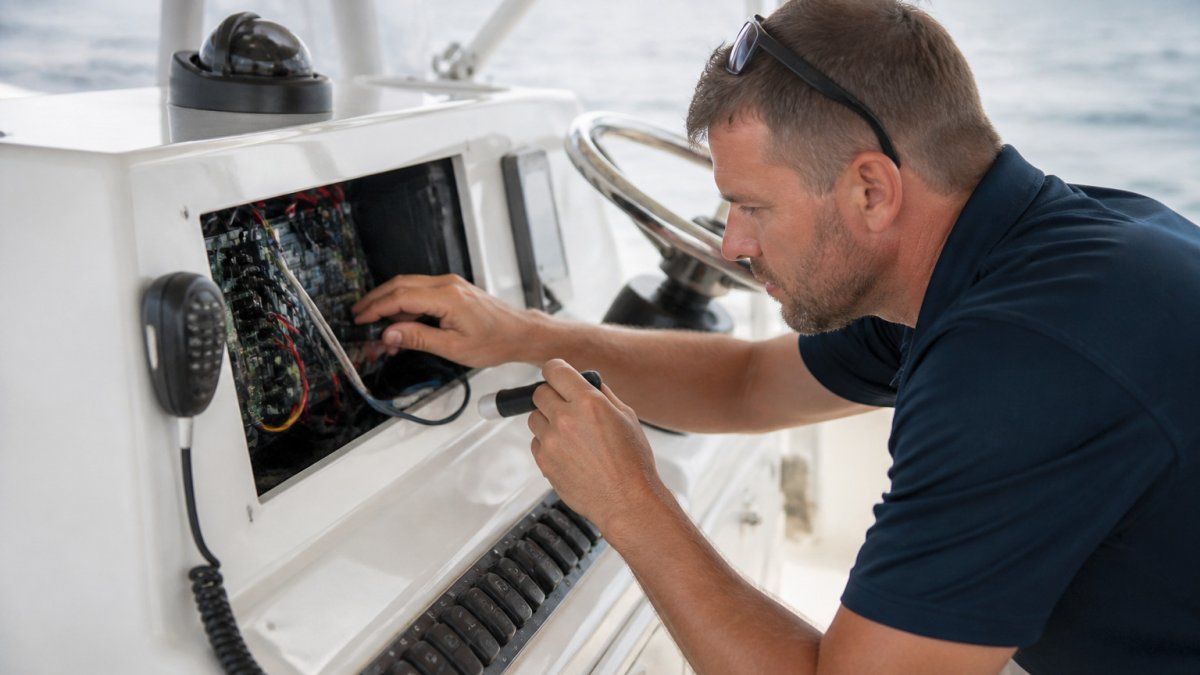
Start with a complete walkthrough of your yacht electrical system. Document every component: main battery banks, alternators, shore power connections, circuit breakers, wiring runs, and grounding points. Look for corrosion, loose connections, deteriorating insulation, and outdated components.
Pay special attention to wiring condition. Salt spray and moisture degrade marine electrical systems faster than freshwater environments. Check the engine room, galley, and cabin wiring for signs of wear. Note the gauge of existing cables, undersized wiring is a common problem that limits your ability to add new systems.
Document your current propulsion system too. Record engine hours, fuel consumption rates, and any performance issues. If you're considering a hybrid yacht propulsion retrofit, understanding your diesel engine's current efficiency is essential. Take photos of your engine compartment layout.
Calculate Your Electrical Load and Power Requirements
Your electrical load determines everything downstream: battery capacity, charger sizing, inverter specifications, and circuit protection requirements. Without this calculation, you'll either oversize your system (wasted money) or undersize it (inadequate power).
List every electrical device on your yacht: navigation equipment, lighting, refrigeration, water heaters, winches, stern thrusters, and entertainment systems. Note the voltage and amperage of each. Add them up to find your peak load, the maximum draw when multiple systems run simultaneously.
Calculate your daily consumption too. Multiply average hourly usage by 24 to estimate total amp-hours per day. This tells you whether a battery-electric propulsion system can handle your typical cruising pattern or whether you need a hybrid setup with engine backup.
Understanding Hybrid Yacht Propulsion Options
Hybrid yacht propulsion combines a diesel engine with an electric motor and battery bank. The electric motor handles low-speed maneuvering and cruising, while the diesel engine kicks in for higher speeds or heavy loads.
A typical hybrid propulsion system includes a battery bank (usually lithium), an electric motor coupled to a reduction gear, a diesel engine, a battery management system, and sophisticated power management electronics.
Hybrid systems work best for vessels that spend significant time at low speeds, fishing boats, cruising yachts, and displacement hulls. If your yacht runs at full throttle for hours daily, the efficiency gains diminish.
Consider the maneuvering load separately. Stern thrusters and low-speed maneuvering draw substantial power.
Electric vs. Hybrid Yacht Propulsion: Which Fits Your Vessel
Pure electric propulsion uses only a battery bank and electric motor. No combustion engine. No fuel. No emissions. The appeal is obvious, but the limitations are real.
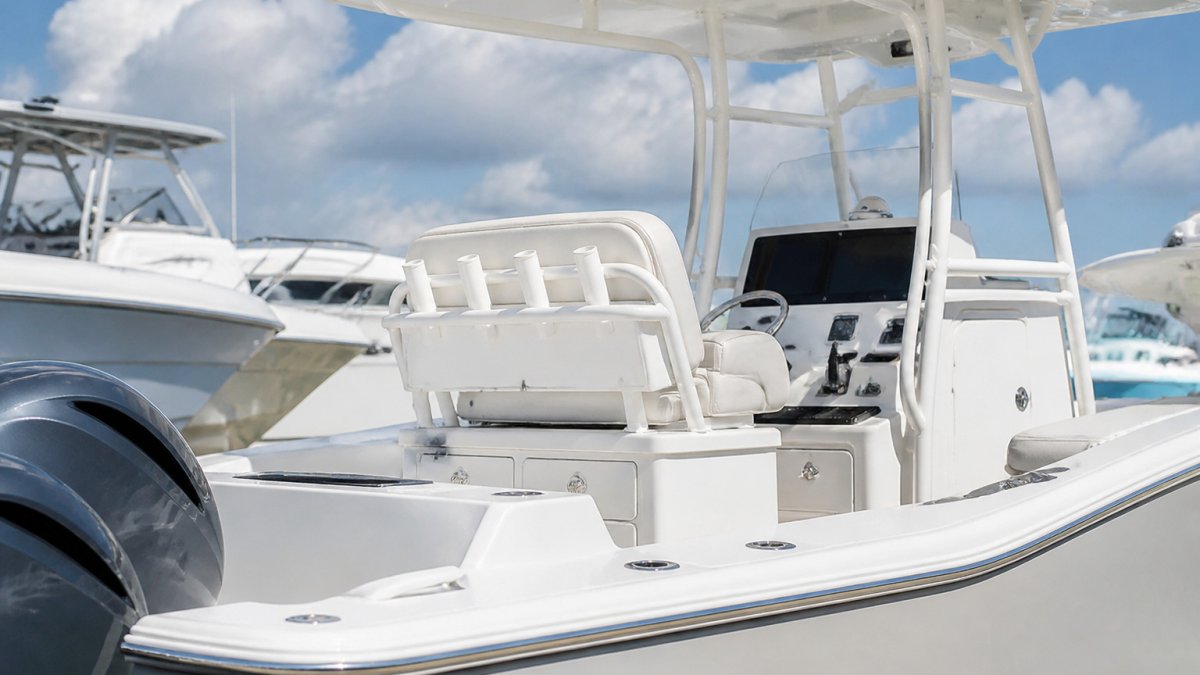
Battery-electric propulsion works well for small vessels with modest range requirements and low power demands. A 30-foot center console running short coastal trips might work as a pure electric yacht.
Charging infrastructure matters too. Unless you have reliable shore power at your home marina and every destination you visit, recharging becomes a logistical nightmare. Diesel fuel is available worldwide.
Hybrid propulsion solves these limitations. For most serious cruising yachts, hybrid is the practical middle ground.
The trade-off is complexity and cost. Hybrid yacht propulsion systems are more expensive than diesel-only setups and require more sophisticated maintenance.
Plan Your Yacht Propulsion Refit: Compatibility and Constraints
A yacht propulsion refit isn't just about swapping engines. It's a systems integration project that touches your hull, engine room, electrical architecture, and control systems.
Evaluate Space, Weight, and Structural Limits
Engine room layout is your first constraint. Hybrid propulsion systems require space for the electric motor, battery bank, power electronics, and additional cooling systems. Many older yachts have tight engine rooms designed around a single diesel engine.
Weight matters equally. Lithium battery banks are lighter than lead-acid alternatives, but they're still substantial. Adding 5,000-10,000 pounds of batteries and electric propulsion equipment shifts your yacht's weight distribution and center of gravity. This affects trim, stability, and fuel efficiency. Some vessels can handle it. Others can't without compromising performance or safety.
Have a naval architect review your vessel's structural limits before committing. They'll tell you whether your hull can support the added weight and whether the weight placement will degrade handling. This step costs a few thousand dollars but prevents catastrophic mistakes downstream.
Select Battery Bank Capacity and Energy Management Systems
Battery capacity is measured in kilowatt-hours (kWh). A typical hybrid yacht might use a 50-100 kWh battery bank, while a pure electric vessel could require 200+ kWh for adequate range.
Lithium batteries are standard for modern yachts. They're lighter, charge faster, and last longer than lead-acid alternatives. But they require sophisticated battery management systems to prevent overcharging, over-discharging, and thermal runaway.
Your energy management system coordinates power flow between the battery bank, diesel engine, shore power, and electrical loads. It decides when to run the engine, when to draw from batteries, and when to charge.
Sizing your battery bank requires balancing several factors: your electrical load, desired range, charging infrastructure, and budget. Undersizing leaves you stranded. Oversizing wastes money on batteries you'll never fully use.
Execute the Modernization: Installation, Testing, and Commissioning
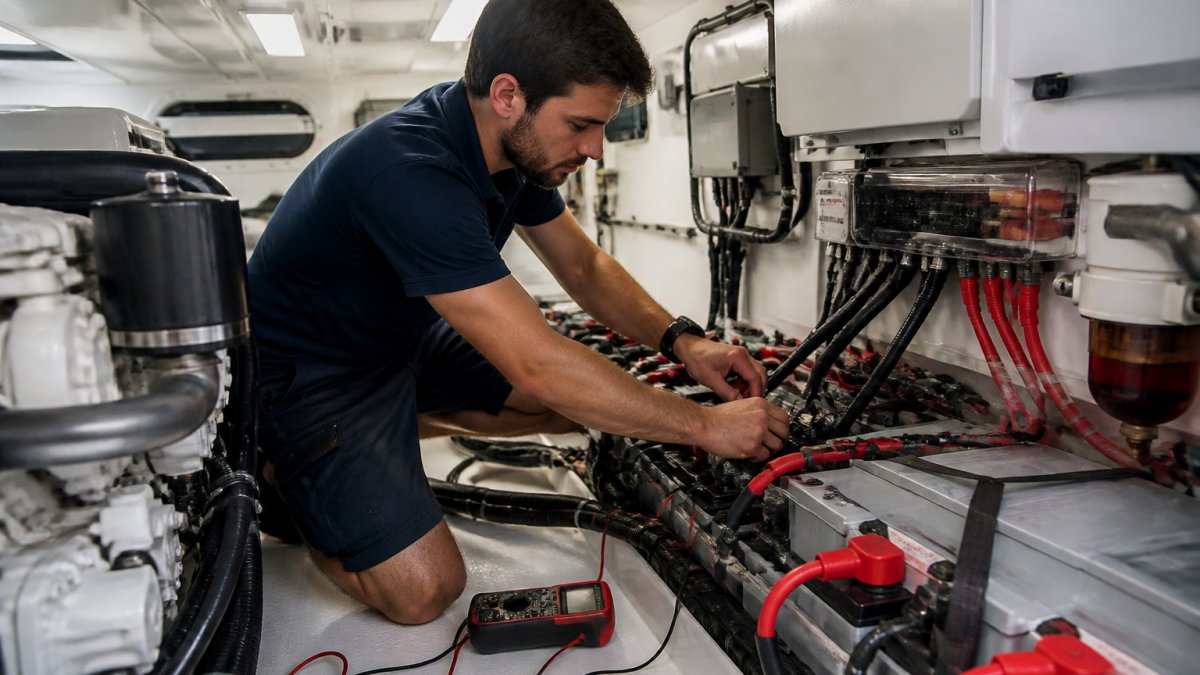
This is where theory meets reality. Installation of a hybrid propulsion system or a complete electrical modernization takes weeks or months, depending on complexity. Most owners use a qualified marine systems integrator for this phase, and the sequence below is the one that prevents rework.
Sequence the Work in the Right Order
Retrofits fail when the sequence is wrong. A practical order:
- Structural and weight verification, naval architect sign-off on battery placement, motor mounts, and shaft alignment before anything is bolted down.
- Mechanical installation, motor, reduction gear, shaft coupling, cooling loop, and ventilation.
- High-current DC backbone, battery bank, main fuse, disconnect, bus bars, and motor cables.
- House DC and AC distribution, panels, breakers, inverter/charger, and shore power inlet.
- Control and monitoring, BMS, energy management, throttle/helm integration, and alarms.
- Commissioning and sea trials, the step that proves the design.
Wiring, Grounding, and Circuit Protection Upgrades
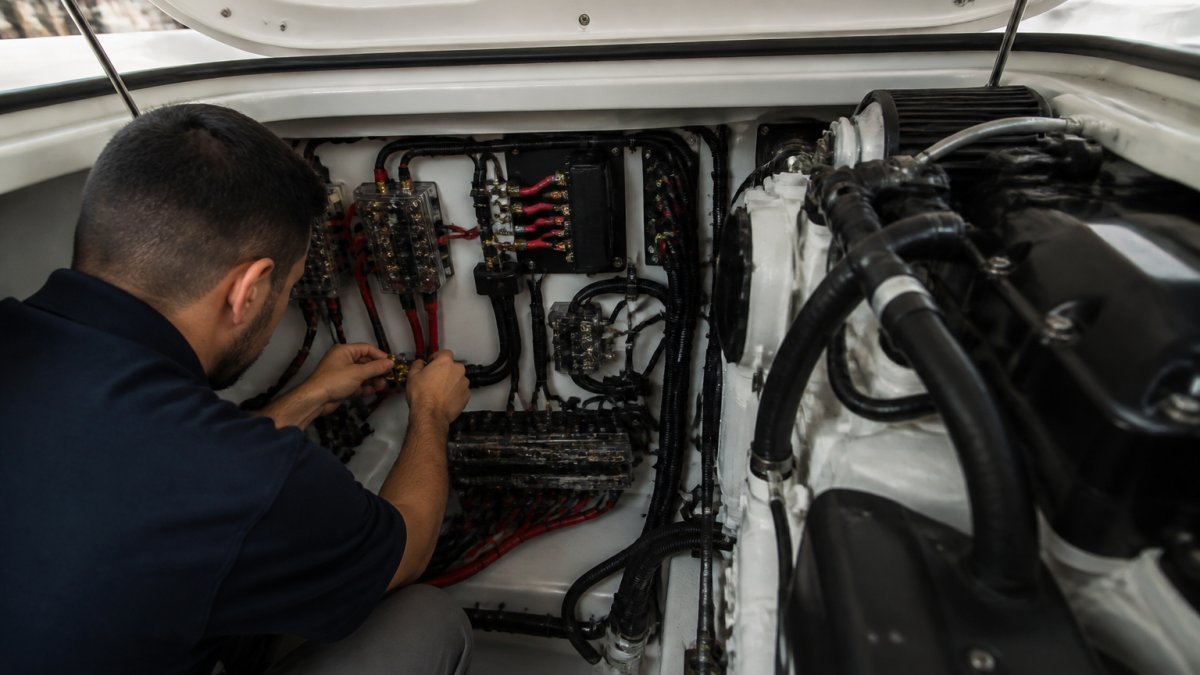
Marine-grade wiring uses tinned copper conductors that resist corrosion better than standard electrical wire. Size conductors by amperage and round-trip distance, targeting under 3% voltage drop on critical circuits (What Is Voltage Drop?). Don't cut corners here, undersized wiring is a common retrofit failure point and a frequent finding in marine electrical surveys.
Grounding requires a dedicated ground bus connected to the vessel's bonding system and, where applicable, a through-hull ground plate. Every electrical component grounds to this bus, creating a low-resistance return path. Poor grounding causes equipment malfunction, galvanic corrosion, and shock hazards.
Circuit protection includes breakers and fuses sized to protect wiring and equipment. High-current propulsion circuits need breakers rated for marine duty and for the bank's available fault current. Properly sized protection prevents fires and equipment damage if a fault occurs.
Commissioning Checklist: Test Before You Launch
Commissioning is a documented series of tests, not a visual once-over. A practical checklist:
- Insulation resistance, megger each circuit to confirm no leakage to ground before energizing.
- Polarity and continuity, verify every conductor is landed on the correct terminal and that grounds are continuous.
- Protection device function, trip every breaker and fuse manually; confirm the main disconnect isolates the bank under load.
- BMS safety cutoffs, force over-voltage, under-voltage, and over-temperature conditions and confirm the BMS opens the contactor as designed.
- Charging sources, verify shore power, alternator or DC-DC charger, and any generator each charge the bank to the correct profile and transition cleanly.
- Inverter transfer, confirm automatic transfer between shore and inverter with no drop to critical loads.
- Alarms and monitoring, confirm high-temperature, low-voltage, and fault alarms annunciate at the helm, not just at the panel.
Sea Trials: Test Under Real Load
Before declaring the modernization complete, conduct sea trials that exercise every operating mode: pure electric at low speed, diesel at cruising speed, combined mode for acceleration, and emergency shutdown. Run the thruster, windlass, and winches simultaneously with house loads to confirm the bank delivers peak demand without voltage sag.
Monitor system performance with real-time data logging. Record battery voltage, current, temperature, motor output, and fuel consumption. Compare actual performance against design predictions. Small discrepancies are normal; large ones indicate installation problems that need correction before you accept the job.
Test the BMS safety functions under load, not just at the dock. Confirm that the energy management system transitions between power sources without dropping critical loads. Document everything, photograph wiring runs, battery connections, and grounding points, and record baseline performance data.
Lifecycle Economics: Operating Costs, Maintenance, and Payback
The financial case for modernizing yacht electrical and propulsion systems depends on your usage patterns and local fuel costs.
Hybrid propulsion reduces fuel consumption significantly compared to diesel-only operation. Exact savings vary by vessel type and duty cycle.
Maintenance costs shift with a hybrid propulsion retrofit. Your diesel engine runs fewer hours, extending service intervals and reducing maintenance.
Battery replacement is your biggest long-term cost. Modern lithium batteries last 10-15 years with proper care. When they degrade below acceptable capacity, replacement costs can exceed $100,000 for larger systems.
Calculate your payback period by dividing total retrofit cost by annual fuel savings. If your hybrid propulsion retrofit costs $200,000 and saves $10,000 annually in fuel, payback takes 20 years.
Modernizing yacht electrical and propulsion systems is a complex undertaking that demands careful planning and qualified execution.
Frequently Asked Questions
What should you assess before modernizing a yacht's electrical and propulsion systems?
Start with a thorough inspection of your yacht electrical system, including wiring condition, circuit protection, grounding integrity, and battery bank capacity. Calculate your total electrical load by documenting all onboard systems and their power draw. Measure engine room space, weight distribution limits, and structural constraints. Review your vessel's age, hull type, and current propulsion configuration. These assessments determine whether a full hybrid retrofit, battery-electric upgrade, or diesel-electric conversion is feasible and which components suit your specific vessel.
How does hybrid yacht propulsion work compared to pure electric?
Hybrid yacht propulsion combines a diesel engine with an electric motor and battery bank, allowing the vessel to run on electric power alone at low speeds or in port, then switch to the diesel engine for higher-speed cruising or when battery charge drops. This dual-source approach extends range and reduces fuel consumption versus traditional diesel-only operation. Pure electric propulsion relies solely on battery capacity and offers zero emissions but requires frequent charging and limits range. Hybrid systems suit vessels with longer cruising ranges and variable operating profiles, while electric systems work best for day trips, harbor work, or vessels with predictable short-range duty.
What are the disadvantages of electric propulsion on a yacht?
Battery capacity limits operating range, most battery-electric yachts can cruise 40-100 nautical miles before requiring a full charge, depending on battery size and speed. Charging infrastructure is sparse outside major ports, making long-distance cruising impractical. Battery systems are expensive, adding significant upfront cost, and battery degradation occurs over time, reducing capacity. Weight of large battery banks affects hull trim and performance. Cold water reduces battery efficiency. Electric motors provide less peak power for quick maneuvering or towing. Retrofit integration into older vessels often requires extensive rewiring and structural modifications.
How long does a yacht electrical and propulsion refit take?
Timeline depends on scope and vessel size. A straightforward electrical system upgrade (wiring, grounding, circuit protection) typically takes 2-6 weeks for vessels under 50 feet. A hybrid propulsion retrofit, including motor installation, battery integration, and control system commissioning, usually requires 8-16 weeks. Full diesel-electric or battery-electric conversions on larger vessels can extend to 6-12 months if structural modifications, engine room reconfiguration, or extensive cabling is needed. Availability of marine contractors and parts sourcing also affect duration. Schedule sea trials and real-time monitoring setup after commissioning, adding 1-2 weeks.