 how-to
How Long Does a Yacht Refit Take?
Last Updated: November 4, 2026
Quick Summary
A yacht refit usually takes anywhere from a few weeks for a maintenance haul-out to six to twelve months or longer for a major program. The exact duration depends almost entirely on scope, so listing the work before estimating time is the key step.
- Maintenance haul-outs and minor refurbishments typically take 2 to 4 weeks.
- Medium refurbishments generally run 2 to 3 months.
- Major refits on large vessels take 6 to 12 months or longer.
- Phases overlap by design, so procurement can start during the survey.
- Long-lead items such as engines and stabilizers often set the critical path.
Table of Contents
- What a Yacht Refit Includes and Why Scope Sets the Timeline
- Typical Yacht Refit Duration by Project Scope
- Yacht Refit Timeline by Phase
- The Yacht Refit Process From Survey to Sea Trial
- Yacht Interior Refit Scheduling and Its Effect on Total Time
- Yacht Refit Checklist and What Causes Delays
- Planning Your Refit Window and Booking Your Consultation With Primo Yachts
- Frequently Asked Questions
What a Yacht Refit Includes and Why Scope Sets the Timeline
If you're asking how long does a yacht refit take, the honest answer is that it depends almost entirely on scope. A refit is a broad term covering everything from a routine haul-out and antifouling job to a full rebuild of hull, propulsion, and interiors. Owners often underestimate this gap, and it is one of the most common reasons schedules slip.
A yacht refit is a planned program of repair, upgrade, and renovation work carried out on a vessel that is already in service. Scope can include hull and deck work, engine and generator overhauls, electrical and navigation systems, and interior refinishing.
Published industry estimates reflect this range, with duration depending heavily on the scope of work and the size of the vessel. Owners should request a phase-based schedule from the shipyard for their specific yacht.
The point is simple: list the work first, then estimate time. Owners who skip that step tend to be surprised.
Typical Yacht Refit Duration by Project Scope
Duration tracks scope closely. A single work package moves quickly. A full-vessel program does not.
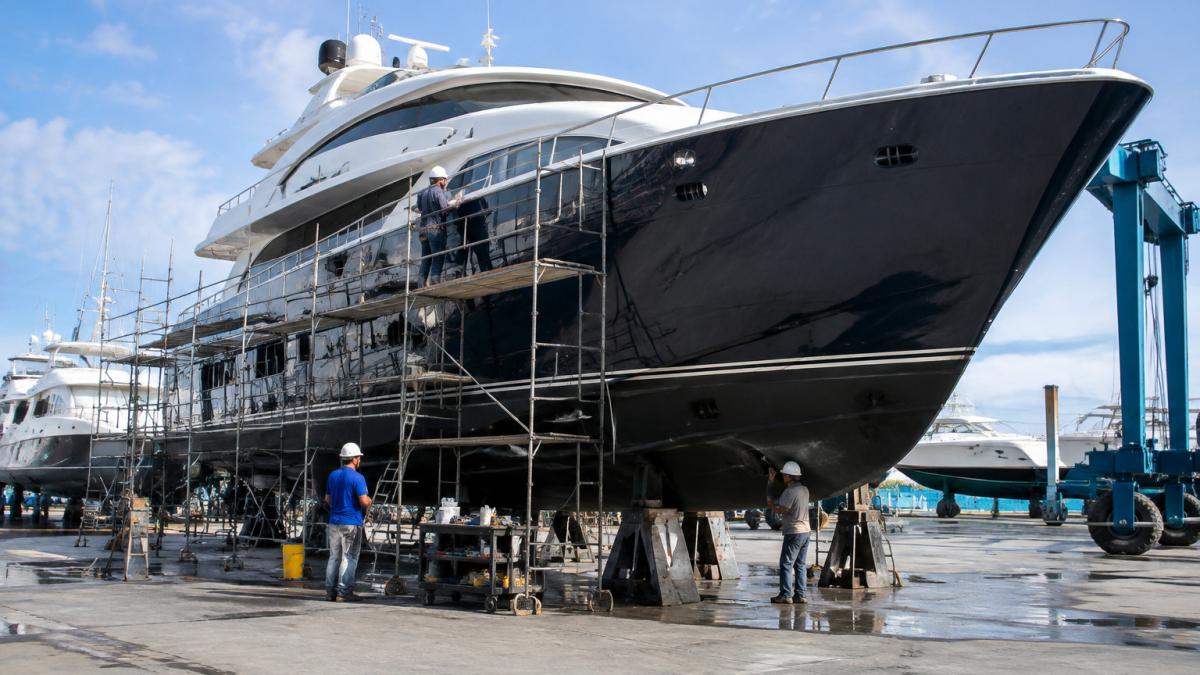
Here is how most projects break down:
- Maintenance haul-out: roughly 2 to 4 weeks
- Minor refurbishment: 2 to 4 weeks
- Medium refurbishment: 2 to 3 months
- Major refit on a large vessel: 6 to 12 months or longer
These are general benchmarks, not promises. A single standard timeline is not reliable for every yacht, which is why scope review comes first.
Minor Refits: Weeks, Not Months
Minor refits usually cover cosmetic work, a routine service, or one system upgrade. Confirm parts availability before the haul-out starts.
Major Refits: Six to Twelve Months and Beyond
Major refits combine structural repairs, propulsion work, and full interior renovation. A larger or more complex program will generally run longer than a smaller one, so disciplined planning matters.
Yacht Refit Timeline by Phase
A phase-level schedule shows when to book the yard, when to order parts, and when the owner needs to make decisions. A well-run refit generally follows a similar sequence regardless of vessel size, and the total duration is largely set by how well the phases overlap.
Here is a practical phase-by-phase breakdown for a mid-size refit, with the dependencies that drive timing.
- Survey and scope definition, 1 to 3 weeks. A full condition survey, machinery inspection, and owner walkthrough produce the work list. This phase sets everything downstream, so rushing it is the most expensive shortcut in the project. The output should be a written scope with line-item priorities, not a verbal punch list.
- Specification, design, and approvals, 2 to 6 weeks. Naval architecture, interior design, and class or flag-state approvals run here. On larger vessels, class society review of structural changes can add several weeks on its own. Owners who approve renderings and materials during this window avoid stalling the yard later.
- Procurement and long-lead ordering, 2 to 16 weeks, overlapping phases 1 and 2. Engines, generators, stabilizers, watermakers, navigation suites, and custom joinery carry the longest lead times. A common pattern is to place orders for long-lead items as soon as the survey confirms they are needed, rather than waiting for the full specification to close.
- Haul-out, hull, and structural work, 3 to 12 weeks. Bottom work, antifouling, blister repair, shaft and rudder service, and any steel or composite repair happen here. Duration depends heavily on what the survey found; hidden damage discovered after haul-out is the classic schedule breaker.
- Systems and machinery installation, 4 to 16 weeks. Propulsion, electrical, HVAC, plumbing, and electronics are usually the longest single phase on a comprehensive refit. Trades must be sequenced so that, for example, wiring and piping are complete before interior panels close up the access.
- Interior and finish work, 4 to 12 weeks. Joinery, upholstery, flooring, and soft goods. This phase is driven by material lead times and by how early the owner approved finishes. It frequently runs in parallel with the tail of systems work.
- Commissioning, sea trials, and handover, 1 to 3 weeks. Systems are tested dockside, then underway. Defect correction and final sign-off follow. A yacht is not genuinely ready until this phase closes, and owners should budget time for a punch list rather than treating sea trials as a formality.
Two scheduling rules matter more than any single duration. First, phases overlap by design: procurement starts during survey, interior fabrication starts during systems work, and commissioning planning starts before the yard work ends. A schedule that stacks every phase end-to-end will run far longer than necessary. Second, the critical path usually runs through the longest-lead item, not through the most visible work. Identifying that item early, whether it is a generator, a stabilizer, or a custom joinery package, is what separates a schedule that holds from one that slips.
Watch out: locking scope only after haul-out can add substantial time to the program, because procurement then restarts while the vessel sits in the yard.
The table below summarises the phase-by-phase durations described above, so you can see how each stage contributes to the overall schedule.
| Phase | Typical duration | Key dependency |
|---|---|---|
| Survey and scope definition | 1 to 3 weeks | Sets all downstream work |
| Specification, design, and approvals | 2 to 6 weeks | Class review on larger vessels |
| Procurement and long-lead ordering | 2 to 16 weeks | Overlaps phases 1 and 2 |
| Haul-out, hull, and structural work | 3 to 12 weeks | Depends on survey findings |
| Systems and machinery installation | 4 to 16 weeks | Trades sequenced before interiors |
| Interior and finish work | 4 to 12 weeks | Material lead times and approvals |
| Commissioning, sea trials, and handover | 1 to 3 weeks | Punch list and final sign-off |
The Yacht Refit Process From Survey to Sea Trial
A well-run refit starts with a thorough survey. The survey identifies hidden damage, which is the most common cause of mid-project scope growth. Once scope is locked, the yard builds a work schedule, sequences trades, and tracks progress against milestones.
Reach out now to see how we can help with your boating needs! →
Sea trials close the process. They confirm that propulsion, navigation, and systems perform as specified before handover. Skipping or rushing this step creates problems that surface after the owner takes the boat back.
Yacht Interior Refit Scheduling and Its Effect on Total Time
Interior work often drives the back half of a schedule. Joinery, upholstery, and fabric orders carry lead times that rarely match the yard's pace. Coordinating interior finishes early, and approving materials before the hull work wraps, keeps the project from stalling at the end. Labor availability in peak seasons can also stretch these phases, so book the yard and key trades well in advance.
Yacht Refit Checklist and What Causes Delays
Refits that run long often do so because a handful of predictable problems were not planned for. Understanding the mechanism behind each delay is what makes it preventable.
Parts lead times. Engines, generators, stabilizers, watermakers, navigation electronics, and custom joinery are often built to order and can have long lead times. The delay mechanism is simple: the part is ordered when the work package reaches the yard, not when the survey identifies the need, so the vessel sits idle waiting. Mitigation: place orders for long-lead items as soon as the survey confirms them, and ask the yard for a written long-lead list during scope definition.
Hidden damage. Corrosion, delamination, wet core, and failed through-hulls are frequently invisible until the hull is opened up. The delay mechanism is that the discovery triggers a new scope, a new quote, and often a new parts order mid-project. Mitigation: commission a thorough pre-haul-out survey, including moisture readings and ultrasonic thickness testing where appropriate, and hold a contingency in both budget and schedule for what the survey cannot see.
Contractor availability. Skilled trades, riggers, marine electricians, joiners, and paint specialists, are booked out during peak refit season. The delay mechanism is that a trade arrives late, and every trade sequenced behind it slips. Mitigation: book the yard and key subcontractors months in advance, and ask the yard to name the specific trades and dates in the work schedule.
Approvals and decisions. Owner sign-off on finishes, layouts, and change orders is a common bottleneck. The delay mechanism is that fabrication cannot start until materials and designs are approved, and each round of revisions adds days. Mitigation: set a written decision calendar at project kickoff with dates for each approval, and assign one owner representative with authority to sign.
Scope creep. Small additions, an extra outlet, a different faucet, a revised layout, accumulate. The delay mechanism is that each change interrupts sequenced work and may require re-ordering materials. Mitigation: require a written change order with a time and cost impact before any addition is approved, and review the change log at every milestone meeting.
Use this checklist to protect the schedule:
- Complete a full condition survey, including moisture and thickness testing, before fixing scope
- Build a written long-lead list during scope definition and order against it immediately
- Set a decision calendar with dated owner approvals for finishes, layouts, and equipment
- Name one owner representative with authority to approve changes
- Require written change orders with time and cost impact before work proceeds
- Book the yard and key trades months ahead of the refit window
- Set written milestones with the yard and review progress against them at fixed intervals
- Schedule sea trials and commissioning dates before yard work begins
- Hold a schedule and budget contingency for hidden damage
A milestone plan for a refit should set a logical sequence of stages and review points, even though exact dates will move as the project progresses. Tracking progress against milestones rather than a single completion date helps owners catch slippage early.
Watch out: a refit without a written change-order process can extend considerably, because small additions are absorbed silently into the schedule.
Planning Your Refit Window and Booking Your Consultation With Primo Yachts
Start planning early. Decide on your target relaunch date, then work backward through survey, procurement, and yard time. Our team can help you define scope and build a realistic schedule before you commit. For guidance on evaluating shipyards, read our guide on how to choose a yacht refit shipyard. If you want to understand the legal issues that can stall a refit, review our piece on yacht refit legal mistakes, and for ongoing expenses around the refit window, see our Florida mega yacht operating costs guide.
Reach out now to see how Primo Yachts can help with your refit planning and timeline.
Frequently Asked Questions
How long does a typical yacht refit take?
A typical refit depends on scope, and durations vary widely from one vessel to another. Planning with a shipyard that provides a written, phase-based schedule is the most reliable way to set expectations for your specific vessel.
What factors affect a yacht refit timeline?
The biggest drivers are project scope, vessel size, and the condition of the boat once work begins. Hidden damage discovered during disassembly, scope changes requested mid-project, parts lead times, and labor availability all extend schedules. Seasonal demand at shipyards also affects when work can start. Clear specifications before the yard period begins, plus contingency time in the plan, reduce the risk of overruns.
How long does a full yacht refit take compared with a cosmetic refit?
A cosmetic refit, such as interior soft goods, upholstery, or paint touch-ups, is generally much shorter than a full refit. A full refit that includes hull work, propulsion or engine overhauls, electrical and systems upgrades, and interior renovation requires considerably more time. The gap is driven mainly by how many work packages must be sequenced and how many trades must coordinate.
How far in advance should I plan a yacht refit?
Plan a major refit well ahead, particularly if you need a specific shipyard slot or specialty equipment with long lead times. Start with a survey and written scope, then request a detailed schedule from the yard before committing to a completion date. For tailored guidance, contact Primo Yachts.