 how-to
Yacht Refit and Repower Services: A Complete Guide
Table of Contents
- Understanding Yacht Refit and Repower Services
- Key Service Categories for Yacht Refit Projects
- Planning Your Yacht Refit Timeline
- Understanding Yacht Engine Repower Cost Factors
- Regulatory Compliance and Environmental Requirements
- Choosing the Right Refit Service Provider
- Insurance and Warranty Considerations
- Conclusion
Last Updated: August 26, 2026
Understanding Yacht Refit and Repower Services
A yacht refit is a comprehensive restoration or modernization project that addresses one or more systems, structures, or aesthetic elements of a vessel. A repower specifically replaces or upgrades the engine and propulsion system. Together, yacht refit and repower services represent the full spectrum of vessel restoration, from mechanical overhauls to complete interior redesigns.
The distinction matters because they're often bundled but serve different purposes. A refit might involve replacing windows, updating electrical systems, or refreshing cabinetry. A repower focuses entirely on propulsion and engine performance. Many yacht owners combine both to maximize efficiency and extend vessel life.
At Primo Yachts of Palm Beach, we've worked with owners navigating these decisions since 2009, and the complexity is real. Refit projects touch every system on a vessel. Repowers demand precision engineering. Understanding what each service entails helps owners make informed decisions about timing, budget, and which service providers to trust.
The scope of these services has expanded dramatically over the past decade. Modern yachts require expertise in marine electronics, composite materials, hydraulic systems, and environmental compliance that didn't exist in older vessels. This is why specialized service providers have become essential, general contractors simply lack the depth needed for high-end marine work.
Key Service Categories for Yacht Refit Projects
Yacht refit projects break down into distinct service categories. Each demands specialized expertise, and most professional refits involve coordination across multiple trades.
Engine Diagnostics and Mechanical Overhaul
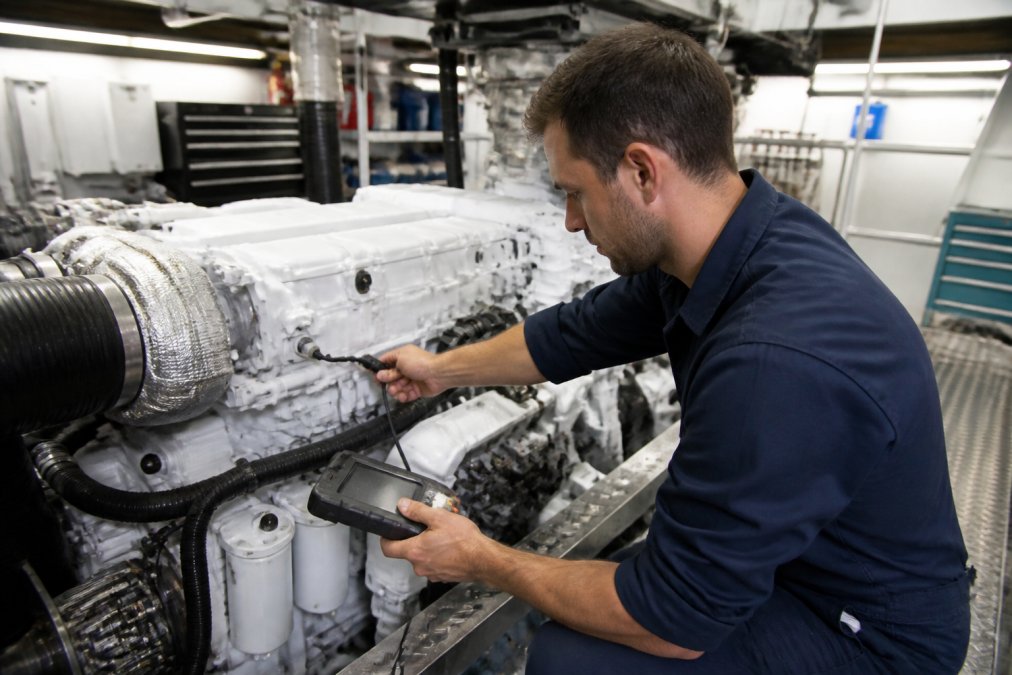
Engine diagnostics form the foundation of any mechanical assessment. A thorough diagnostic identifies wear, corrosion, fuel system issues, cooling system performance, and bearing condition before major work begins. This step prevents expensive surprises mid-project.
Mechanical overhaul goes beyond diagnosis. It involves disassembly, inspection of internal components, replacement of worn parts, and reassembly to factory specifications. For inboard engines, this typically includes valve work, bearing replacement, gasket sealing, and fuel injector servicing. Outboard engines follow similar logic but with different access points and component layouts.
The cost and timeline for mechanical overhaul depend entirely on engine condition and type. A well-maintained engine might need only routine service. A neglected one could require complete rebuilding. Professional shipyards like Derecktor Shipyards and Bradford Marine use in-house machine shops to handle complex overhauls, ensuring precision and quality control that external contractors can't always match.
Marine engineering specialists often recommend preventative maintenance schedules to extend engine life between major overhauls. Regular oil changes, filter replacements, and system flushing cost far less than emergency repairs or complete rebuilds.
Propulsion and Repowering Solutions
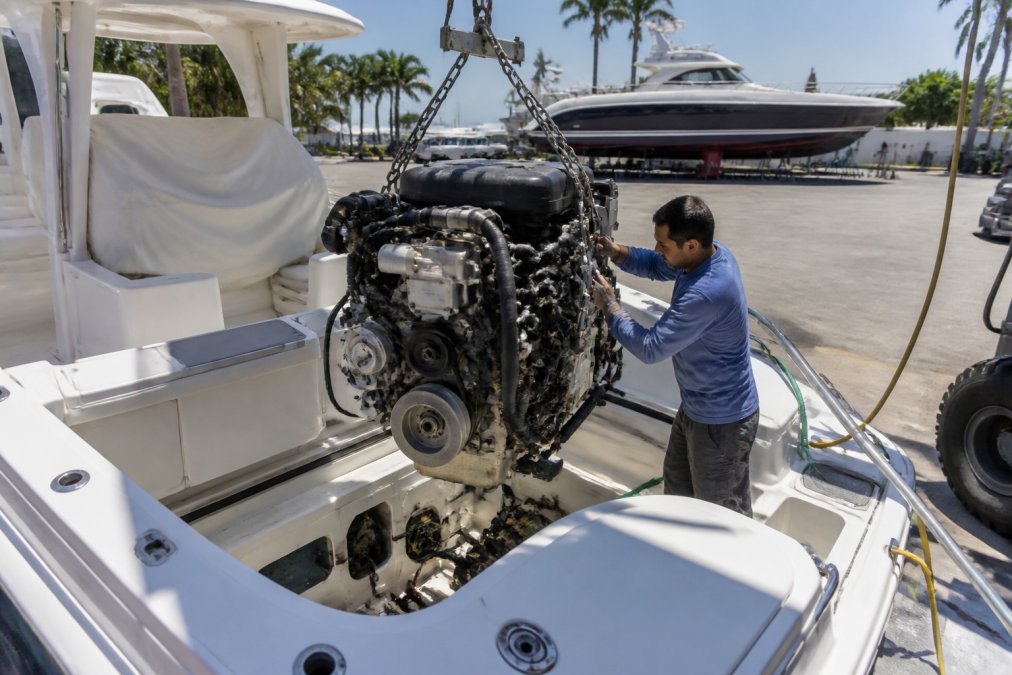
Repowering is the most significant propulsion upgrade available to yacht owners. It replaces aging engines with modern units that deliver better fuel efficiency, lower emissions, improved reliability, and quieter operation.
The decision to repower hinges on several factors. Older engines consume more fuel and require frequent repairs. Modern marine engines meet current environmental standards and integrate with digital monitoring systems. For vessels over 15 years old, repowering often makes financial sense within 5-7 years of ownership (peer-reviewed research).
Inboard repower projects require structural modifications, new engine beds, updated fuel systems, modified exhaust routing, and propeller pitch adjustments. Outboard repowers are simpler mechanically but still demand precise mounting and electrical integration. Both approaches involve weeks of work and require haul-out or dry-dock access.
Propeller selection changes with repowering. A new engine may require different propeller pitch to achieve optimal performance and fuel consumption. Specialists use performance data and vessel weight to calculate the correct pitch, ensuring the engine operates in its intended RPM range.
Electrical System Upgrades and Marine Electronics
Modern yachts depend on sophisticated electrical systems. Upgrades typically include new battery banks, charging systems, inverters, panel upgrades, and wiring replacement with marine-grade cable.
Marine electronics integration has become critical. GPS, autopilot, fish finders, radar, and communication systems must work seamlessly. This requires proper grounding, shielding, and integration with the vessel's main electrical panel. Poor electrical work causes intermittent failures, safety hazards, and expensive troubleshooting.
Specialists like Aquamare Marine USA focus on electrical refits because the work demands precision. A single grounding error can cascade into multiple system failures. Professional marine electricians understand the unique challenges of saltwater environments, corrosion, moisture intrusion, and vibration that would destroy standard electrical work.
Fiberglass and Hull Restoration
Hull condition determines vessel longevity. Fiberglass deterioration, osmotic blistering, and structural damage require specialized repair expertise. Restoration ranges from cosmetic refinishing to structural reinforcement.
Fiberglass work involves grinding out damaged areas, applying new composite material, fairing surfaces, and refinishing. Large repairs demand skilled craftspeople who understand composite layup techniques, resin chemistry, and structural requirements. A poorly executed fiberglass repair compromises hull integrity and creates future problems.
RMK Merrill-Stevens and American Marine Repair maintain in-house fiberglass teams capable of complex structural work. Their expertise ensures repairs meet classification society standards and restore the vessel's original strength.
Interior Remodeling and Custom Joinery
Interior spaces define the ownership experience. Remodeling projects range from updated cabinetry and upholstery to complete layout redesigns, new flooring, and custom furniture.
Custom joinery demands woodworking expertise combined with marine knowledge. Materials must resist moisture and salt air. Construction must accommodate vessel movement and vibration. Bilge 2 Bridge Refit specializes in this work, understanding that aesthetic quality and functional durability must coexist.
Interior refits also address comfort systems, air conditioning packages, heating upgrades, ventilation improvements, and galley equipment. These systems interact with hull structure and electrical systems, requiring coordinated planning.
Planning Your Yacht Refit Timeline
Refit timelines depend on project scope, vessel size, and service provider capacity. A minor update might take 4-8 weeks. A comprehensive refit involving engine, hull, electrical, and interior work typically spans 3-6 months.
The planning phase itself takes 4-6 weeks. This includes surveying the vessel, identifying all systems needing attention, obtaining quotes from specialists, and scheduling dry-dock or haul-out dates. Coordination is critical, some trades must complete before others can begin. Engine work must finish before interior systems are installed. Hull work must be complete before electrical and plumbing systems are commissioned.
Unexpected issues extend timelines. Once the vessel is hauled out and systems are exposed, additional damage often emerges. Budget 10-15% schedule buffer for discovery work. Professional project managers, like those at Lauderdale Marine Center, build this contingency into timelines from the start.
Seasonal factors matter. Hurricane season (June-November) limits dry-dock availability. Peak refit season (December-April) means longer waits for service providers. Planning ahead and scheduling during shoulder seasons can reduce timeline pressure and potentially lower costs.
Understanding Yacht Engine Repower Cost Factors
Repowering costs vary dramatically based on engine type, vessel size, and integration complexity. Several factors determine final pricing.
Engine selection drives the largest cost component. New marine engines range widely in price depending on horsepower, manufacturer, and technology level. A basic replacement engine costs less than one with advanced emission controls and digital monitoring.
Installation complexity adds significant cost. Structural modifications, fuel system changes, exhaust routing, and electrical integration require skilled labor. Inboard repowers typically cost more than outboard replacements because structural work is more extensive.
Propeller replacement often accompanies repowering. A new propeller optimized for the new engine adds cost but is essential for performance and efficiency.
Additional systems integration increases expenses. Modern engines work best with updated electrical panels, battery systems, and monitoring equipment. Owners often choose to upgrade these systems simultaneously, improving overall vessel performance.
The supporting keyword yacht engine repower cost reflects owner concern about budgeting. Costs vary so significantly that generalizing is misleading. Primo Yachts of Palm Beach recommends obtaining detailed quotes from multiple service providers before committing. Transparent pricing allows owners to understand where money is being spent and make informed decisions about which upgrades provide real value.
Regulatory Compliance and Environmental Requirements
Yacht refit and repower services must comply with federal environmental regulations and classification society standards. Understanding these requirements prevents costly rework and ensures legal operation.
The Environmental Protection Agency (EPA) regulates marine engine emissions (the EPA). Older engines produce higher emissions than current standards allow. Repowering to modern engines ensures compliance with federal regulations and positions vessels for future regulatory changes.
The Coast Guard enforces safety standards for vessel construction, electrical systems, and propulsion equipment. Major refits require compliance verification. Classification societies like the American Bureau of Shipping (ABS) and Lloyd's Register establish additional standards that many insurers require.
Fiberglass and composite work must meet structural standards. Hull repairs affecting structural integrity require certification that work meets original design specifications. This documentation protects owners and ensures resale value.
Electrical system work must comply with American Boat and Yacht Council (ABYC) standards (abycinc.org). Proper grounding, circuit protection, and equipment installation prevent fires and electrical hazards.
Environmental compliance also includes proper waste disposal during refits. Shipyards must handle hazardous materials, used oil, and composite waste according to EPA and state regulations. Professional facilities like Derecktor Shipyards maintain Foreign Trade Zone (FTZ) status, which provides tax advantages for major international refits while ensuring environmental compliance.
Choosing the Right Refit Service Provider
Selecting a service provider determines project success. The decision involves evaluating expertise, capacity, reputation, and alignment with your vessel and budget.
Specialization matters enormously. Providers who focus on specific vessel types or service categories develop deeper expertise than generalists. Merritt's Boat & Engine Works specializes in sportfishing yachts. Viking Yacht Service Center focuses on Viking, Princess, and Valhalla brands. This specialization translates to faster work, fewer mistakes, and better results.
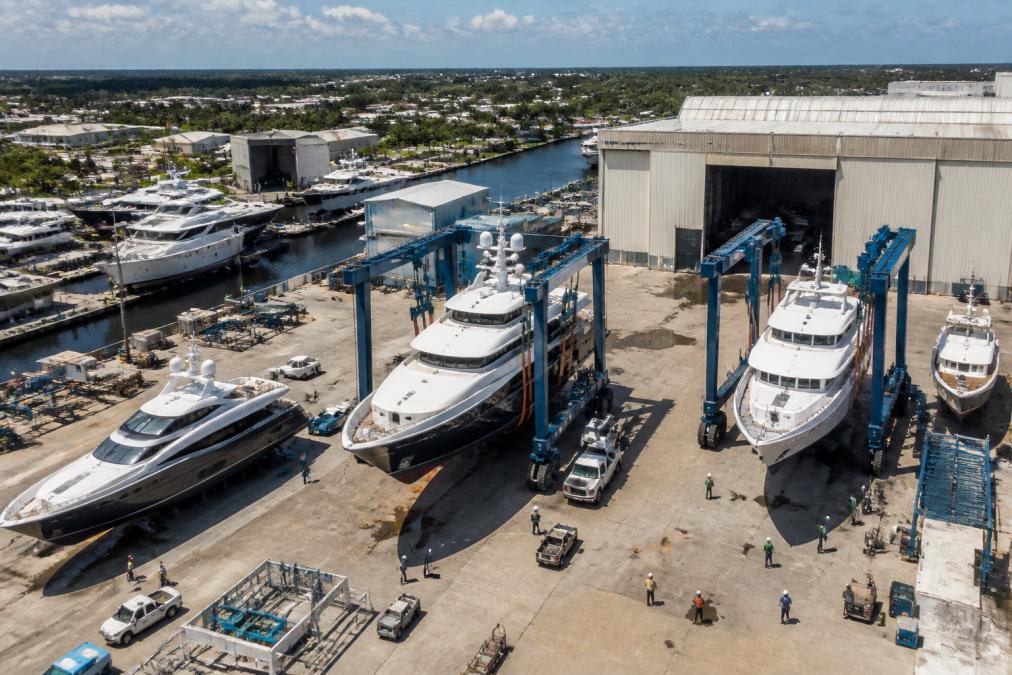
Facility capacity determines timeline and quality. Larger yards like Lauderdale Marine Center and RMK Merrill-Stevens can handle multiple large projects simultaneously. Smaller specialists might offer more personalized service but have limited availability.
Reputation and references provide insight into reliability. Ask for references from recent projects similar in scope to yours. Contact those references directly and ask about timeline adherence, budget management, and quality of work. Long-term reputation in a tight-knit industry matters, poor work becomes known quickly.
Project management capability separates excellent providers from adequate ones. Providers who assign a dedicated project manager, maintain clear communication, and provide regular updates reduce owner stress and catch problems early. Derecktor Shipyards' "Derecktor One" program exemplifies this approach, offering a single point of contact and coordinated scheduling.
Visit facilities in person when possible. Observe the condition of the yard, organization of work areas, and professionalism of staff. A well-maintained facility with organized systems usually delivers better results than a chaotic operation.
Understanding the marketplace model matters too. Lauderdale Marine Center operates as a marketplace where owners select from certified contractors. This model offers choice and transparency but requires active owner involvement. All-inclusive models like those offered by Derecktor Shipyards simplify coordination but offer less flexibility.
Primo Yachts of Palm Beach can guide owners through this selection process. Our experience with vessel ownership and our connections throughout the Florida marine service community position us to recommend providers aligned with your specific needs and vessel type.
Insurance and Warranty Considerations
Insurance and warranty implications deserve careful attention during refit planning. Work performed during refits affects coverage, and warranty terms vary significantly among service providers.
Notify your insurance carrier before beginning major refit work. Some policies require pre-approval or may exclude coverage for work performed by uncertified contractors. Documenting all work and obtaining warranties on completed work protects you if issues emerge later.
Warranty terms vary by service provider and work type. Engine repowers typically come with manufacturer warranties on the new engine (usually 3-5 years), but labor warranties from the installer are shorter (often 1-2 years). Fiberglass and structural work may include longer warranties if the provider is confident in their work.
Get warranty terms in writing before work begins. Understand what's covered, how long coverage lasts, and what triggers warranty claims. Some providers offer extended warranties for additional cost, evaluate whether this protection makes sense for your situation.
Work performed by certified contractors often carries better warranty protection than work by uncertified individuals. Classification society certification (ABS, Lloyd's) adds credibility and insurance value to major work.
Haul-out insurance covers potential damage during the refit process. Most service providers carry this coverage, but verify it's included in your agreement. Accidents happen, proper insurance protects both you and the service provider.
Document everything. Photograph the vessel before work begins. Keep all invoices, warranties, and work completion certificates. This documentation supports insurance claims if needed and proves warranty compliance if disputes arise.
Yacht refit and repower services represent substantial investments in vessel performance, safety, and longevity. The complexity of modern yachts demands specialized expertise across multiple disciplines. Success depends on selecting service providers with proven capability in your specific needs, maintaining clear communication throughout the project, and understanding the regulatory and insurance implications of major work.
The Florida marine service industry includes world-class facilities capable of handling any refit project. Primo Yachts of Palm Beach has worked with vessel owners for over 15 years, and we understand the challenges of coordinating major refit work. Our expertise in the center console market and our connections with leading service providers position us to guide owners through refit planning, recommend qualified specialists, and ensure your vessel emerges from the refit process safer, more efficient, and ready for years of reliable operation. Contact us to discuss your vessel's refit needs and explore how we can support your project.
=== FAQ ANSWERS (audit these too, same rules) ===
[1] Q: How long does a typical yacht refit timeline take? A: A yacht refit timeline depends on project scope and complexity. Minor refits focusing on specific systems may take 2-4 weeks, while comprehensive refits involving engine diagnostics, propulsion upgrades, electrical rewiring, and interior remodeling typically require 8-16 weeks or longer. The timeline also accounts for dry dock availability, parts procurement, and coordination between multiple trades. Your service provider should deliver a detailed schedule during the project planning phase.
[2] Q: What factors influence yacht engine repower cost? A: Yacht engine repower cost varies based on engine type (inboard vs. outboard), horsepower requirements, fuel efficiency upgrades, and installation complexity. Additional expenses include engine mounting modifications, exhaust system upgrades, fuel system integration, marine hydraulics adjustments, and steering system reconfiguration. Labor costs depend on shipyard rates and project duration. Vessel survey requirements, parts sourcing, and any corrosion control work add to the total. Pricing depends on your specific vessel and repower objectives; contact a specialist service provider for a detailed quote.
[3] Q: What's the difference between a yacht refit and a restoration? A: A yacht refit focuses on upgrading, repairing, or replacing specific systems and components to improve performance, safety, or aesthetics. This may include propulsion upgrades, electrical system modernization, or interior updates. A restoration, by contrast, returns an older vessel to original or near-original condition, often involving comprehensive structural work, hull restoration, and full mechanical overhaul. Restorations typically require more extensive work and longer timelines than targeted refits, though both involve professional marine engineering and project management.
[4] Q: How do I know if my yacht needs repowering? A: Signs your yacht may benefit from repowering include aging engines with declining fuel efficiency, frequent mechanical repairs, excessive vibration or noise, difficulty meeting modern emissions standards, or performance limitations that affect your fishing or cruising experience. Engine diagnostics performed by a marine technician can reveal wear patterns and corrosion issues. If your vessel is over 15-20 years old or shows declining power output despite maintenance, a professional vessel survey and engineering consultation can determine whether repowering or a mechanical overhaul is the right choice for your needs.
Frequently Asked Questions
How long does a typical yacht refit timeline take?
A yacht refit timeline depends on project scope and complexity. Minor refits focusing on specific systems may take 2-4 weeks, while comprehensive refits involving engine diagnostics, propulsion upgrades, electrical rewiring, and interior remodeling typically require 8-16 weeks or longer. The timeline also accounts for dry dock availability, parts procurement, and coordination between multiple trades. Your service provider should deliver a detailed schedule during the project planning phase.
What factors influence yacht engine repower cost?
Yacht engine repower cost varies based on engine type (inboard vs. outboard), horsepower requirements, fuel efficiency upgrades, and installation complexity. Additional expenses include engine mounting modifications, exhaust system upgrades, fuel system integration, marine hydraulics adjustments, and steering system reconfiguration. Labor costs depend on shipyard rates and project duration. Vessel survey requirements, parts sourcing, and any corrosion control work add to the total. Pricing depends on your specific vessel and repower objectives; contact a specialist service provider for a detailed quote.
What's the difference between a yacht refit and a restoration?
A yacht refit focuses on upgrading, repairing, or replacing specific systems and components to improve performance, safety, or aesthetics. This may include propulsion upgrades, electrical system modernization, or interior updates. A restoration, by contrast, returns an older vessel to original or near-original condition, often involving comprehensive structural work, hull restoration, and full mechanical overhaul. Restorations typically require more extensive work and longer timelines than targeted refits, though both involve professional marine engineering and project management.
How do I know if my yacht needs repowering?
Signs your yacht may benefit from repowering include aging engines with declining fuel efficiency, frequent mechanical repairs, excessive vibration or noise, difficulty meeting modern emissions standards, or performance limitations that affect your fishing or cruising experience. Engine diagnostics performed by a marine technician can reveal wear patterns and corrosion issues. If your vessel is over 15-20 years old or shows declining power output despite maintenance, a professional vessel survey and engineering consultation can determine whether repowering or a mechanical overhaul is the right choice for your needs.
This article was written using GrandRanker