 how-to
When to Hire a Professional Marine Engine Technician
Last Updated: October 23, 2026
Quick Summary
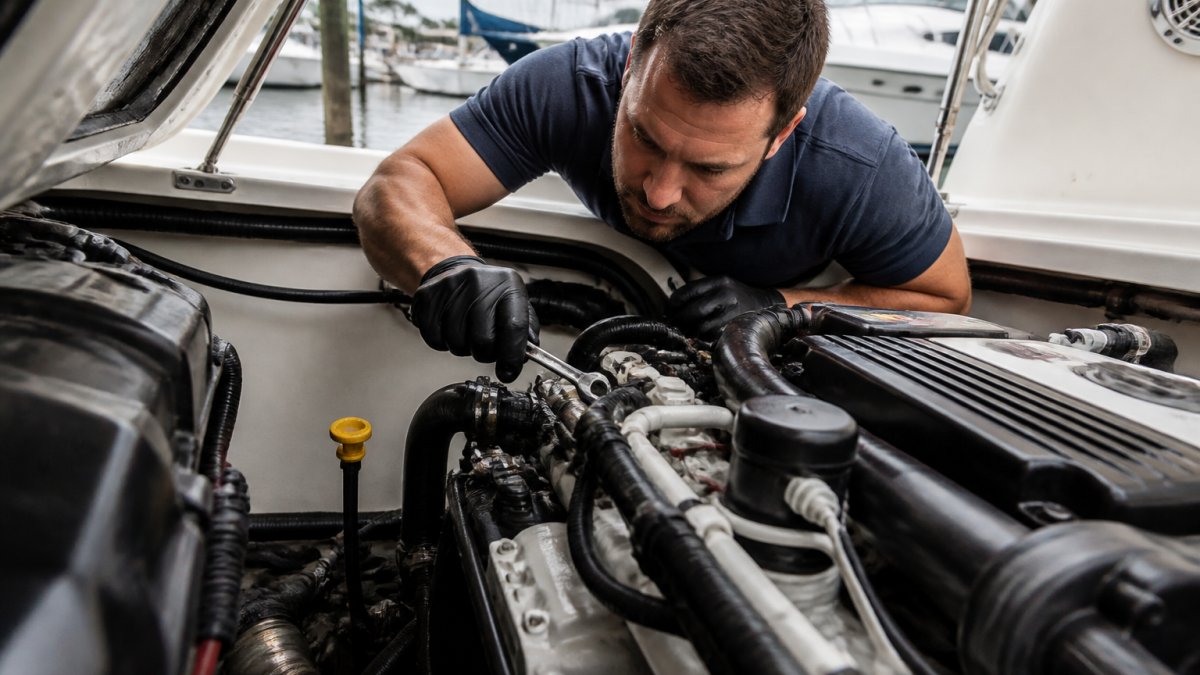
Hire a marine engine technician when your boat shows Tier 1 warning signs like overheat alarms, oil pressure drops, fuel smells, grinding noises, or sudden power loss with smoke. A marine engine technician brings diagnostic tools and experience to identify problems that visual inspection cannot reveal, and should also service your engine every 100 operating hours or annually for gasoline engines.
- Tier 1 symptoms require stopping the engine immediately and calling a technician without restarting
- Gasoline engines need professional service every 100 operating hours or annually, whichever comes first
- Certified marine engine technicians hold credentials from the National Association of Marine Technicians or manufacturer-specific certifications
- Provide your technician with engine serial number, alarm codes, symptom logs, fuel and oil details, and service history before work begins
- Match the service option to the job: mobile technicians for diagnostics and minor work, authorized dealers for warranty and complex repairs
Table of Contents
- Signs Your Boat Engine Needs Professional Attention
- Marine Engine Warning Signs That Demand Immediate Service
- Boat Engine Troubleshooting: What You Can Handle Yourself
- How Often Should a Boat Engine Be Serviced Professionally
- Choosing the Right Professional Marine Technician
- Questions to Ask a Marine Mechanic Before Hiring
- Preparing for Your Marine Engine Service Visit
- Frequently Asked Questions
Signs Your Boat Engine Needs Professional Attention
Catching a boat engine problem early can mean the difference between a quick repair and a catastrophic failure at sea.
Some issues you can spot yourself; others demand professional expertise.
Common signs that warrant professional inspection include:
- Engine won't start or starts inconsistently
- Unusual noises (grinding, knocking, squealing)
- Visible leaks under the engine
The key question isn't whether something is wrong, it's whether you should fix it yourself or call a professional.
How to Inspect Yacht Engine History Before Purchase(page:1) covers what to look for when evaluating an engine's past maintenance.
Marine Engine Warning Signs That Demand Immediate Service
Most owners need a triage rule: is this a stop-the-boat-now problem, a dock-it-this-week problem, or a watch-it-and-log-it problem? When in doubt, treat the symptom as one tier more urgent than you think.
Tier 1, Stop the engine now and do not restart
- Overheat alarm or gauge climbing past normal. Once the impeller or thermostat fails, heat can warp a head or seize a piston in minutes. Shut down, let it cool, and check the raw-water strainer and telltale (outboards) or coolant reservoir (inboards) only after the engine is cold. Do not "limp home."
- Oil-pressure warning or gauge dropping toward zero. Low oil pressure means bearings aren't getting oil, and every minute adds wear that cannot be undone. Check the oil level after shutdown; if it's fine and the alarm persists, the problem is the pump, pickup, or sender, a technician's job.
- Fuel smell or visible fuel leak. Gasoline vapor pools in the bilge. Shut down, turn off the battery switch, and do not run the blower until the source is found.
Tier 2, Dock it and schedule service within days
- Rough idle, hesitation, or a miss under acceleration. Often fuel delivery, spark, or injector issues. A technician can run a diagnostic scan and cylinder-contribution test rather than replacing parts by guesswork.
- Slow coolant or oil weep under the engine. A few drops after a run can be a seal starting to fail. Persistent weeping on a sterndrive bellows or inboard rear main seal is a haul-out item, not a dockside one.
- Exhaust smoke that does not clear after warm-up. White smoke can be steam from a cooling leak; blue smoke is oil; black smoke is over-fueling. Each points to a different system and is cheaper to diagnose early.
Tier 3, Log it and mention it at the next service
- Intermittent gauge flicker with no other symptom.
- A one-time alarm that cleared and did not return.
- Minor cosmetic corrosion on a terminal or bracket.
Log the date, engine hours, RPM, and conditions for any Tier 3 item. If it repeats, it moves up a tier.
Diagnostic thresholds technicians actually use
Owners often ask "how hot is too hot" or "how low is too low." The threshold is engine-specific and lives in your owner's manual, but the pattern is consistent. Most marine gasoline inboards and sterndrives run thermostats in the 140-160°F range and alarm in the 190-200°F range; most outboards alarm around 195-205°F. Oil pressure at cruise is typically 30-60 psi on gasoline engines and higher on diesels.
What not to do while waiting for the technician
- Do not clear alarm codes or disconnect the battery to "reset" the engine. Stored codes are the technician's best evidence.
- Do not add stop-leak or octane booster to chase a symptom. These can mask the problem and contaminate sensors.
- Do not run the engine on a hose or flush port to "test" an overheat. Without load it may not reproduce the symptom, and you risk a second overheat.
How to Inspect Yacht Engine History Before Purchase(page:1) covers what to look for when evaluating an engine's past maintenance. That knowledge helps you spot patterns of neglect or proper care.
Marine engine problems fall into three tiers based on urgency and required action.
| Tier | Symptoms | Action Required |
|---|---|---|
| Tier 1 | Overheat alarm, oil pressure drop, fuel smell, grinding noise, power loss with smoke | Stop engine now, do not restart |
| Tier 2 | Rough idle, slow leaks, exhaust smoke, hard starting, new vibration | Dock and schedule service within days |
| Tier 3 | Intermittent gauge flicker, one-time alarm, minor corrosion | Log it and mention at next service |
Boat Engine Troubleshooting: What You Can Handle Yourself
Not every engine problem requires professional help.
Basic checks you can perform:
Check your fuel first.
Inspect visible fuel lines and connections for cracks or loose fittings.
Check your battery and electrical connections.
Verify your spark plugs on a gasoline engine.
Check your oil level and condition.
Inspect your cooling system for visible leaks or low coolant.
Limits of DIY troubleshooting:
Diagnostics beyond these basics require specialized tools.
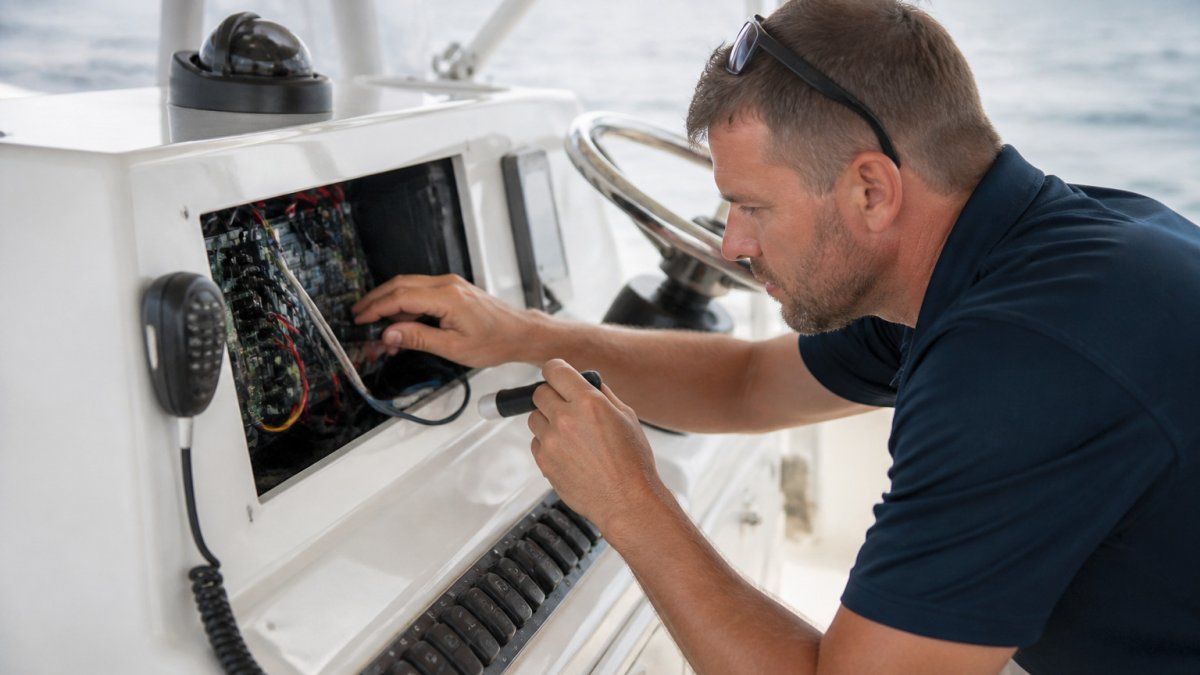
Electrical problems often look simple but hide complex issues.
How Often Should a Boat Engine Be Serviced Professionally
Regular professional service keeps your engine reliable and extends its lifespan. The schedule depends on engine type, use, and operating conditions.
Standard professional service intervals:
Most gasoline engines need professional service every 100 operating hours or annually, whichever comes first.
Reach out now to see how we can help with your boating needs! →
Factors that increase service frequency:
Saltwater operation requires more frequent service than freshwater, salt corrodes components faster and contaminates fuel systems more aggressively.
Professional service isn't just oil changes.
Choosing the Right Professional Marine Technician
Finding a qualified marine engine technician takes more than a quick online search.
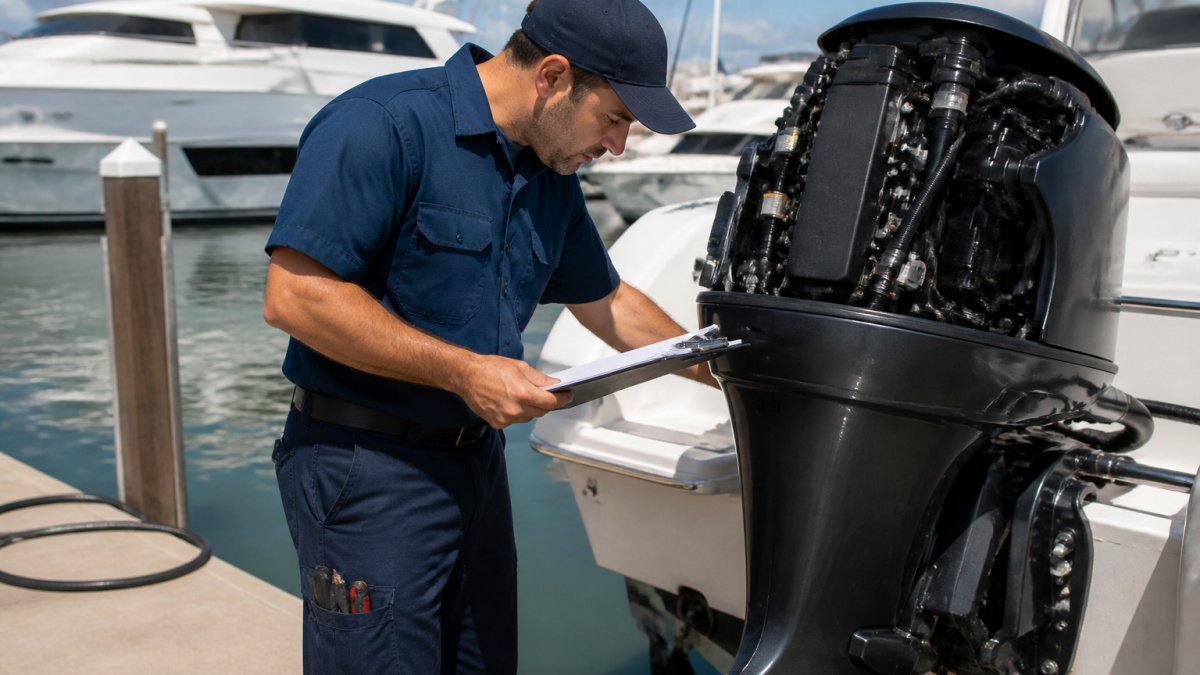
What to look for in a marine technician:
Certification matters. Look for technicians certified by the National Association of Marine Technicians or holding manufacturer-specific certifications from brands like Yamaha, Mercury, or Volvo.
Types of marine service providers:
Authorized dealerships offer factory-trained technicians and genuine parts; they cost more but provide warranty coverage. Independent marine repair shops often provide personalized service and competitive pricing.
How to Choose a Yacht Refit Shipyard: 7 Steps(page:3) applies similar evaluation criteria to finding qualified marine service providers. The principles of selecting a refit yard, reputation, expertise, communication, apply equally to choosing any marine technician.
Questions to Ask a Marine Mechanic Before Hiring
Before you hand over your boat, ask the right questions.
Essential questions:
"What certifications do you hold?" A qualified marine engine technician can point to specific training and credentials.
"What warranty do you offer on repairs?" Reputable shops stand behind their work with written warranties.
"Can you provide references from other boat owners?" Ask for clients with similar boats.
"How long will repairs take?" A timeline helps you plan around boat downtime.
Preparing for Your Marine Engine Service Visit
A technician who arrives with a complete symptom history diagnoses faster and charges less than one who has to reconstruct the story from scratch. Here's what experienced marine technicians ask for before they open the hatch.
Before the appointment: the owner's packet
Put these in a folder or a phone note and hand it to the technician at drop-off.
- Engine identification. Make, model, serial number, and engine hours. The serial number, on a plate on the engine block or the outboard's mounting bracket, determines which service bulletins, parts diagrams, and diagnostic software apply.
- Alarm codes and warning history. Photograph every active and stored code before the appointment, and do not clear them. On engines with a Yamaha Command Link, Mercury SmartCraft, or similar display, scroll to the fault history and photograph each screen.
- Symptom log. For each event, record date, engine hours, RPM, load, water conditions, air temperature, and whether the symptom cleared on its own. "It overheats" is not a symptom log; "overheat alarm at 4,200 RPM after 20 minutes, cleared at idle, happened twice in the last month" is.
Choosing the right service option for the job
The three service options are not interchangeable. Match the option to the complexity of the work.
- Mobile technician. Best for diagnostics, minor service, electrical troubleshooting, and anything that does not require a haul-out or full shop. You pay a call-out fee but save the cost and time of moving the boat. Poor fit for internal engine work, sterndrive bellows, or jobs needing a parts wash tank and lift.
- Marina service department. Best for routine maintenance, winterization, and jobs that need the boat in the water or on a nearby lift. Convenient, but scheduling can be tight in season and the marina may subcontract specialized work.
- Authorized dealer or service center. Best for warranty work, manufacturer-specific diagnostics, and complex repairs on late-model engines. Factory-trained technicians and genuine parts cost more per hour, but the work is backed by the manufacturer.
A practical rule: if the job requires opening the engine, removing the drive, or hauling the boat, use a marina or authorized center. For diagnosis, a sensor, a battery, or a tune-up, a mobile technician is usually most efficient.
What to ask about cost before work begins
Ask for the estimate in writing and ask what is included. The line items that matter are:
- Diagnostic fee. Many shops charge a flat fee, often credited toward the repair if you authorize the work. Ask whether it is credited and under what conditions.
- Labor rate and estimated hours. Labor is usually billed hourly, and the rate varies by region and by dealer versus independent shop. Ask for estimated hours, not just the rate.
- Parts. Ask whether the estimate uses OEM or aftermarket parts, and whether the price includes freight for parts not in stock.
At the appointment
- Walk the technician to the boat and demonstrate the symptom if safe. Do not reproduce a Tier 1 symptom (overheat, oil pressure, fuel leak), describe it and let the technician decide how to test.
- Hand over the owner's packet and the video. Point out the serial number location.
- Ask the technician to explain the diagnostic plan before they start, and to call you if the scope changes.
After service
- Review the invoice against the estimate and ask about any line that changed.
- Keep the work order, diagnostic report, and parts list with the boat's service history. These support resale value and warranty claims.
- Run the engine under load before you leave the dock, and log the engine hours at the start of next season so the next service interval is easy to calculate.
How to Choose a Yacht Refit Shipyard: 7 Steps(page:3) applies similar evaluation criteria to finding qualified marine service providers. The principles of selecting a refit yard, reputation, expertise, communication, apply equally to choosing any marine technician.
Frequently Asked Questions
What are the most common marine engine warning signs that require professional service?
Common warning signs include rough idling, loss of power, excessive smoke, unusual engine noise, overheating, fuel leaks, and warning lights on your dashboard. Electrical issues, fuel system problems, and cooling system failures often require a professional marine engine technician because they involve complex diagnostics. If your engine won't start or runs erratically after sitting idle, have a technician inspect it before attempting further operation.
How often should a boat engine be serviced by a professional?
Most manufacturers recommend professional marine engine service annually or every 100 operating hours, whichever comes first. Saltwater boats may need more frequent servicing due to corrosion. Before the start of each season and after extended storage, have a technician perform a full inspection. Regular preventive maintenance prevents costly repairs and keeps your propulsion system reliable for offshore conditions.
What questions should I ask a marine mechanic before hiring them?
Ask about their certifications, experience with your specific engine type (outboard, inboard, or stern-drive), warranty on repairs, diagnostic process, and estimated labor costs. Inquire whether they offer mobile service or require you to bring the boat to their facility. Request references from other boat owners and clarify their turnaround time. A qualified marine engine technician should provide transparent communication about what they find and why repairs are necessary.
Can I troubleshoot boat engine problems myself, or should I always hire a technician?
Basic troubleshooting like checking fuel levels, inspecting visible hose connections, and confirming battery charge is safe for most owners. However, once you've ruled out simple causes, stop and hire a professional. Marine engine troubleshooting involving electrical systems, fuel injectors, ignition timing, or internal engine components requires specialized diagnostic tools and training. Attempting complex repairs yourself risks further damage and safety hazards.
Regular professional service keeps your boat engine running reliably for years. Knowing when to call a marine engine technician, and how to find the right one, protects your investment and keeps you safe on the water. At Primo Yachts, we've helped clients navigate engine decisions and find qualified technicians who deliver honest service. Reach out now to see how we can help with your boating needs!