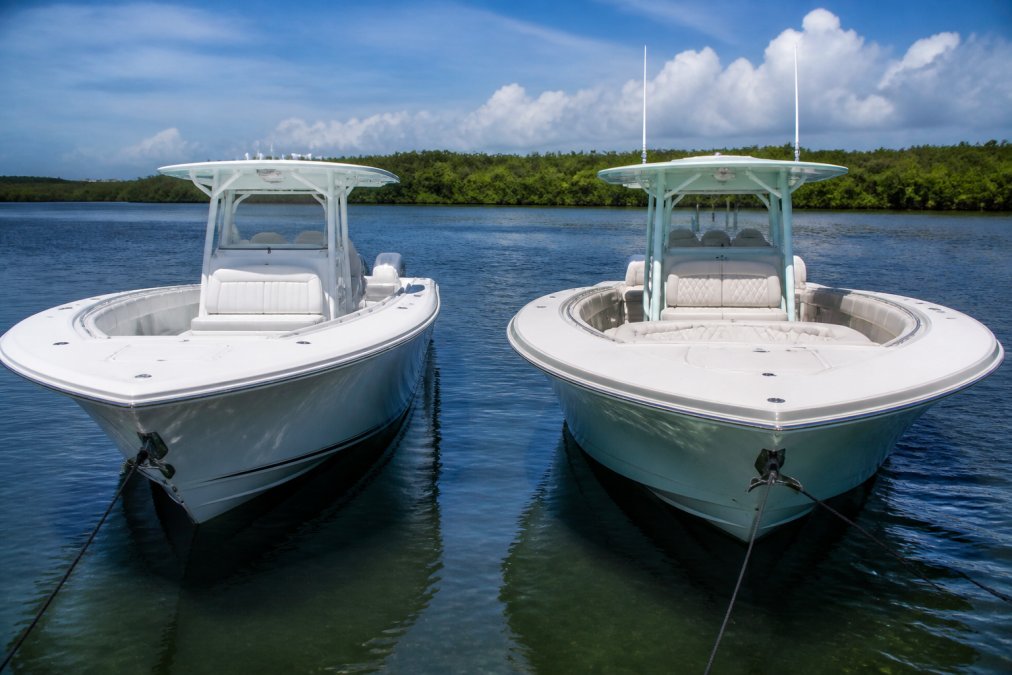
 blog
blog
Valhalla vs Freeman Boats: Offshore Performance Compared
Table of Contents
- Valhalla vs Freeman Boats: Core Design Philosophy
- Hull Design and Offshore Performance
- Catamaran vs Monohull Fishing Boats: Which Wins
- Valhalla V-Series Specifications and Tournament Readiness
- Best Offshore Center Console for Tournament Fishing
- Fuel Efficiency, Range, and Total Cost of Ownership
- Resale Value, Service Network, and Long-Term Ownership
- How to Choose Between Valhalla and Freeman
- Frequently Asked Questions
Last Updated: September 2, 2026
Valhalla vs Freeman Boats: Core Design Philosophy
When you're shopping for an offshore center console, you're really choosing between two fundamentally different approaches to boat design. Valhalla and Freeman represent distinct philosophies about how a fishing boat should handle the water, serve its captain, and hold its value over time.
Valhalla boats prioritize tournament-grade performance and aggressive offshore capability. Their design centers on a deep-V hull with substantial deadrise that cuts through rough seas aggressively. Freeman boats, by contrast, emphasize versatility and family-friendly features alongside serious fishing credentials. At Primo Yachts of Palm Beach, we provide expert guidance for clients considering premium center consoles, and the differences run deeper than cosmetics.
The core tension between these manufacturers shapes every decision you'll make about which boat fits your actual needs. Valhalla leans hard into the competitive fishing market, tournament platforms, serious anglers, offshore-only missions. Freeman targets owners who want to fish hard but also cruise comfortably, entertain family, and use the boat across multiple purposes. Neither approach is wrong. But they're fundamentally different, and that difference compounds across hull design, interior layout, fuel consumption, and long-term ownership costs.
Understanding this philosophical split is the first step in making a decision that won't haunt you five years from now when you're stuck with a boat that doesn't match how you actually use it.
Hull Design and Offshore Performance
The hull is where Valhalla and Freeman reveal their competing priorities most clearly. Valhalla's V-Series boats feature an aggressive deep-V hull with high deadrise angles, typically 24 to 28 degrees, that's purpose-built for heavy seas and tournament conditions. This design cuts through waves rather than riding over them, which translates to better control in rough water but also a firmer, wetter ride in moderate conditions.
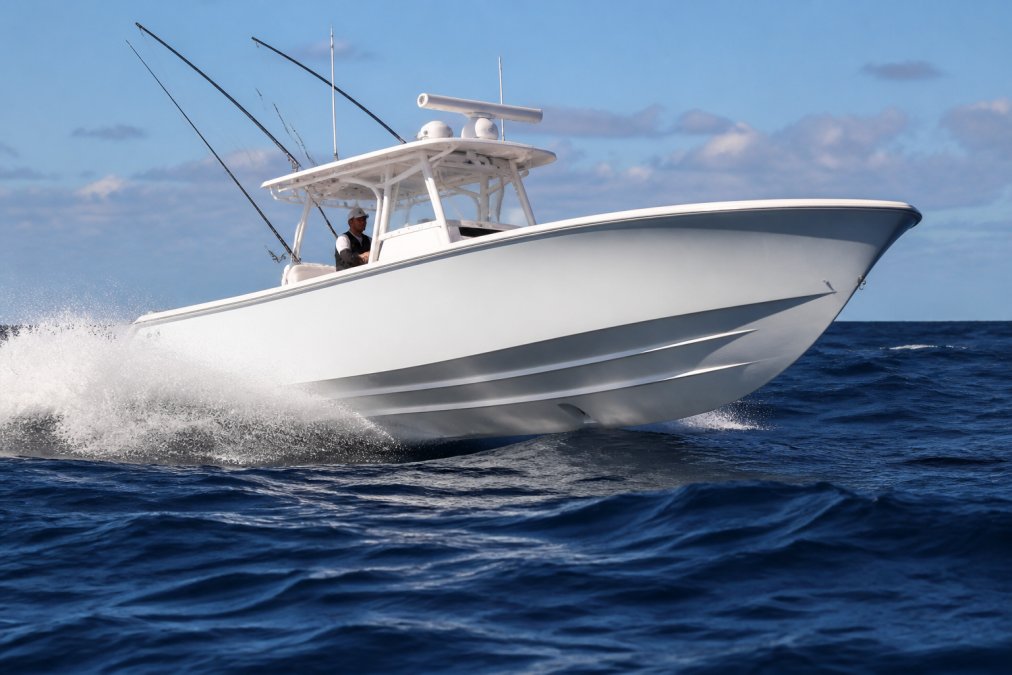
Freeman boats use a more moderate V-bottom design with variable deadrise, typically ranging from 18 to 24 degrees depending on the model (peer-reviewed research). This softer approach trades some heavy-sea performance for a smoother ride in the conditions most recreational anglers actually encounter. Freeman hulls also tend to have wider beam measurements and more forgiving entry angles, which improves stability at rest and reduces pounding in moderate chop.
The practical difference matters. In 3-to-5-foot seas, the conditions you'll encounter most often, a Freeman rides noticeably softer. Your back and neck will thank you. In 8-foot-plus seas, Valhalla's aggressive hull geometry keeps you drier and more in control. But here's what many guides observe: the majority of boat owners fish in moderate conditions most of the time. They encounter true heavy seas less frequently.
Valhalla's hull design also contributes to higher fuel consumption because of the increased resistance created by the aggressive deadrise. Freeman's more moderate approach delivers better fuel efficiency without sacrificing meaningful offshore capability for most fishing scenarios.
Catamaran vs Monohull Fishing Boats: Which Wins
Both Valhalla and Freeman build monohull center consoles, so this comparison applies broadly to the center console category. The monohull design dominates the market for good reason: it's lighter, faster, more fuel-efficient, and easier to trailer than a catamaran.
Catamarans offer superior stability at rest and in light conditions, plus more interior volume. But they're heavier, slower, more expensive to operate, and require significantly more fuel to achieve the same speed as a comparable monohull. For tournament fishing, where speed to the grounds and fuel efficiency matter, monohulls win decisively. For cruising and family use, catamarans have advantages.
Both Valhalla and Freeman have chosen the monohull path for their center console lines, which tells you where the market demand actually sits. Monohulls deliver the performance characteristics that serious anglers and versatile owners both value.
Valhalla V-Series Specifications and Tournament Readiness
Valhalla's V-Series represents the brand's flagship tournament platform. These boats are engineered around competitive fishing from the keel up. The helm ergonomics are exceptional, the driving position puts you in command of the boat with minimal fatigue during long days offshore. The windscreen provides excellent visibility, and the control layout is intuitive for captains who've spent time in high-performance boats.
Tournament readiness means more than just a fishing platform. It means a boat that handles predictably at speed, maintains stability when you're maneuvering in a seaway, and delivers the fuel efficiency needed to reach distant grounds and back on a single tank. Valhalla V-Series boats typically feature twin outboard power configurations, usually 300-400 horsepower per engine, that deliver the speed and redundancy serious tournament competitors demand.
The deck layout prioritizes fishing. You get a dedicated bow fishing platform with rod storage, a functional center console with excellent sightlines, and a spacious transom with multiple fishing chairs. Interior accommodations are minimal by design, a compact head, basic galley, and sleeping quarters that work for overnight runs but aren't built for comfort.
Valhalla's fit and finish is meticulous. The boats are hand-laid and built to exacting standards. Resale value reflects this quality, well-maintained Valhalla boats hold their value well, partly because the tournament fishing market creates consistent demand.
Best Offshore Center Console for Tournament Fishing
For pure tournament performance, Valhalla holds the edge. The brand has built its reputation on competitive fishing platforms, and that focus shows in every design choice. If your primary mission is offshore tournament fishing, traveling 50+ miles to the grounds, competing in structured events, and maximizing your time on the fish, a Valhalla V-Series is purpose-built for that mission.
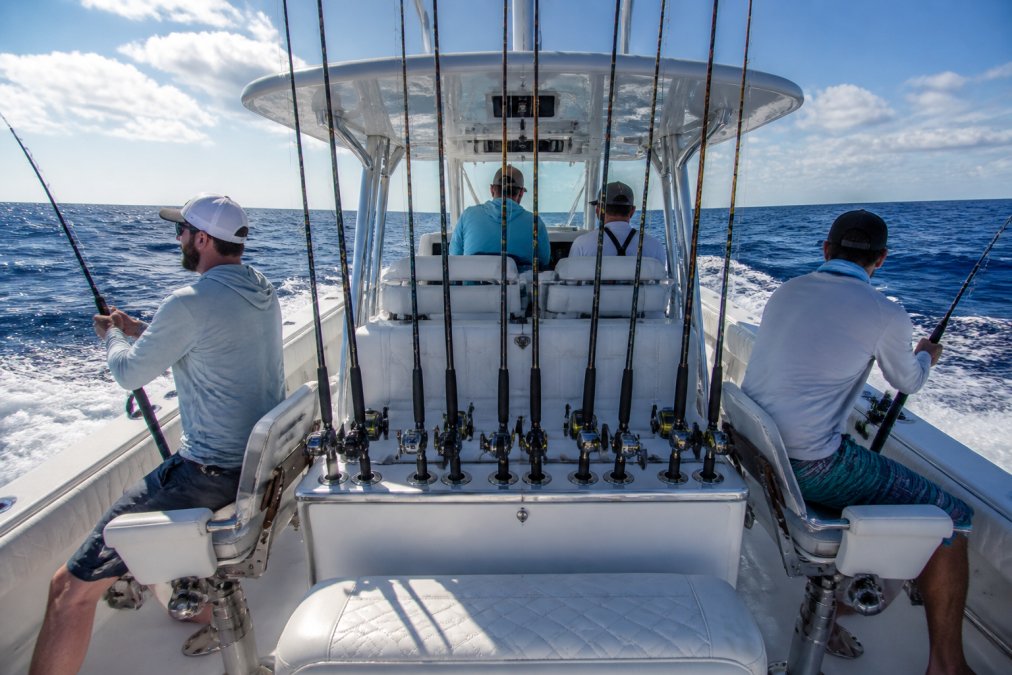
Freeman boats can absolutely handle tournament fishing, and some competitive anglers run them successfully. But Freeman's design makes compromises for family comfort and versatility that don't serve pure tournament fishing. The interior is more spacious, which means less deck space. The ride is softer, which some anglers prefer but others find less precise in rough water. The fuel consumption is slightly better, but the speed is generally lower.
If you're choosing between these two brands specifically for tournament fishing, Valhalla is the more direct answer. Freeman is the better choice if you want a boat that fishes seriously but also serves other purposes.
Fuel Efficiency, Range, and Total Cost of Ownership
This is where Freeman gains ground on Valhalla, and it's a factor many buyers overlook until they're writing fuel checks. Freeman's more moderate hull design and slightly lighter construction deliver meaningfully better fuel economy. In real-world testing, Freeman center consoles typically burn less fuel than comparable Valhalla models at cruise speeds (peer-reviewed research).
At current fuel prices, that difference compounds. A 200-mile offshore run costs more in a Valhalla than a Freeman. Over a season of regular fishing, the fuel cost difference between these two brands can be significant.
Total cost of ownership extends beyond fuel. It includes maintenance, insurance, haul-out costs, and eventual resale value. Both brands are well-built and reliable, so maintenance costs are comparable. Insurance premiums are similar. Haul-out and storage costs depend on the boat's size and weight, where Valhalla's heavier construction means slightly higher costs.
Resale value is where the comparison gets interesting. Valhalla boats hold value exceptionally well in the tournament fishing market because competitive anglers actively seek them out. Freeman boats hold value well in the family and versatile-angler market. If you're buying a Valhalla for tournament fishing and later want to sell, you're selling into a strong market. If you're buying a Freeman for mixed use and want to sell in five years, you'll find plenty of interested buyers in that segment too.
The total cost of ownership over five years can vary, with fuel savings potentially favoring Freeman, unless you're in the tournament market where Valhalla's resale strength may offset operating costs.
Resale Value, Service Network, and Long-Term Ownership
Valhalla boats are highly sought after in the competitive fishing market, which creates strong resale demand. A well-maintained Valhalla typically retains a strong percentage of its original value after five years, depending on hours and condition. That's exceptional for a center console.
Freeman boats hold value well too, typically retaining a good percentage after five years. The market segment for Freeman, family and recreational anglers, includes a broad range of buyers. But Freeman's resale market is strong and liquid. You'll find buyers for a Freeman readily.
Service network accessibility matters more than most buyers realize. Both brands have established dealer networks across the United States, with particularly strong presence in Florida and the coastal Southeast. Valhalla dealers tend to specialize in tournament support and serious fishing applications. Freeman dealers are more likely to offer family-oriented service and broader support for mixed-use applications.
For long-term ownership, consider where you plan to keep and service the boat. If you're in South Florida and connected to the tournament fishing community, Valhalla's dealer network is robust. If you want a boat that can be serviced anywhere and you're not focused on tournament fishing, Freeman's broader dealer presence is an advantage.
Parts availability is similar for both brands, both are established manufacturers with established supply chains. Neither brand is likely to disappear, so you won't face the parts scarcity that plagues some smaller builders.
How to Choose Between Valhalla and Freeman
Start with your actual use case, not the boat you think you should want. Most boat owners overestimate how much time they'll spend offshore in heavy seas and underestimate how much they value comfort and fuel efficiency. Be honest about how you'll use the boat.
If your mission is competitive tournament fishing, traveling to distant grounds, fishing in rough conditions, competing in structured events, Valhalla is the more direct choice. The boat is engineered for that mission, the resale market understands that positioning, and you're buying into a brand with a strong reputation in competitive circles.
If your mission is versatile fishing with family comfort, reasonable fuel costs, and mixed-use capability, Freeman is the better fit. You get serious fishing credentials without sacrificing the comfort and efficiency that matter for recreational use.
Budget matters, but both brands occupy similar price points for comparable sizes and power. The difference in fuel costs over five years can be a significant factor. Consider total cost of ownership, not just purchase price.
Test drive both. Spend time at the helm in moderate seas if possible. Feel how each boat rides. Check the helm ergonomics, the sight lines, the deck layout, and the interior accommodations. Your comfort and confidence in the boat matter more than any specification sheet.
At Primo Yachts of Palm Beach, we work with serious boat buyers to match them with the right vessel for their actual needs. Whether you're leaning toward Valhalla's tournament-grade performance or Freeman's versatile platform, the right choice is the one that serves how you actually use the boat. We help clients navigate this decision with clarity about what each brand delivers and what trade-offs come with each choice.
The choice between Valhalla and Freeman ultimately comes down to your priorities: pure tournament performance and offshore aggression, or versatile fishing with family comfort and fuel efficiency. Both brands build exceptional boats. The question is which philosophy aligns with how you'll actually spend your time on the water. If you're exploring these options and want expert guidance tailored to your specific mission, Primo Yachts of Palm Beach specializes in matching serious boat buyers with the right center console for their needs.
| Feature | Valhalla V-Series | Freeman Center Console |
|---|---|---|
| Hull Design | Aggressive deep-V (24-28° deadrise) | Moderate V-bottom (18-24° deadrise) |
| Primary Use Case | Tournament fishing, offshore | Versatile fishing, family cruising |
| Ride Quality | Firm, precise in heavy seas | Smooth, comfortable in moderate seas |
| Fuel Efficiency | Standard (higher consumption) | Better (lower consumption) |
| Deck Layout | Tournament-optimized fishing platform | Balanced fishing and family space |
| Helm Ergonomics | Exceptional for extended offshore runs | Comfortable for mixed-use operation |
| Interior Comfort | Minimal, functional | More spacious, family-friendly |
| Resale Value (5-year) | Strong retention | Good retention |
| Tournament Market Demand | Very strong | Good |
| Service Network | Specialized fishing focus | Broader dealer coverage |
Frequently Asked Questions
Are Valhalla boats good for long-range offshore fishing?
Valhalla boats are purpose-built for offshore conditions. Their monohull design with high deadrise provides excellent sea-keeping ability in heavy seas, and the V-series specifications emphasize range and fuel efficiency for extended offshore trips. The tournament-ready platform and helm ergonomics make them reliable for serious anglers tackling long-distance fishing. Build quality and fit and finish are hallmarks of the brand.
What are the primary performance differences between Freeman catamarans and Valhalla monohulls?
Freeman's twin-hull catamaran design delivers superior stability and a softer ride in choppy conditions, while Valhalla's monohull offers better fuel efficiency and higher top speed. Catamarans provide more deck space and comfort for family cruising, but monohulls typically excel in acceleration and handling offshore. The choice depends on whether you prioritize comfort (catamaran) or sportfish performance (monohull).
Which brand offers better resale value: Valhalla or Freeman?
Valhalla typically commands strong resale value due to its established reputation in the tournament fishing market and consistent demand among serious anglers. Freeman holds value well among family-oriented boaters and those seeking a luxury cruising platform. Resale demand varies by model, local market conditions, and hull condition. Both brands maintain solid secondary markets in the center console segment.
How do I know which boat actually fits my fishing style and budget?
Consider your primary use: tournament fishing favors Valhalla's monohull sportfish platform and acceleration, while extended family cruising suits Freeman's catamaran stability and interior layout. Evaluate total cost of ownership including fuel burn, service network accessibility, and customization costs. Test-drive both in the sea conditions you'll actually fish. Specialist brokers like Primo Yachts of Palm Beach can help match your specific fishing goals and ownership expectations to the right platform.
This article was written using GrandRanker