 ultimate-guide
First-Time Yacht Buyer Tips for South Florida
Table of Contents
- Start With Intended Use, Not the Boat
- Set a Purchase Budget and Plan for Annual Ownership Costs
- New vs. Pre-Owned: Which Vessel Type Fits Your Plan
- How to Choose a Yacht Broker Who Knows Your Market
- Your Yacht Buying Checklist Before You Make an Offer
- Yacht Survey and Sea Trial: What First-Time Buyers Should Expect
- Florida Taxes, Registration, and Insurance for First-Time Yacht Buyers
- Marina, Storage, and Waterway Logistics in South Florida
- Frequently Asked Questions
Last Updated: October 13, 2026
Start With Intended Use, Not the Boat
The most common mistake first-time buyers make is falling in love with a listing before defining what they need.
Intended use is the combination of activities, destinations, and frequency that defines how a vessel will be operated. A buyer who runs to the Bahamas twice a year needs a different boat than one who fishes offshore every weekend.
Start by writing down three things:
- Your primary activity (fishing, cruising, entertaining, or a mix)
- Your realistic annual hours on the water
- Your home dock or storage situation
That last point matters: a boat that doesn't fit your slip, lift, or tow vehicle becomes a problem before it becomes a pleasure.
How Many Nights Aboard and How Many Guests?
Guest count and overnight plans decide your layout. Day trips with four people call for an open cockpit and simple seating. Weekend trips with six guests demand berths, a head, and real storage.
Be honest about both numbers. The U.S. Coast Guard boating safety guidance is a useful reference for capacity and equipment requirements once you've settled on a size.
Set a Purchase Budget and Plan for Annual Ownership Costs
Your purchase budget is only half the equation. Annual ownership costs typically run a meaningful fraction of the vessel's value every year, and buyers who ignore this often sell within two seasons. Budget two numbers before you shop: what you can pay upfront, and what you can spend each year to keep the boat in the water and in good condition.
What Annual Ownership Actually Covers
Recurring costs fall into predictable categories. Planning for them upfront prevents the shock that ends too many first ownership experiences.
| Cost Category | What It Covers | How Often |
|---|---|---|
| Marina or slip fees | Wet slip, dry stack, or mooring | Monthly |
| Insurance | Hull, liability, and named storm coverage | Annually |
| Maintenance | Engine service, bottom cleaning, systems | Quarterly to annually |
| Fuel | Offshore runs and cruising range | Per trip |
| Storage and haul-out | Off-season or hurricane storage | Seasonal |
| Registration and taxes | State fees and applicable sales tax | Annually or at purchase |
A Realistic Annual Cost Framework
Rather than guess at a single number, build your annual budget as a percentage of the vessel's value, then adjust for how you use the boat. A common planning pattern is to reserve roughly 10 percent of the purchase price per year for total ownership costs, though the split shifts with slip type, engine hours, and year-round storage.
- Dockage and storage. Wet slips in high-demand waterfront markets command the highest monthly rates, climbing with beam and length. Dry stack is often cheaper per foot but limits height and weight. Expect dockage to be your largest recurring line item in most coastal markets.
- Insurance. Premiums scale with hull value, cruising area, and named-storm terms. Coastal named-storm coverage costs more than inland policies, and named-storm deductibles are often a percentage of hull value rather than a flat amount.
- Maintenance and systems. Outboard and inboard engines carry different service intervals and parts costs. Bottom cleaning, zinc replacement, and annual engine service are predictable; electronics, pumps, and upholstery are the surprises. Budget a reserve even in a low-hour year.
The South Florida Cost Multiplier
Local conditions change the math. Year-round boating means year-round maintenance and no off-season to defer projects. Hurricane season adds haul-out, storage, and storm-prep costs inland buyers never see, and winter demand tightens slip availability and pushes dockage higher in desirable waterfront locations.
New vs. Pre-Owned: Which Vessel Type Fits Your Plan
New boats offer warranty coverage, current electronics, and the exact configuration you want. The right answer depends on your timeline and tolerance for projects: a buyer who wants to be on the water this season usually does better with a well-maintained pre-owned center console, while one who wants a specific build and can wait will prefer ordering new.
Condition matters more than model year. A ten-year-old boat with documented engine service and fresh electronics can outperform a neglected three-year-old vessel on every practical measure, so the survey, not the year, should drive your decision.
How to Choose a Yacht Broker Who Knows Your Market
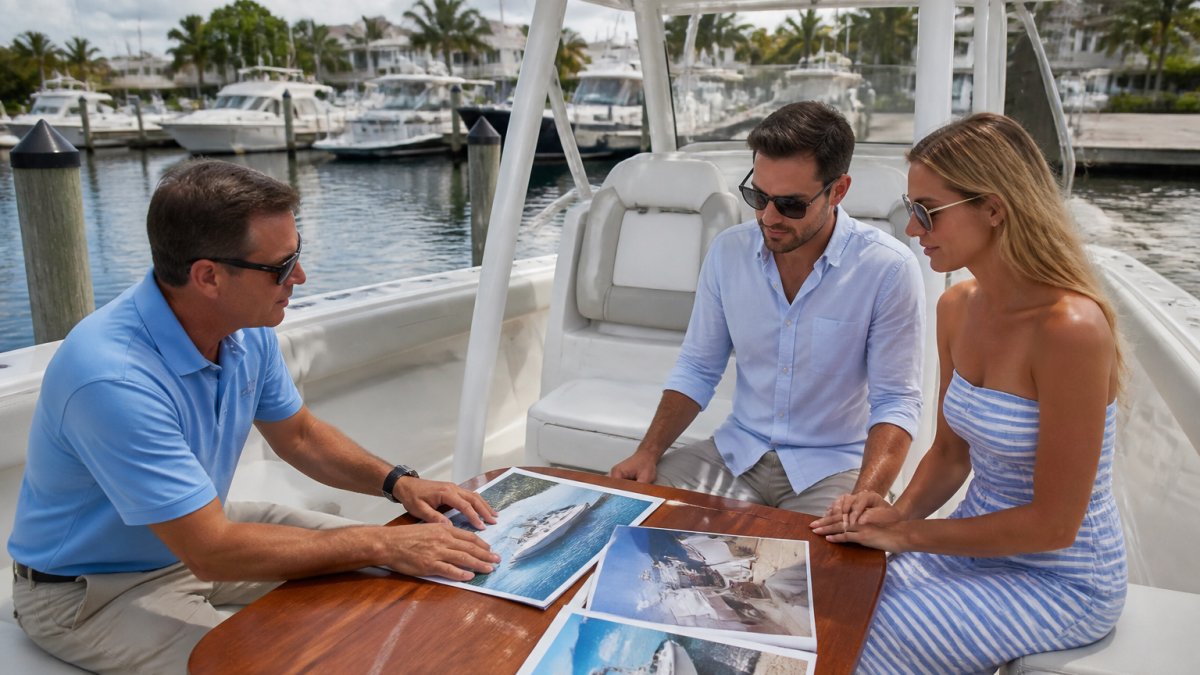
The best broker for a first-time buyer is a specialist who knows your intended use, your local waterways, and the inventory that rarely reaches public listing sites.
General brokers handle everything from sailboats to superyachts. A specialist brokerage focused on one vessel category understands which hulls handle your conditions and which listings are worth your time.
Ask any broker three questions before you commit:
- What percentage of your transactions are in my vessel category?
- How do you source inventory that isn't publicly listed?
- Who will actually represent me during survey and negotiation?
A broker who can't answer all three specifically isn't the right fit. For a broader view of how brokerage relationships work, the BoatUS guidance on buying and selling covers the fundamentals of representation and disclosure.
Your Yacht Buying Checklist Before You Make an Offer
A yacht buying checklist keeps emotion out of a decision that should be driven by evidence. Use this before you sign anything.
Reach out now to see how we can help with your boating needs! →
- Confirm intended use, guest count, and overnight requirements in writing
- Verify the purchase budget and first-year ownership costs are both funded
- Review the vessel's documented service history and engine hours
Work through it in order. Skipping the insurance and storage steps before the offer turns an exciting purchase into a logistics problem.
Yacht Survey and Sea Trial: What First-Time Buyers Should Expect
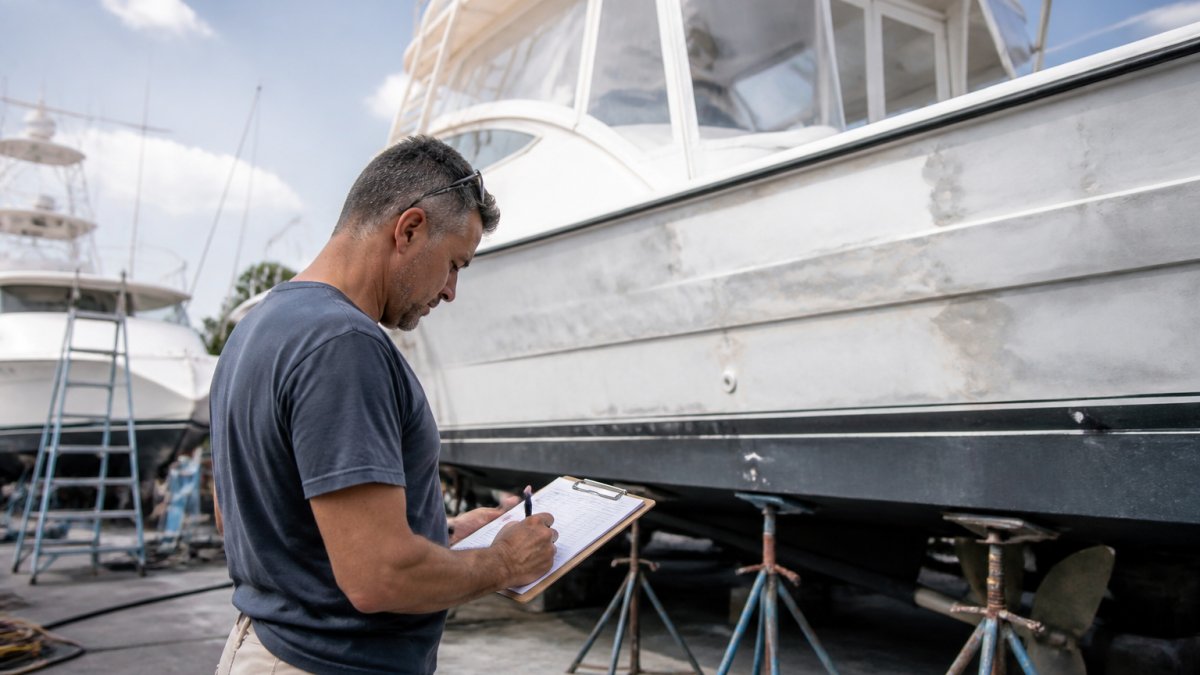
A yacht survey and sea trial are the two inspections that protect your money: the survey examines condition out of the water, and the sea trial tests performance under load.
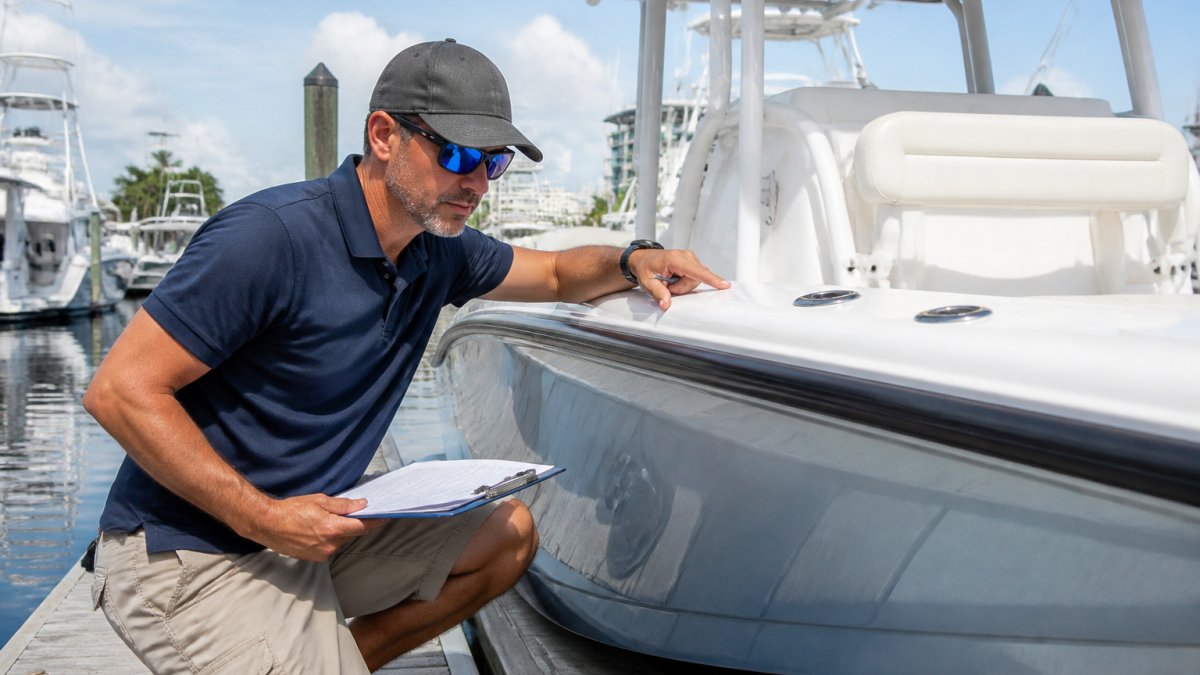
A marine survey is a professional condition assessment covering the hull, structure, engines, systems, and safety equipment, performed by an independent surveyor before purchase. The surveyor taps, tests, and documents; you receive a written report that becomes your negotiation tool.
Florida Taxes, Registration, and Insurance for First-Time Yacht Buyers
Taxes, registration, and insurance are the three compliance items that catch first-time buyers off guard. Each has rules that vary by how and where you buy, and each has a mechanism you should understand before signing anything.
Sales Tax and the Cap on Recreational Vessel Purchases
Florida levies a sales tax on boat purchases, and state law applies a cap on the tax owed for most recreational vessel transactions. The practical effect is that above a certain purchase price, the tax you owe stops scaling with the sale price. Because rates and caps change, confirm current figures with the Florida Department of Revenue before you close.
Two mechanics matter for first-time buyers:
- Where the sale closes can change the tax treatment. A casual or isolated sale between private parties is treated differently from a dealer sale, and the documentation you receive at closing determines how the transaction is reported.
- Use tax can follow the boat. If you buy out of state and bring the vessel into Florida, use tax may apply. Ask your closing agent how the transaction will be reported before you take delivery.
Registration, Titling, and Documentation
Registration happens through your county tax collector's office, and titled vessels require a title transfer in addition to registration. Registration is separate from U.S. Coast Guard documentation, and the two are not interchangeable.
- State registration is required for vessels operated on state waters and is handled at the county level. You will need proof of ownership, a completed application, and payment of the applicable fees.
- U.S. Coast Guard documentation is a federal form of vessel registration that establishes nationality and is often required or preferred by lenders for larger vessels. It is not a substitute for state registration where state registration is required.
- Title and lien checks should be completed before closing. A documented vessel with an outstanding preferred mortgage lien is a different transaction than a clean-title state-registered boat, and the payoff and lien-release mechanics differ.
Insurance: Lender Requirements and Hurricane-Zone Underwriting
Insurance is both a legal and a practical gate. Lenders typically require hull and liability coverage, and the lender is usually named on the policy as a loss payee.
Coastal policies often include separate terms for named storms, and those terms drive real decisions:
- Named-storm deductibles are frequently expressed as a percentage of hull value rather than a flat dollar amount, which means a higher-value vessel carries a higher out-of-pocket exposure in a storm claim.
- Hurricane haul-out requirements may obligate you to move or haul the vessel when a storm enters a defined area. Ask about those requirements before you sign, because they affect where you can keep the boat during storm season and what you will pay to comply.
- Cruising area limits define where the policy will cover you. If your intended use includes runs to the Bahamas or extended offshore trips, confirm those areas are included rather than assumed.
Marina, Storage, and Waterway Logistics in South Florida
Slip availability, bridge heights, and seasonal demand shape where you can keep and run your boat, so address these logistics before you buy.
Seasonal demand matters too. Winter brings an influx of seasonal residents, and slip availability tightens accordingly. Buyers who secure storage before finalizing a purchase avoid the scramble that follows a closing.
Buying your first yacht in South Florida comes down to preparation: define your intended use, fund both the purchase and the annual ownership costs, and lean on specialists who know the market.
Frequently Asked Questions
What is the best yacht for a first-time buyer?
The right yacht depends on how you plan to use it. For South Florida buyers who fish offshore, a center console in the 30 to 40 foot range is a common starting point because it handles open water, is easy to dock, and keeps maintenance manageable. If you plan overnight trips with family, a boat with a cabin and more seating may suit you better. Start with intended use, typical guest count, and nights aboard before comparing listings.
How much should I budget for yacht maintenance each year?
Annual ownership costs go well beyond the purchase price. Plan for insurance, marina slip or dry storage, fuel, haul-out and bottom service, engine maintenance, safety gear, and canvas or upholstery replacement. A qualified broker can help you estimate these for a specific vessel type and size. Ask for a written breakdown before you commit, so there are no surprises in your first year of ownership.
What should I look for during a yacht survey?
A pre-purchase marine survey covers hull condition, deck and structural integrity, engine and mechanical systems, electrical, plumbing, and safety gear. Ask the surveyor to document findings in writing with photos. Pay close attention to moisture readings in the hull and deck, engine hours and service records, and any prior repair work. The survey report is your best negotiating tool if issues surface before closing.
What happens during a yacht sea trial?
A sea trial is a test drive on the water, usually scheduled after the survey. You will run the boat at different speeds, check handling and steering, test electronics and gauges, and listen for unusual engine noise or vibration. Bring your broker and, if possible, a mechanic. Note how the vessel performs in the conditions you actually fish or cruise in, not just calm water.
Should I hire a yacht broker when buying my first yacht?
A qualified broker who knows South Florida waters and your specific vessel type saves time and reduces risk. They help you define your needs, access listings that may not be publicly advertised, negotiate the purchase agreement, coordinate the survey and sea trial, and guide you through registration and insurance. For a first purchase, that expertise is worth the conversation.
How can I estimate the total cost of owning a yacht?
Add up the purchase price plus first-year costs: Florida sales tax and registration, insurance, marina slip or storage, fuel, maintenance, and any initial outfitting. Then estimate recurring annual costs for the same categories. Ask your broker for a realistic range based on the vessel size and type you are considering. Reviewing both numbers side by side prevents overextending on the purchase itself.