 ultimate-guide
Essential Shallow Water Fishing Gear Guide for 2026
Table of Contents
- Why Shallow Water Fishing Demands a Different Gear Setup
- Inshore Saltwater Fishing Gear for Beginners: The Core Four
- Best Rod and Reel for Inshore Fishing: Matching Tackle to Target Species
- Lures, Bait, and Soft Plastics for Shallow Water
- Inshore Fishing Tackle Checklist: What to Pack for a Day on the Flats
- Fishing Safety Gear Checklist for Shallow Water and Small Craft
- Gear Recommendations by Shallow Water Habitat and Budget Tier
- Frequently Asked Questions
Last Updated: October 20, 2026
Why Shallow Water Fishing Demands a Different Gear Setup
Shallow water fishing is the practice of targeting fish in depths of roughly ten feet or less, where structure, grass, and current break in ways that open-water anglers never deal with. The gear that works offshore often fails here. Long casts spook fish in skinny water, heavy tackle buries lures in grass, and a noisy approach clears a flat in seconds.
Here is the core tension most guides miss: shallow water rewards finesse and stealth, not power. A quiet presentation and accurate placement matter more than drag capacity.
Inshore Saltwater Fishing Gear for Beginners: The Core Four
Inshore saltwater fishing gear for beginners comes down to four pieces: a rod, a reel, line and leader, and a small set of terminal tackle. Beginners who buy these four well, and skip the rest until they know their water, catch more fish and waste less money.
Rod and Reel Selection
A 7-foot medium-power spinning rod with a fast action is the most versatile starting point for inshore work. It casts light lures accurately, has enough backbone to turn a redfish, and stays comfortable over a full tide. Pair it with a 2500- or 3000-size spinning reel. A common mistake is oversizing the reel; a smaller, smoother reel balances the rod and reduces fatigue on long days.
Fishing Line and Leader Selection
Braided line in the 10- to 15-pound-test range gives you thin diameter, long casts, and sensitivity to bottom contact. Tie on a fluorocarbon leader of 15 to 20 pounds for abrasion resistance around oysters and dock pilings. The leader matters more in clear water, where fish are spooky and a visible line costs strikes.
Best Rod and Reel for Inshore Fishing: Matching Tackle to Target Species
The best rod and reel for inshore fishing depends on the species you chase. A light 6-foot-6 setup handles speckled trout and small reds; a stouter 7-foot-6 rod suits bigger redfish, snook, and jack crevalle around structure. Match power to the fish, not to your ego.
| Target Species | Rod Power / Length | Reel Size | Line (Braid) | Leader |
|---|---|---|---|---|
| Speckled trout | Medium-light, 6'6" | 2500 | 10 lb | 15 lb fluoro |
| Redfish | Medium, 7' | 3000 | 15 lb | 20 lb fluoro |
| Snook | Medium-heavy, 7'6" | 3000-4000 | 20 lb | 25 lb fluoro |
| Flounder | Medium-light, 7' | 2500 | 10 lb | 15 lb fluoro |
Species-specific setups beat one-size-fits-all tackle every time. If you fish mostly grass flats for trout, stay light. If you work dock lights for snook, step up the leader.
Lures, Bait, and Soft Plastics for Shallow Water
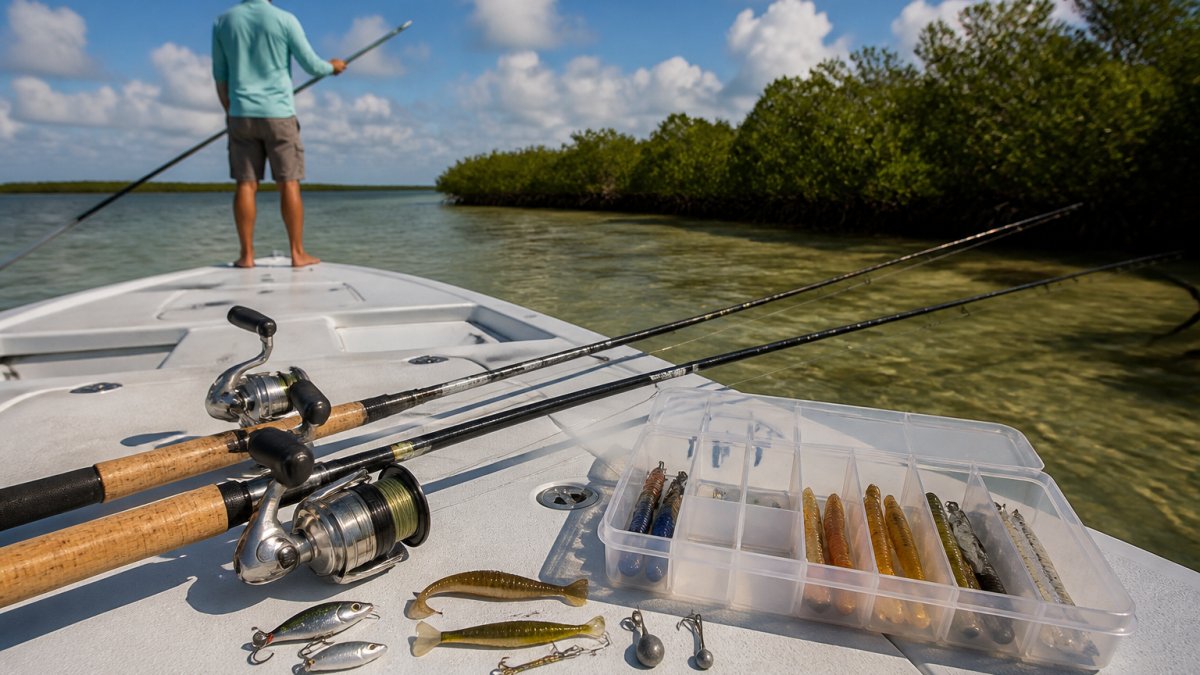
Soft plastics are the backbone of shallow water fishing. A shrimp imitation or swimming mullet rigged on a jig head covers water quietly and triggers strikes from fish that ignore hardware.
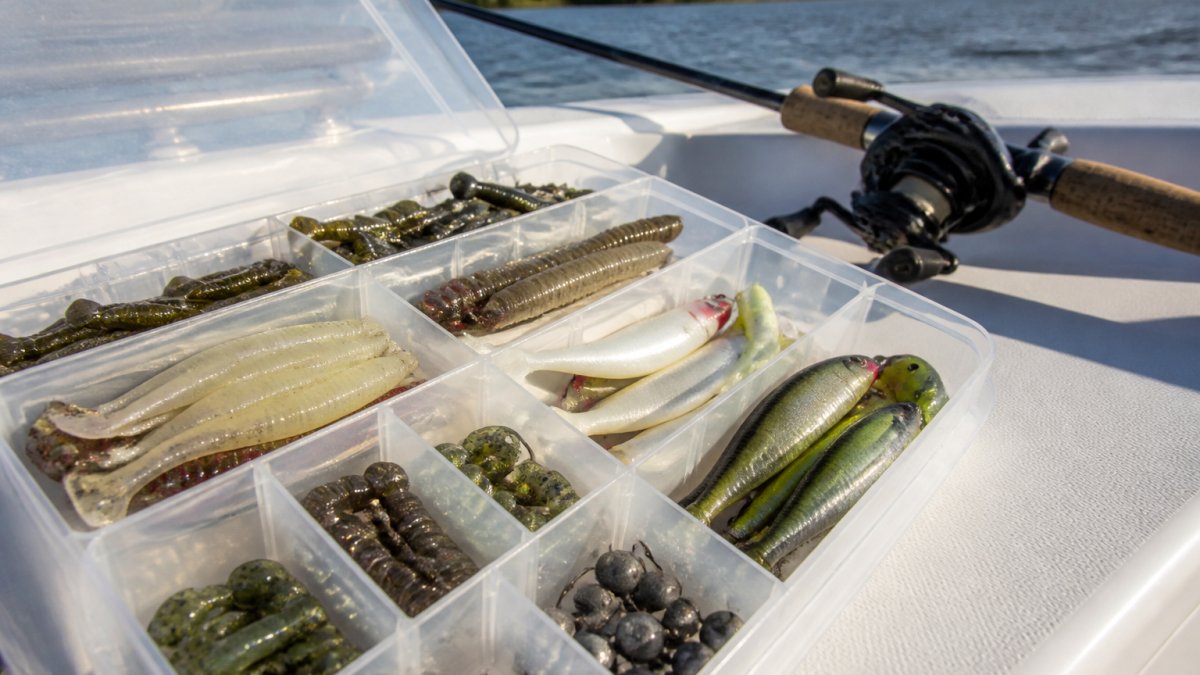
Live bait still wins on pressured fish, but soft plastics let you cover more water and cast into skinny spots without spooking everything. Carry both and let the conditions decide.
Jig Heads and Sinkers
Jig head weight is the single most important shallow-water decision. Too heavy and you snag grass; too light and you cannot cast into wind. Carry a range from 1/16 to 3/8 ounce and let depth and current pick the weight. A red jig head is a classic for redfish in stained water.
Hooks and Terminal Tackle
Circle hooks reduce gut-hooking on live bait and are worth carrying in several sizes. Round out terminal tackle with split shots, swivels, and a few extra leaders. Small details decide whether a good cast turns into a landed fish.
Inshore Fishing Tackle Checklist: What to Pack for a Day on the Flats
An inshore fishing tackle checklist keeps you from losing a tide to a missing item. Pack light, but pack deliberately, and organize by function rather than by brand. The checklist below covers a full day on the flats from a small boat; the notes after it explain what changes for wading and kayak anglers.
- Spinning rod and reel, balanced and freshly spooled
- Braided line plus spare fluorocarbon leader material in two strengths
- Assorted jig heads (1/16 to 3/8 oz)
- Soft plastics, topwater plugs, jerkbaits
- Circle hooks and split shots
- Pliers, line shears, and a hook sharpener
- Small tackle box organized by lure type
- Polarized sunglasses and a wide-brim hat
- Push pole or shallow-water anchor
- US Coast Guard-approved life jacket for every person aboard
- VHF radio or fully charged phone in a waterproof case
- First-aid kit and sun protection
- Throwable flotation device
- Checked weather forecast before launch
A tidy tackle box saves minutes every time you retie. Organize by lure type, jig heads in one compartment, soft plastics in another, topwater and jerkbaits in a third, so you can find a replacement without unpacking the whole box on a rocking deck.
Wading and Small-Craft Additions
Anglers fishing on foot or from a kayak need a slightly different kit. Add a wading belt and a wading staff for stability on uneven bottom, and carry a small dry bag for phone, keys, and a first-aid kit. A lightweight landing net or a lip grip replaces the boat's net. Kayak anglers should add a paddle leash, a small anchor trolley, and a waterproof headlamp for early launches.
Why Each Item Earns Its Place
Polarized sunglasses are not a comfort item, they cut surface glare so you can see fish, structure, and bottom contour before you cast. A push pole turns a soft grounding into a quick correction instead of a long wait for the tide. A hook sharpener matters because a dull hook costs strikes on soft plastics and live bait alike. The throwable flotation device and life jackets are required safety equipment on most vessels, and checking the weather forecast before launch is the cheapest safety step available.
Reach out now to see how we can help with your boating needs! →
Fishing Safety Gear Checklist for Shallow Water and Small Craft
A fishing safety gear checklist matters more in shallow water than many anglers admit. Flats and backcountry water hide oyster bars, and a small skiff can go from fine to stuck in seconds.
- US Coast Guard-approved life jacket for every person aboard
- VHF radio or fully charged phone in a waterproof case
- First-aid kit and sun protection
- Push pole or shallow-water anchor
- Throwable flotation device
- Checked weather forecast before launch
Wading anglers should add a wading belt and a staff. Small-craft owners should confirm their registration and safety equipment meet state requirements before every trip.
Gear Recommendations by Shallow Water Habitat and Budget Tier
Gear should follow habitat, not the other way around. The same 7-foot medium spinning rod behaves differently over a grass flat than it does against an oyster reef, and the anglers who catch consistently are the ones who adjust jig weight, leader, and presentation to the bottom they are fishing.
| Habitat | Bottom & Cover | Jig Head Weight | Leader | Rod Consideration | Snag Management |
|---|---|---|---|---|---|
| Grass flats | Seagrass, sparse sand potholes | 1/16-1/8 oz | 15 lb fluoro | Medium-light, fast tip for feel | Weedless soft plastics; slow lift-and-drop retrieve |
| Mangroves | Roots, overhanging limbs, tannic water | 1/8-3/16 oz | 20-25 lb fluoro | Medium-heavy for pulling fish out | Cast past the root line, not into it; braid main line for cut resistance |
| Marsh shorelines | Mud, submerged vegetation, tidal creeks | 1/8-1/4 oz | 20 lb fluoro | Medium, 7' for accurate sidearm casts | Texas-rigged plastics; braid helps cut through vegetation |
| Docks and pilings | Vertical structure, shade lines, barnacles | 3/16-3/8 oz | 25 lb fluoro | Medium-heavy with backbone | Skip casts under the dock; check leader after every fish |
| Rocky shorelines | Oyster bars, riprap, rock ledges | 1/4-3/8 oz | 25-30 lb fluoro | Medium-heavy, fast action | Fluorocarbon leader is non-negotiable; retie after abrasion |
| Sandy potholes | Clean sand, scattered shell | 1/16-1/8 oz | 15 lb fluoro | Medium-light for long, accurate casts | Light line and natural presentations; avoid over-weighting |
A few patterns cut across every habitat. Grass and marsh reward lighter jig heads and weedless rigging because a heavy jig buries itself and drags vegetation on every cast. Oyster, rock, and dock structure reward heavier leader and a rod with enough backbone to turn a fish before it reaches the structure.
Budget-Tiered Starter Kits
A complete shallow-water starter kit can be built in three tiers. Prices below are typical U.S. retail ranges for new gear and will vary by brand and season; treat them as planning figures, not quotes.
Entry tier, roughly $150-$250 total
Midrange tier, roughly $400-$650 total
Upgrade tier, roughly $800 and up
Build in order. Buy the entry-tier rod, reel, line, leader, and a small jig and plastic selection first. Add the second rod only after you know which habitat you fish most. Saltwater anglers should budget for corrosion care from day one: rinse reels, guides, and hooks with fresh water after every trip, and replace leader after any contact with oyster or rock.
Frequently Asked Questions
What gear do you need for shallow water fishing?
A shallow water fishing setup typically includes a medium-light spinning rod (6'6" to 7'6"), a 2500-3000 size spinning reel, 10-15 lb braided line, a fluorocarbon leader (15-20 lb), soft plastics on jig heads, topwater plugs, and a tackle bag with pliers and line cutters. For safety, add a PFD, polarized sunglasses, and a first-aid kit. This core kit covers most inshore scenarios from grass flats to mangrove shorelines.
What rod and reel are best for inshore saltwater fishing?
For inshore saltwater fishing, a 7-foot medium-light spinning rod paired with a 2500 or 3000 size reel spooled with 10-15 lb braid is a versatile choice. This combo handles everything from speckled trout to redfish and snook. Look for rods with fast actions for casting accuracy and reels with sealed drags to resist saltwater corrosion.
What tackle should beginners bring for inshore fishing?
Beginners should start with a simple inshore fishing tackle checklist: 1/4 oz and 1/8 oz jig heads, 3-4 inch soft plastic swimbaits, a few topwater plugs (like a Spook or Skitter Walk), 2/0 and 3/0 circle hooks, 20 lb fluorocarbon leader material, and a small assortment of split-shot sinkers. Bring pliers, line cutters, and a towel. This minimal kit lets you fish grass flats, docks, and beach troughs without overcomplicating your first trips.
What safety gear should you bring on a shallow-water fishing trip?
A fishing safety gear checklist for shallow water should include a U.S. Coast Guard-approved life jacket (wear it, don't stow it), polarized sunglasses for eye protection and glare reduction, a wide-brim hat, sunscreen, a first-aid kit, and a waterproof VHF radio or fully charged phone in a dry bag. If wading, add a wading belt and staff. For small boats, carry a throwable flotation device, paddle, and anchor with sufficient line.
What colors should you avoid wearing when fishing?
Avoid bright colors like white, yellow, and neon, which can spook fish in clear shallow water. Instead, wear muted tones such as gray, olive, tan, or light blue that blend with the sky and water. Some anglers also avoid red, as it can be visible in certain light conditions. The goal is to minimize contrast and movement that alert fish in shallow, clear water.
How do you choose lures for shallow-water fishing?
Choose lures based on water clarity, depth, and target species. For clear, calm conditions, use natural-colored soft plastics (like shrimp or mullet imitations) on 1/8 oz jig heads. For murky water or active fish, try brighter colors and topwater plugs. Match the hatch: select lures that mimic local forage such as shrimp, crabs, or baitfish. Always carry a variety of sizes and colors to adapt to changing conditions.