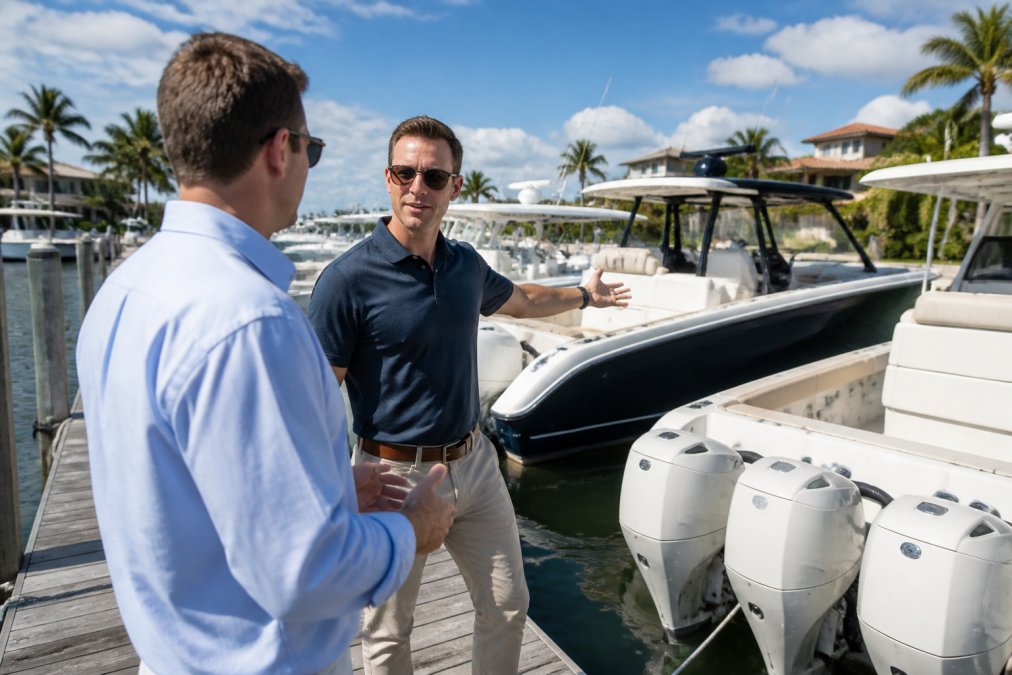
 ultimate-guide
Selling High-End Boats in Florida: A Complete Guide
Table of Contents
- Why Selling High-End Boats Requires Specialized Expertise
- Understanding Yacht Brokerage Services and How They Work
- Preparing a Luxury Boat for Sale: The Essential Steps
- Center Console Resale Value: What Determines Your Asking Price
- Seasonal Timing and Market Demand for Selling High-End Boats
- Tax-Efficient Vessel Disposal and Post-Sale Considerations
- Listing Optimization and Digital Marketing for Private Sellers
- Conclusion
Last Updated: August 25, 2026
Why Selling High-End Boats Requires Specialized Expertise
Selling high-end boats in Florida demands far more than listing a vessel and waiting for offers. The luxury yacht market operates on different principles than the general boating market, involving complex maritime law, vessel documentation requirements, and fair market valuation that general brokers often mishandle.
At Primo Yachts of Palm Beach, we've spent years focusing exclusively on center console yachts and premium offshore fishing vessels. This specialization means we understand the specific buyer personas, the mechanical systems that drive value, and the seasonal market dynamics that affect your asking price.
Understanding Yacht Brokerage Services and How They Work
Yacht brokerage services connect sellers with qualified buyers through established networks, professional marketing, and legal expertise. A broker's primary role is to represent your vessel, manage inquiries, coordinate inspections, and facilitate negotiations while handling the complex paperwork that comes with transferring vessel ownership.
The brokerage model exists because selling a high-end boat requires access to buyer networks that private sellers simply don't have. Brokers maintain databases of qualified purchasers, advertise on specialized platforms, and use relationships built over years of transactions. They also provide professional photography, video documentation, and listing optimization that transforms how your vessel appears to potential buyers.
Beyond marketing, brokers handle the transactional complexity: coordinating marine surveys, managing title transfers, facilitating sea trials, and ensuring all documentation meets federal and state requirements. The relationship between broker and seller is formalized through a listing agreement, a contract that specifies the broker's commission, the duration of the listing, and any exclusivity terms.
Consignment vs. Direct Sale: Which Method Moves Your Vessel
Consignment means the broker takes possession of your vessel and handles the sale on your behalf. You retain ownership until a buyer is found and the sale closes. The broker markets the boat, coordinates showings, arranges sea trials, and manages all buyer interactions. This works well if you want to step back from the selling process entirely, though it requires surrendering physical control of the vessel for an extended period.
Direct sale means you retain control and work with the broker as your representative without surrendering possession. You remain involved in showings, negotiations, and decision-making. The broker still markets your vessel and brings qualified buyers, but you're the primary point of contact. This appeals to sellers who want to maintain control, keep the boat in their preferred location, or continue using it during the selling process.
The choice depends on your circumstances. If you want minimal involvement and the boat isn't in active use, consignment makes sense. If you're still using the vessel or prefer to stay involved, direct sale gives you that flexibility.
Broker Commission and Fee Structures
Broker commissions on high-end boats typically reflect the complexity and value of the transaction. Most brokers work on a percentage-based commission calculated on the final sale price, often including dual representation where the listing broker and buyer's broker split the percentage.
Beyond commission, ask about additional fees. Some brokers charge for professional photography, video production, or listing placement on premium platforms. Others include these services in their commission. Clarify what's included and what costs extra before signing a listing agreement.
Preparing a Luxury Boat for Sale: The Essential Steps
Preparation determines whether your vessel attracts serious buyers or sits on the market gathering dust. High-end boat buyers expect immaculate condition, complete documentation, and evidence that the vessel has been maintained to professional standards.
Start by addressing deferred maintenance. Any visible wear, mechanical issues, or cosmetic problems signal to buyers that you may have neglected other systems they can't see. Professional detailing, mechanical inspection, and any necessary repairs should be completed before marketing begins.
Next, organize all documentation: the vessel's title, bill of sale, registration records, maintenance logs, warranty information, and any upgrades or modifications. Buyers at this level will request this documentation early in the process.
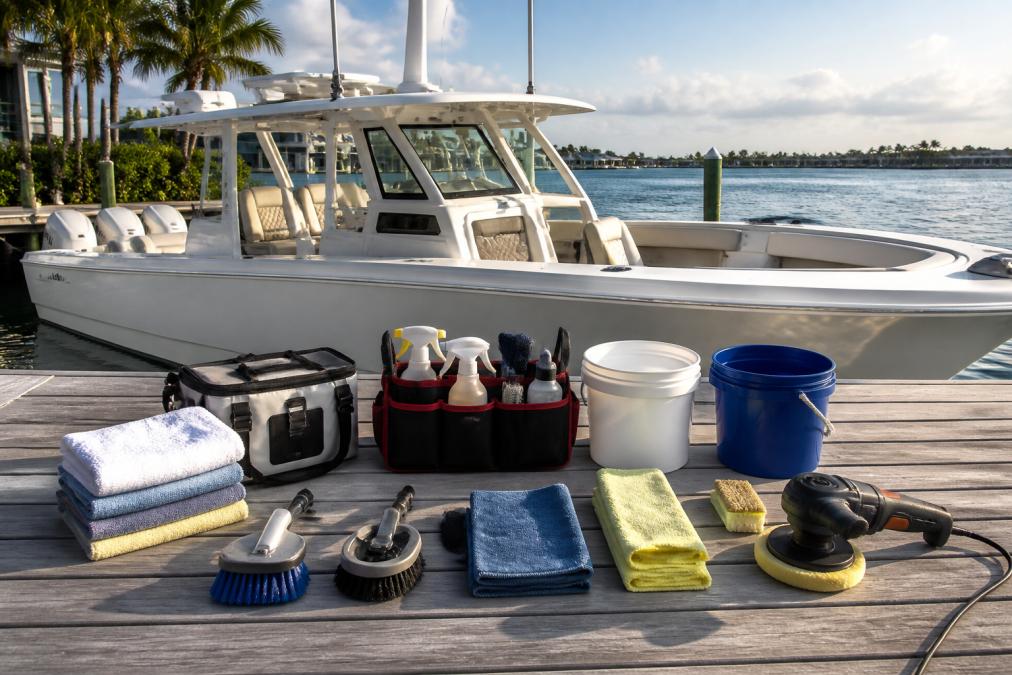
Professional photography and videography are non-negotiable. Professional photographers understand lighting, angles, and composition that showcase your vessel's best features. Video walkthroughs showing the helm, cabin, engine room, and deck systems give remote buyers confidence before scheduling a sea trial.
Marine Survey and Pre-Purchase Inspection Requirements
A marine survey is a comprehensive professional evaluation of your vessel's condition, performed by a certified marine surveyor (uscg.gov). The surveyor inspects the hull, engine systems, electrical systems, plumbing, safety equipment, and structural integrity. The resulting survey report documents the vessel's condition and identifies any defects or maintenance issues.
Most serious buyers will hire their own surveyor before committing to purchase. However, getting a pre-listing survey demonstrates transparency and confidence in your vessel's condition, removing a major objection and potentially accelerating the sales process.
The cost of a marine survey depends on the vessel's size and complexity. For a high-end center console or motoryacht, expect a thorough survey to take a full day or more. The investment typically pays for itself by reducing buyer hesitation and supporting your asking price.
Documentation and Vessel Registration
Your vessel's documentation must be current and accurate before you list it for sale. This includes the vessel's title, hull identification number (HIN), registration with your state's boating authority, and documentation with the U.S. Coast Guard if applicable.
Gather all maintenance records, service receipts, and upgrade documentation. These records support your asking price and demonstrate that the vessel has been properly maintained. Title transfer in Florida requires coordination with the state's Department of Highway Safety and Motor Vehicles, as well as any lienholders if the vessel has outstanding loans (flhsmv.gov).
Center Console Resale Value: What Determines Your Asking Price
Determining fair market value for a center console requires understanding the factors that drive prices in the current market. Unlike mass-produced vehicles, each yacht is unique, condition, age, engine configuration, and maintenance history all influence value differently.
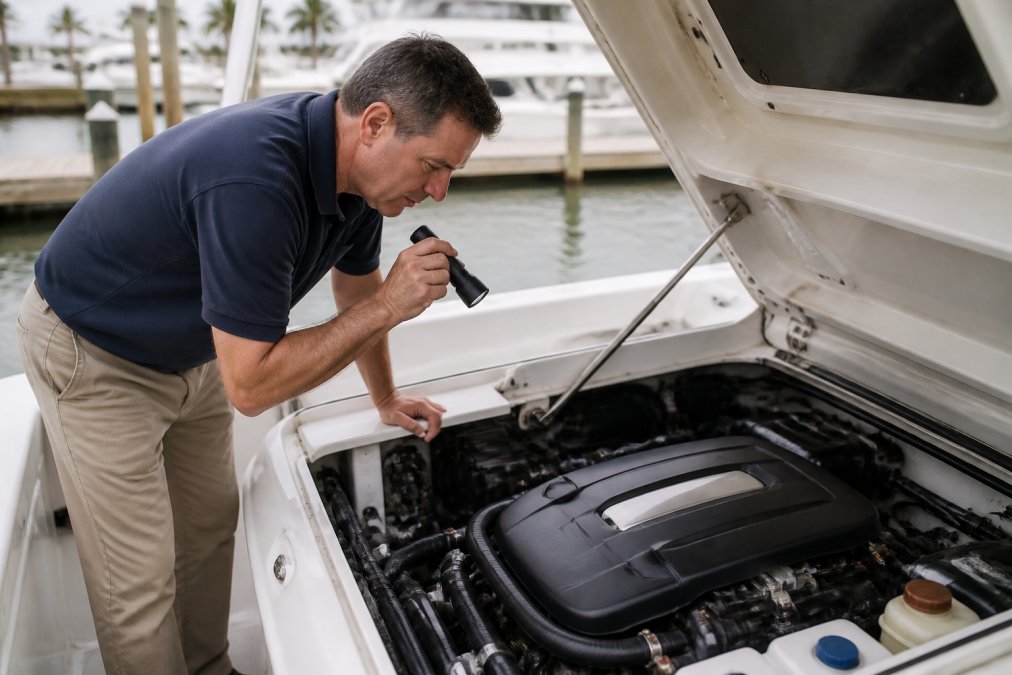
The vessel's age matters, but not uniformly. A well-maintained 10-year-old center console with documented service records may command a higher price than a neglected 5-year-old model. Engine configuration significantly impacts resale value, newer engines with lower hours, fuel efficiency, and warranty coverage attract premium prices. Outboard engines are easier to service and replace than inboards, which appeals to many buyers.
Upgrades and customizations influence value, but not always positively. High-quality GPS chartplotters or advanced fish-finding sonar add value. Custom paint, unusual cabin configurations, or specialized fishing equipment may appeal to niche buyers but could limit your market.
Fair Market Value and Vessel Appraisal
Fair market value is the price at which a vessel would sell between a willing buyer and willing seller, neither under pressure, with reasonable knowledge of relevant facts (irs.gov). Determining fair market value requires comparing recent sales of similar vessels. Your broker should provide comparable sales data, actual prices paid for center consoles of similar age, size, engine configuration, and condition in your market.
Professional vessel appraisals provide formal documentation of value, useful for insurance, financing, or estate purposes. An appraiser evaluates your specific vessel and produces a written report supporting a value estimate. Market conditions affect value significantly, a strong market with high demand and limited inventory supports higher prices, while a soft market puts downward pressure on values.
How Condition, Age, and Maintenance Records Impact Price
Condition is the single most important factor determining resale value. A newer boat in poor condition will sell for less than an older boat in excellent condition. Maintenance records prove that condition, documented service intervals, engine hours, fuel system maintenance, and haul-outs demonstrate responsible ownership.
Engine hours are a key data point. Engines with moderate hours (500-1,500 hours) are typically more valuable than high-hour engines (3,000+ hours) or extremely low-hour engines (under 100 hours). The vessel's cosmetic condition, paint, upholstery, hardware, and overall appearance, influences buyer perception and attracts serious buyers.
Seasonal Timing and Market Demand for Selling High-End Boats
Timing your sale to match market demand can significantly affect your asking price and time on market. Spring and early summer represent peak buying season, when the weather improves and serious buyers are actively shopping. Listings placed during this window typically generate more inquiries and competitive offers.
Fall represents a secondary peak as buyers prepare for winter boating in warm-water destinations. Winter typically sees reduced demand and lower prices, though if your vessel is winter-ready and marketed to serious offshore fishermen, it can work with a longer sales cycle.
Tax-Efficient Vessel Disposal and Post-Sale Considerations
Selling a high-end boat involves tax implications that many sellers overlook. If you've owned the vessel for personal use, the sale may trigger capital gains tax on any appreciation. Consult with a tax professional to understand your specific liability before closing.
Some vessels are held in business entities or trusts for liability protection or estate planning purposes. The structure of ownership affects how the sale is taxed and how title transfers. If your vessel is held in an LLC, trust, or corporate entity, coordinate the sale with your tax advisor and attorney.
Escrow services protect both buyer and seller during the closing process. The escrow agent holds funds and documentation until all conditions are met, then releases them simultaneously. Post-sale liability is typically eliminated once title transfer is complete and the new owner has obtained appropriate insurance. If you financed the original purchase, you'll need to satisfy any outstanding liens before closing.
Listing Optimization and Digital Marketing for Private Sellers
Professional listings include high-quality photography, detailed specifications, and compelling descriptions that attract qualified buyers. Your listing should highlight unique features, upgraded engines, premium electronics, and recent maintenance that differentiate your vessel from competitors.
The listing description should address the vessel's intended use. A center console marketed to offshore fishermen emphasizes fuel capacity, sea-keeping ability, and fish-finding electronics. Video tours have become essential for high-end listings, giving remote buyers confidence before scheduling an in-person showing.
Digital marketing extends beyond your broker's website. Premium listings appear on specialized yacht marketplaces, social media platforms, and industry publications. Your broker should explain where your listing will be promoted and how they'll reach qualified buyers. In South Florida, word-of-mouth and relationship-based marketing drive sales, your broker's reputation and network directly affect how quickly your vessel reaches serious buyers.
Selling a high-end boat in Florida successfully requires specialized knowledge of yacht brokerage services, fair market valuation, marine documentation, and strategic timing. Working with a specialist who understands center console yachts and the offshore fishing market accelerates the process and protects your investment.
Primo Yachts of Palm Beach has been serving the South Florida market since 2009, specializing in center console and premium offshore fishing vessels. Our expertise in vessel valuation, documentation, and buyer networks means your boat gets in front of serious purchasers who understand its true value. Contact us to discuss your vessel's market position and develop a selling strategy tailored to your timeline and goals.
Frequently Asked Questions
Q: What's the best way to sell a high-end boat in the current market?
A: Working with a specialized yacht brokerage that understands your vessel type, whether a center console, sportfishing yacht, or motoryacht, makes the difference. A broker with access to serious buyers, a strong listing agreement, and expertise in fair market valuation will position your boat competitively. Professional marketing, quality photos, and a documented maintenance history accelerate the sale. Timing matters too: spring and early fall typically see stronger demand for premium vessels in this region.
Q: How do professional yacht brokerage services add value compared to selling privately?
A: Brokers handle the entire process: fair market valuation, listing optimization, buyer qualification, sea trials, marine surveys, and escrow services. They access networks of serious buyers you won't reach alone, manage negotiations, and handle complex documentation including vessel registration and title transfer. A broker's commission is typically offset by a faster sale at a better price, plus the protection of professional liability management and post-sale escrow arrangements.
Q: What factors affect center console resale value the most?
A: Condition is paramount: engine hours, maintenance records, hull integrity, and recent upgrades directly impact price. Late-model center consoles with lower hours and documented service history command higher values. Market demand for your specific model, whether it's outboard or inboard powered, and current trends in the sportfishing and offshore fishing markets all influence resale value. A professional vessel appraisal ensures you understand fair market value before listing.
Q: What documentation do I need to sell a boat in Florida?
A: You'll need the vessel registration, hull identification number (HIN), bill of sale, and clear title documentation. If your boat is documented with the U.S. Coast Guard, you'll need those records too. A marine survey and pre-purchase inspection report protect both you and the buyer. Your maintenance records, warranty information, and any recent service receipts strengthen the listing. Your broker or yacht brokerage will guide you through all required paperwork and vessel documentation requirements.
This article was written using GrandRanker