 listicle
Refit Services for High-End Yachts: Top Yards Compared
Table of Contents
- What Are Refit Services for High-End Yachts?
- Quick Comparison: Leading US Yacht Refit Shipyards
- Types of Yacht Refit Services: From Cosmetic to Full Rebuild
- Top Refit Services for High-End Yachts in the United States
- Material Choices and Their Impact on Cost and Durability
- Legal, Contractual, and Compliance Considerations
- How a Refit Affects Your Yacht's Resale Value
- Budgeting, Project Management, and Crew Considerations
Last Updated: July 31, 2026
Choosing the right shipyard for refit services for high end yachts is one of the most consequential decisions a yacht owner makes. The variance in quality, timeline management, and final results across US shipyards is significant. Below, we compare leading US refit yards, break down service types, and cover angles most guides skip: material choices, legal protections, resale impact, and crew logistics.
A critical distinction: a cosmetic refresh and a full mechanical rebuild are entirely different projects requiring different expertise, contracts, and budgeting logic.
What Are Refit Services for High-End Yachts?
Refit services for high end yachts are comprehensive programs of restoration, modernization, and upgrade work performed on luxury vessels to extend operational lifespan, improve performance, and maintain or enhance market value.
A refit transforms a vessel; routine maintenance simply keeps it running. Scope ranges from cosmetic interior refresh to full structural rebuild involving naval architecture, new propulsion systems, and complete electrical rewiring. Classification societies such as the American Bureau of Shipping set standards governing compliant refits, particularly for commercially operated superyachts. According to American Bureau of Shipping vessel survey and classification standards, vessels undergoing significant structural or mechanical modifications must meet specific ABS classification requirements, affecting both scope and cost.
Quick Comparison: Leading US Yacht Refit Shipyards
| Shipyard | Location | Max Vessel Size | Specialty | Best For |
|---|---|---|---|---|
| Safe Harbor Lauderdale Marine Center | Fort Lauderdale, FL | 200 ft (60m) | Full-service superyacht refit | Large-scale projects, foreign-trade zone benefits |
| RMK Merrill-Stevens | Miami, FL | Superyachts | Mechanical, hydraulic, painting | South Florida owners needing full-service work |
| Derecktor Shipyards | Multiple US locations | 213 ft (65m) | Custom fabrication, mega yacht refit | Mega yacht owners, custom steel/aluminum work |
| Marine Group Boat Works | San Diego, CA | 400 ft dockside | Hull painting, ABS welding, propulsion | West Coast superyacht owners |
| Seattle Yachts / Northern Marine | Pacific Northwest | Varies | Repower, stabilizers, modernization | Pacific Northwest owners, full overhaul projects |
| The Yacht Docktor | San Diego, CA | Varies | Interior carpentry, teak decking | Interior-focused renovations |
| Pinmar USA | Fort Lauderdale / Savannah | Superyachts | Premium paintwork | Owners prioritizing exterior finishes |
| Concord Marine Electronics | Fort Lauderdale, FL | All sizes | AV, navigation, satellite systems | Electronics and tech upgrades |
Types of Yacht Refit Services: From Cosmetic to Full Rebuild
Understanding service categories prevents the most common mistake: scoping the wrong type of project.
Interior Design and Cabin Upgrades
Interior refits cover new soft furnishings, cabinetry, and complete cabin reconfiguration. The Yacht Docktor in San Diego delivers custom marine carpentry, teak decking, and furniture engineered for yacht spaces where structural loads and humidity demand different construction than residential work.
Exterior Enhancements: Hull, Deck, and Paintwork
Hull paintwork on a superyacht is technically demanding. Pinmar, operating in Fort Lauderdale and through Safe Harbor locations, offers a global guarantee on paint services, a meaningful differentiator where finish quality directly affects resale value. Deck refinishing choices carry long-term cost implications. Traditional teak is aesthetically superior but requires consistent maintenance. Synthetic teak alternatives offer lower lifecycle costs and are increasingly accepted in the premium market.
Mechanical, Propulsion, and Electrical Systems
RMK Merrill-Stevens in Miami specializes in marine stabilizer and hydraulic systems, meeting ABS, Lloyd's, and US Coast Guard requirements. Derecktor Shipyards brings heavy mechanical and rigging capabilities across multiple locations, serving mega yachts from 30 to 65 meters. Propulsion upgrades, engine overhauls, and generator replacements require dry dock access and specialized expertise. Seattle Yachts, in partnership with Northern Marine Shipyard, handles engine repowers and generator replacements, positioning the result as near-new at a fraction of new-build cost.
Navigation, Electronics, and Technological Innovations
Electronics represent one of the fastest-moving refit categories. Concord Marine Electronics, based at Safe Harbor Lauderdale Marine Center, brings over 35 years of experience with direct partnerships with Crestron Marine, FLIR, Raymarine, and Garmin, offering customized audio-visual systems and satellite internet solutions. Seakeeper gyroscopic stabilizers are routinely specified in refit scopes for roll reduction and are available as aftermarket refit installation.
Top Refit Services for High-End Yachts in the United States
The US market is concentrated in three geographic clusters: South Florida, Southern California, and the Pacific Northwest.
Safe Harbor Lauderdale Marine Center
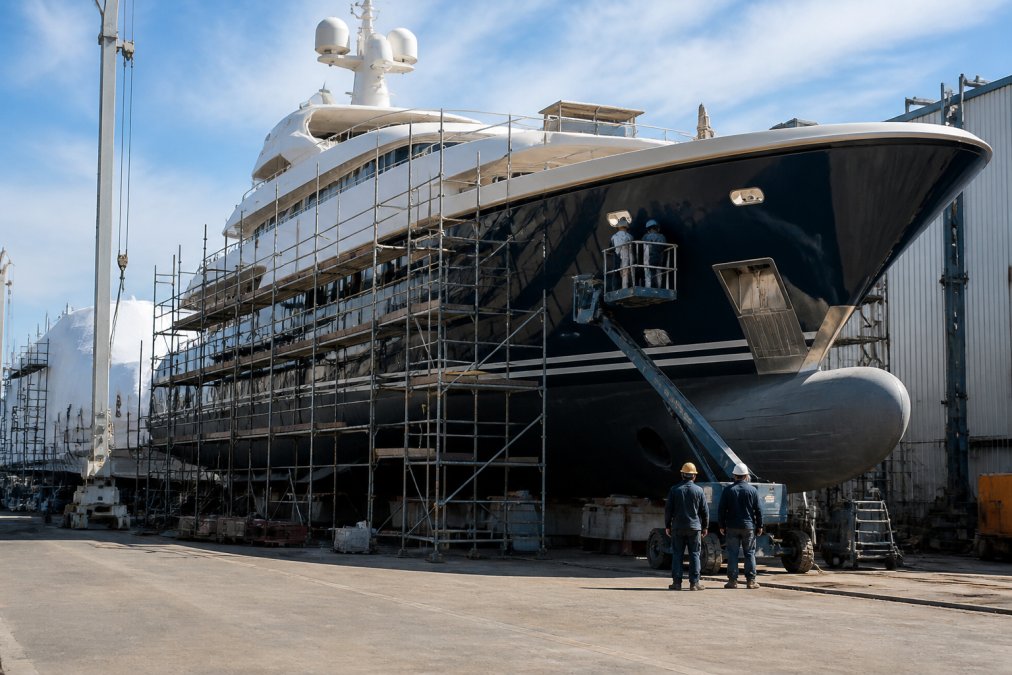
Safe Harbor Lauderdale Marine Center is the largest yacht repair and refit shipyard in the United States, accommodating vessels up to 200 feet with access to over 160 certified contractors. Its foreign-trade zone designation offers potential financial advantages for owners importing equipment or materials. The scale means virtually any scope can be managed on-site, from cosmetic refreshes to full structural rebuilds.

RMK Merrill-Stevens (Miami)
RMK Merrill-Stevens is a full-service shipyard with a strong reputation for mechanical and hydraulic systems, meeting major classification society requirements. In-house capabilities cover painting, welding, fabrication, and engine overhauls. A 2,700-ton shiplift in progress will expand capacity for larger vessels. For South Florida owners wanting comprehensive refit work without relocating to Fort Lauderdale, this is the most complete local alternative.
Derecktor Shipyards
Derecktor operates across multiple US locations including Dania Beach, Fort Pierce, New York, and Maine, offering flexibility single-location yards cannot match. Their core strength is custom steel and aluminum welding and fabrication, making them the natural choice for structural modifications. Decades of custom build experience translate directly into refit quality.

Marine Group Boat Works (San Diego)
Marine Group Boat Works operates on San Diego Bay with over 195 in-house craftsmen and the ability to haul vessels up to 665 tons. Dockside, they accommodate vessels up to 400 feet. The in-house model gives tighter control over quality and timeline. Their ABS-certified welding capability addresses structural work many West Coast yards cannot handle.
Seattle Yachts and Northern Marine Shipyard
The partnership covers the full refit spectrum for Pacific Northwest owners, from stabilizer installation to hull and cockpit extensions. Their particular strength is modernization: navigation upgrades, gyro and fin stabilizer installations, and AV system overhauls. For owners wanting a vessel that performs like a new build without the new-build price, this partnership delivers credible results.
Specialist Providers: Pinmar, Concord Marine Electronics, and The Yacht Docktor
These providers are not full-service shipyards but are best-in-class within specialties. Pinmar's global guarantee on paint services is a genuine differentiator for owners prioritizing exterior finish quality. Concord Marine Electronics' 35-year track record and direct brand partnerships make them the go-to for electronics integration. The Yacht Docktor's master craftsmen bring residential-quality aesthetics to marine-grade construction standards.
Material Choices and Their Impact on Cost and Durability
Material selection is where refit budgets diverge most dramatically. Hull coatings range from single-stage polyurethane to two-stage linear polyurethane systems with fairing compound preparation. Premium systems require significantly more preparation labor and material cost, but finish quality and longevity differences are substantial. For owners prioritizing resale value, the higher-cost finish pays back in buyer perception.
Deck materials present similar choices. Traditional teak remains aesthetically superior but its maintenance burden and replacement cycle make synthetic alternatives increasingly rational for lifecycle cost. Premium synthetic teak products have improved significantly and are now accepted by most surveying bodies.
Interior materials require marine-specific specification throughout. Upholstery fabrics need UV and mold resistance. Cabinetry joinery must account for vessel movement. Fasteners in wet areas require marine-grade stainless or non-ferrous materials.
Legal, Contractual, and Compliance Considerations
Scope definition is the most critical contractual element. Vague scope language drives cost overruns and disputes. Every work item should be defined with enough specificity that a third party could evaluate completion. "Repaint hull" is not a scope item. "Apply two-stage linear polyurethane topside paint system to hull above waterline, including fairing to Class A finish standard" is.
Change order protocols deserve equal attention. Refits almost always surface additional work once the vessel is in dry dock. The contract should specify the process for authorizing additional work, the markup rate applied to change orders, and the owner's right to obtain competitive quotes for significant scope additions.
Compliance with US Coast Guard regulations and applicable classification society requirements is non-negotiable for commercially operated vessels. According to US Coast Guard vessel documentation and inspection requirements, vessels operating under USCG certification must maintain compliance with applicable standards through any significant modification. For vessels with ABS or Lloyd's classification, the classification society's surveyor must approve significant structural or mechanical modifications.
How a Refit Affects Your Yacht's Resale Value
A well-executed refit increases market value; a poorly executed one decreases it. The difference lies in documentation, material quality, and shipyard reputation. Buyers and surveyors scrutinize refit work carefully. Work completed at a recognized, reputable shipyard with full documentation carries a premium in the brokerage market. According to Yacht Broker Association of America on vessel valuation standards, documented maintenance and refit history is a primary valuation factor.
Mechanical systems, navigation and electronics, and exterior paintwork carry the strongest resale return. Interior refits have more variable return; highly customized interiors can reduce buyer appeal if the aesthetic is strongly personal.
Budgeting, Project Management, and Crew Considerations
Scoping the Project and Setting a Realistic Budget
The most reliable budgeting approach is a pre-refit survey by an independent marine surveyor before engaging any shipyard. The surveyor's report provides objective assessment of vessel condition and identifies genuinely necessary work versus desirable work.
Project management for refit services for high end yachts is a discipline in itself. Larger projects benefit from an owner's representative, a professional who manages scope, timeline, and budget on the owner's behalf. For projects above a certain complexity threshold, the owner's representative fee is typically recovered in avoided cost overruns.
All-in budgets should include a contingency of at least 15-20% above contracted scope. Refits routinely surface hidden work once the vessel is opened up.
Crew Logistics During a Refit
A vessel in dry dock is not a habitable working environment for the full crew complement. For extended refits, some crew members are typically retained on reduced schedules to manage vessel access, liaise with contractors, and maintain familiarity with systems. Others may be placed on temporary leave or transitioned off entirely. Employment implications, including applicable US labor law considerations for crew employed under US contracts, should be reviewed with maritime employment counsel before the refit begins.
Crew who remain through a refit are valuable assets during commissioning. Their familiarity with pre-refit condition helps identify discrepancies in completed work and accelerates return-to-service.
Common Mistakes and How to Avoid Them
The most common and costly mistakes follow predictable patterns:
- Underspecified contracts: Vague scope language creates disputes and cost overruns. Specify everything.
- Insufficient contingency: Budget 15-20% above contracted scope for inevitable discoveries.
- Skipping the independent survey: A pre-refit survey by an independent surveyor is essential for large projects.
- Choosing the cheapest bid: The lowest bid is rarely the lowest final cost. Evaluate yards on track record, capacity, and contractor quality.
- Ignoring classification requirements: For commercially certified vessels, classification society approval must be built into the project plan from day one.
- No owner's representative: For complex projects, the owner's representative fee is almost always recovered in better outcomes.
According to Society of Accredited Marine Surveyors on pre-purchase and refit survey standards, independent surveys before and after significant refit work provide critical documentation for valuation and insurance purposes.
| Common Mistake | Root Cause | How to Avoid It |
|---|---|---|
| Cost overruns | Vague scope definition | Specify every work item in detail before signing |
| Timeline delays | No contingency planning | Build surveyor approvals and change order time into schedule |
| Resale value loss | Poor material choices | Specify marine-grade materials; document everything |
| Crew disruption | No refit crew plan | Establish crew roles and accommodation before yard entry |
| Classification non-compliance | Ignoring survey requirements | Engage classification society surveyor at project outset |
| Disputes with shipyard | No owner's representative | Appoint an owner's rep for projects above basic complexity |
Choosing the right partner for refit services for high end yachts requires specialist judgment. Primo Yachts of Palm Beach has provided expert guidance to South Florida yacht owners since 2009, with specialist focus and a brokerage approach built on genuine market knowledge. For owners navigating refit decisions alongside broader ownership questions, including valuation, financing, and vessel transitions, the team at Primo Yachts of Palm Beach offers informed, discreet guidance grounded in real South Florida market experience. Contact Primo Yachts of Palm Beach to discuss your vessel.
Frequently Asked Questions
What does a high-end yacht refit typically involve?
A high-end yacht refit can range from targeted upgrades, such as new navigation systems, paintwork, or interior finishes, to a comprehensive rebuild covering propulsion systems, electrical systems, hull work, and full interior redesign. The scope of work depends on the vessel's age, condition, and the owner's goals. Reputable US shipyards like Safe Harbor Lauderdale Marine Center and RMK Merrill-Stevens offer full-service refit programs tailored to superyachts and luxury motor yachts. Contact a qualified yard or owner's representative to define your project's scope before committing.
How do I choose between a full-service shipyard and a specialist refit provider?
Full-service shipyards handle everything from hull and mechanical systems to interior refurbishment under one roof, which simplifies project management and accountability. Specialist providers, such as dedicated paint companies or marine electronics installers, deliver deeper expertise in a single discipline. For complex, multi-system refits on superyachts, a full-service yard with an experienced owner's representative is usually the stronger choice. For targeted upgrades like navigation systems or premium paintwork, a specialist with a proven track record may deliver superior results at a more focused cost.
Does a refit increase a yacht's resale value?
A well-executed refit can meaningfully improve a vessel's market position, particularly when it addresses safety compliance, modernizes mechanical and electrical systems, and refreshes aesthetics. Buyers in the high-end market place a premium on documented maintenance history and recent upgrades. However, over-customizing to personal taste can limit buyer appeal. Refits that improve performance, efficiency, and classification society compliance tend to deliver the strongest return. Working with a specialist brokerage familiar with the South Florida market helps you prioritize upgrades that resonate with qualified buyers.
What legal and compliance requirements apply to yacht refits in the United States?
US-flagged commercial and charter yachts must meet US Coast Guard (USCG) regulations, and vessels enrolled with classification societies such as ABS (American Bureau of Shipping) must satisfy periodic survey requirements. Refits that alter structural elements, propulsion systems, or safety equipment typically trigger re-inspection. Owners should also review contractual terms carefully before engaging a shipyard, a detailed scope of work, milestone payment schedule, and clear change-order process are essential protections. Consulting a maritime attorney before signing a major refit contract is strongly advisable.
What are the most impactful technological upgrades available during a yacht refit?
Modern yacht refit services increasingly incorporate advanced navigation systems, integrated Crestron Marine audio-visual platforms, high-speed satellite internet, gyroscopic stabilizers such as Seakeeper units, and energy-efficient propulsion upgrades. Electronics specialists like Concord Marine Electronics, based at Safe Harbor Lauderdale Marine Center, design fully customized systems for superyachts. On the mechanical side, engine repowers and hybrid propulsion retrofits are gaining traction for owners prioritizing efficiency and sustainability. These upgrades enhance both onboard comfort and the vessel's long-term value in the brokerage market.
This article was written using GrandRanker