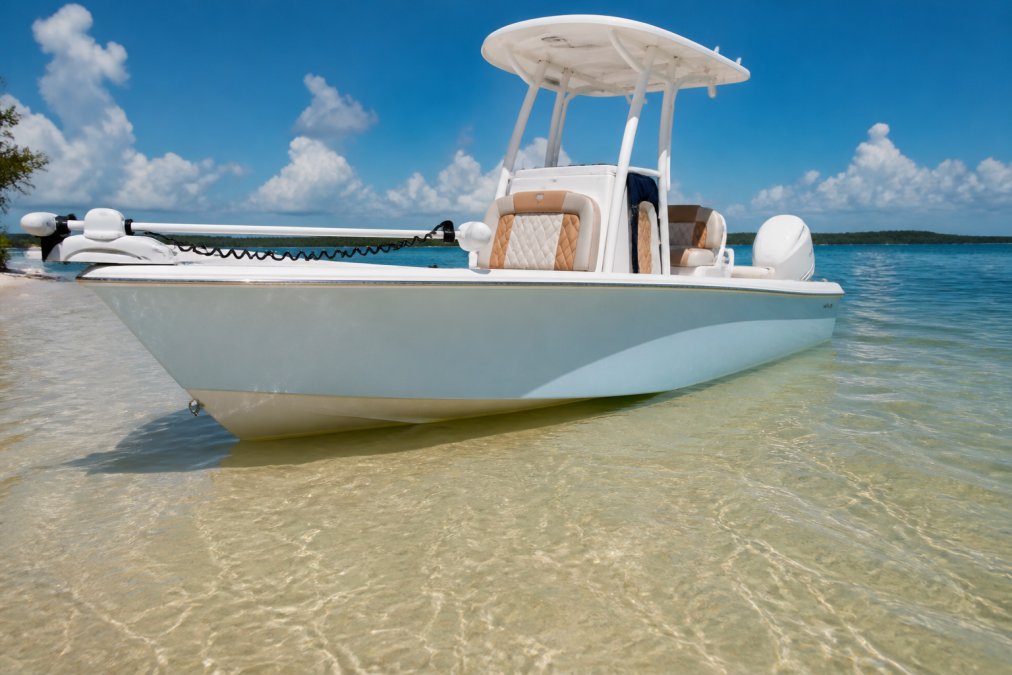
 listicle
Center Console Alternatives for Shallow Water
Table of Contents
- Why Center Console Alternatives Matter for Shallow Water
- Hull Design and Draft Depth: The Foundation of Shallow Water Performance
- Bay Boat vs Center Console: Understanding the Trade-offs
- Flats Boat Draft Requirements and Shallow Water Fishing Boat Features
- Propulsion Systems and Shallow Water Navigation
- Key Features for Shallow Water Alternatives
- Safety and Anchoring Protocols in Shallow Water
- Conclusion
- Frequently Asked Questions
Last Updated: September 21, 2026
Why Center Console Alternatives Matter for Shallow Water
When you're fishing shallow flats or navigating tight coastal waters, a traditional center console often becomes a liability. These boats draw too much water, handle poorly in tight quarters, and sacrifice the specialized features that make shallow water fishing productive. Primo Yachts of Palm Beach provides expert guidance for those seeking premium vessels.
The core issue isn't that center consoles are bad boats. It's that they're designed for different conditions. A standard center console prioritizes offshore capability, fuel efficiency at speed, and open-water stability. Those priorities create deeper drafts, higher transoms, and heavier displacement. In water that's 18 inches deep, those design choices work against you.
Shallow water center console alternatives exist because the market demanded them. Flats boats, bay boats, skiffs, and hybrid designs emerged from real-world fishing needs. Each solves specific problems that traditional center consoles can't address. Understanding the trade-offs between these options is what separates a productive fishing season from a frustrating one.
Hull Design and Draft Depth: The Foundation of Shallow Water Performance
The hull design determines everything about how a boat performs in shallow water. It controls draft depth, stability, ride quality, and how the boat tracks through tight turns.
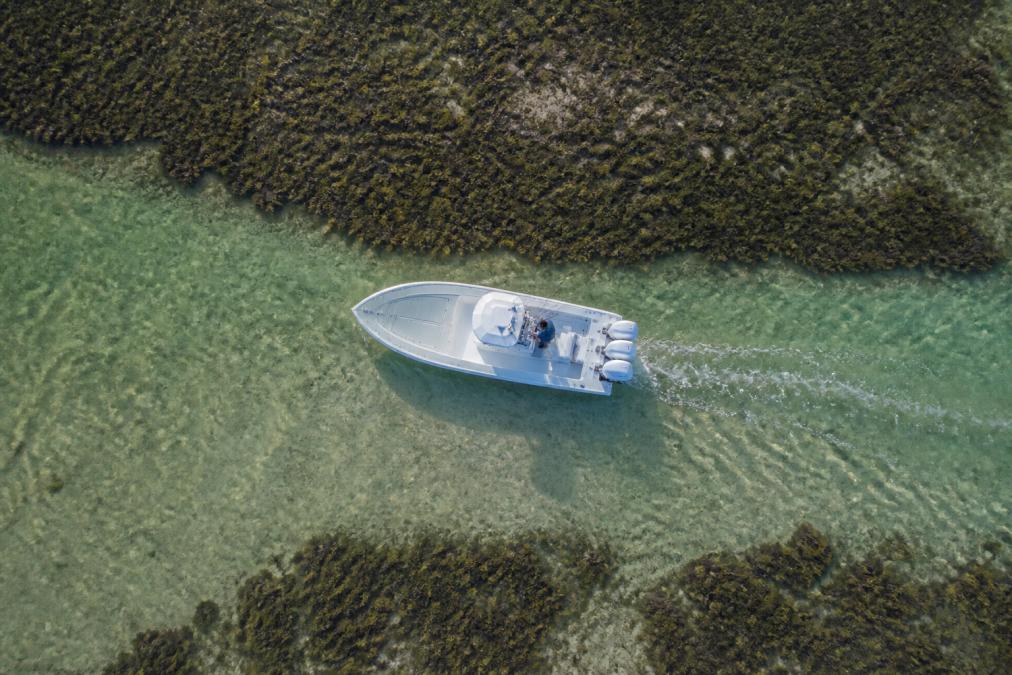
Draft depth is the vertical distance from the waterline to the lowest point of the hull. Traditional center consoles typically draft 18 to 24 inches depending on load and engine configuration. Flats boats and skiffs often draft 10 to 14 inches. That difference matters enormously when you're fishing areas where the average depth is 18 inches.
Hull shape determines how water moves around the boat. A deep-V hull cuts through chop but displaces more water, requiring deeper draft. A flat-bottom hull sits on top of the water, drawing less depth but providing a rougher ride in any chop. A tunnel hull runs two longitudinal channels along the bottom, which reduces draft while maintaining stability. The inverted V design used in specialized skiffs offers a middle ground: shallow draft with acceptable ride quality in moderate conditions.
The relationship between hull weight and draft matters more than most boaters realize. A lightweight composite boat with a shallow hull can navigate areas that would ground a heavier traditional center console.
Dead-rise angle affects both draft and stability. Dead-rise measures the angle of the hull bottom relative to horizontal. Higher dead-rise (more V-shaped) means deeper draft but better ride quality. Lower dead-rise (flatter) means shallower draft but a wetter, bouncier ride. Shallow water alternatives typically run dead-rise angles between 10 and 18 degrees, compared to 20+ degrees on offshore center consoles.
Bay Boat vs Center Console: Understanding the Trade-offs
A bay boat versus center console comparison reveals fundamental design philosophy differences. This comparison matters because it shapes which boat works for your actual fishing.
Bay boats prioritize versatility. They combine fishing features with family comfort, offer moderate shallow-water access, and maintain reasonable offshore capability. They typically run modified V-hulls with dead-rise angles between 15 and 22 degrees. Draft ranges from 14 to 18 inches depending on the model and load.
Center consoles prioritize open deck space and offshore performance. They offer maximum fishing room, better offshore capability, and faster speeds. Traditional center consoles draft 18 to 24 inches and feature deep-V hulls designed for rough water.
The trade-off is straightforward: bay boats sacrifice some open fishing space and offshore speed to gain shallow-water capability and creature comforts. Center consoles sacrifice shallow-water access and family comfort to maximize fishing room and offshore performance.
For shallow water fishing specifically, bay boats can be a strong option. They'll navigate water that would ground a standard center console, yet they offer more amenities and slightly better offshore capability than a pure flats boat.
The real question isn't which design is "better." It's which design matches your actual fishing. If you spend 80% of your time in water shallower than 18 inches, a bay boat or flats boat outperforms a center console. If you run offshore regularly and only occasionally fish shallow flats, a center console with a jack plate makes more sense.
Flats Boat Draft Requirements and Shallow Water Fishing Boat Features
Flats boats represent the extreme end of shallow water specialization. They're built for one job: accessing and fishing the shallowest water possible.
Skiffs: Maximum Shallow Water Capability
Skiffs are purpose-built shallow water machines. Skiffs are purpose-built shallow water machines, often featuring inverted V-hull designs, low draft, and a footprint optimized for tight creeks and backcountry areas.
Skiff design prioritizes draft depth above all else. These boats sacrifice offshore capability, comfort, and speed to access water that no other boat class can reach. A skiff will navigate 10-inch depths loaded with two people and gear. That capability defines the category.
The trade-off is real. Skiffs ride rough in chop. They offer minimal shade or weather protection. They have limited fuel capacity, restricting range. But if your fishing is concentrated in shallow flats, backcountry creeks, or tidal zones, a skiff is unmatched.
Flats boat features matter for productivity. Shallow water fishing boat features typically include:
- Elevated poling platforms for sight-fishing from height
- Integrated rod holders positioned for easy casting
- Aerated livewells that keep bait and catch healthy in shallow water
- Minimal freeboard (the distance from waterline to deck edge), which reduces draft
- Non-skid deck surfaces for safe footing on wet surfaces
- Shallow-water anchoring systems that hold in sand and mud without dragging
Hybrid Designs: Balancing Shallow Access and Offshore Capability
Hybrid boats attempt to split the difference. They combine shallow-water access with enough offshore capability for extended trips beyond the immediate flats.
Hybrid boats represent this category. These boats run shallow-water hulls but incorporate features that make offshore fishing viable: higher freeboard for wave protection, better fuel capacity, more sophisticated navigation electronics, and hull designs that handle offshore chop better than pure flats boats.
Hybrids cost more than dedicated skiffs or traditional center consoles. They're heavier, which increases draft slightly compared to pure flats boats. But they solve a real problem: many serious anglers fish both shallow flats and offshore reefs or wrecks in the same season.
The hybrid approach works when you need versatility more than specialization. If your fishing splits between shallow backcountry and offshore structure, a hybrid saves you from owning two boats. The compromise is acceptable because you're not sacrificing everything for one extreme.
Propulsion Systems and Shallow Water Navigation
Engine choice and mounting configuration dramatically affect shallow water performance. This is where jack plates and jet drives become critical.
Outboard motors remain the standard for shallow water boats.
Key Features for Shallow Water Alternatives
Specific features separate boats that work in shallow water from boats that merely claim to. These features should be on your evaluation checklist.
| Feature | Importance | Why It Matters |
|---|---|---|
| Draft depth | Critical | Determines water access |
| Hull design | Critical | Controls ride quality and stability |
| Trim tabs | High | Optimizes draft in varying conditions |
| Deck layout | High | Affects fishing productivity |
| Livewell system | High | Keeps bait and catch healthy |
| Navigation electronics | High | Enables safe shallow-water navigation |
| Anchor system | Medium | Holds position without dragging |
Safety and Anchoring Protocols in Shallow Water
Propeller damage is expensive and common in shallow water. Running over grass, oyster beds, or sand bars can damage or destroy a propeller. Carry a spare propeller and the tools to change it. Know how to recognize cavitation (high RPM with no speed increase). It indicates propeller damage or loss of water contact.
Conclusion
Choosing a shallow water center console alternative depends on matching the boat to your actual fishing. If you spend most of your time in water shallower than 18 inches, a traditional center console compromises your fishing. Flats boats and skiffs access water that grounds standard center consoles. Bay boats and hybrids balance shallow-water capability with versatility. Primo Yachts of Palm Beach specializes in helping clients navigate these decisions.
Frequently Asked Questions
What is the best center console alternative for extremely shallow water?
Dedicated flats boats and skiffs outperform traditional center consoles in water under 2 feet. Skiffs and similar models use inverted V-hulls and tunnel designs that reduce draft to 8-12 inches. If you need both shallow water access and offshore capability, hybrid designs bridge the gap, though they draw slightly more water than pure flats boats.
How does hull design affect shallow water performance?
Hull design directly determines draft depth and bottom-contact stability. Shallow V-hulls and tunnel hulls displace less water, allowing boats to run in skinny conditions. Inverted V-hulls track straighter in tight creeks. Deep-V designs offer better offshore ride quality but require deeper water. Dead-rise angle (the slope of the hull) affects both draft and stability. A shallower dead-rise reduces draft but can feel rougher in chop.
What are the main advantages of a bay boat over a center console?
Bay boats typically feature modified V-hulls that balance shallow water access with family comfort. They offer more seating, integrated features like livewells, and smoother rides than dedicated flats boats. The trade-off: bay boats draw more water than skiffs and have less open fishing deck than traditional center consoles. Certain models appeal to boaters wanting versatility between fishing and recreation.
Do I need a jet drive or outboard for shallow water fishing?
Outboards are standard for shallow water alternatives and offer better fuel efficiency and speed. Jet drives excel in extreme shallows and rocky bottoms since they have no exposed propeller, but they consume more fuel and cost more to maintain. Most flats boats and bay boats use outboards with jack plates and trim tabs, which allow you to tilt the motor up for shallow running while maintaining control.