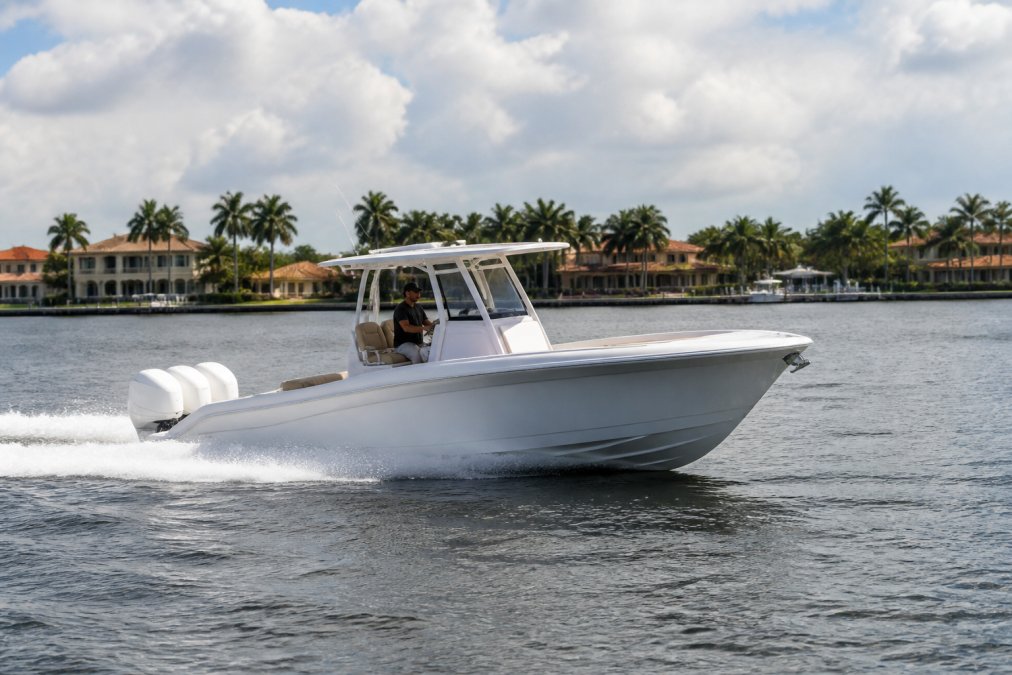
 listicle
Center Console Boat Depreciation Rates 2026
Table of Contents
- Center Console Depreciation Rates: What Owners Need to Know
- How Annual Depreciation Affects Your Investment
- Best Center Console Brands for Resale Value
- Impact of Outboard Engine Hours on Value
- Used Center Console Market Trends 2026
- Maintenance and Hull Condition: Protecting Resale Value
- Calculating Total Cost of Ownership
- Conclusion
- Frequently Asked Questions
Last Updated: September 26, 2026
Center Console Depreciation Rates: What Owners Need to Know
Understanding center console depreciation is essential for anyone considering a significant investment in a premium vessel. Whether you're buying your first center console or upgrading to a larger model, the financial trajectory of your boat matters as much as its performance on the water.
Center console depreciation follows predictable patterns, though the specific rates depend heavily on brand reputation, engine condition, maintenance history, and current market demand. Primo Yachts of Palm Beach has tracked these trends since 2009, helping clients navigate the often-misunderstood economics of center console ownership.
The challenge most buyers face is conflating purchase price with total cost of ownership. A boat that seems reasonably priced upfront can become a financial burden if depreciation accelerates unexpectedly. Conversely, premium brands with strong resale value often justify their higher initial cost over the long term.
This guide breaks down the real numbers behind center console depreciation, identifies which brands hold value best, and shows how to calculate true ownership costs before committing capital.
How Annual Depreciation Affects Your Investment
Center consoles typically experience their steepest depreciation in the first year of ownership. Many boats lose value immediately upon delivery, a phenomenon known as "off-the-lot" depreciation. After this initial drop, the depreciation curve stabilizes into a more predictable annual rate.
The typical center console experiences meaningful value loss in years one through three, after which the annual depreciation rate slows considerably. Boats that are well-maintained and have complete service records tend to hold value more effectively than those with spotty maintenance histories or missing documentation.
Understanding this depreciation curve helps you make strategic decisions about when to buy, when to upgrade, and how to structure your ownership timeline. A boat purchased used, after the steepest depreciation has already occurred, often represents better long-term value than a new purchase, assuming you're willing to accept the cosmetic wear that comes with a pre-owned vessel.
The total cost of ownership extends far beyond depreciation. Fuel, insurance, storage, maintenance, and dockage all accumulate. When you factor in these ongoing expenses alongside depreciation, the annual cost to own a center console can be substantial. This is why calculating your true financial commitment before purchase is so important.
Best Center Console Brands for Resale Value
Premium brands consistently outperform entry-level manufacturers when it comes to resale value retention. This isn't coincidental, it reflects build quality, owner satisfaction, dealer network support, and buyer demand in the secondary market.
Boston Whaler stands out as the gold standard for value retention. Their unsinkable foam-injected hull construction and legendary durability command strong resale prices. Buyers recognize the brand as synonymous with safety and longevity, which translates directly to stronger demand for used models. Boston Whaler center consoles typically retain between 70-80% of their original value after three years, significantly outpacing many competitors.
Grady-White holds similar resale strength, with comparable retention rates over the same period. Their SeaV² hull design delivers a smooth, dry ride that appeals to serious offshore anglers, and their reputation for build quality and customer service creates a loyal secondary market. Grady-White owners tend to be repeat buyers, which sustains demand for quality used inventory.
Entry-level brands, while more affordable at purchase, often depreciate more steeply. The gap between a premium brand retaining 75% of value and an entry-level brand retaining 55% becomes substantial when you're working with a $300,000 or $500,000 purchase price.
The market for used center consoles remains strong, particularly for well-maintained vessels from reputable manufacturers. This liquidity, the ability to sell your boat relatively quickly at fair market value, is itself valuable. A boat that's easy to sell is worth more than one that sits on the market for months.
Impact of Outboard Engine Hours on Value
Engine hours represent one of the most significant factors influencing center console resale value, yet many buyers underestimate their importance. An outboard motor's lifespan is measured in operating hours, not calendar years, making this metric critical for pricing used boats.
A center console with 500 hours on its engines is fundamentally different from one with 2,000 hours, even if both are the same model year and appear cosmetically identical. Buyers understand that high-hour engines require closer inspection and may need rebuilding or replacement sooner than low-hour alternatives.
Most outboard engines are considered to have useful service lives between 1,500 and 2,000 hours before major overhaul becomes likely. Boats approaching or exceeding this threshold face steeper depreciation curves because prospective buyers factor in the cost of engine work. A $15,000 engine rebuild or replacement weighs heavily on purchase decisions.
Engine maintenance records become critical at higher hour counts. An engine with 1,800 documented service hours, complete with receipts showing regular maintenance, oil changes, and preventive work, commands significantly more confidence than one with 1,200 mystery hours and no service history. Documentation protects resale value.
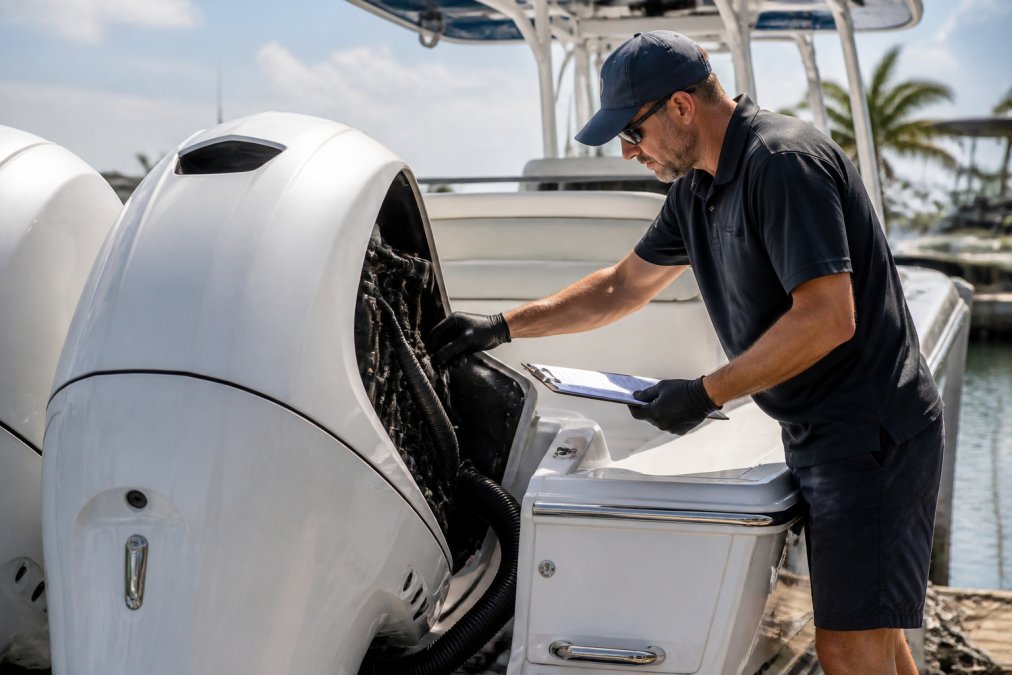
The relationship between engine hours and depreciation isn't linear. A boat at 1,000 hours might lose value gradually as hours accumulate. But as it approaches the 1,500-2,000 hour range, depreciation often accelerates because buyers begin factoring in imminent major maintenance costs.
Used Center Console Market Trends 2026
The used center console market in 2026 reflects a stabilization after pandemic-driven pricing volatility. During 2020-2023, used boat prices inflated significantly due to supply constraints and elevated demand from buyers seeking recreational assets. That market correction has largely completed, bringing prices closer to historical norms.
Current market conditions favor buyers with patience and sellers with realistic pricing expectations.
Maintenance and Hull Condition: Protecting Resale Value
A center console's hull condition is its foundation. Any structural damage, osmotic blistering, or core deterioration significantly impacts resale value and can be expensive to repair. Buyers conducting marine surveys will identify these issues immediately, and the cost to remedy them comes directly out of the boat's market value.
Calculating Total Cost of Ownership
Total cost of ownership extends far beyond purchase price and depreciation. A complete financial picture includes fuel, insurance, storage, maintenance, dockage, licensing, and opportunity cost on invested capital.
| Cost Component | Typical Annual Range | Notes |
|---|---|---|
| Depreciation | 5-15% of market value | Highest in years 1-3 |
| Fuel | $5,000-$20,000 | Depends on usage and efficiency |
| Insurance | $2,000-$6,000 | Varies by coverage and value |
| Storage/Dockage | $3,000-$15,000 | Location and facility dependent |
| Maintenance Reserve | 5-10% of market value | Covers routine and emergency repairs |
| Licensing/Registration | $200-$500 | Varies by state and vessel size |
Conclusion
Center console depreciation follows predictable patterns, but the specific rate depends on brand choice, maintenance quality, engine condition, and market dynamics. Premium brands like Boston Whaler and Grady-White consistently retain 70-80% of value over three years, while entry-level manufacturers often see steeper depreciation curves.
Frequently Asked Questions
What is the typical depreciation rate for center console boats?
Center console boats typically depreciate 10-15% in the first year after purchase, then 5-10% annually for the next three to five years. Premium brands like Boston Whaler and Grady-White retain 70-80% of their value after three years, while entry-level models may drop to 60-65%. The depreciation curve stabilizes after year five, with annual losses typically under 5%. Market conditions, engine hours, and maintenance history significantly influence actual depreciation for individual vessels.
Do center console boats hold their value better than other boat types?
Center consoles generally hold value better than cabin cruisers or express boats due to their versatility and strong demand among fishing enthusiasts. Their simpler construction and lower maintenance requirements also support better asset retention. However, resale value depends heavily on the brand, engine condition, and regional market liquidity. In competitive markets like South Florida, quality center consoles from established manufacturers experience strong market demand and faster sales velocity.
How do engine hours impact center console depreciation in 2026?
Engine hours are one of the most critical factors in center console valuation. Outboard motors with under 500 hours typically command premium prices, while vessels exceeding 1,000 hours see measurable depreciation. Each additional 100 hours can reduce resale value by 1-3%, depending on maintenance records and engine type. Well-documented service history mitigates hour-related depreciation; neglected engines with high hours may face 20-30% value reductions. Prospective buyers now request detailed engine logs before making offers.
What factors influence the resale value of premium center consoles?
Premium center console resale value is shaped by hull condition, engine hours, service records, upgraded electronics, and regional market saturation. Vessels with complete maintenance documentation and low engine hours retain 75-85% of original value. Upgraded features like advanced navigation systems and premium upholstery add 5-10% to resale price. Regional demand also matters; center consoles command stronger prices in fishing-focused markets. Post-pandemic market correction has stabilized pricing, making 2026 a more predictable environment for asset valuation.
Is it better to buy a new or used center console for long-term value?
Buying a used center console (3-5 years old) typically offers better long-term value than purchasing new. Used boats have already absorbed the steep first-year depreciation while retaining 70-80% of original value through stable middle years. A new purchase loses 10-15% immediately; a used boat avoids this penalty. However, purchase price, maintenance condition, and your intended use matter. Buyers prioritizing specific features or warranty protection may justify new purchases; value-conscious owners should target quality used inventory with documented service history.