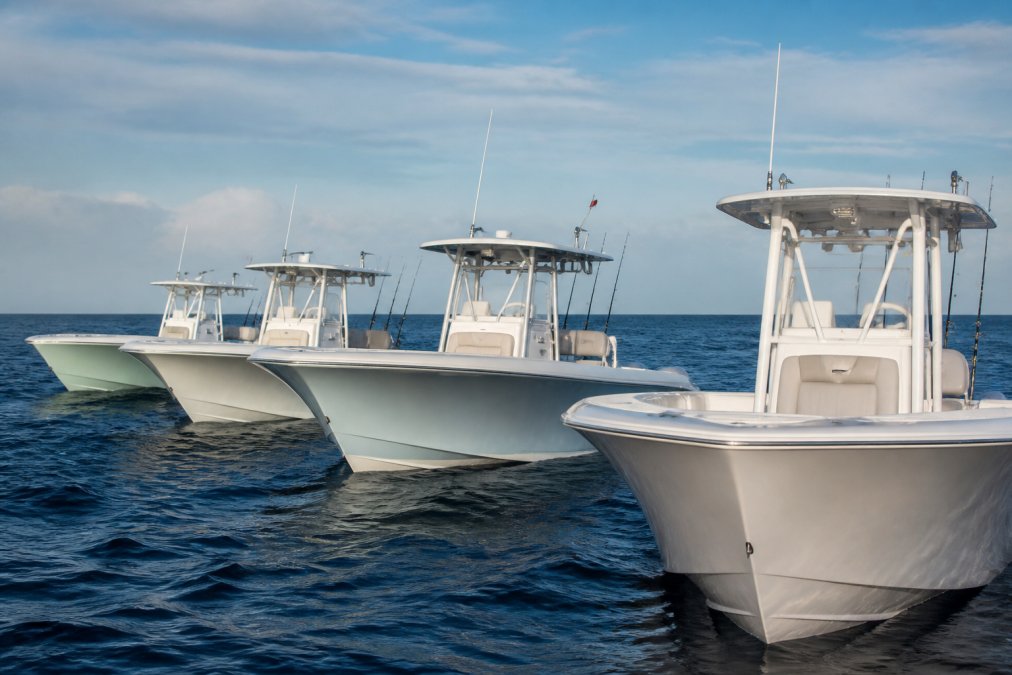
 listicle
Offshore Fishing Boat Alternatives to BH Yachts
Table of Contents
- What to Look for in Offshore Fishing Boat Alternatives
- Best Offshore Fishing Boat Brands for Performance
- Trailerable Offshore Fishing Boats for Flexibility
- Aluminum vs. Fiberglass Construction
- Maintenance and Long-Term Ownership Costs
- New vs. Used Market Considerations
- Conclusion
Last Updated: August 6, 2026
What to Look for in Offshore Fishing Boat Alternatives
When evaluating offshore fishing boat alternatives, you're weighing far more than horsepower and hull color. The right vessel depends on how you fish, where you fish, and what you're willing to maintain. At Primo Yachts of Palm Beach, we've guided clients through this decision since 2009, and the pattern is consistent: buyers who match their boat to their actual fishing style win.
Start by defining your mission. Are you targeting grouper 40 miles out, or running to the edge for wahoo? Do you need to sleep four people aboard, or is it day trips only? Will you trailer the boat, or keep it at a dock? These questions eliminate more options than any price point ever could.
The best offshore fishing boat alternatives share certain characteristics regardless of brand. Hull design matters more than you'd think, a 24-degree deadrise cuts through chop differently than a 20-degree. Center console layouts maximize fishability but sacrifice cabin comfort. Convertible designs trade open deck space for below-deck amenities. Fuel capacity determines range. Livewell capacity and fish box volume determine how long you can stay out and what you can bring home.
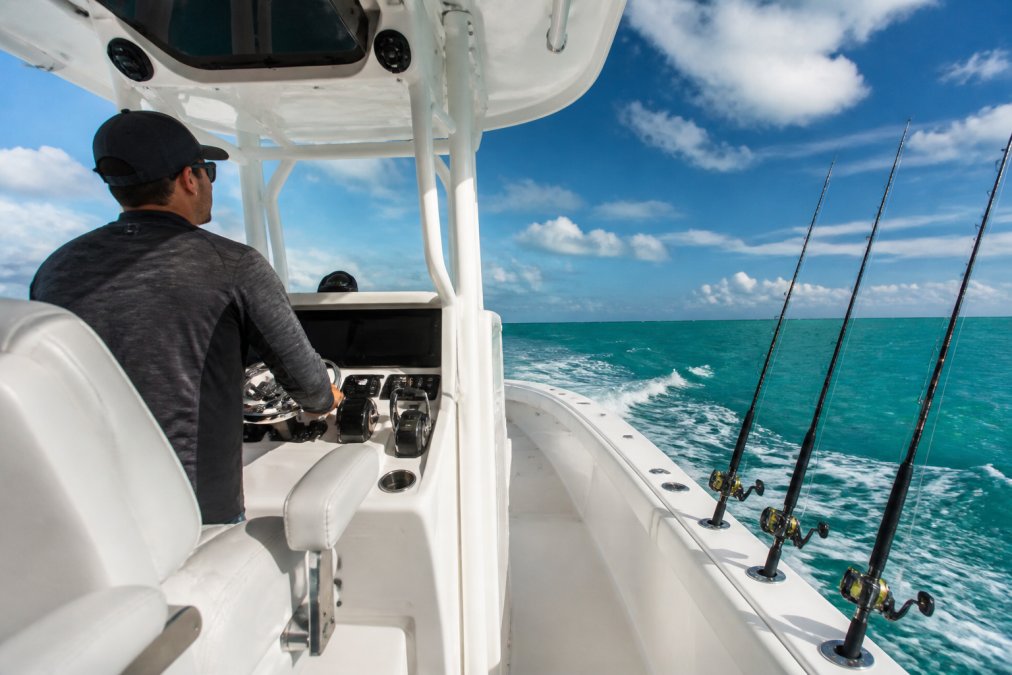
Hull Design and Seaworthiness
The hull is everything. Deep-V hulls with sharp entries slice through chop. Stepped hulls reduce drag and improve fuel efficiency. A 24-degree deadrise hull will track straighter in offshore swell than a 20-degree, but it trades some speed for stability.
Fiberglass construction dominates the offshore market because it handles salt water better than aluminum over decades. Hand-laid fiberglass absorbs impact better than chopped strand. Vinylester resin resists osmotic blistering. These details matter if you plan to own the boat for 10 years.
Seaworthiness balances hull shape, weight distribution, freeboard height, and how the boat handles beam seas. A narrow beam cuts through waves efficiently but rolls more in beam seas. A wider beam provides stability but can pound in head seas. The best offshore fishing boat alternatives balance these trade-offs based on where you actually fish.
Center Console vs. Convertible Configuration
Center console boats dominate the offshore fishing market because they offer 360-degree fishability. An open deck means you can fight a fish from any angle. Rod storage wraps the boat. Livewells and fish boxes integrate into the deck. The helm sits elevated, giving the captain visibility and control.
The trade-off is weather exposure and limited accommodations. On a rough day run, you're standing at the wheel getting hammered. A 12-hour trip means nowhere to rest. For day fishing within 30 miles of the inlet, this is perfect. For multi-day trips or longer offshore runs, it's exhausting.
Convertible designs flip this equation. A full cabin with galley, head, and sleeping accommodations means you can stay out overnight. An enclosed helm protects the captain. But the cockpit is smaller, fighting space is limited, and deck layout is less flexible. A convertible works for anglers who want the option to cruise comfortably but still need serious fishing capability.
Fishing-Specific Features and Amenities
Livewell capacity separates day boats from serious offshore platforms. A 40-gallon livewell keeps 10 dolphin alive for a few hours. A 100-gallon system keeps them healthy for 12 hours. If you're running 60 miles to the grounds, you need the larger system.
Fish box volume matters equally. A 200-pound capacity box seems large until you're trying to store 10 wahoo and a 60-pound grouper. Insulation quality affects ice retention. Rod storage should be vertical, protected from sun damage, and organized by line weight.
Navigation electronics have become mandatory. GPS, sounder, radar, and autopilot integration reduce fatigue on long runs. Autopilot lets the captain rest during transit. A quality sounder shows structure and bait on the bottom.
Fuel capacity determines range. A 300-gallon tank on a boat burning 20 gallons per hour gives you roughly 7.5 hours of run time. Factor in current, sea state, and the need to return to port with reserve fuel.
Best Offshore Fishing Boat Brands for Performance
The offshore fishing boat market has genuine specialists. These aren't luxury brands dabbling in fishing. They're companies that have built their reputation on boats that perform in blue water.
Viking Yachts Convertible Series
Viking Yachts builds convertibles for serious offshore anglers who refuse to compromise on comfort. Their 44 to 90-foot range covers everything from weekend warriors to tournament competitors. The cockpit is wide and functional. The cabin is appointed with granite countertops, rich woods, and leather lounges. The helm station offers exceptional visibility and ergonomic controls.
What separates Viking is consistency. Their boats hold value. Tournament anglers choose Viking because the boat performs when it matters. The ride is smooth in offshore swell. The systems are reliable. The fishing layout makes sense.
Hatteras Yachts GT Series
Hatteras built its reputation on seaworthiness. The GT series represents their semi-custom approach to offshore fishing. These boats are engineered for rough conditions. The hull construction is strong. The electrical systems are hand-wired for reliability. Customization options are extensive.
The GT series appeals to dedicated sport fishermen who understand that rough days happen. The boat won't back down from challenging conditions. The fighting cockpit is oversized. The livewell systems are comprehensive. Hatteras boats require experienced captains and more demanding maintenance, but they deliver performance for decades.
Grady-White Canyon Series
Grady-White's Canyon series represents the center console approach to offshore fishing. The SeaV² hull tracks straight in chop. The ride is dry. The stability is exceptional for a center console.
A 45-footer gives you a full cabin for overnight trips but maintains the open deck layout. Rod storage is abundant. The livewell system is large. Fish boxes are integrated and insulated. Grady-White boats are well-maintained in the used market because owners tend to keep them.
Regulator Marine Offshore Series
Regulator Marine specializes in center consoles with serious offshore credentials. The 24-degree deadrise hull is their signature. It's heavy, solid, and cuts through chop with authority.
Regulators are built for rough water. The hull is thicker than competitors. The materials are premium. The ride quality is exceptional. The trade-off is speed, a heavier hull means lower top speed compared to lighter designs. But fuel efficiency in rough conditions and stability make up for it.
Boston Whaler Outrage Series
Boston Whaler's Outrage series is the unsinkable center console. The Unibond hull construction is their proprietary design. The boat literally cannot sink. For offshore fishing, this peace of mind matters.
The Outrage series appeals to anglers who want serious offshore capability with an emphasis on safety. Mercury Verado outboards are the standard power. The livewells are huge. The fish boxes are integrated. The electronics package is comprehensive. Boston Whaler boats command premium prices because the brand has earned trust over decades.
Trailerable Offshore Fishing Boats for Flexibility
Some anglers want offshore capability but need the flexibility of trailering. You can launch from any ramp, fish, and store the boat at home. You avoid marina fees and have complete control over maintenance. The trade-off is that trailerable boats are smaller, usually 28 to 35 feet, and the ride can be rougher in big seas.
Invincible Boats Open Fisherman Series
Invincible Boats builds high-performance center consoles designed for serious saltwater fishing. The Stepped-Vee Ventilated Tunnel hull is their signature. It's fast and efficient. The boat planes quickly and maintains speed in rough conditions.
Invincible boats are built for anglers who want to run far and fish hard. The deck layout is uncluttered. Rod storage is abundant. Livewells and fish boxes are large. The boat tracks straight and handles beam seas well. Invincibles are expensive, but for the angler who understands performance boats, they deliver.
Contender Boats ST Models
Contender's ST (Sport Tournament) models are pure fishing platforms. The 24.5-degree deadrise hull is designed for rough offshore conditions. The single-level deck runs from stern to bow, maximizing fish-fighting access. The fish boxes are enormous. Rod storage is methodical.
Contenders appeal to tournament anglers and serious offshore fishermen. The boat is built for performance in challenging conditions. The ride is smooth and dry. The stability is exceptional. Quality is high and durability is proven.
Aluminum vs. Fiberglass Construction
This choice affects maintenance, durability, cost, and long-term ownership. Each material has genuine advantages and real drawbacks.
Fiberglass dominates offshore fishing boats because it handles salt water better over decades. The material doesn't corrode. Osmotic blistering can occur if the barrier coat fails, but it's repairable. Fiberglass boats typically last 30+ years with proper maintenance. Repairs are straightforward. The used market for fiberglass boats is larger, so resale is easier.
Fiberglass boats are heavier, which improves ride quality in rough water but reduces top speed and fuel efficiency. They're more expensive to manufacture, so new fiberglass boats cost more than comparable aluminum designs.
Aluminum boats are lighter, faster, and more fuel-efficient. They're cheaper to manufacture. Aluminum doesn't suffer osmotic blistering. However, aluminum corrodes in salt water and requires regular maintenance. Anodes must be replaced. Paint systems must be strong. Aluminum boats typically have a shorter service life than fiberglass, maybe 15-20 years before corrosion becomes problematic.
For offshore fishing, fiberglass is the safer long-term choice if you plan to own the boat for 10+ years. Aluminum makes sense if you want a lighter, faster boat and you're comfortable with more frequent maintenance.
Maintenance and Long-Term Ownership Costs
Boat ownership costs extend far beyond the purchase price. Maintenance, insurance, storage, and fuel add up quickly. Understanding these costs before you buy prevents regrets.

Haul-outs for bottom maintenance should happen annually for offshore boats. The hull needs inspection, cleaning, and paint touch-ups. Anodes need replacement. This typically costs $2,000 to $5,000 depending on boat size.
Engine maintenance is continuous. Outboards need seasonal service. Inboards require oil changes, coolant flushes, and impeller replacement. Budget $1,500 to $3,000 annually for engine service on a boat with twin outboards.
Electrical systems corrode in salt water. Connections oxidize. Battery cables need replacement. Budget $500 to $1,500 annually for electrical maintenance.
Upholstery and canvas deteriorate from sun damage and saltwater spray. Reupholstering a cabin typically costs $5,000 to $15,000. Canvas replacement is $2,000 to $5,000. Plan for this every 5-7 years.
Plumbing and through-hull fittings corrode. Seacocks fail. Hoses deteriorate. Budget $500 to $1,000 annually for plumbing maintenance. A through-hull failure can sink the boat, so this isn't optional.
Insurance for offshore boats typically runs 1.5% to 2.5% of the boat's value annually. A $500,000 boat costs $7,500 to $12,500 per year in insurance.
Fuel costs depend on engine efficiency and run distance. A boat burning 20 gallons per hour at $3.50 per gallon costs $70 per hour to operate. A 40-mile offshore run takes roughly 4 hours, costing $280 in fuel.
Marina fees for permanent docking run $300 to $800 monthly depending on location and boat size. That's $3,600 to $9,600 annually. Mooring fields are cheaper, maybe $100 to $300 monthly.
Seasonal storage costs $1,500 to $3,000 for a 40-footer.
Total annual ownership costs for a $500,000 offshore fishing boat typically run $30,000 to $50,000 including insurance, maintenance, fuel, and storage. Over 10 years, that's $300,000 to $500,000 on top of the purchase price. Budget accordingly.
New vs. Used Market Considerations
Buying new offers warranty protection, latest technology, and the ability to customize. You know the maintenance history. The downside is depreciation, a new boat loses 15% to 20% of its value in the first year.
Buying used offers lower entry cost and less depreciation risk. You can find proven designs. The market is larger, so you have more options. The downside is unknown history.
When buying used, inspect the hull carefully. Look for soft spots in the fiberglass. Check for water intrusion or delamination. Have a surveyor evaluate the structure. Inspect all through-hull fittings. Test all electrical systems. Run the engines and listen for knocking or unusual noise. Check the transmission fluid. Inspect the fuel system.
Ask for maintenance records. A boat with documented service history is worth more than one with no records. Previous owners who kept detailed logs typically maintained the boat properly.
For offshore fishing boats, a 5 to 10-year-old boat is often the sweet spot. The depreciation has stabilized. The design is proven. Modern electronics can be added if needed. Prices are 40% to 50% below new.
At Primo Yachts of Palm Beach, we help clients navigate both markets. New boat buyers benefit from our relationships with builders and our understanding of what features matter for offshore fishing. Used boat buyers benefit from our market knowledge and our ability to identify boats that have been maintained properly. Either way, the goal is matching the right boat to the right owner.
Conclusion
Choosing an offshore fishing boat alternative means understanding your fishing style, your budget, and your tolerance for maintenance. The best boat isn't always the biggest or the most expensive. It's the one that matches how you actually fish.
Consider hull design and seaworthiness first. A boat that handles rough water safely is a boat you'll actually use. Evaluate whether a center console or convertible configuration fits your trips. Define your fishing-specific needs: livewell capacity, rod storage, fish box volume. Research brands with proven offshore credentials.
If you're serious about offshore fishing and you want expert guidance through the selection process, Primo Yachts of Palm Beach specializes in helping discerning buyers find the right vessel. Our team understands the nuances of offshore fishing boats. We work with buyers to match capability to actual fishing needs, not just spec sheets. Whether you're buying new or exploring the used market, our specialist approach ensures you make an informed decision backed by real knowledge of offshore performance and long-term ownership costs.
Frequently Asked Questions
What makes a boat suitable for offshore fishing?
An offshore fishing boat needs a hull design with adequate deadrise (typically 20+ degrees) for stability and a smooth ride in rough seas. Key features include large livewells with aeration, insulated fish boxes, ample rod storage, and seaworthiness to handle challenging conditions. Fuel capacity and range are critical for reaching deep-water fishing grounds. Center consoles offer open deck space for multiple anglers, while convertibles provide cabin comfort for extended trips. Navigation electronics and safety equipment are essential for offshore operations.
What are the best offshore fishing boat brands for performance?
Top offshore fishing boat brands include Viking Yachts (known for tournament-grade performance), Hatteras Yachts (superior hull construction), Grady-White (legendary SeaV² hull technology), Regulator Marine (24-degree deadrise deep-V design), Boston Whaler (unsinkable Unibond hull), Invincible Boats (stepped-vee hull innovation), and Contender Boats (pure tournament platforms). Each brand excels in different areas, some prioritize luxury accommodations, others focus on raw fishing capability. Your choice depends on whether you value open deck space, cabin comfort, speed, or stability.
Should I buy a new or used offshore fishing boat?
New boats offer the latest technology, full warranties, and customization options, but depreciate quickly in the first few years. Used boats in the offshore fishing market hold value well if properly maintained, allowing you to avoid initial depreciation while accessing premium models at lower entry costs. Consider a pre-owned vessel if you want to maximize value and are comfortable with a pre-purchase survey and maintenance history review. New boats make sense if you want specific electronics, engine configurations, or warranty protection.
What are the maintenance costs for offshore fishing yachts?
Annual maintenance for offshore fishing yachts typically includes engine servicing, hull inspections, antifouling paint, and electronics upkeep. Fiberglass boats require regular gel-coat maintenance and UV protection, while aluminum vessels need corrosion monitoring. Budget 5-10% of the boat's purchase price annually for routine maintenance. Major expenses include engine rebuilds, electrical system overhauls, and structural repairs. Proper winterization and regular haul-outs extend vessel life and prevent costly damage from saltwater exposure and marine growth.
What's the difference between aluminum and fiberglass offshore fishing boats?
Fiberglass boats (like Grady-White and Hatteras models) offer superior ride quality, lower noise, and excellent durability with minimal corrosion concerns. They hold resale value well and require less frequent maintenance. Aluminum boats (welded construction) are lighter, more fuel-efficient, and easier to repair, but require more vigilant corrosion prevention and anodic protection. Fiberglass dominates the premium offshore market, while aluminum excels in trailerable and commercial applications. Your choice depends on maintenance tolerance, fuel efficiency priorities, and intended use patterns.
This article was written using GrandRanker