 how-to
Marine Fuel Additives for Outboards: A 2026 Guide
Table of Contents
- Why Marine Fuel Additives Matter for Outboard Engines
- Understanding Your Outboard's Fuel System Needs
- Marine Fuel Stabilizer for Outboards: Storage and Seasonal Protection
- Fuel Additives for Ethanol Gas in Boats: Addressing Modern Gasoline
- Outboard Fuel Injector Cleaner: Deposit Control and Performance
- Marine Fuel Additive Dosage: Calculating Treatment Rates
- Choosing the Right Additive: Your Decision Framework
- Frequently Asked Questions
Last Updated: October 21, 2026
Why Marine Fuel Additives Matter for Outboard Engines
Outboard engines operate differently than automotive engines. They're exposed to salt water, extreme temperature swings, and seasonal storage periods that invite fuel degradation. This is where marine fuel additives outboards become essential.
Your fuel system faces constant threats. Ethanol-blended gasoline absorbs water from humid air. Deposits accumulate on fuel injectors and carburetors. Corrosion creeps into fuel tanks during off-season storage.
At Primo Yachts, we've worked with hundreds of center console owners who discovered this lesson the hard way. The ones who treat their fuel regularly see dramatically fewer engine problems.
The difference between a well-maintained fuel system and a failing one often comes down to one decision: choosing the right marine fuel additives outboards and using them consistently.
Understanding Your Outboard's Fuel System Needs
Your outboard's fuel system is more sensitive than you'd expect. The fuel tank, lines, carburetor or fuel injectors, and engine internals all interact. A problem in one place cascades to others.
Water contamination is the most common issue. Ethanol in modern gasoline pulls moisture from the air. In humid climates or during seasonal storage, water separates from fuel and settles at the tank bottom.
Deposit buildup happens next. Fuel oxidizes over time, leaving varnish and gum on critical components. Your fuel injectors or carburetor spray fuel less efficiently. The engine runs lean, stumbles, or won't start.
Corrosion in the fuel tank itself is the third threat. Salt spray, condensation, and trace metals in fuel all contribute. A corroded tank leaks fuel or contaminates it with rust particles.
Two-Stroke vs. Four-Stroke Engine Requirements
Two-stroke and four-stroke outboards need different additive approaches. Understanding this distinction changes which products you choose.
Two-stroke engines mix oil with fuel. This means additives must be compatible with oil and not interfere with combustion. Fuel stabilizers for two-stroke outboards focus on water separation and corrosion prevention without adding extra detergents that could cause carbon buildup.
Four-stroke engines have separate oil systems. They tolerate more aggressive fuel-system cleaning additives. A four-stroke outboard benefits from stronger deposit control and injector cleaners because the oil system won't be overwhelmed.
Older two-stroke engines are particularly sensitive. Vintage carburetors have tighter tolerances and smaller passages. Modern fuel additives can sometimes cause varnish to dislodge and clog these narrow passages.
Age and Maintenance History Considerations
A new four-stroke outboard with full service records needs different treatment than a 15-year-old two-stroke with unknown history.
New engines have clean fuel systems. They benefit from preventive additives, fuel stabilizers during storage and light detergents during the season. Your goal is to keep them clean.
Older engines with maintenance gaps likely have accumulated deposits and corrosion. These engines need stronger treatment. Start with a fuel-system flush or cleaner-grade additive to remove existing buildup. Then transition to regular maintenance doses.
If you've inherited an outboard with no service history, assume the worst. Treat the fuel system aggressively in the first season, then move to standard maintenance.
Marine Fuel Stabilizer for Outboards: Storage and Seasonal Protection
Off-season storage is where most fuel problems begin. Fuel sitting in a tank for three to six months degrades rapidly. Ethanol absorbs water. Gasoline oxidizes. Corrosion accelerates.
A marine fuel stabilizer for outboards solves this by slowing oxidation and preventing water separation. Think of it as a preservation system for your fuel during dormancy.
Stabilizers work through chemistry. They contain antioxidants that prevent fuel molecules from bonding and forming varnish. They include corrosion inhibitors that coat metal fuel system components.
Winterization is the most critical application. Before storing your outboard for winter, add a stabilizer to a full tank of fuel.
The protection period varies by product and storage conditions. Most stabilizers maintain fuel quality for 6-12 months in a cool, dry location.
Fuel Additives for Ethanol Gas in Boats: Addressing Modern Gasoline
Ethanol fuel is now standard in most marinas. It's cheaper and more sustainable than pure gasoline, but it creates challenges for marine engines.
Ethanol attracts water. A tank of ethanol-blended fuel sitting in humid conditions will absorb moisture from the air.
Fuel additives for ethanol gas in boats address this directly. They contain demulsifiers that prevent water from separating. They add corrosion inhibitors that protect against ethanol's aggressive chemistry. Some also include lubricity improvers, which reduce wear on fuel pumps and injectors.
Not all additives work equally well with ethanol. Older products designed for pure gasoline sometimes fail with modern fuel blends. When choosing an additive, verify it's labeled for ethanol-blended fuel compatibility.
Water Separation and Corrosion Prevention
Water in your fuel tank is not a minor issue. It causes rust, corrosion, and engine failure. Prevention is far easier than repair.
Water separation happens in two ways. First, ethanol pulls moisture from humid air into the fuel. Second, condensation forms inside the tank when temperature swings occur, especially in seasonal storage.
Corrosion prevention additives coat metal surfaces with a thin protective layer. This barrier prevents water and fuel components from directly contacting steel or aluminum. Over time, this coating slows rust formation significantly.
Some additives include biocides, ingredients that kill microorganisms that thrive in water-contaminated fuel. These microbes can clog fuel filters and damage fuel pumps. A preventive biocide stops the problem before it starts.
Outboard Fuel Injector Cleaner: Deposit Control and Performance
Fuel injector cleaner is different from a fuel stabilizer. While stabilizers protect fuel during storage, injector cleaners remove existing deposits and improve engine performance during use.
Deposits form on injector tips and intake valves. Fuel oxidation leaves behind varnish. Combustion byproducts accumulate. Over time, injectors spray fuel less efficiently.
Reach out now to see how we can help with your boating needs! →
An outboard fuel injector cleaner dissolves these deposits. It contains detergents that break down varnish and carbon.
The results are noticeable. A properly cleaned injector sprays a finer mist, burns fuel more completely, and improves fuel economy.
Carburetor cleaning is equally important for older carbureted outboards. Carburetors are more prone to varnish buildup because they expose fuel to air inside the carb bowl.
Use an injector cleaner every 50-100 operating hours or at the start of each season.
Marine Fuel Additive Dosage: Calculating Treatment Rates
Dosing is where many boat owners go wrong. Too little additive wastes money, it won't solve the problem. Too much can cause issues like excessive smoke or deposit dislodging.
Most marine fuel additives are dosed at a ratio of ounces per gallon of fuel. A typical treatment rate is 1 ounce of additive per 10 gallons of fuel.
The key is knowing your tank capacity. A typical center console outboard holds 30-80 gallons, depending on the model. Knowing this number lets you calculate the exact dose needed.
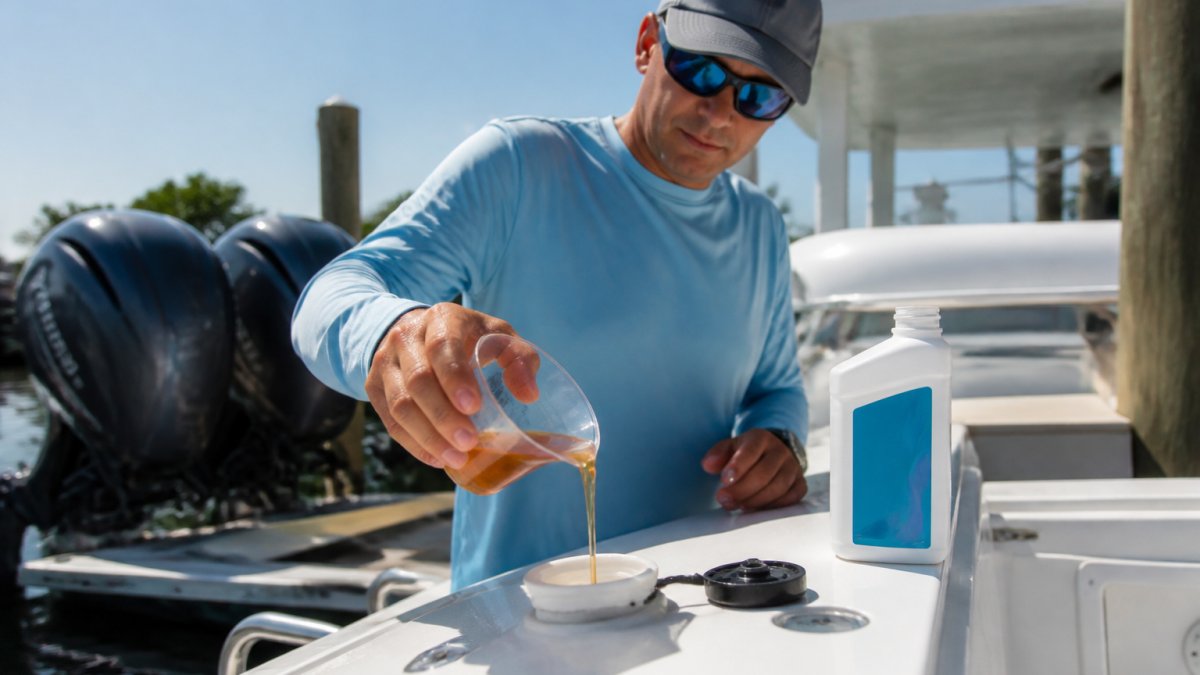
Step-by-Step Dosage Calculation
Step 1: Identify your tank capacity. Check your outboard's manual or the fuel gauge. Write this number down.
Step 2: Read the additive label. It will state the recommended treatment rate, typically 1 ounce per X gallons.
Step 3: Calculate total ounces needed. Multiply tank capacity by the treatment ratio. Example: 50-gallon tank with 1-ounce-per-10-gallon dosing = 5 ounces needed.
Step 4: Measure the additive. Use a marked measuring cup or syringe. Pour the calculated amount into your fuel tank before adding gasoline.
Step 5: Mix thoroughly. Run the engine for 10-15 minutes to circulate the treated fuel through the entire system.
Common Dosing Mistakes and How to Avoid Them
Overdosing is tempting. You might think more additive means better protection. It doesn't. Excess additive can cause spark plug fouling, excessive smoke, or deposit dislodging that clogs fuel filters.
Underdosing wastes money and time. If you add half the recommended dose, you'll get half the benefit. Stick to the label recommendation.
Forgetting to mix the additive into the fuel is another common error. Some owners pour additive directly into the tank without circulating it. The additive pools at the bottom and doesn't protect the entire fuel system. Always run the engine after adding an additive to distribute it.
Adding additive to an empty tank is ineffective. The additive needs fuel volume to distribute properly. Fill your tank first, then add the additive.
Choosing the Right Additive: Your Decision Framework
Not all marine fuel additives are created equal. Some focus on storage protection. Others emphasize cleaning. Some target specific engine types or fuel types.
Your decision depends on three factors: your engine type, your use pattern, and your storage conditions.
Matching Additives to Your Use Pattern
High-use engines need different treatment than seasonal boats. If you run your outboard 100+ hours per season, use a fuel-system cleaner every 50-75 hours. Your engine accumulates deposits faster, and regular cleaning maintains performance.
Seasonal boats stored 6+ months need a strong stabilizer. Focus on storage protection and corrosion prevention. A stabilizer-focused product is your priority.
Year-round users in mild climates need a balanced approach. Use a light stabilizer during storage and a mild cleaner during the season. Your fuel system faces less stress, so aggressive treatment isn't necessary.
Boats in salt-water environments face accelerated corrosion. Prioritize additives with strong corrosion inhibitors and water-separation capability. The marine environment demands premium protection.
Manufacturer Compatibility and Warranty Considerations
Your outboard's manufacturer may have specific recommendations or restrictions. Some manufacturers recommend or require certain additive types. Using non-approved additives could void your warranty.
Check your outboard's manual for approved additive lists. Most modern outboard makers approve major fuel-system additive brands, but older engines or specific marine applications may have restrictions.
If your outboard is under warranty, contact the manufacturer before using any additive. A brief phone call or email prevents warranty disputes later.
| Consideration | Action | Impact |
|---|---|---|
| Engine type | Match additive to two-stroke or four-stroke | Prevents incompatibility and performance loss |
| Tank capacity | Calculate exact dosage needed | Ensures proper treatment without overdosing |
| Storage duration | Choose stabilizer if storing 3+ months | Prevents fuel degradation and corrosion |
| Fuel type | Confirm ethanol compatibility | Prevents water separation and phase separation |
| Warranty status | Check manufacturer guidelines | Protects warranty coverage |
Choosing the right marine fuel additives for outboards comes down to understanding your specific engine, use pattern, and storage conditions. The best additive matches your situation, not the most expensive product or the one with the most marketing.
At Primo Yachts, we've guided center console owners through this decision for over 15 years.
Frequently Asked Questions
What fuel additives are recommended for outboard motors?
The best choice depends on your engine type and storage conditions. For seasonal storage, marine fuel stabilizers protect against fuel degradation and water contamination. For active use, fuel injector cleaners maintain performance. Look for additives formulated specifically for marine gasoline and outboard engines. Check your engine manufacturer's recommendations to ensure compatibility and warranty protection. Additives targeting ethanol-blended fuel are essential if your marina supplies E10 gasoline.
How much marine fuel stabilizer should I add to my outboard's tank?
Most marine fuel stabilizers require one ounce per gallon of fuel. For a 50-gallon tank, add 50 ounces (approximately 1.5 quarts). Always follow the specific product's dosage instructions, as treatment rates vary. Add the additive to a nearly full tank to ensure proper mixing with the gasoline. For long-term storage exceeding 30 days, some products recommend doubling the dose for extended protection periods.
Can marine fuel additives help with ethanol-blended gasoline in boats?
Yes. Ethanol-blended fuel (E10) absorbs water more readily than pure gasoline, causing fuel separation and corrosion in fuel systems. Marine fuel additives designed for ethanol gas contain water separation agents and corrosion inhibitors that stabilize the fuel and protect injectors and carburetors. These additives are especially important if you store your boat for winter or use it seasonally, as ethanol fuel degrades faster than non-ethanol alternatives.
When should I add fuel stabilizer to my outboard engine?
Add fuel stabilizer before storing your boat for more than 30 days, including seasonal winter storage. Treat the fuel at the start of the storage period, not at the end. If you use your outboard year-round, add stabilizer before any extended layup. For boats in active use, some owners treat every fill-up as preventive maintenance, especially when using ethanol-blended fuel. Always treat stored fuel before fuel degradation occurs.