 blog
7 Costly Mistakes When Selling a Yacht in Palm Beach
Last Updated: November 1, 2026
Quick Summary
The most costly mistakes when selling a yacht in Palm Beach are overpricing or underpricing from the start, listing before paperwork is clean, skipping boat preparation, poor timing, weak photos, ignoring surveys and known issues, and expecting a quick sale. Avoiding these errors protects both your timeline and your final price.
- Price the boat using recent comparable sales, adjusted for hours, condition and upgrades.
- Clear every lien with a written payoff letter before the first showing.
- Never sign over title or bill of sale before funds are verified and the lien release is recorded.
- Get your own survey or mechanical inspection before listing to avoid surprises.
- Plan for a longer timeline and set a clear walk-away point before negotiating.
Table of Contents
- 7 Costly Mistakes When Selling a Yacht in Palm Beach
- Pricing Too High or Too Low From the Start
- Listing Without Clean Ownership and Transfer Paperwork
- Skipping Preparation Before Buyers See the Boat
- Choosing the Wrong Time to List in Palm Beach
- Weak Photos and Incomplete Listing Descriptions
- Ignoring Surveys, Sea Trials and Known Issues
- Expecting a Quick Sale and Mishandling the Timeline
- Booking Your Yacht Sale Consultation With Primo Yachts
- Frequently Asked Questions
7 Costly Mistakes When Selling a Yacht in Palm Beach
Selling a yacht in Palm Beach can take months, and the wrong moves can cost you real money. The same errors come up again and again when owners sell. Here are the seven we see most often, and how to avoid each one.
Pricing Too High or Too Low From the Start
The asking price sets the tone for the whole sale. Price too high and serious buyers scroll past your listing. Price too low and you leave money on the table.
Many sellers anchor on what they paid or what they spent on upgrades. Buyers judge a boat on its current condition and recent comparable sales, not on your receipts.
A practical approach:
- Pull recent sales of similar models and years
- Adjust for hours, condition, and recent upgrades
- Set a price with some room to negotiate
- Review the price if the listing sits without offers for several weeks
Listing Without Clean Ownership and Transfer Paperwork
Paperwork problems stall deals faster than almost any other issue. Buyers and their lenders will not release funds until title is clear, liens are satisfied, and the transfer path is documented. Most sellers who lose a deal at the closing table lost it weeks earlier by listing before the file was clean.
Start by identifying how the vessel is titled. A documented vessel carries a Coast Guard Certificate of Documentation; a state-titled vessel carries a state title. Know which one you have before you list, because the transfer steps differ.
Build a closing file before the first showing:
- Original certificate of title or Certificate of Documentation, plus any state registration
- A lien release or satisfaction letter from every lender with a recorded interest
- Bill of sale on a form that matches the title type
- Hull identification number (HIN) verification against the title and the physical hull
- Service records, engine-hour documentation, and any recent survey
- For documented vessels, the Coast Guard abstract of title showing no outstanding mortgages
Liens are the most common delay. If a lender holds a payoff, request a written payoff letter early and confirm the release will be recorded at closing. A buyer's lender or escrow agent will not wire funds against an open lien, and a title company cannot transfer clean title until the release is in hand.
Vessel sales can carry sales tax, and the treatment depends on where the buyer takes delivery and how the vessel is used. Confirm the buyer's residency, delivery location, and intended use in writing before closing, and check the applicable exemption rules with the relevant tax authority or a qualified tax professional before you accept an offer.
Finally, keep a signed written disclosure of known defects in the file. Buyer expectations reward transparency, and a documented disclosure can protect you if a dispute arises after closing. A clean file is not paperwork for its own sake; it is what lets a buyer's lender, surveyor, and escrow agent move quickly instead of stalling your sale.
The paperwork checklist below lists the documents a seller should have ready before listing, and the common delays each one prevents.
| Document | Purpose | Common delay |
|---|---|---|
| Certificate of title or Certificate of Documentation | Proves ownership | Wrong title type identified |
| Lien release or satisfaction letter | Clears lender interest | Open lien blocks funds |
| Bill of sale | Records the transfer | Form does not match title type |
| HIN verification | Matches title to hull | Mismatch stalls closing |
| Service and engine-hour records | Supports vessel condition | Missing history |
| Coast Guard abstract of title | Shows no outstanding mortgages | Unchecked mortgages |
Skipping Preparation Before Buyers See the Boat
First impressions happen in person. A buyer who finds a cluttered deck or a dirty engine room starts asking what else is wrong.
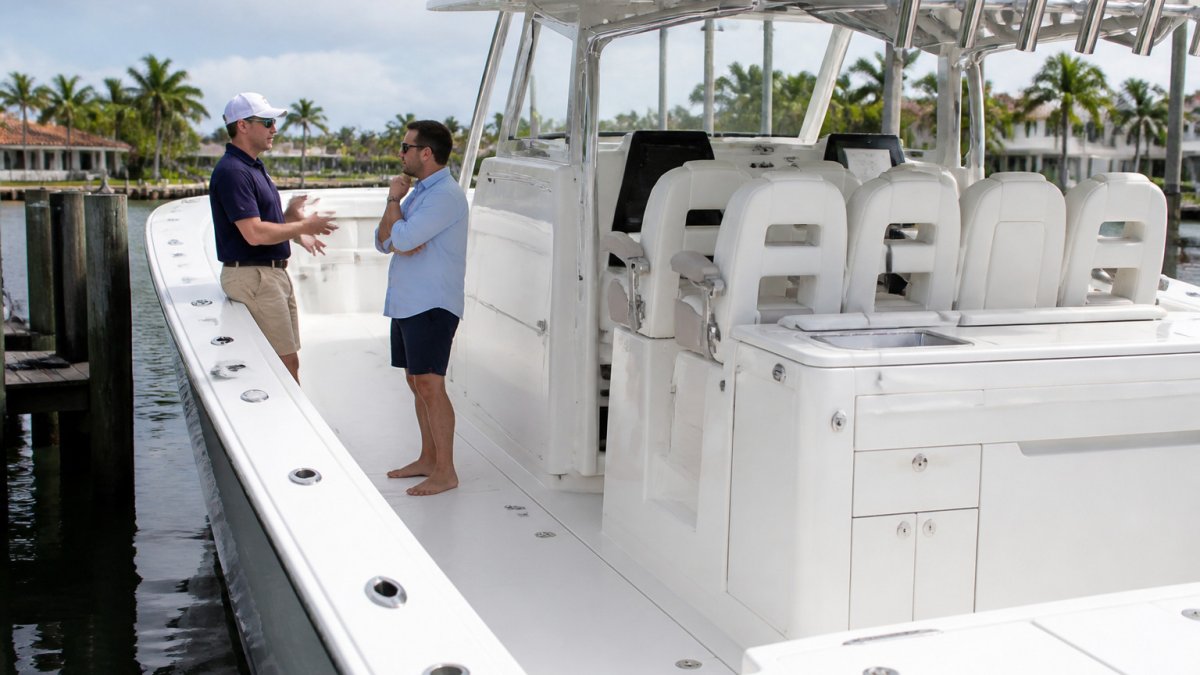
Clean and detail the vessel inside and out. Remove personal items and extra gear. Service the engines and document the work. A well-kept boat signals that the rest of the vessel has been maintained too.
Choosing the Wrong Time to List in Palm Beach
Buyer activity in the Palm Beach market can vary by season.
Reach out now to see how we can help with your boating needs! →
Timing matters, but so does readiness. Listing in the right window only helps if the boat, paperwork, and price are ready when buyers arrive.
Weak Photos and Incomplete Listing Descriptions
Buyers often decide whether to call based on your photos and listing text. Dark, cluttered, or sparse images get skipped.
Shoot in good light, cover the exterior, interior, helm, and engines, and include the details buyers search for: length, engine hours, recent upgrades, and equipment. Be accurate. Overstated listings lead to lost time and angry buyers at the dock.
Ignoring Surveys, Sea Trials and Known Issues
Hiding known problems almost always backfires. Serious buyers will commission a marine survey and ask for a sea trial, and surprises at that stage can kill a deal or trigger a steep price cut. The sellers who close smoothly are the ones who prepared for the survey before the buyer ever scheduled it.
Understand what the buyer is actually commissioning. The surveyor typically works for the buyer, not for you, so your job is to make the vessel easy to inspect and to have answers ready.
Prepare the vessel for a haul-out. Confirm the marina or boatyard can haul the vessel on the buyer's schedule, that the travel lift capacity matches the boat, and that the yard allows the surveyor access. Clear the engine room and bilges so the surveyor can see, not guess. Have the HIN, engine serial numbers, and any prior survey or repair invoices on hand. A vessel that is easy to inspect reads as a vessel that has been maintained.
Prepare for the sea trial. The boat should start cold, run at cruise and wide-open throttle, and demonstrate every system the listing claims: electronics, autopilot, windlass, pumps, heads, air conditioning, and generator under load. Fuel and water tanks should be at sensible levels so the trial reflects real performance. Brief the captain or operator on the route and have the required safety gear aboard. A sea trial that surfaces a failed system is far cheaper to fix before the buyer's surveyor writes it up than after.
Plan your response to survey findings before they arrive. Most surveys generate a list, and the negotiation is about which items are safety or structural and which are cosmetic or maintenance. Decide in advance which findings you will fix, which you will credit at closing, and which you will decline with a reason. A calm, documented response keeps the deal moving; a defensive one invites the buyer to walk or re-trade the price.
Disclose known issues in writing, fix what you reasonably can, and treat the survey and sea trial as a scheduled event you control rather than a surprise. That is what separates a clean closing from a renegotiation at the dock.
Expecting a Quick Sale and Mishandling the Timeline
Yachts rarely sell overnight. Sellers who expect a fast sale often panic, cut the price too far, or accept a weak offer.
Plan for a longer timeline, set a clear walk-away point, and review your strategy at regular intervals. A steady process beats a rushed one.
Booking Your Yacht Sale Consultation With Primo Yachts
Avoiding these seven mistakes is much easier with an experienced guide. Primo Yachts of Palm Beach is a specialist brokerage focused on center consoles and premium vessels. Reach out now to see how we can help with your boating needs.
Frequently Asked Questions
What are the most common mistakes when selling a yacht?
The most frequent errors are pricing without current comparable sales, listing before the paperwork is ready, skipping cleaning and minor repairs, posting weak photos, and hiding or underplaying known issues. Each one slows the sale or weakens your negotiating position. Fixing them before you list, rather than after offers arrive, usually shortens the time on market and reduces the number of price reductions you will need to make.
How long does it take to sell a yacht?
Timelines vary widely with the vessel's size, condition, price and the season. Well-priced, well-presented center consoles in the Palm Beach market can move faster than larger, older or more specialized yachts. Listings that sit for several months often point to pricing or presentation problems. Plan for a window of several months rather than weeks, and build in time for surveys, sea trials and title transfer once an offer is accepted.
What documents do I need to sell a yacht?
Most sales require the vessel's title or registration, proof of ownership, a bill of sale, records of any liens and their payoff status, service and maintenance records, and the hull identification number. Sales can also involve sales tax and registration steps that vary by location. Gathering these documents before listing prevents delays when a buyer's attorney or lender requests them, and it signals to serious buyers that the vessel is well managed.
Should I use a yacht broker or sell my yacht privately?
A broker can provide market pricing, qualified buyer access, marketing and transaction management, but takes a commission and requires a listing agreement with defined terms. A private sale keeps more of the proceeds but places the burden of pricing, screening buyers, handling offers and managing paperwork on you. Compare net proceeds after fees and the time you expect to spend before deciding.