 how-to
How to Find Exclusive Yacht Listings: A Buyer's Guide
Table of Contents
- Understanding the Exclusive Yacht Market
- Off-Market Yacht Sales and Pocket Listings
- How to Choose a Yacht Broker for Exclusive Access
- Advanced Search Filters and Criteria for Finding Exclusive Listings
- Vetting Listings and Conducting a Yacht Survey and Inspection Checklist
- Navigating Global Fleet Access and Regional Search Capabilities
- Legal and Financial Requirements for Exclusive Yacht Purchases
- Conclusion
Last Updated: August 11, 2026
Understanding the Exclusive Yacht Market
The yacht market operates on two distinct tiers: public listings visible across major brokerage platforms and exclusive listings that circulate through private networks. Finding exclusive yacht listings requires understanding how this dual market works and where serious buyers actually source premium vessels.
Exclusive listings exist for good reason. Sellers of high-end vessels often prefer discretion, limited showings, and qualified buyers only. This privacy protects their ownership status and limits unwanted inquiries. Buyers who know where to look gain access to inventory that never appears on general platforms, often before it's formally listed.
The difference between a generic search and finding exclusive yacht listings comes down to relationships and specialization. A general search engine returns whatever brokers have uploaded to public databases. Exclusive access requires working with brokers embedded in private networks, understanding off-market sales channels, and knowing how the luxury marine market actually functions.
At Primo Yachts of Palm Beach, our approach to finding exclusive yacht listings focuses on understanding the networks that move premium center console yachts. Since 2009, we've worked directly with buyers seeking vessels that match their specific fishing conditions and offshore performance requirements. This specialized knowledge of the market separates casual browsing from strategic acquisition.
Off-Market Yacht Sales and Pocket Listings
Off-market yacht sales represent the segment where most premium transactions actually occur. A pocket listing is a vessel marketed privately to a select group of qualified buyers before public distribution. These listings circulate through broker networks, private registries, and direct owner connections rather than appearing on public websites.
Why do sellers choose off-market channels? The reasons vary. Some owners want to avoid marina foot traffic and casual inquiries. Others prefer to control who sees their vessel and avoid competitive bidding situations. High-profile owners often require absolute discretion. Sellers also use off-market sales to test market interest before committing to a full public listing.
Off-market transactions typically follow this pattern: a broker receives a call from an owner interested in selling, the broker immediately contacts qualified buyers in their network, and serious offers materialize within days. The best off-market deals close before they ever become public listings. This is why access to off-market inventory separates experienced buyers from those who only search public platforms.
The challenge with pocket listings is simple: you can't find them through search engines. You find them by being in the right network. Brokers with strong buyer relationships and deep market knowledge control access to these deals. Building relationships with specialized brokers becomes essential for buyers seeking exclusive yacht listings in competitive markets.
How to Choose a Yacht Broker for Exclusive Access
Selecting the right yacht broker determines whether you'll access exclusive yacht listings or remain limited to public inventory. Not all brokers have equal access to off-market deals. Specialization, network depth, and buyer relationships directly impact what listings they can show you.
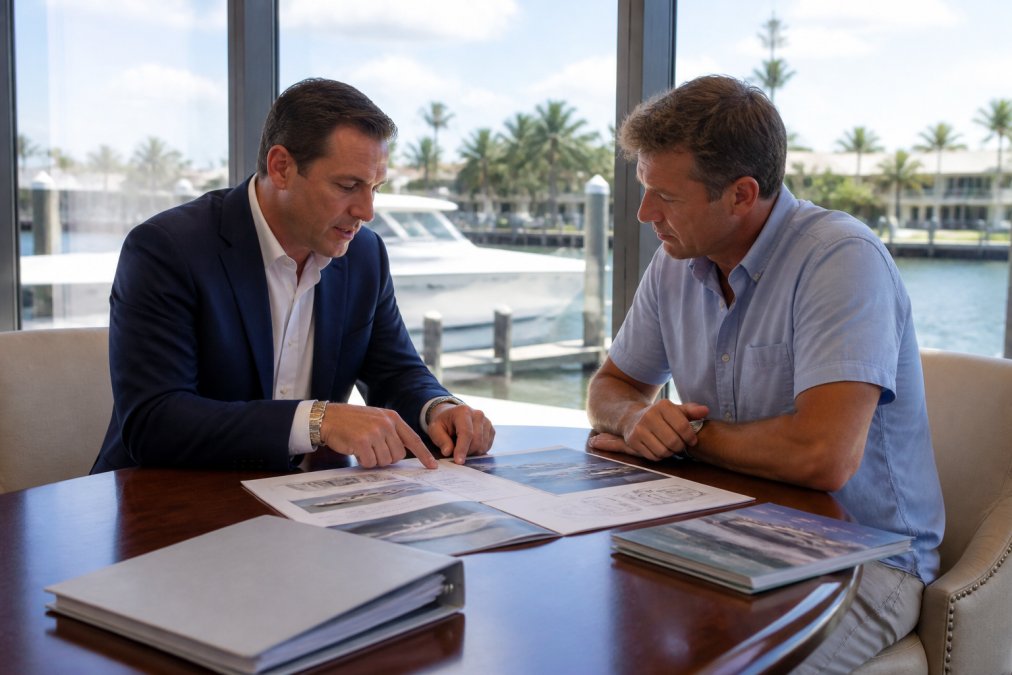
Evaluating broker specialization and market reach
A broker's specialization in your vessel type matters significantly. General brokers handle everything from sailboats to motor yachts to fishing vessels. Specialized brokers focus deeply on specific categories, center consoles, offshore fishing vessels, or luxury cruisers. Specialized brokers develop deeper relationships with owners of those specific vessel types and receive calls first when those boats come available.
Ask potential brokers directly about their inventory sources. How many off-market listings do they typically handle monthly? What percentage of their transactions involve pocket listings versus public sales? A broker who handles significant off-market volume has the network to find exclusive yacht listings. One who primarily lists publicly available boats won't provide the access you're seeking.
Market reach extends beyond inventory. Ask about their buyer network. Do they have qualified buyers actively searching for the vessel type you want? Can they reach buyers outside your region? A broker with national or international buyer connections can accelerate sales and provide better market intelligence about comparable sales and pricing trends.
Assessing access to private registries and networks
Private registries of pre-owned vessels exist within broker networks, yacht clubs, and owner associations. Access to these registries separates brokers with deep market connections from those with surface-level relationships. Ask whether brokers maintain relationships with specific registries or have access to owner networks that generate off-market leads.
Experienced brokers often know owners personally or maintain relationships with captains and managers who alert them to potential sales before owners list publicly. These informal networks generate exclusive yacht listings that never appear anywhere else. A broker's ability to tap these networks directly impacts what deals they can access for you.
Some brokers participate in exclusive buyer groups or membership networks where members share inventory before public distribution. Membership in these networks indicates serious market participation. Ask whether your broker belongs to recognized industry groups and whether membership provides access to exclusive listings.
Advanced Search Filters and Criteria for Finding Exclusive Listings
When you do access exclusive yacht listings through a broker, knowing how to filter and evaluate options efficiently saves time. Advanced search criteria help you identify vessels matching your specific requirements rather than reviewing every available option.
Filter by vessel specifications first: length, hull type, engine configuration, and year built. A 38-foot center console from 2015 with twin outboards performs differently than a 42-foot model from 2020 with triple engines. Narrow your search to vessels matching your intended use, offshore fishing in deep water requires different specifications than coastal cruising.
Asking price and age work together as filters. Newer vessels command premium pricing but offer current technology and warranty protection. Pre-owned vessels cost less but may require refits or repairs. Establish your budget range and age tolerance upfront. This prevents wasting time on listings outside your parameters.
Engine hours matter significantly for pre-owned vessels. Lower hours indicate lighter use and potentially longer remaining service life. Compare hours against vessel age to understand usage patterns. A 2015 center console with 800 hours shows moderate use; the same year with 2,500 hours suggests heavy commercial operation.
Interior and exterior condition filters help identify vessels needing immediate attention versus turnkey options. Some buyers accept cosmetic work in exchange for lower pricing. Others want move-in-ready vessels. Being clear about condition tolerance helps brokers surface listings matching your actual preferences.
Vetting Listings and Conducting a Yacht Survey and Inspection Checklist
Not all exclusive yacht listings prove legitimate. Some brokers circulate outdated photos or exaggerate vessel condition. Others list ghost inventory, vessels that sold months ago but remain in circulation. Vetting listings protects you from wasted time and bad purchases.

Identifying authentic listings versus ghost inventory
Request recent photos of the actual vessel, not stock photos or professional marketing images. Ask the broker to provide photos taken within the last two weeks. Legitimate brokers can provide current images immediately. Delays or stock photos suggest the listing may not be active or accurate.
Ask for the vessel's current location and availability for inspection. A legitimate listing has a specific boat at a specific dock available to view. Brokers representing actual vessels can schedule inspections within days. If a broker hesitates about location or inspection availability, the listing may be inactive or misrepresented.
Verify the vessel's registration and title history. Ask for documentation confirming current ownership and any liens against the vessel. Legitimate brokers readily provide this information. Hesitation about title or registration details is a red flag.
Cross-reference the listing details against the vessel's actual specifications. Pull the hull identification number (HIN) and verify it matches the documentation. Check engine serial numbers against the reported engine configuration. Discrepancies between listing details and actual documentation indicate either careless listing practices or intentional misrepresentation.
Essential inspection points before committing
A professional yacht survey provides objective assessment of vessel condition. Don't skip this step for any exclusive yacht listings, even those appearing pristine. Surveys identify hidden structural issues, engine problems, and deferred maintenance that photos never reveal.
Hire a surveyor specializing in your vessel type. A surveyor experienced with center consoles understands the specific systems and stress points relevant to your boat. General marine surveyors may miss type-specific issues.
During inspection, verify all systems personally: engines, generators, air conditioning, electrical, plumbing, and navigation equipment. Run engines at various RPMs and listen for unusual sounds. Check that all systems operate as described. Document any discrepancies between listing claims and actual performance.
Inspect the hull for cracks, delamination, or structural damage. Check the console, gunwales, and deck for signs of impact damage or previous repairs. Examine the interior for water damage, mold, or soft spots indicating structural compromise. These issues affect safety and future resale value.
Review maintenance records. A well-maintained vessel has documented service history showing regular oil changes, filter replacements, and system servicing. Vessels with spotty records likely have hidden problems or deferred maintenance that will surface after purchase.
Navigating Global Fleet Access and Regional Search Capabilities
Exclusive yacht listings aren't limited to local markets. Serious buyers access regional and national inventory through brokers with geographic reach. Understanding how to search beyond your immediate area opens access to more exclusive yacht listings and better pricing opportunities.
Regional brokers maintain connections within their geographic markets. A South Florida broker has deep relationships with local owners and access to pocket listings circulating in that market. A California broker connects with West Coast owners and networks. Brokers in major yachting centers, South Florida, California, the Northeast, handle higher transaction volumes and access more inventory.
National brokerage networks connect regional brokers, allowing them to show inventory from other areas. A broker in one region can access listings from affiliated brokers nationwide. This network access expands your options significantly beyond local markets.
Ask brokers about their ability to source vessels from other regions. Can they access inventory from multiple markets? Do they have relationships with brokers in other major yachting centers? Network depth directly impacts their ability to find exclusive yacht listings matching your requirements regardless of location.
International transactions add complexity but open access to vessels not available domestically. Brokers with international experience understand import documentation, customs requirements, and registry transfers. If you're open to international purchases, brokers with global connections can access a broader market.
Legal and Financial Requirements for Exclusive Yacht Purchases
Purchasing exclusive yacht listings involves legal and financial considerations beyond the purchase price. Understanding these requirements prevents surprises and delays during the acquisition process.
Yacht financing requires lenders experienced with marine vessels. Not all banks finance boats, and those that do often have specific requirements. Lenders typically require surveys, insurance quotes, and proof of income. Pre-approval before beginning your search simplifies the purchase process when you find the right vessel.
Vessel registration and documentation represent legal requirements. Vessels over a certain size must be registered with the Coast Guard. This process involves title verification, proof of ownership transfer, and formal documentation. Brokers handle much of this process, but understanding the requirements prevents delays.
Insurance is mandatory for financed vessels and essential for any significant investment. Marine insurance covers hull damage, liability, and loss. Insurers require surveys and may impose specific requirements based on vessel age and condition. Obtain insurance quotes early in your search to understand total ownership costs.
Taxes on yacht purchases vary by location and vessel use. Some states impose sales tax on vessel purchases; others don't. Understanding your state's specific requirements prevents unexpected costs. Brokers familiar with local regulations can guide you through these requirements.
International purchases involve additional complexity. Importing a vessel requires customs documentation, import duties, and registry transfers. The Coast Guard's documentation process for imported vessels differs from domestic registration. Brokers experienced with international transactions understand these processes and can guide you through them.
Finding exclusive yacht listings requires moving beyond public search engines and into the networks where serious transactions occur. Understanding off-market sales channels, selecting specialized brokers, and vetting listings carefully separates successful acquisitions from frustrating searches through generic inventory.
Primo Yachts of Palm Beach specializes in exactly this process. Our team understands the networks that move premium center console yachts and maintains relationships with owners seeking qualified buyers. When you're ready to explore exclusive yacht listings with a broker who knows the market deeply, our experience since 2009 in the South Florida marine market provides the specialized expertise that moves deals forward efficiently and professionally.
Frequently Asked Questions
How do I find off-market yacht listings that aren't advertised publicly?
Off-market yacht sales occur through established relationships with specialized yacht brokers who maintain private registries and networks of buyers and sellers. Brokers with deep market expertise and long-standing industry connections have access to pocket listings before they reach public marketplaces. Building a relationship with a broker who understands your specific vessel type, such as center consoles or offshore fishing vessels, gives you first access to exclusive opportunities. Many high-net-worth sellers prefer this approach because it maintains discretion and reaches qualified buyers directly.
What should I look for when choosing a yacht broker to find exclusive listings?
Look for a broker with specialized expertise in your desired vessel type and demonstrated access to private networks. Verify their market tenure, client testimonials, and whether they maintain their own inventory or registries. A quality broker should clearly explain their sourcing process, understand your specific needs (whether fishing capability, luxury amenities, or hull type), and provide transparent communication. Ask about their connections with other brokers, captains, and yacht management companies, these relationships directly impact access to exclusive deals that don't appear on public platforms.
What's included in a proper yacht survey and inspection checklist?
A comprehensive yacht survey covers hull condition, structural integrity, engine and mechanical systems, electrical systems, plumbing, safety equipment, and interior condition. The surveyor should verify vessel age, construction quality, maintenance history, and any previous damage or repairs. For offshore or fishing vessels, pay special attention to hull type, sea trial performance, and the condition of specialized equipment. A detailed inspection protects your investment and reveals potential refit or maintenance costs before you commit to purchase.
How can I verify that an exclusive yacht listing is authentic and not a ghost listing?
Request recent photographs and video walkthroughs taken by the broker or surveyor. Authentic listings include detailed vessel specifications, maintenance records, and transparent pricing. Legitimate brokers facilitate in-person inspections and sea trials without pressure. Be cautious of listings with only professional photography, vague specifications, or brokers who avoid direct communication about vessel condition. Verify the vessel's registration and title through official maritime records, and always conduct your survey through an independent marine surveyor rather than relying solely on broker representations.
This article was written using GrandRanker