 how-to
How to Compare Offshore Boat Deck Layouts
Table of Contents
- Understanding Offshore Boat Deck Layout Fundamentals
- Center Console Boat Layout: The Core Design Elements
- Evaluating Offshore Fishing Boat Features for Your Needs
- Offshore Boat Seating and Storage: Comparing Options
- Layout Trade-Offs by Offshore Boat Type
- Center Console Boat Walkthrough Checklist
- Building Your Side-by-Side Comparison Framework
- Conclusion
- Frequently Asked Questions
Last Updated: October 14, 2026
Understanding Offshore Boat Deck Layout Fundamentals
When you're evaluating center console boats for offshore fishing or cruising, offshore boat deck layouts determine how safely your crew moves under way, how efficiently you fish, and whether the boat suits your mission. Yet most buyers focus on engine specs and price while overlooking it.
The offshore boat deck layout is the spatial arrangement of the foredeck, cockpit, cabin top, seating, storage, and safety systems that define how a boat functions at sea. A well-designed layout keeps crew safe, maximizes fishing space, and distributes weight properly. A poor one creates bottlenecks, dangerous transitions, and stability issues.
At Primo Yachts, we provide expert guidance for those seeking premium vessels. The difference isn't obvious in photos, so you need a framework to compare layouts side by side and spot problems before you buy.
Center Console Boat Layout: The Core Design Elements
Foredeck and Casting Deck Configuration
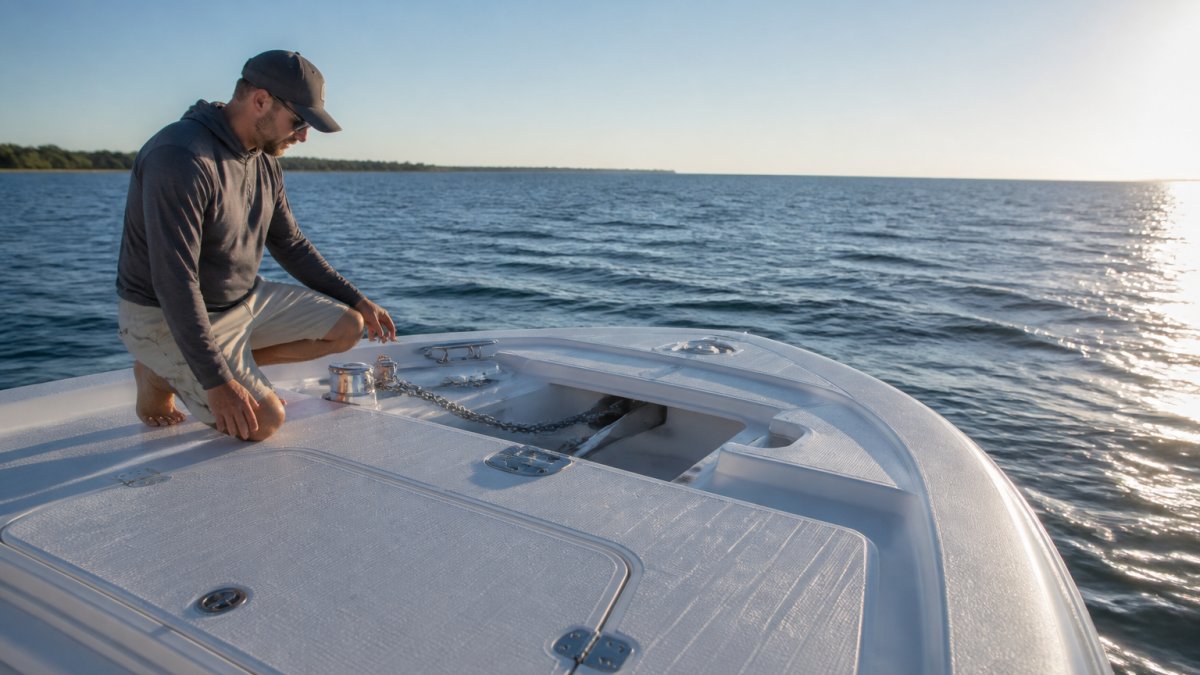
The foredeck is your primary fishing platform on a center console. Its size, height, and safety features determine whether anglers can cast safely in a seaway.
Casting deck width matters more than total foredeck length. A 6-foot-wide casting deck is workable. An 8-foot width gives two anglers room to move without tangling lines.
Check the radiused lip at the foredeck edge: a sharp edge is a tripping hazard, while a smooth, rounded edge with an inward-angled lip keeps water from sloshing across the deck.
Anchor system placement matters here too. A bow roller mounted low keeps the anchor out of the casting zone.
Cockpit and Cabin-Top Organization
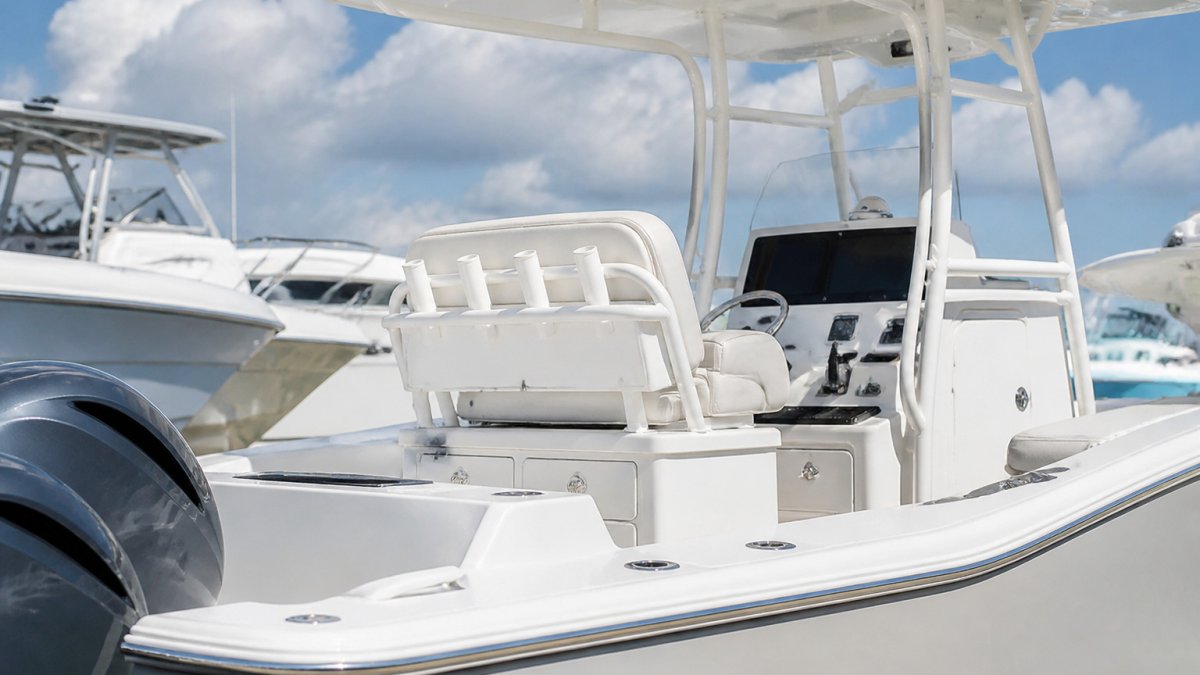
The cockpit houses your helm station, passenger seating, and engine access. A well-organized cockpit keeps the helmsman comfortable and gives crew clear sightlines.
Console height matters. A helm console between 38 and 42 inches tall lets the captain stand comfortably and see over the bow; too low and you're crouching, too high and you lose forward visibility. Leave adequate space behind it for crew to move without bumping the captain.
Cabin-top seating works for cruising and casual fishing but eats into deck space. Folding jump seats clear the space when needed; fixed bench seats are always in the way. Folding or removable seating is more versatile.
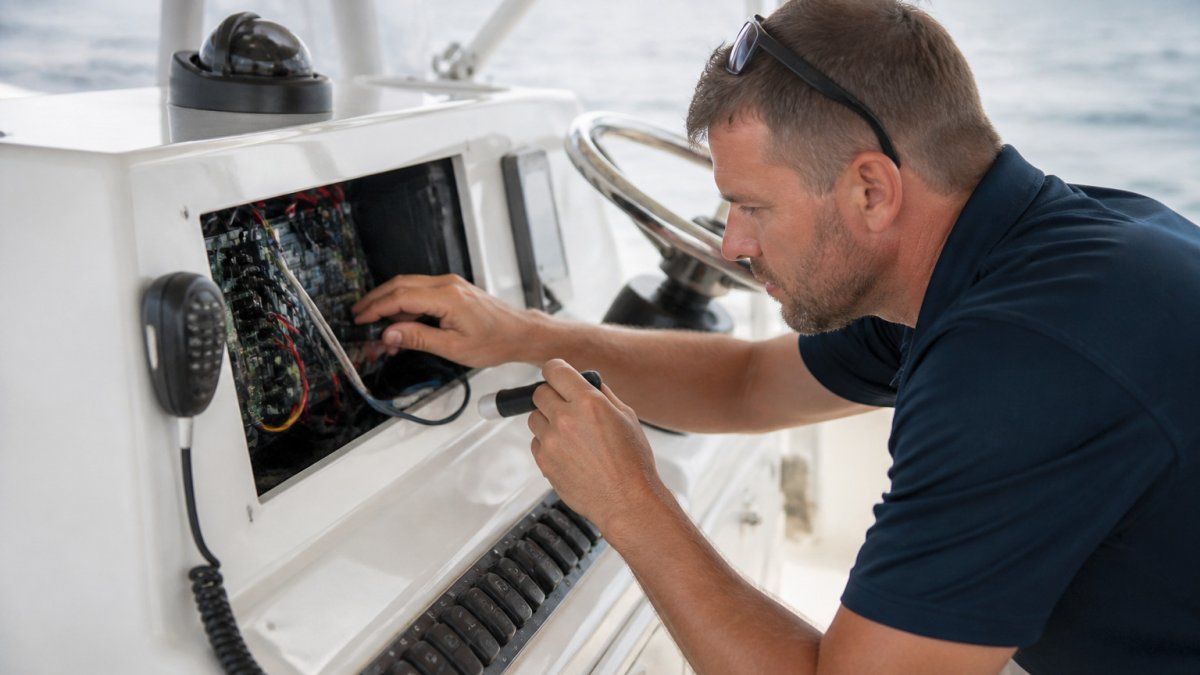
Electronics mounting is critical. A good helm has a dedicated electronics box with screens at eye level, wired cleanly, and protected from spray. Poor mounting means tangled cables and broken screens.
Evaluating Offshore Fishing Boat Features for Your Needs
Deck Space and Accessibility
Total cockpit and deck area tells you how much room your crew has to work.
Accessibility between deck zones is often overlooked. Can your crew move safely from the foredeck to the cockpit without climbing over seats or squeezing through gaps?
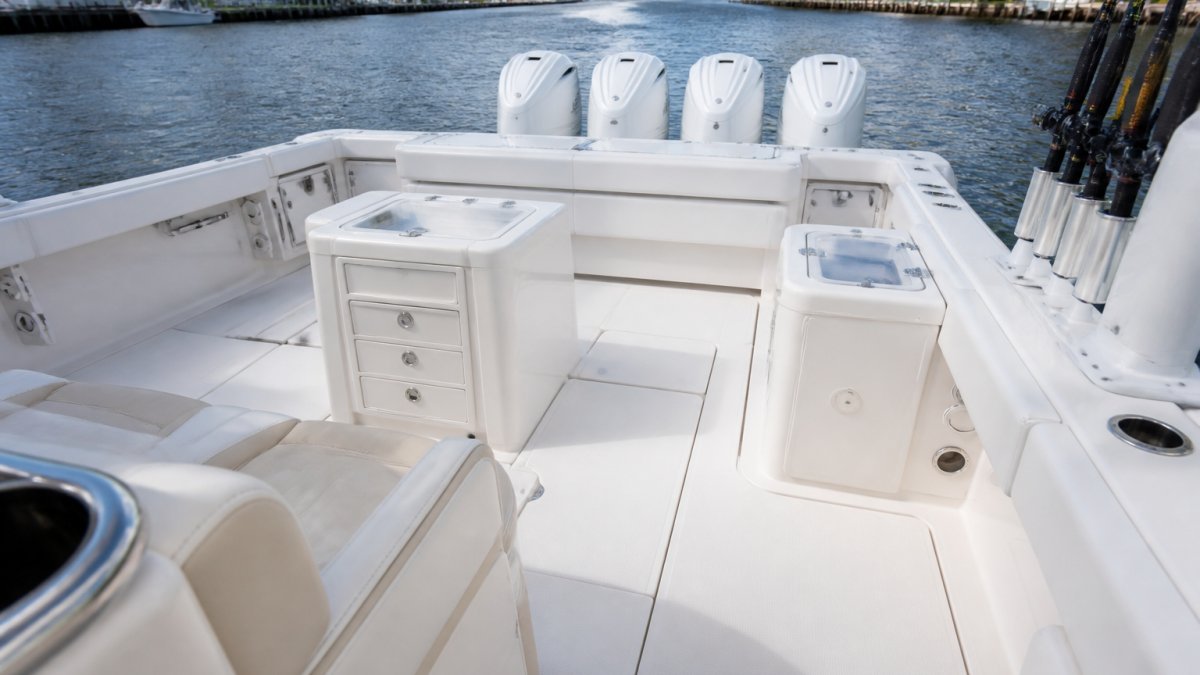
Side compartments that run along the gunwale save space. They store fishing gear, life jackets, and safety equipment without taking up deck real estate. But access matters. A compartment you can't reach quickly is useless in an emergency.
Check handholds and grab rails. Every transition point from foredeck to cockpit should have a secure handhold. Stainless steel gunwale rails are standard; rope lines are cheaper but less reliable, and molded fiberglass handles often crack under load.
Handholds, Trim, and Crew Safety Under Way
Crew safety under way depends on deck design and boat handling. A boat that trims bow-down in a seaway is dangerous because the foredeck gets buried; one that trims bow-up is safer but rides rougher.
Test the boat's trim at sea. Run at cruise speed in moderate chop. The bow should stay just above the horizon. If it dips below, water will regularly wash the foredeck.
Stability matters. A narrow beam feels tippy; a wider beam adds stability but reduces speed. Most offshore boats compromise with a beam-to-length ratio around 0.28 to 0.32, anything narrower than 0.25 feels unstable in a beam sea.
Weight distribution affects trim and stability. Fuel, water, and catch weight shift the center of gravity. A boat designed to handle these loads gracefully won't become unstable when you're loaded for a three-day offshore run.
Offshore Boat Seating and Storage: Comparing Options
Bench Seating vs. Individual Seats
Bench seating takes up less space and seats more people per square foot. It's common on smaller boats and family cruisers. But bench seats don't adjust. Everyone sits at the same height. Passengers in the middle have no back support.
Individual seats with backrests and armrests cost more but provide comfort and security. High-back captain's chairs with adjustable height let the helmsman dial in position, and passenger seats with harnesses keep crew safe in rough water.
For offshore fishing, individual seats are worth the cost. Anglers need to stay in place while fighting fish. Bench seating makes that nearly impossible. A passenger sliding around the cockpit is a liability.
Storage under seats is standard. But access matters. Can you reach storage without removing cushions? Are the compartments sealed to keep gear dry? Open storage under bench seats collects water and debris.
Compartment Access and Anchor System Placement
Side compartments should have lids that open fully, a half-opening lid traps gear inside. Stainless steel hinges last longer than painted steel.
Anchor system placement affects safety and functionality. A bow roller at gunwale level is easy to service; one mounted on the stem requires climbing forward on a moving boat. Windlasses should be wired to a breaker panel with a dedicated battery circuit, a manual windlass works but means hauling by hand.
Reach out now to see how we can help with your boating needs! →
Ground tackle storage should be accessible but secure. Loose anchor rode on deck is a tripping hazard; rode lockers with drain holes prevent pooling, and a dedicated forward anchor locker keeps gear organized and out of the way.
Life raft storage must be accessible but protected from UV. A life raft mounted on the hardtop is visible and easy to deploy. One stored below deck takes time to retrieve in an emergency.
Layout Trade-Offs by Offshore Boat Type
Different offshore boat types make different layout choices based on mission. A center console fishing boat prioritizes casting deck space. A cruising center console prioritizes cabin comfort and storage.
A 25-foot center console might have a 6-foot foredeck, modest cabin, and open cockpit. A 35-foot center console adds a full cabin with berths, a galley, and a head.
A catamaran hull provides more stability and interior volume than a monohull, but it's slower and burns more fuel.
A stepped hull reduces drag and improves fuel economy. But a stepped hull is more expensive to build and repair. The step itself creates a weak point if the boat is stressed.
Understand what your mission demands. If you fish 100 days a year, prioritize deck space and fishing features. If you cruise weekends and fish occasionally, prioritize comfort and cabin space.
Center Console Boat Walkthrough Checklist
Measurements and Ergonomic Verification
Bring a tape measure and notepad when you inspect a boat. Measure foredeck width at its widest and narrowest points, cockpit length from transom to helm console, and console height from deck to the top of the steering wheel.
Check the helm seat height. Sit in the captain's chair: can you see over the bow, reach all controls without stretching, and does your back have support? A poorly positioned helm seat makes every day on the water uncomfortable.
Measure the distance from the helm to the nearest handholds. It should be no more than two steps. Any farther and crew moving around the helm becomes unsafe.
Check the height of the gunwale at the foredeck. It should be at least 18 inches high to provide crew protection. Lower than that and waves wash over easily.
Drainage, Weight Distribution, and Stability Assessment
Look at the scuppers (deck drains). They should be at least 1.5 inches in diameter, since small scuppers can't drain fast enough in heavy rain or spray. Look for multiple scuppers across the deck, not just one or two at the transom.
Check for standing water. After a rain or spray, does water collect anywhere on the deck? Poor drainage creates corrosion and makes the deck slippery. A well-designed deck slopes toward scuppers so water runs off immediately.
Test weight distribution by loading the boat as if you're going offshore: fuel in the tanks, water, fishing gear, safety equipment, and passengers.
Stability is the hardest thing to assess without a sea trial. A boat can feel stable in flat water and become unstable in a beam sea. If possible, take the boat out in at least 2-foot chop. Watch how it handles.
Building Your Side-by-Side Comparison Framework
Use this framework to compare two or more boats objectively. Rate each category on a scale of 1 to 5, with 5 being excellent and 1 being poor.
| Category | Boat A | Boat B | Boat C | Notes |
|---|---|---|---|---|
| Foredeck width and height | __ / 5 | __ / 5 | __ / 5 | Width over 6 ft, raised platform |
| Casting deck nonskid surface | __ / 5 | __ / 5 | __ / 5 | Grip in wet conditions |
| Cockpit layout and seating | __ / 5 | __ / 5 | __ / 5 | Individual seats preferred |
| Console height and visibility | __ / 5 | __ / 5 | __ / 5 | 38-42 inches ideal |
| Handholds and safety rails | __ / 5 | __ / 5 | __ / 5 | Continuous, stainless steel |
| Storage compartment access | __ / 5 | __ / 5 | __ / 5 | Full-opening lids, sealed |
| Anchor system placement | __ / 5 | __ / 5 | __ / 5 | Bow roller, windlass |
| Deck drainage | __ / 5 | __ / 5 | __ / 5 | Multiple scuppers, no pooling |
| Stability in a seaway | __ / 5 | __ / 5 | __ / 5 | Requires sea trial |
| Overall fit for your mission | __ / 5 | __ / 5 | __ / 5 | Fishing, cruising, or both |
Add up the scores for each boat. The boat with the highest total score best matches your needs. But don't rely on the score alone. If one category is critical to your mission (like a wide casting deck for tournament fishing), weight that category more heavily.
Conclusion
Comparing offshore boat deck layouts takes time and a structured approach: understanding foredeck design, cockpit organization, seating, storage, and safety systems, then measuring carefully, testing under way, and comparing boats objectively.
The boats that hold their value and deliver years of safe, productive fishing have thoughtful layouts. They prioritize crew safety, provide adequate fishing space, and handle rough water without drama.
At Primo Yachts, we help serious boaters navigate this process. We understand center console design because we work with these boats every day. We know which layouts deliver in real-world conditions and which ones look good in photos but fall short offshore. Reach out to our team and let's talk about finding the right boat for your mission. We're here to help with your boating needs.
Frequently Asked Questions
What should you look for in an offshore boat deck layout?
Prioritize unobstructed deck access, secure handholds, and non-slip surfaces for crew safety. Evaluate foredeck space for casting, cockpit visibility, and storage that protects gear from saltwater spray. Check that seating doesn't block sightlines and that anchor systems are accessible without crossing active fishing areas. Walk the deck at multiple points to confirm crew movement is safe in rough seas.
How much open deck space do you need for offshore fishing?
Cockpit space should allow crew to move freely without tripping over coolers or tackle. Verify measurements in person; manufacturer specs often exclude railings and console footprint.
How do you compare center console layouts for fishing?
Use a checklist covering foredeck size, rod storage, cooler placement, baitwell access, and console sightlines. Compare seating arrangements, raised seats block less visibility than low-profile benches. Evaluate handholds and step heights for crew safety. Test storage compartment access and confirm drainage prevents water pooling. Inspect the layout during a sea trial to assess stability, trim, and crew movement under way.
Which deck features make an offshore boat safer to move around?
Continuous handholds along the console and gunwales, non-slip deck surfaces or SeaDek matting, low step heights between deck levels, and wide walkways reduce trip hazards. Radiused lips on compartments prevent snagging. Stanchions and railings should be sturdy and positioned to support crew weight. Open sightlines from the helm allow the captain to monitor crew position. Anchor systems should be tucked away from high-traffic areas.