 ultimate-guide
Choosing a Yacht Broker in Florida: A Buyer's Guide
Table of Contents
- Why Selecting the Right Yacht Broker Matters
- Verifying Florida Yacht Broker License and Credentials
- Key Questions to Ask a Yacht Broker
- Understanding Yacht Broker Commission Rates and Fees
- Red Flags and Warning Signs of Unethical Brokers
- Evaluating Post-Purchase Support and Concierge Services
- The Brokerage vs. Private Sale: Understanding Your Options
- Conclusion
Last Updated: August 27, 2026
Why Selecting the Right Yacht Broker Matters
Choosing a yacht broker in Florida means partnering with someone who understands the specific market dynamics, regulatory environment, and operational nuances of yacht ownership in this region. The difference between working with a generalist broker and a specialist can mean the difference between a smooth transaction and months of frustration.
At Primo Yachts of Palm Beach, we've spent years navigating this landscape. Most yacht buyers and sellers encounter brokers who lack deep specialization in their vessel type or market segment, carrying listings across multiple categories, sailboats, mega yachts, fishing vessels, cruisers, without genuine expertise in any single category. This generalist approach often leads to mismatches between buyers and vessels, delayed sales, and missed opportunities.
You're not buying a car or a house. You're investing in a vessel that requires ongoing maintenance, insurance, financing coordination, and regulatory compliance. The broker you choose will influence every stage of this process: from initial evaluation through negotiation and due diligence, and into post-purchase support.
This guide walks you through critical factors to evaluate when choosing a yacht broker in Florida: licensing requirements, key questions to ask, commission structures, red flags to watch for, and the specific advantages of working with a specialist brokerage versus attempting a private sale.
Verifying Florida Yacht Broker License and Credentials
Understanding Licensing Requirements
A licensed yacht broker in Florida operates under specific regulatory oversight. The state requires brokers engaged in the sale of vessels to hold a valid license through the Florida Department of Business and Professional Regulation (DBPR) (dbpr.myflorida.com). This legal requirement protects both buyers and sellers.
The licensing requirement covers anyone who, for compensation, acts as an intermediary in the sale of vessels. A broker without this license is operating illegally, and transactions conducted through unlicensed brokers can create serious legal complications.
To verify that a broker holds a current, valid license, search the DBPR database directly. Look for the broker's name and confirm their license status shows "Active." Ensure the license specifically covers vessel brokerage.
Beyond the state license, check whether the broker holds professional certifications from recognized industry organizations. The Yacht Brokers Association of America (YBAA) and the National Association of Yacht Brokers (NAYB) maintain professional standards and require members to adhere to a code of ethics. Membership signals a commitment to professional standards and continuing education.
Checking Professional Certifications and Memberships
Professional certifications indicate that a broker has invested time in mastering the technical, legal, and ethical dimensions of yacht brokerage. The most recognized credential is the Certified Yacht Broker (CYB) designation, which requires formal training, examination, and ongoing professional development.
Industry association memberships connect brokers to a network of peers, regulatory updates, and best practices. When a broker is affiliated with the YBAA or NAYB, they're subject to disciplinary procedures if they violate the association's ethics code, creating an additional layer of accountability beyond state licensing (nayb.org).
Ask about specific certifications related to your vessel type. If you're buying or selling a center console fishing yacht, a broker with specialized credentials in that category carries more weight than a general certification.
Don't assume that years in business automatically equal expertise. A broker with 5 years of deep specialization may be more valuable than one with 15 years of generalist experience. When evaluating credentials, ask about the broker's specific experience with vessels similar to yours.
Key Questions to Ask a Yacht Broker
Experience and Specialization
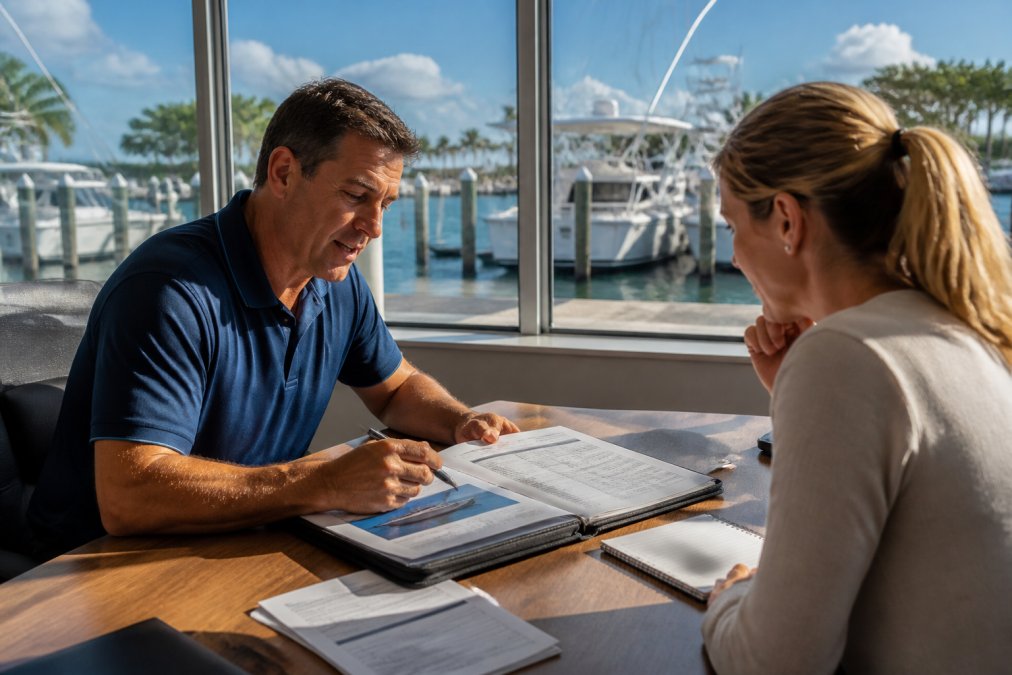
The first substantive conversation with a potential broker should focus on their experience with your specific vessel type and market segment. Ask directly: "How many center console yachts have you sold in the last 12 months?" and "What's your experience with offshore fishing vessels in the 34- to 50-foot range?"
Specific numbers matter. A broker who has handled 15 transactions in your category in the past year has real, current market knowledge. Vague answers signal that this isn't their focus area.
Follow up by asking about their understanding of your vessel's specific use case. If you fish offshore, does the broker understand the hull design differences between center consoles optimized for calm-water fishing versus those built for rough-water capability?
Ask about their network of potential buyers. A specialist broker in the center console market will have relationships with active buyers in that segment. They should describe the types of buyers they work with regularly, whether that's experienced captains, fishing enthusiasts, or commercial operators.
Buyer Access and Market Knowledge
When selling, access to qualified buyers is everything. Ask the broker: "How do you source your inventory?" and "What percentage of your listings come from direct relationships versus public MLS databases?"
A broker with strong market access will have off-market inventory, vessels that haven't been publicly listed yet. These often represent better opportunities because they haven't been exposed to every buyer in the market.
For buyers, ask about the broker's access to private registers and pre-owned vessel databases. Some brokers maintain proprietary lists of vessels available through their network that don't appear on public listing sites.
Market knowledge goes beyond inventory access. Ask about recent market trends: "What's the current market like for center consoles in the 40-foot range?" A knowledgeable broker should discuss pricing trends, buyer demand, inventory levels, and how those factors affect negotiation strategy, referencing specific comparable sales from the past 3-6 months.
Understanding Yacht Broker Commission Rates and Fees
Commission structures in yacht brokerage vary based on vessel price, transaction complexity, and market conditions. Most brokers work on a percentage basis, typically ranging from 5% to 10% of the sale price.
Ask the broker upfront about their commission structure and get it in writing. Some brokers charge a flat percentage; others use a sliding scale where the percentage decreases as the vessel price increases.
Beyond commission, clarify what services are included and what carries additional costs. Does the broker's fee cover marketing, photography, video production, and listing management? Does it include coordination with marine surveyors, insurance agents, and financing sources?
Ask about co-brokerage arrangements. In many transactions, a listing broker and a selling broker split the commission. This is standard practice and shouldn't add to your costs, but you should understand how it works.
For buyers, understand whether you'll be charged a broker fee. In most yacht transactions, the seller's broker handles the transaction and takes commission from the sale price. Clarify this arrangement before you begin working together.
Red Flags and Warning Signs of Unethical Brokers
A broker who pressures you into a listing agreement without allowing time for review is a red flag. Legitimate brokers provide the agreement in advance, explain the terms, and encourage you to have an attorney review it.
Vague or evasive answers about commission structure, fees, or services should concern you. A broker who can't clearly explain how they're compensated or what's included in their fee is either disorganized or deliberately obscuring information.
Watch for brokers who make unrealistic promises about sale price or timeline. Honest brokers discuss realistic timelines based on market conditions and vessel specifics.
If a broker discourages you from conducting a marine survey or suggests you skip certain due diligence steps, that's a major warning sign. A legitimate broker wants the transaction to be thorough and transparent.
Be wary of brokers who won't provide references or whose existing clients are reluctant to speak with you. A broker with a solid track record should have clients willing to discuss their experience.
A broker who disparages competitors or makes unsubstantiated claims about their superiority should be approached cautiously. The best brokers let their track record speak.
Evaluating Post-Purchase Support and Concierge Services
The relationship with your broker doesn't end at closing. The quality of post-purchase support can significantly affect your ownership experience, especially if you're new to yacht ownership.
Ask potential brokers what support they provide after the sale closes. Do they help coordinate with marine surveyors for post-purchase inspections? Do they facilitate introductions to insurance providers, financing sources, or maintenance facilities? Do they provide guidance on vessel documentation, registration, and compliance?
Specialized brokers often offer concierge-level services that go beyond the basic transaction. At Primo Yachts of Palm Beach, we understand that purchasing a premium vessel is the beginning of an ownership journey, not the end of a transaction. Our team helps clients navigate financing coordination, vessel outfitting, repower planning, and ongoing maintenance relationships.
Ask about the broker's network of service providers. A broker with established relationships with trusted marine surveyors, insurance agents, and service yards can save you significant time and stress.
Inquire about ongoing communication and support. Will the broker be available if you have questions after the sale? Do they provide guidance on seasonal maintenance, winterization, or operational issues?
The Brokerage vs. Private Sale: Understanding Your Options
Some vessel owners consider selling privately to avoid broker commission. This approach has significant advantages and serious drawbacks.
A private sale eliminates the broker commission, which can represent substantial savings on a high-value vessel. You maintain complete control over the process, the listing details, and the buyer interaction.
However, private sales carry substantial risks. Without a broker's marketing reach, your vessel gets limited exposure. Most serious buyers work through brokers because they know brokers have access to inventory and can represent their interests.
Pricing is another challenge. A broker brings market knowledge and comparable sales data that inform realistic pricing. Selling privately, you're making pricing decisions without professional guidance, often resulting in either pricing too high or leaving money on the table.
The due diligence and documentation process is complex. A broker manages the marine survey coordination, insurance verification, documentation review, and title transfer. Mistakes in this area can create legal and financial complications.
Financing coordination is more difficult in a private sale. Many buyers rely on marine lenders who require broker involvement or verification. Some lenders won't finance vessels sold privately due to documentation concerns, limiting your potential buyer pool.
A brokerage transaction provides professional representation, market access, documentation management, and liability protection. The commission you pay is offset by these services and the typically higher sale price achieved through professional marketing and buyer access.
For buyers, working with a broker gives you access to a broader range of inventory, professional guidance on vessel evaluation, and representation of your interests during negotiation.
Selecting a yacht broker in Florida requires careful evaluation of credentials, specialization, market access, and professional integrity. The broker you choose will influence not just the transaction outcome, but your entire ownership experience.
The most important factor is specialization. A broker who truly understands center console yachts, offshore fishing vessels, or your specific vessel category will provide better guidance, access to qualified buyers or inventory, and realistic expectations about market conditions.
Primo Yachts of Palm Beach has built our reputation on deep specialization in center console yachts and offshore fishing vessels. Since 2009, our team has focused exclusively on this market segment, developing the market knowledge, buyer relationships, and operational expertise that translates into better outcomes for our clients. When you work with a specialist, you're partnering with someone who understands not just the transaction mechanics, but the specific needs and considerations of your vessel category.
Take time to verify credentials, ask detailed questions about experience and market access, understand the commission structure, and evaluate the broker's commitment to post-purchase support. The investment in finding the right broker pays dividends throughout your ownership experience.
Frequently Asked Questions
Q: Are yacht brokers in Florida required to be licensed?
A: Yes. Florida yacht brokers must hold a valid license through the Florida Department of Business and Professional Regulation (DBPR). Verify licensing through the Florida Department of Business and Professional Regulation (DBPR). A broker should also comply with Florida maritime regulations and the Uniform Commercial Code for vessel sales. Always request proof of current licensing before proceeding.
Q: What questions should I ask a yacht broker before hiring them?
A: Ask about their experience with your vessel type, how many similar boats they've sold in the past year, and their average time on market. Inquire about their buyer network, whether they offer co-brokerage arrangements, and what post-purchase support they provide. Request references from recent clients and ask specifically about their due diligence process, including marine surveys, sea trials, and title verification. Also clarify their communication protocols and how often you'll receive market updates.
Q: What is the standard commission for a yacht broker?
A: Yacht broker commission rates vary based on vessel price, condition, and market demand. Commissions typically range from 5% to 10% of the sale price, though rates are negotiable and may differ for co-brokerage arrangements. Some brokers charge flat fees or tiered rates for higher-value vessels. Always request a written brokerage agreement that clearly outlines commission structure, any additional fees, and payment terms before listing or purchasing a yacht.
Q: How do I verify a yacht broker's credentials and track record?
A: Check their Florida license through the DBPR website and confirm membership in industry associations such as the Yacht Brokers Association of America (YBAA). Request references from buyers and sellers they've worked with recently, and ask for documentation of their transaction history. Verify their insurance coverage and ask about their experience with vessel documentation, financing, and closing procedures specific to your vessel type.
Q: What red flags should I watch for when selecting a yacht broker?
A: Be cautious of brokers who cannot provide proof of licensing or insurance, who pressure you into quick decisions, or who lack transparency about fees and commission structures. Avoid brokers with outdated or heavily edited listing photos, poor communication responsiveness, or reluctance to discuss their track record. If a broker cannot explain the closing process, vessel documentation requirements, or Florida maritime tax implications, that's a warning sign. Trust your instincts if something feels unprofessional.
Q: What is the difference between a buyer's broker and a listing broker?
A: A listing broker represents the vessel seller and is compensated through the sale commission. A buyer's broker represents your interests as a purchaser and typically splits commission with the listing broker. Using a buyer's broker can provide independent guidance on vessel valuation, condition assessment, and negotiation strategy. However, in some transactions, a single broker represents both parties. Always clarify representation in writing and understand any potential conflicts of interest before proceeding.
Q: Should I use a specialized broker for center console or offshore fishing yachts?
A: Yes. Specialized brokers understand the specific features, performance characteristics, and market demand for particular vessel types. A center console specialist will know hull construction differences, engine options, and fishing-specific rigging that affect value and suitability. They'll have a buyer network of fishing enthusiasts and offshore operators, and they'll better assess whether a vessel meets your operational needs. Specialization can lead to better outcomes than generalist brokers.
Q: What should happen during the closing process with a yacht broker?
A: The broker coordinates with title companies, marine surveyors, and your financing lender to ensure all documentation is complete. This includes vessel title verification, bill of sale preparation, escrow account setup, and compliance with Florida vessel registration requirements. The broker should explain the closing timeline, coordinate the sea trial and final inspection, and ensure all contingencies are met. A professional broker provides regular updates and handles the transfer of vessel documentation to the new owner's name with the appropriate maritime authorities.
This article was written using GrandRanker