 ultimate-guide
Upgrading Yacht Navigation Systems: Key Benefits
Table of Contents
- Why Upgrading Yacht Navigation Systems Matters
- Improved Navigation Accuracy and Precision
- Enhanced Safety Features and Collision Avoidance
- Integration with Existing Onboard Systems
- NMEA 2000 Network Benefits for Modern Vessels
- Marine Electronics Installation Cost Considerations
- Resale Value and Long-Term Investment Impact
- Conclusion
- Frequently Asked Questions
Last Updated: September 30, 2026
Why Upgrading Yacht Navigation Systems Matters
Modern vessel operation depends on reliable, accurate navigation data. Owners upgrading their navigation electronics often see immediate improvements in operational confidence, safety margins, and voyage planning efficiency.
Upgrading yacht navigation systems addresses critical gaps in aging equipment: poor data integration, limited real-time information, and lack of redundancy. Offshore, navigation accuracy is the margin between a managed situation and an emergency.
Upgrading yacht navigation systems is about capability: faster information delivery, integration with onboard equipment, and decision-making tools that improve safety, efficiency, and resale value.
Improved Navigation Accuracy and Precision
Modern multifunction displays integrate satellite data, hydrographic charts, and real-time corrections to deliver position accuracy within a few feet. Older systems can't handle the resolution or update frequency of current satellite networks.
Precision matters in tight waters, shallow anchorages, and poor visibility. A system updating position every second versus every five seconds changes chart reading and approach planning. Side imaging and live sonar generate data that legacy systems can't process.
Current systems layer traditional charts, satellite imagery, depth contours, tracklines, and waypoint clusters simultaneously, reducing navigation errors through more complete information.
Enhanced Safety Features and Collision Avoidance
Modern navigation systems integrate AIS data directly into your display, showing other vessels' course, speed, and closest point of approach in real time, allowing you to avoid situations before they develop.
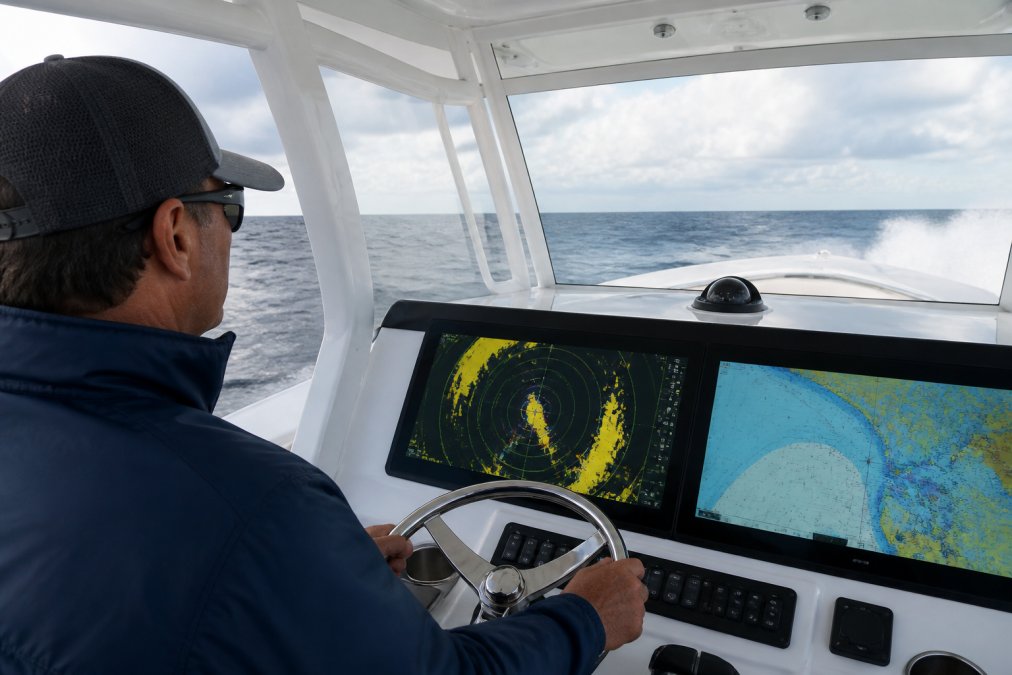
Collision avoidance algorithms calculate course intersections with other traffic and alert you before situations become critical, amplifying your attention by flagging what matters most.
Modern displays integrate radar targets, AIS targets, and chart data on a single screen, enabling faster decision-making and fewer missed details.
Weather routing integration pulls live data and suggests course adjustments that minimize rough water and strong current, reducing fatigue and improving fuel efficiency.
Integration with Existing Onboard Systems
Modern systems connect to existing autopilots, engines, and auxiliary equipment through standardized protocols, eliminating data silos and providing unified vessel performance visibility.
NMEA 2000 is the standard network protocol enabling marine electronics communication. A NMEA 2000-compatible navigation system becomes the central hub: engine data flows to your display, autopilot receives course corrections automatically, and fuel consumption syncs for real-time efficiency monitoring.
This integration reduces workload during long passages: one display aggregates critical data instead of requiring monitoring of three separate instruments, preventing fatigue.
New chartplotters often accept data from older transducers, fishfinders, and radar units through adapter modules, so your upgrade path doesn't require replacing everything simultaneously.
Cybersecurity Considerations for Connected Vessels
Integration introduces network security risks: a vulnerability in one connected device can potentially affect others, unlike legacy systems where each instrument operated independently.
Wireless connectivity creates potential entry points for unauthorized access. A compromised WiFi password or unpatched security vulnerability could allow remote access to your navigation system.
Manufacturers address risks through encryption and authentication, but security depends on consistent manual firmware updates, delaying updates leaves your system vulnerable to known exploits.
Secure networked marine systems by using strong passwords, keeping firmware current, isolating your navigation network from unsecured networks, and disabling unused wireless features. Discuss security practices with your marine electronics installer before upgrading.
Software Update Lifecycle and Long-Term Support
Your system's reliability depends on ongoing manufacturer support. Chartplotters typically receive active updates for 7-10 years after production, then limited-support phase with only critical security patches.
Current-generation chartplotters receive regular updates for a decade; 12-year-old systems likely operate on unsupported firmware as chart data, weather services, and AIS protocols evolve.
Modern systems receive automatic chart corrections as hydrographic data changes; older systems require manual updates that become difficult to obtain as manufacturers discontinue support.
The AIS standard evolves to accommodate new vessel types. Modern systems automatically adapt; older systems may struggle to process newer AIS messages.
Practical Integration Planning
Discuss your integration roadmap with your marine electronics installer to clarify which systems connect via NMEA 2000, which require adapters, and which are incompatible.
Consider your vessel's power budget: fully integrated networks draw more power than individual instruments. A qualified electrician can assess whether your charging system supports the integrated setup.
NMEA 2000 Network Benefits for Modern Vessels
NMEA 2000 networks replace point-to-point connections with true networks where any device can send or receive data from any other, providing greater reliability and flexibility.
NMEA 2000 networks reduce wiring complexity by connecting all devices to a single backbone, making installation cleaner and future upgrades easier.
NMEA 2000 design includes data redundancy: if one connection fails, the network continues operating, which matters on working vessels where reliability is critical.
NMEA 2000 networks minimize latency, enabling instant autopilot response to course corrections and immediate display updates, critical for tactical decisions.
Marine Electronics Installation Cost Considerations
When Repair Makes Sense
Repair is viable if your chartplotter powers on and receives GPS signals. However, repair becomes less attractive when the manufacturer has discontinued parts or stopped releasing software updates.
Repair also makes sense if your vessel's electrical infrastructure is outdated. If your boat has aging wiring, corroded bus bars, or undersized battery banks, upgrading to a modern integrated system might expose underlying electrical problems. In this case, repairing your current system while you address the electrical foundation is the practical approach.
When Replacement Is Necessary
Replacement becomes the better choice when your system no longer integrates with modern sensors or protocols. If your chartplotter uses proprietary connectors that no longer match current transducers, or if it cannot process NMEA 2000 data from newer autopilots and engine management systems, you're operating with a fragmented ecosystem. Modern systems communicate through standardized protocols (NMEA 2000, NMEA 0183, Ethernet), while legacy systems often used point-to-point connections that don't scale.
Data processing capability is another replacement trigger. Older displays struggle with high-frequency sonar data, real-time weather overlays, and simultaneous AIS target tracking. If you're adding modern sensors, side-imaging sonar, high-frequency transducers, or weather routing, your legacy chartplotter may not have the processing power to display the data meaningfully. In these cases, the new sensors are wasted on old hardware.
Software obsolescence is a practical reality. Manufacturers stop releasing security patches and feature updates for systems older than 10 years. If your chartplotter no longer receives updates, it cannot access current chart corrections, security fixes, or compatibility improvements. This creates a cascading problem: you can't upgrade related systems because they won't communicate with your aging display.
The Total Cost of Ownership Framework
Compare repair cost against replacement cost, but include the hidden costs of keeping legacy systems running. A repair that costs $800 today might extend your system's life by 2 years, but if you'll need to replace it anyway within 3 years, you've spent $800 to delay a larger investment. Factor in the cost of workarounds, adapters, redundant instruments, or manual processes, that legacy systems often require.
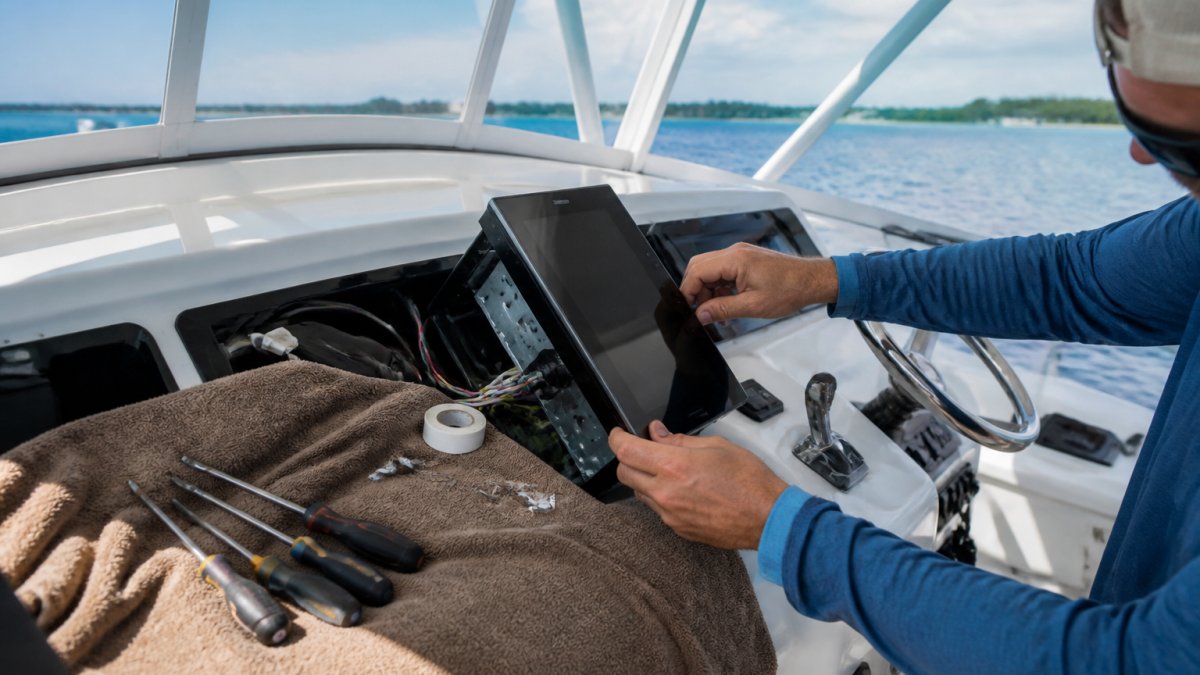
Replacement cost varies based on scope. A single multifunction display upgrade (display only, reusing existing transducers and network connections) costs less than a full NMEA 2000 network installation that integrates your navigation, autopilot, and engine management systems. A qualified marine electrician can evaluate your boat's existing infrastructure and provide a detailed upgrade estimate that accounts for cable runs, transducer repositioning, and network configuration.
Installation Complexity and Hidden Costs
Installation cost depends on your vessel's physical layout and existing electrical organization. Boats with clean cable runs and organized electrical panels cost less to upgrade than boats with congested engine rooms or complex original wiring. Before committing to an upgrade, have a marine electrician evaluate your boat's current setup. They can identify what infrastructure reuses existing cables and what requires new work.
Transducers often need replacement or repositioning during upgrades.
Resale Value and Long-Term Investment Impact
Upgrading yacht navigation systems directly affects resale value. Potential buyers evaluate the electronics suite closely. A vessel with current, integrated navigation systems commands a premium over identical boats with aging equipment. The difference can be significant for premium center console yachts.
Conclusion
| Upgrade Component | Primary Benefit | Resale Impact |
|---|---|---|
| Multifunction Display | Navigation accuracy, data integration | High |
| AIS Integration | Collision avoidance, situational awareness | High |
| NMEA 2000 Network | System interoperability, reduced wiring | Medium-High |
| Modern Transducers | Sonar clarity, depth accuracy | Medium |
| Autopilot Integration | Automated course corrections, reduced fatigue | Medium |
According to NOAA maritime navigation standards, modern chartplotters must meet specific accuracy and update frequency requirements for coastal and offshore navigation. Upgrading ensures your vessel meets current standards.
Frequently Asked Questions
How often should you upgrade your yacht's marine electronics?
Upgrade when your system reaches 8-12 years old, when critical components fail, or when new standards like NMEA 2000 become essential for your vessel class. Modern chartplotters and GPS units typically support 10-15 years of firmware updates. If your system lacks AIS integration, real-time weather routing, or side imaging sonar, upgrading will improve safety and operational efficiency significantly. Consult your captain or a marine electronics specialist to assess whether your current setup meets current navigation standards.
What are the primary safety benefits of modern navigation systems?
Modern systems provide real-time AIS tracking to detect nearby vessels, advanced collision avoidance algorithms, and accurate GPS positioning within 1-3 feet. Integrated radar, sonar, and weather routing reduce navigation errors and allow faster response to hazards. Redundant data streams and automated alerts prevent system failures from going unnoticed. These features are especially critical for offshore fishing and extended cruising where response time to danger is limited.
Does upgrading marine electronics increase the resale value of a yacht?
Yes. Buyers specifically seek vessels with modern, integrated navigation suites because they avoid costly upgrades post-purchase. A well-maintained system with current firmware, NMEA 2000 compatibility, and AIS integration can add to vessel value and reduce time-on-market. Outdated electronics are a red flag that signals potential hidden mechanical issues, even if the hull and engines are sound. Upgrading before sale positions your vessel as move-in ready for serious buyers.
What is the difference between integrated and standalone navigation systems?
Integrated systems (multifunction displays) combine chartplotter, radar, sonar, and autopilot into one networked platform via NMEA 2000, reducing redundancy and complexity. Standalone units perform single functions and require manual cross-referencing. Integrated systems offer faster decision-making, lower power consumption, and easier firmware updates. For offshore or fishing operations, integrated platforms reduce cognitive load and improve situational awareness during critical moments.