 ultimate-guide
Private Yacht Inventory Access Florida: A 2026 Guide
Table of Contents
- Why Private Yacht Inventory Access in Florida Changes Everything
- Off-Market Yachts Florida: How to Find What Isn't Listed
- Florida Yacht Brokers: What Separates Specialists from Generalists
- Legal and Regulatory Due Diligence When Accessing Private Inventory
- Data-Driven Market Valuation for Pre-Owned and Mega Yachts
- Buying a Yacht in Florida Guide: From First Contact to Sea Trial
- Yacht Ownership Costs Florida: What to Budget After the Sale
- How to Gain Private Yacht Inventory Access in Florida Starting Today
Last Updated: July 30, 2026
Gaining private yacht inventory access in Florida is harder than most buyers expect. The gap between public listings and what actually trades hands in South Florida is wider than most brokers admit. At Primo Yachts of Palm Beach, operating since 2009, the pattern is consistent: the most sought-after center consoles and offshore fishing vessels rarely reach the open market before a qualified buyer steps in. This guide breaks down how the private inventory ecosystem works, where real deals originate, and what you need to do to position yourself inside it.
The core argument: public listings are the residue of a market, not the market itself. Premium vessels move through relationships, not search filters.
Why Private Yacht Inventory Access in Florida Changes Everything
A pocket listing is a vessel offered through a broker's private network before, or instead of, appearing on public databases like YachtWorld or Boat Trader. The best vessels rarely need public exposure. An owner with a well-maintained 50-foot sportfish calls a trusted broker, who calls qualified buyers, and the transaction closes quietly. If you search only on public platforms, you are shopping inventory nobody else wanted first.
The Difference Between Public Listings and Pocket Listings
Public listings aggregate vessels uniformly, regardless of condition or seller motivation. Pocket listings are shared selectively, meaning less competition, genuinely motivated sellers, and more room to negotiate terms including survey credits and delivery arrangements.
How the Pocket Listing Ecosystem Actually Works
The pocket listing ecosystem runs on broker-to-broker communication, owner referrals, marina relationships, and yacht show conversations. A typical off-market transaction flows like this:
- An owner contacts a trusted broker expressing intent to sell with discretion
- The broker qualifies the vessel and confirms realistic price range
- The broker contacts two to five pre-qualified buyers from their private register
- A showing is arranged privately at a marina slip or dock
- If interest is confirmed, a formal purchase agreement is drafted
- Survey, sea trial, and title search proceed on an accelerated timeline
- Closing occurs without public listing
Off-Market Yachts Florida: How to Find What Isn't Listed
Off-market yachts are found through relationships, not better search tools. Identify a brokerage with genuine specialty rather than general inventory, then register your interest formally in writing with specific vessel criteria. Brokers with active private registers use these profiles to match incoming off-market listings.
Fort Lauderdale and Miami: The Two Epicenters of Private Deals
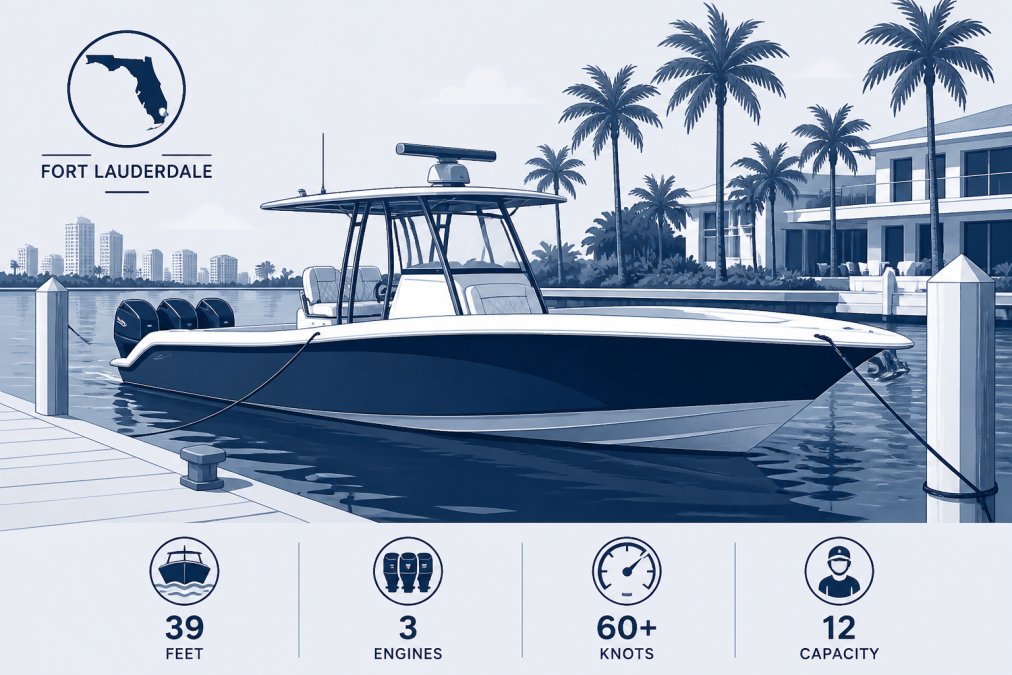
Fort Lauderdale is the primary hub for larger sportfish and express cruiser transactions. Home to the annual Fort Lauderdale International Boat Show, the marina infrastructure along the New River and Intracoastal supports dense broker, service yard, and private owner concentration. According to Fort Lauderdale International Boat Show industry data, the show generates significant transaction activity in the weeks before and after, with many deals originating from floor conversations rather than formal listings.
Miami skews toward center consoles, performance vessels, and catamarans, with Coconut Grove and Miami Beach marina communities generating consistent off-market activity. Both markets reward buyers who show up in person and work with a brokerage established in their target vessel category.
Yacht Shows as a Gateway to Exclusive Access
Yacht shows are not just display events. For serious buyers, the Fort Lauderdale and Palm Beach International Boat Shows are the most efficient venues for establishing broker relationships and surfacing off-market inventory. Attend with specific criteria, identify brokers specializing in your target vessel type, and request a conversation about their private register rather than public listings.
Florida Yacht Brokers: What Separates Specialists from Generalists
The most common mistake is engaging a generalist brokerage assuming more listings means better access. A generalist with five hundred listings has no particular reason to prioritize your search. A specialist with a defined niche, established seller network, and private buyer register has every incentive to match you quickly, because their reputation depends on it.
The Case for a Boutique Brokerage with a Defined Niche
Primo Yachts of Palm Beach is built around center console expertise. Operating since 2009, the brokerage has developed a private register of pre-owned vessels not appearing on public platforms, along with a buyer network of experienced boaters and captains understanding offshore conditions specific to South Florida.
For sellers, a specialist brokerage brings qualified buyers who understand the vessel category, meaning fewer wasted showings and faster closings. For buyers, the advantage is access to inventory that never reaches the general market. A buyer evaluating a 40-foot center console for offshore use needs guidance on hull design, engine configuration, and sea-keeping characteristics, not just specifications.
AI-Powered Search and Inventory Tools: What They Can and Cannot Do
AI-powered search tools have improved the public listing experience considerably. For buyers searching public databases, these tools reduce time spent filtering irrelevant listings. The limitation is structural: AI tools can only surface what has been listed. They have no visibility into pocket listings, private registers, or off-market transactions. Use AI tools for market intelligence, pricing trends, comparable sales, and vessel specifications, while relying on specialist broker relationships for actual access to private inventory.
Legal and Regulatory Due Diligence When Accessing Private Inventory
Private transactions carry specific legal risk that public listings partially mitigate through platform documentation. When a vessel changes hands off-market, the buyer bears greater responsibility for confirming clear title, verifying registration status, and ensuring no outstanding maritime liens exist.
Vessel Registration, Title Searches, and Maritime Law Basics
Vessel registration is the process by which a boat is documented with either the U.S. Coast Guard under federal documentation or registered with a state agency. Coast Guard documentation is required for vessels over five net tons used in coastwise trade and is preferred for financed transactions because it provides a clear federal title chain.
Before any purchase agreement is signed, a title search should confirm the vessel is free of maritime liens, preferred ship mortgages, and encumbrances filed under the Ship Mortgage Act. The U.S. Coast Guard National Vessel Documentation Center maintains the federal documentation database and is the authoritative source for confirming documentation status and lien history.
Maritime law governs yacht transactions differently than real estate or automotive purchases. For transactions involving vessels above a certain value threshold, engaging a maritime attorney is standard practice.
Yacht Survey, Sea Trial, and What to Insist On Before Signing
A professional yacht survey is non-negotiable in any serious purchase agreement. The survey should be conducted by a certified marine surveyor independent of both seller and brokerage. The National Association of Marine Surveyors professional standards provides guidance on surveyor qualifications and survey scope.
The survey should cover hull integrity, engine and mechanical systems, electrical systems including ABYC compliance, safety equipment status, and any deferred maintenance items with estimated remediation cost. The sea trial should occur under conditions representative of the vessel's intended use. For an offshore fishing vessel, this means open water at operating speed.
Data-Driven Market Valuation for Pre-Owned and Mega Yachts
Market valuation for pre-owned vessels in Florida is less standardized than many buyers assume. Unlike real estate, yacht transaction prices are often confidential. A data-driven valuation approach draws on multiple sources: comparable public listings adjusted for condition and equipment, historical transaction data from broker networks, replacement cost analysis for major systems, and depreciation curves specific to vessel make and model. For center consoles and sportfish vessels in the 34-to-60-foot range, engine hours and service records are the single most significant valuation variables after the hull itself.
| Valuation Factor | High Impact | Moderate Impact | Lower Impact |
|---|---|---|---|
| Engine hours vs. model average | Yes | - | - |
| Hull condition and survey findings | Yes | - | - |
| Electronics and navigation package | - | Yes | - |
| Recent refit or repower | - | Yes | - |
| Interior condition and upholstery | - | - | Yes |
| Color and cosmetic appearance | - | - | Yes |
| Original documentation completeness | - | Yes | - |
Buying a Yacht in Florida Guide: From First Contact to Sea Trial
The path from initial inquiry to completed purchase typically runs four to eight weeks for straightforward transactions.
Step 1: Define your criteria precisely. Hull length, engine configuration, intended use, and maximum budget should be documented before contacting any broker.
Step 2: Identify a specialist broker and register your interest. Provide criteria in writing and ask specifically about private inventory matching your profile.
Step 3: Review matched listings, both public and private. Evaluate each vessel against your criteria before requesting a showing.
Step 4: Conduct a preliminary inspection. Walk the vessel, run engines at the dock, and review available documentation before committing to formal survey.
Step 5: Submit a conditional purchase offer. Include survey and sea trial contingencies with deposit held in escrow.
Step 6: Commission an independent survey. Schedule survey and sea trial within the timeframe specified in the purchase agreement.
Step 7: Negotiate based on survey findings. Request price adjustments or seller-funded repairs for material defects.
Step 8: Close the transaction. Confirm clear title, execute bill of sale, and arrange vessel delivery.
Yacht Financing, Insurance, and Delivery Considerations
Yacht financing for vessels above a certain size is handled by marine lenders rather than conventional banks. Marine financing terms, loan-to-value ratios, and documentation requirements differ from automotive or real estate lending. Engage a marine finance specialist early, before identifying a specific vessel, to confirm financing parameters.
Yacht insurance for a South Florida vessel should account for hurricane coverage, offshore range limits, and liveaboard provisions if applicable. According to BOAT U.S. Foundation marine insurance guidance, coverage terms vary significantly between carriers for offshore use and storm haul-out requirements. For vessels purchased at a distance, engage a licensed yacht delivery captain with experience in relevant coastal waters.
Yacht Ownership Costs Florida: What to Budget After the Sale
Yacht ownership costs in Florida extend well beyond the purchase price. Budget a meaningful percentage of the vessel's value annually for maintenance, insurance, dockage, and fuel, though the actual figure varies substantially by vessel size, age, and usage patterns.
Post-Purchase Inventory Management: Maintenance, Refit, and Repower
Post-purchase inventory management is the discipline of tracking and scheduling all maintenance, warranty, and improvement work over a vessel's ownership lifecycle. A structured approach includes maintaining a complete service log with dates, costs, and technician records; scheduling engine service at manufacturer-specified intervals; budgeting for biennial haul-outs covering bottom paint and through-hull inspection; and documenting any refit or repower work with photographs and receipts.
A well-documented service history is a significant valuation asset when selling. Repower decisions, replacing existing engines with new or rebuilt units, are among the highest-impact ownership decisions and can extend useful life by a decade while resetting market value significantly.
Yacht Charter Registration as an Ownership Offset Strategy
Registering a vessel with a charter management program is a legitimate strategy for offsetting ownership costs. Under a properly structured arrangement, the vessel generates charter revenue during periods when the owner is not using it. The tax implications are governed by IRS rules on passive activity and hobby loss provisions. Regulatory requirements for operating a vessel as a charter yacht in Florida waters are administered through the U.S. Coast Guard's Subchapter T inspection program for small passenger vessels, and compliance is mandatory for commercial charter operations.
How to Gain Private Yacht Inventory Access in Florida Starting Today
Private yacht inventory access in Florida is a function of relationships, not search tools. The practical steps are specific and actionable.
First, identify a specialist brokerage with documented focus on your target vessel category and verifiable track record in South Florida. Ask directly about their private register and the number of off-market transactions closed in the past twelve months.
Second, provide your criteria in writing and request formal registration in their buyer database. Third, attend the Fort Lauderdale and Palm Beach boat shows with the explicit goal of relationship building. Fourth, engage the due diligence infrastructure before you need it. Identify a certified marine surveyor, a maritime attorney, and a marine finance specialist before finding the vessel you want to buy. Buyers who arrive with their team assembled close faster and on better terms.
The buyers who consistently access the best private inventory in Florida are not those with the largest budgets. They are those who have positioned themselves as serious, qualified, and ready to move when the right vessel becomes available.
The Florida yacht market's best vessels rarely wait for buyers still figuring out the process. Primo Yachts of Palm Beach has spent over fifteen years building the specialist expertise, private seller relationships, and qualified buyer network that makes genuine off-market access possible. As a boutique brokerage focused on center consoles and premium offshore vessels, the team brings technical knowledge to evaluate what you are actually buying. Contact Primo Yachts of Palm Beach to register your criteria and gain access to private inventory that never reaches the public market.
Frequently Asked Questions
How do I find off-market yachts in Florida that aren't publicly listed?
Accessing private yacht inventory in Florida requires working with a specialist broker who maintains an active network of owner relationships, not just MLS-style databases. Boutique brokerages focused on specific vessel types, such as center consoles or sportfish yachts, often maintain a private register of pre-owned boats whose owners prefer discreet, off-market sales. Attending regional yacht shows in Fort Lauderdale and Miami and building direct relationships with captains and yacht managers also surfaces pocket listings before they reach public platforms.
What is the role of a Florida yacht broker in accessing private inventory?
A Florida yacht broker acts as the gatekeeper to private yacht inventory that never appears on public listing sites. Their broker network provides exclusive access to off-market vessels, pre-vetted by professionals who understand yacht specifications, condition, and fair market valuation. A specialist broker also manages legal due diligence, including vessel registration checks, title searches, and coordination of independent yacht surveys, protecting buyers from costly surprises. For sellers, a broker's curated buyer relationships mean faster, more discreet yacht sales transactions.
Are there exclusive yacht listings in Florida not available to the general public?
Yes. A significant portion of premium yacht sales in Florida, particularly in the Fort Lauderdale and Miami markets, occur through private or pocket listings that are never published publicly. Owners of luxury yachts and pre-owned mega yachts often prefer this approach to avoid price anchoring, unwanted attention, or prolonged market exposure. Gaining access to these listings typically requires a direct relationship with a boutique brokerage that has cultivated trust within the private seller community over many years.
What are the typical yacht ownership costs in Florida I should plan for after purchase?
Beyond the purchase price, Florida yacht ownership costs include ongoing expenses such as marina or dry storage fees, yacht insurance, routine maintenance, fuel, and crew or captain costs where applicable. Vessels requiring a refit or repower add significant budget considerations. Registering your yacht with a charter management program can help offset carrying costs by generating charter income. Pricing for these services varies widely based on vessel size, condition, and usage, contact a specialist broker for a realistic ownership cost estimate tailored to your specific vessel.
How can I verify the legitimacy of a private yacht listing in Florida before making an offer?
Verifying a private yacht listing in Florida involves several layers of due diligence. Start with a USCG vessel documentation search or Florida DMV title check to confirm clean ownership and no outstanding liens. Engage a certified marine surveyor for an independent condition assessment. Always insist on a sea trial before finalizing any yacht sales transaction. A reputable yacht broker will facilitate all of these steps and flag any red flags in the vessel's registration history, prior insurance claims, or maintenance records before you commit.
When is the best time to buy a yacht in Florida to find the best private inventory?
The fall and early winter months, roughly September through December, tend to surface strong private yacht inventory in Florida as snowbird season approaches and owners reassess their fleets ahead of the Fort Lauderdale International Boat Show. Post-show, motivated sellers who didn't transact publicly sometimes move their vessels into private or off-market channels. Working with a specialist broker year-round, rather than only during peak season, gives buyers the best chance of accessing pocket listings before they attract competitive interest.
This article was written using GrandRanker