 how-to
How to Sell Center Console Yachts Faster
Table of Contents
- Professional Detailing and Condition Assessment
- How to Prepare a Yacht for Sale
- Yacht Listing Description Examples That Convert
- Pricing Strategy and Market Value Research
- Best Websites to Sell a Boat and Digital Marketing
- Documentation, Title Transfer, and Yacht Brokerage Commission Rates
- Negotiation, Sea Trials, and Closing Process
- Seasonal Timing and Market Strategy
Last Updated: August 5, 2026
Professional Detailing and Condition Assessment
A well-maintained, meticulously detailed vessel signals proper care and justifies a higher asking price. Professional detailing addresses every surface: hull, console, upholstery, engine compartment, and deck. Salt spray, UV exposure, and constant moisture create oxidation and staining that casual cleaning won't fix.
Start with a comprehensive condition assessment. Walk the entire boat with a critical eye, or hire a marine surveyor for an objective evaluation. Look for cracks in the gelcoat, soft spots in the hull, corrosion on stainless steel fittings, and signs of water intrusion. Document issues honestly in your listing; buyers will discover them anyway, and transparency builds trust.
The console and helm area deserve special attention, this is where buyers spend most of their time and where photographs focus. Clean the windscreen inside and out, polish the stainless steel wheel and hardware, and ensure all gauges and electronics function.
How to Prepare a Yacht for Sale
Preparing a center console for sale requires a systematic approach that goes beyond detailing. You're staging an asset for market inspection, and every detail matters.
Center Console-Specific Maintenance Checklist
Center consoles have unique maintenance demands. The open design means exposure on all sides, and the helm station takes the brunt of sun and salt damage. Before listing, work through this checklist:
- Hull and Topsides: Inspect for cracks, blisters, or soft spots. Polish and wax the entire exterior. Address oxidation on the gelcoat.
- Console and Helm: Clean all glass and acrylic surfaces. Polish stainless steel hardware and the wheel. Test all electronics and gauges.
- Upholstery and Cushions: Clean or replace worn seat covers. Check for mold, mildew, or water damage.
- Deck and Non-Skid: Pressure-wash thoroughly. Repair or replace damaged non-skid surface.
- Railings and Hardware: Polish all stainless steel. Tighten loose fittings. Replace corroded fasteners.
- Bilge and Engine Room: Clean thoroughly. Check for fuel leaks, oil seepage, or water accumulation.
- Plumbing and Systems: Test all through-hulls, sea cocks, and drain plugs for leaks.
- Electrical Systems: Test all lights, pumps, and electronics. Replace burnt-out bulbs.
- Canvas and Covers: Clean or replace sun-damaged canvas. Ensure all zippers and snaps function.
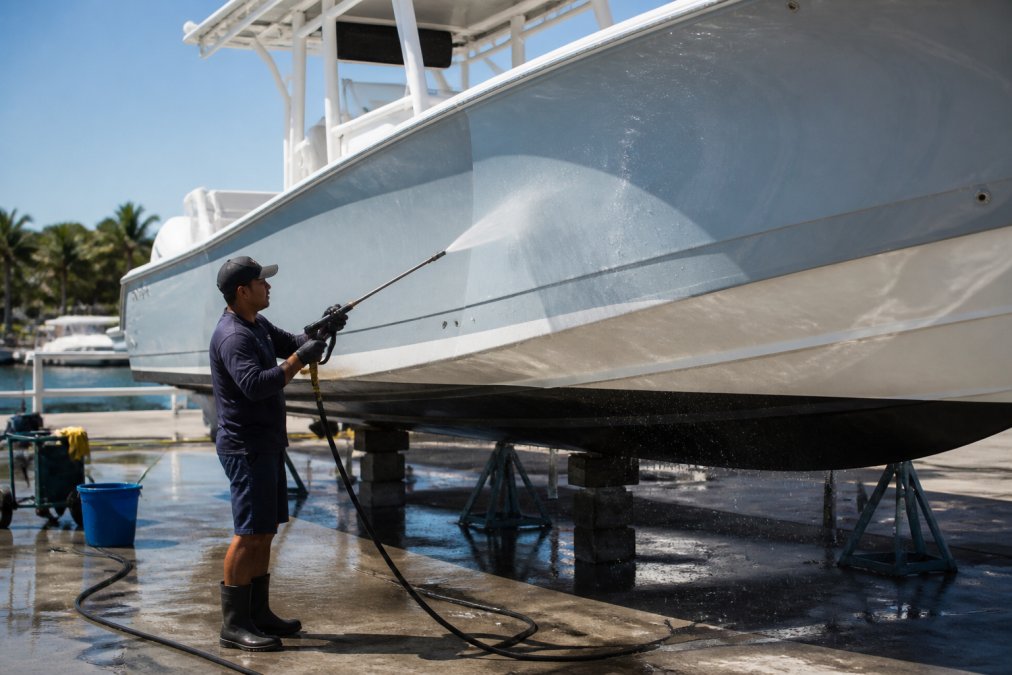
This checklist is the baseline for a competitive listing. Experienced boaters shopping for center console yachts know what to look for, and boats that fail on these basics either sit on the market or sell at a discount.
Engine Hours and Service Records
Engine hours and maintenance history directly impact how fast you sell a center console yacht. Modern buyers want proof of proper maintenance.
Gather all service records from purchase onward. Document every oil change, filter replacement, impeller service, and major repair. If records are missing, be honest about it, buyers will have the boat surveyed anyway. Missing documentation raises red flags and invites lower offers.
Engine hours matter significantly. A center console with 500 hours is in a completely different market position than one with 2,000 hours. Lower hours command higher prices, but only if engines have been well-maintained. A low-hour engine that's been neglected is worth less than a higher-hour engine with perfect service records.
Yacht Listing Description Examples That Convert
Your listing description is the first real opportunity to sell the boat. Most buyers start online, and your words determine whether they contact you for a showing or keep scrolling.
Effective descriptions focus on condition, capability, and experience. Start with the boat's best features. Include specifics: model year, engine type and hours, beam and length, key features (hardtop, tower, enclosed head, generator, air conditioning). A detailed description like "2021 35-foot center console with twin 400hp Yamaha outboards, 380 hours, hardtop, full electronics package, and recent bottom paint" immediately conveys value.
Describe the boat's purpose and capability. For a fishing-focused center console, mention fuel capacity, rod holders, livewell systems, and offshore range. For a cruising-oriented vessel, highlight cabin comfort, galley features, and overnight capability. Use professional language without being stiff. "Immaculate condition" is better than "very nice." Address known issues head-on if they exist and price accordingly.
Pricing Strategy and Market Value Research
Pricing is where many sellers make their biggest mistake. They either overprice based on what they paid or underprice out of desperation to sell quickly. Both approaches cost money.
Research comparable sales in your market. Look at similar center console yachts that sold in the past 6-12 months. Check listing sites, broker inventory, and auction results. Note the model year, engine hours, condition, and final sale price. This gives you a realistic range for your boat.
Consider the boat's condition, age, hours, and features relative to comparable vessels. A well-maintained, low-hour center console with recent upgrades can command a premium. An older boat with high hours and deferred maintenance will need aggressive pricing to attract buyers.
Fair Market Value and Depreciation Factors
Center console yachts depreciate over time, but the rate varies based on several factors. A well-maintained vessel in a desirable size and configuration holds value better than a neglected boat or unpopular model.
Engine type and hours significantly impact value. Newer engines, lower hours, and recent repowers all support higher prices. Brand reputation matters, established manufacturers with strong resale value and proven reliability command better prices.
Condition is paramount. A 15-year-old boat in pristine condition with full service records can be worth more than a 10-year-old boat that's been neglected. Market timing also affects value. Center console yachts sell better in spring and early summer when boating season is ramping up.
Best Websites to Sell a Boat and Digital Marketing
Where you list your boat determines who sees it. The right platforms connect you with serious buyers actively shopping for center console yachts.
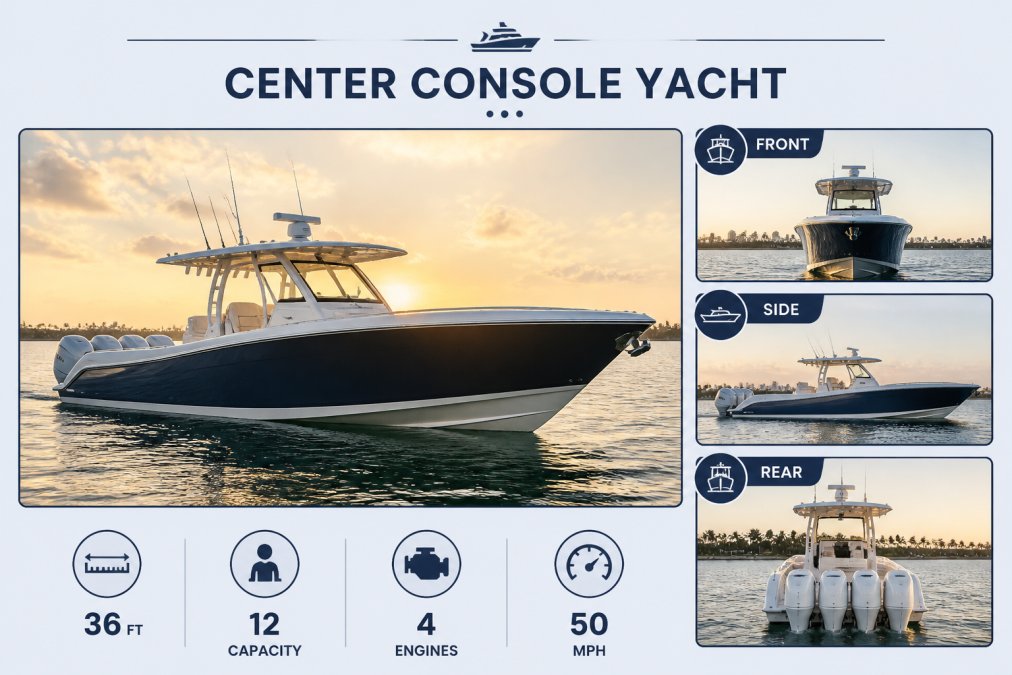
Professional photography is non-negotiable for digital marketing. Buyers form opinions based on photos before they ever contact you. Invest in professional photography that shows the boat in the best light. Shoot during golden hour (early morning or late afternoon) when lighting is warm and flattering. Capture the boat from multiple angles: bow, stern, profile, and from the water. Include interior shots of the helm, cabin, and engine room.
High-Resolution Photography and Video Walkthrough
Video is increasingly important in boat marketing. A professional video walkthrough allows buyers to inspect the boat remotely and decide whether to schedule a showing.
A good boat video should be 5-10 minutes long. Start with exterior shots from the water, showing the boat's profile and overall condition. Walk around the deck, showing railings, cleats, and hardware. Move to the helm and show the console, electronics, and seating. Tour any cabin space, showing the galley, head, and sleeping areas. Walk through the engine room, showing the engines, bilge, and systems. Narrate the video clearly, pointing out key features, recent upgrades, and condition highlights. Post the video on YouTube and link to it from your listing.
Documentation, Title Transfer, and Yacht Brokerage Commission Rates
The paperwork side of selling a boat is often overlooked until it becomes a problem. Get it right from the start, and the closing process moves smoothly.
Bill of Sale, Lien Release, and Vessel Registration
A bill of sale is the legal document that transfers ownership from seller to buyer. It should include the boat's hull identification number (HIN), model year, make, and model. It must state the sale price and the date of sale. Both parties sign it, and it becomes the legal proof of ownership transfer.
Before closing, obtain a lien release from any lender who has a security interest in the boat. This document proves that any loan has been paid off and the lender releases their claim. Without a lien release, the buyer cannot register the boat in their name.
Vessel registration varies by state. In Florida, boats are registered with the Department of Motor Vehicles. Gather all documentation before listing: the original bill of sale from your purchase, current registration, any title documents, and proof of ownership.
Tax and Legal Implications of Private Sales
Consult a tax professional about your specific situation. The sale of a personal-use boat may have capital gains implications if you sell for more than you paid. Documentation of your original purchase price and current sale price is important for tax purposes.
Sales tax may apply depending on your state and the buyer's location. In Florida, sales tax is typically due on boat sales. Clarify this with your accountant before closing.
Negotiation, Sea Trials, and Closing Process
Once you have an offer, the real work begins. Negotiation, inspection, and closing require clear communication and attention to detail.
Expect buyers to request a sea trial. This is standard practice and non-negotiable for serious buyers. A sea trial allows them to run the engines, test all systems, and evaluate how the boat handles on the water. Ensure the boat is fueled, all systems are functional, and you're prepared to demonstrate how everything works.
During negotiation, be realistic about the boat's condition and value. Sometimes it's better to make minor repairs and close the deal than to dig in and risk losing the sale.
The closing process typically involves a final walkthrough where the buyer inspects the boat one last time, verifies that any agreed repairs have been completed, and ensures all documentation is in order. Both parties sign the bill of sale, the buyer transfers funds, and ownership transfers.
Seasonal Timing and Market Strategy
When you list your boat matters as much as how you list it. The boating market is seasonal, and understanding these patterns helps you time your sale for maximum exposure and faster results.
Spring and early summer are peak boating season in South Florida. Buyers are actively shopping, and listing during this period is ideal if your boat is in excellent condition and competitively priced.
Fall and early winter see fewer listings and fewer buyers. This works in your favor if you're selling a unique or exceptional boat; less competition means more attention. Winter is the slowest season for boat sales. If you must sell in winter, price aggressively and be prepared for a longer sales cycle.
Consider the boat's intended use when timing your listing. A center console marketed for offshore fishing sells faster in spring when fishing season is ramping up.
| Timing | Buyer Activity | Competition | Strategy |
|---|---|---|---|
| March-May | Peak | High | Competitive pricing, excellent condition required |
| June-August | Moderate | Moderate | Flexible pricing, highlight specific features |
| September-November | Declining | Low | Price aggressively or emphasize uniqueness |
| December-February | Lowest | Lowest | Target serious buyers only, expect longer sales cycle |
Selling a center console yacht faster comes down to preparation, pricing, marketing, and timing. Start with a boat in excellent condition backed by service records. Price it competitively based on market research. Market it professionally with high-quality photos and video. Handle the paperwork correctly. And list when buyer demand is highest. For specialized guidance on selling premium center console vessels in South Florida, Primo Yachts of Palm Beach brings expertise in matching discerning buyers with exceptional boats. Our team understands the market dynamics, knows qualified buyers actively shopping, and handles the entire process with the professionalism your premium vessel deserves.
Frequently Asked Questions
What's the fastest way to sell a center console yacht?
The fastest way to sell a center console yacht combines professional detailing, accurate pricing based on fair market value, and strategic digital marketing across multiple platforms. High-resolution photography and video walkthroughs attract serious buyers quickly. Working with a specialized yacht broker who understands the center console market, not a general broker, accelerates the process significantly. Most yachts listed through brokers with targeted marketing and proper staging sell within 3-6 months, compared to 12+ months for private sales.
Should I use a yacht broker to sell my center console?
A specialized yacht broker typically sells center consoles faster than private sales, despite commission rates. Brokers provide professional photography, access to qualified buyers, legal documentation expertise, and market knowledge that private sellers lack. General brokers may struggle with center console specifics, so choosing a broker experienced in your vessel type matters. The commission cost is often offset by faster sales and higher final prices due to professional presentation and buyer access.
How important is professional photography for selling a yacht faster?
Professional photography is critical for speed. High-resolution images showing the hull condition, outboard engine, console layout, and deck space drive initial buyer interest. Video walkthroughs demonstrating the vessel's turnkey condition significantly increase inquiry rates. Poor-quality photos or missing details extend listing time by months. Most serious buyers research online first; polished, comprehensive imagery filters for qualified prospects and reduces time spent on uninterested inquiries.
What documents do I need to sell a yacht in the US?
You'll need the vessel registration, bill of sale, proof of title ownership, and lien release (if applicable). For center consoles financed through marine financing, the lienholder must release their claim before closing. Documentation of service records and a recent marine survey strengthen buyer confidence and support fair market value pricing. State-specific requirements vary; Florida requires title transfer through the Department of Motor Vehicles. A yacht broker handles most documentation logistics, reducing your burden.
This article was written using GrandRanker