 ultimate-guide
How to Inspect Preowned Yachts: A Pro Checklist
Table of Contents
- How to Inspect Preowned Yachts: What You Need Before Starting
- Hull and Deck Inspection: Spotting Structural Red Flags
- Engine Performance and Service Records
- Electrical Systems and Navigation Electronics
- Signs of Water Damage in Boats: What to Look For
- Interior Upholstery and Cushion Condition Assessment
- Hiring a Certified Marine Surveyor for Professional Evaluation
- Yacht Sea Trial Checklist: Testing Performance on Water
Last Updated: August 4, 2026
How to Inspect Preowned Yachts: What You Need Before Starting
Learning how to inspect preowned yachts requires preparation, the right tools, and a systematic approach that catches structural damage, mechanical failure, and hidden neglect before you commit to a purchase. At Primo Yachts of Palm Beach, we've guided buyers through this critical process, and the difference between a thorough inspection and a cursory walkthrough often determines whether you're buying a solid vessel or inheriting someone else's problems.
Water damage, osmotic blistering in the hull, corroded electrical systems, and engine hours that don't match maintenance records are the kinds of issues that turn a good deal into a financial disaster. This guide walks you through exactly what to look for, which tools matter most, and when to bring in a certified marine surveyor.
Essential tools and documentation to gather
Start by requesting the vessel's complete service records, engine logs, and maintenance history from the seller. Bring these tools during the inspection:
- Moisture meter: Detects water intrusion in the hull, deck, and interior structures. Readings above 20% indicate potential rot or delamination.
- Flashlight or headlamp: Bright illumination for inspecting the bilge, engine compartment, and tight spaces.
- Tap hammer or coin: Lets you perform the transom tap test to identify soft spots where water has compromised structural integrity.
- Magnifying glass: Helps spot gelcoat cracks, sealant failure, and through-hull fitting corrosion.
- Notebook: Document measurements, observations, fluid conditions, and any damage.
Why digital documentation audit matters
Before inspecting the physical boat, audit the digital record. Request all service records, warranty documentation, and communications between the owner and service centers. Look for gaps in maintenance or major repairs done recently, which might indicate the owner was trying to hide problems before sale.
Cross-reference engine hours against service records. If the engine shows 1,200 hours but maintenance records only exist for the last 200 hours, that's a red flag. Check for any insurance claims or reported damage, which can reveal structural issues the seller may not disclose.
Hull and Deck Inspection: Spotting Structural Red Flags
The hull and deck are the foundation of your vessel's structural integrity. Damage here compromises seaworthiness and can lead to catastrophic failure offshore.
Gelcoat cracks and osmotic blistering
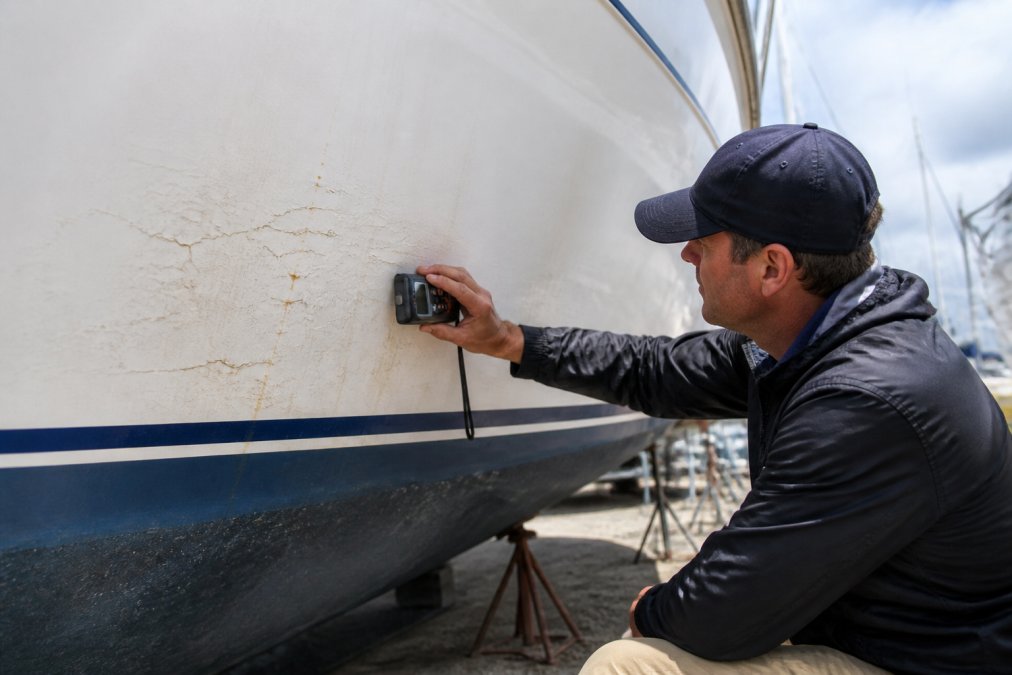
Gelcoat is the protective outer layer of fiberglass. Fine hairline cracks are cosmetic, but larger cracks indicate underlying fiberglass damage or structural stress. Run your fingers over cracks to feel if they're surface-level or if the fiberglass beneath has delaminated.
Osmotic blistering appears as small bubble-like formations on the hull, usually below the waterline. These blisters form when water penetrates the gelcoat and reacts with resins in the fiberglass. A few blisters might be manageable, but extensive blistering signals that water has compromised the entire hull structure. Use your moisture meter to measure the hull at various points. Readings consistently above 20% indicate osmotic blistering or water intrusion. If you see significant blistering, get a professional assessment before proceeding.
Transom tap test and soft spots
The transom is the vertical structure at the stern that supports the engine. Tap it methodically with a small hammer or coin, listening for changes in sound. A solid transom produces a crisp, clear tone. A soft spot, where water has compromised the wood or fiberglass core, produces a dull, hollow sound.
Pay special attention to areas around the engine mounting bolts, where vibration and stress create weak points. If you detect soft spots, use your moisture meter to confirm water intrusion. A compromised transom is expensive to repair and affects the boat's structural integrity and resale value.
Engine Performance and Service Records
The engine is the heart of your yacht. High engine hours, poor maintenance, or mechanical problems can cost tens of thousands of dollars to fix.
Reviewing engine hours and maintenance history
Marine engines are designed for specific operating hours before major overhauls become necessary. A well-maintained diesel engine might run reliably for 5,000 hours or more. Gasoline engines typically reach 2,000-3,000 hours before significant wear. However, how the engine was operated and maintained matters more than raw numbers.
Look for consistency in maintenance. Engines that receive regular oil changes, filter replacements, and seasonal inspections show up in the service records. If the boat has 2,000 engine hours but maintenance records only cover the last 500 hours, that's a problem. Cross-reference the reported engine hours with the service records. If the owner claims 1,500 hours but the engine's hour meter shows 2,200 hours, something's off.
Fluid analysis and mechanical health indicators
Before you start the engine, check the fluid levels and condition. Pull the dipstick and examine the oil. Fresh oil is translucent amber or brown. Dark, gritty oil indicates the engine hasn't been serviced recently. Milky or foamy oil suggests water contamination, a sign of internal engine problems.
Check the coolant level and color. Coolant should be bright green, pink, or orange. Rusty or discolored coolant indicates corrosion inside the cooling system. Look for fluid leaks under the engine. Oil weeping from gaskets is normal on older engines, but active dripping indicates failing seals. Coolant leaks, transmission fluid leaks, and fuel leaks are serious and require immediate attention.
Electrical Systems and Navigation Electronics
Modern yachts depend on reliable electrical systems. Corroded wiring, failed batteries, and malfunctioning electronics can leave you stranded or unable to navigate safely.
Battery bank condition and corrosion
Examine the battery bank carefully. Look for corrosion on the terminals, white, blue, or green crusty deposits indicate acid leakage and poor maintenance. Check the battery date codes. Marine batteries typically last 3-5 years in saltwater environments. If the batteries are older than 5 years, budget for replacement soon.
Inspect the battery cables for damage, fraying, or loose connections. Poor connections increase electrical resistance and reduce system reliability. Look for signs of water intrusion in the battery compartment.
Navigation electronics and through-hull fittings
Test all navigation electronics: GPS, chartplotter, autopilot, radar, and fish finder. Ask the seller to power them on and verify they function. Electronics that haven't been used in months may have failed capacitors or corroded connections.
Inspect through-hull fittings, the seacocks and valves that allow water to flow in and out of the hull. These are critical safety components. Look for corrosion, leaks, or cracks. Test each seacock to ensure it opens and closes smoothly. Check the condition of hoses connected to through-hull fittings. Marine hoses degrade over time, becoming brittle and prone to splitting. If hoses are original and the boat is more than 10 years old, assume they need replacement.
Signs of Water Damage in Boats: What to Look For
Water damage is the silent killer of preowned yachts. It hides inside walls, under cushions, and in structural cavities until it becomes catastrophic.
Bilge condition and moisture meter readings
The bilge is the lowest point inside the hull where water naturally collects. Open the bilge access hatch and look inside. A clean, dry bilge is a good sign. A bilge with standing water, sludge, or oily residue indicates the boat has water intrusion problems or the owner doesn't maintain the vessel properly.
Smell the bilge. A fresh, clean smell is normal. A musty, moldy smell indicates moisture and mold growth, signs of chronic water intrusion. Use your moisture meter throughout the interior. Measure the cabin sole (floor), walls, and areas around windows and hatches. Readings above 15% in areas that should be dry indicate water intrusion.
Underlying neglect and rot indicators
Look for soft spots in the cabin sole by pressing down with your heel. A solid cabin floor is firm and doesn't flex. Soft spots indicate rot in the underlying structure.
Inspect wooden trim, cabinetry, and door frames for soft wood, discoloration, or peeling varnish. Press your fingernail into wooden surfaces. If it dents easily, the wood is rotting. Check around windows, hatches, and deck penetrations for sealant failure. Cracks or gaps in sealant allow water to penetrate. Inspect the headliner (interior ceiling) for water stains, sagging, or discoloration.
Interior Upholstery and Cushion Condition Assessment
The interior tells you how the previous owner treated the boat. Inspect cushions and upholstery for mold, mildew, stains, or tears. Press on cushions to feel for firmness. Old foam deteriorates and becomes lumpy or soft.
Check galley appliances for functionality and corrosion. Test the stove, refrigerator, and any other built-in appliances. Inspect the head (bathroom) plumbing for leaks, corrosion, or blockages. Ask the seller to demonstrate that the toilet, sink, and shower function properly. Test lighting throughout the interior. Non-functional lights might be simple bulb replacements, but they could indicate corroded wiring or failed fixtures.
Hiring a Certified Marine Surveyor for Professional Evaluation
A certified marine surveyor brings professional expertise and liability insurance that protects you.
What a marine survey includes
A comprehensive marine survey examines the hull, deck, engine, electrical systems, plumbing, safety equipment, and interior condition. The surveyor produces a detailed written report with photographs documenting any damage, defects, or areas of concern. This report becomes your negotiating tool.
A reputable surveyor is certified by organizations like the American Society of Marine Surveyors (ASMS) or similar bodies. Hire only surveyors with current certifications and professional liability insurance.
Marine survey cost and timeline
The cost of a marine survey depends on the yacht's size, age, and condition. Surveys typically range from $1,500 to $5,000 or more for larger vessels. Schedule the survey after you've done your initial inspection and preliminary assessment. The surveyor will need full access to the engine compartment, bilge, electrical panels, and all storage areas.
Yacht Sea Trial Checklist: Testing Performance on Water
A sea trial is your chance to test the yacht's performance and handling. Many problems become obvious only when the boat is underway.
Engine responsiveness and fuel consumption
Start the engines and listen for smooth operation. The engine should start without excessive cranking and settle into a steady idle. Any knocking, grinding, or unusual noises suggest mechanical problems.
Accelerate gradually and listen for changes in engine sound. A healthy engine accelerates smoothly without hesitation. Sputtering, backfiring, or loss of power indicates fuel system problems, ignition issues, or internal engine damage.
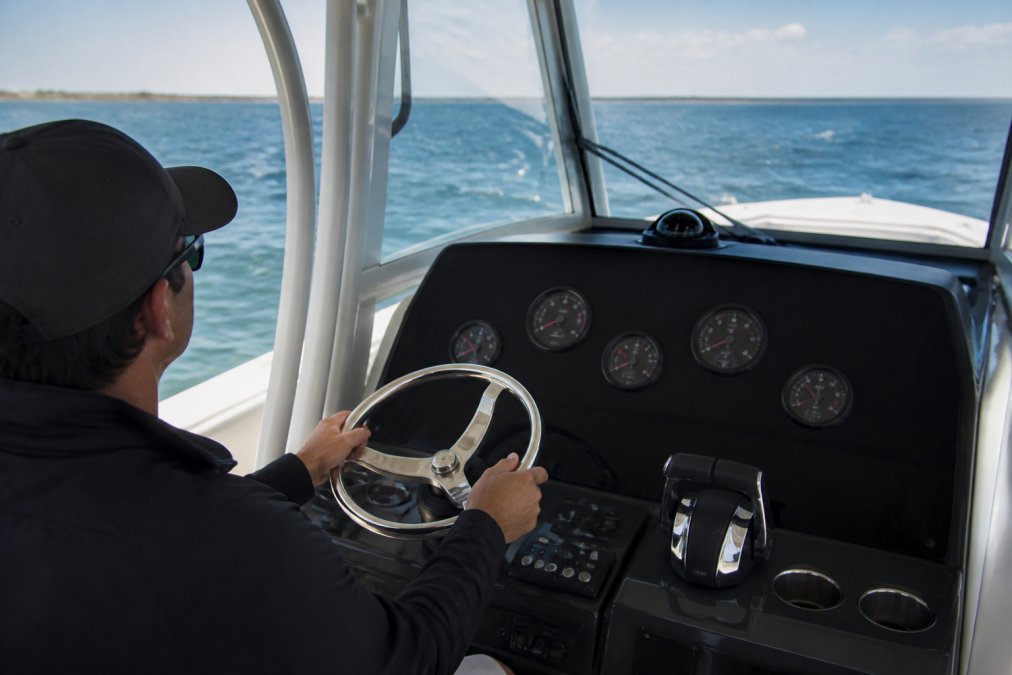
Monitor engine gauges throughout the sea trial. Oil pressure should be steady and within the manufacturer's specifications. Engine temperature should stabilize at normal operating levels.
Steering, propeller condition, and exhaust system
Test the steering at various speeds. The helm should respond smoothly and predictably. Heavy or sluggish steering suggests hydraulic problems, worn steering cables, or propeller issues.
Observe the exhaust system during the sea trial. Exhaust should exit cleanly from the transom without excessive smoke or steam. White smoke might indicate water in the fuel or cylinders. Black smoke suggests rich fuel mixture or incomplete combustion. Inspect the propeller visually before and after the sea trial. Look for corrosion, bent blades, or barnacle growth.
| Inspection Area | What to Check | Red Flags | Timeline |
|---|---|---|---|
| Hull & Deck | Gelcoat, blistering, cracks | Osmotic blistering, soft spots, delamination | 30-45 minutes |
| Engine | Hours, maintenance records, fluid condition | High hours with poor maintenance, dark oil, leaks | 20-30 minutes |
| Electrical | Battery condition, through-hull fittings, electronics | Corroded terminals, non-functional systems, stuck seacocks | 20-30 minutes |
| Interior | Water damage, rot, upholstery, appliances | Mold, soft spots, stains, non-functional systems | 30-45 minutes |
| Sea Trial | Engine response, steering, propeller, exhaust | Unusual noises, sluggish steering, excessive smoke | 60-90 minutes |
The difference between buying a reliable preowned yacht and inheriting someone else's problems comes down to thoroughness. You can't inspect every component yourself, but you can learn to spot the warning signs that indicate when professional help is needed. A certified marine surveyor brings expertise and documentation that protects your investment, but your preliminary inspection determines whether the boat is worth surveying at all.
Primo Yachts of Palm Beach has guided buyers through this process since 2009. Our team understands center console and offshore fishing vessels inside and out. We help clients identify quality vessels, negotiate fair prices based on condition, and avoid costly mistakes. Whether you're a first-time buyer or an experienced captain, our specialized expertise ensures you're making an informed decision.
The investment in a thorough inspection, your time, the moisture meter, the surveyor's fee, is insurance against far more expensive problems down the road. Start your yacht purchase with confidence by knowing exactly what you're buying.
Frequently Asked Questions
What are the most common red flags when inspecting a used yacht?
Watch for soft spots in the hull (detected by tap testing), visible cracks in the gelcoat, osmotic blistering, signs of water damage or rot in the bilge, corroded through-hull fittings, and mismatched or worn upholstery. Engine hours that seem inconsistent with the vessel's age, missing service records, and poor electrical connections are also warning signs. These indicate deferred maintenance or structural issues that will be expensive to repair.
Do I need a professional marine surveyor for a preowned yacht purchase?
Yes, hiring a certified marine surveyor is essential for any significant purchase. A professional marine survey provides an independent, detailed assessment of hull integrity, engine condition, electrical systems, and structural damage that you cannot reliably evaluate alone. The surveyor uses specialized tools like moisture meters and produces a formal report documenting findings. This protects your investment and provides documentation for insurance and financing purposes.
How much does a marine survey cost and how long does it take?
Marine survey costs depend on vessel size, age, and complexity. Pricing varies based on the surveyor's experience and your location. Contact local marine surveyors in South Florida for current quotes. Most surveys take one to two days to complete. The investment is worthwhile because the findings often reveal issues that justify renegotiating the purchase price or walking away from a problematic vessel entirely.
What should I look for during a yacht sea trial to check for water damage and mechanical issues?
During a sea trial, test engine responsiveness at various throttle levels, monitor fuel consumption, and listen for unusual noises. Check steering responsiveness and propeller performance. Inspect the exhaust system for discoloration or leaks. Return to the dock and examine the bilge for water accumulation or debris. Signs of water damage include staining, soft areas, or musty odors. Engine overheating, sluggish acceleration, or excessive smoke indicate mechanical problems requiring further investigation by a marine mechanic.
This article was written using GrandRanker