 how-to
How to Hire Concierge Yacht Brokerage Services
Table of Contents
- What Concierge Yacht Brokerage Services Actually Provide
- Hiring a Yacht Broker: Tips for Finding the Right Specialist
- Understanding Yacht Brokerage Commission Rates and Fee Structures
- Conducting Yacht Purchase Due Diligence: A Practical Checklist
- Evaluating Specialized Expertise and Market Knowledge
- Onboard Services and Concierge Support During Ownership
- Conclusion
Last Updated: August 7, 2026
What Concierge Yacht Brokerage Services Actually Provide
When you're ready to buy or sell a premium yacht, a concierge yacht brokerage does far more than list boats online. These firms handle the entire ecosystem of yacht ownership, from sourcing the right vessel to managing logistics, coordinating crews, and arranging shore-side support that keeps your boat running flawlessly. At Primo Yachts of Palm Beach, we've spent over 15 years helping South Florida's most discerning yacht owners navigate this complex market with specialized expertise focused specifically on center console yachts and offshore fishing vessels.
A concierge yacht brokerage combines traditional brokerage services with white-glove concierge support. This means the same team managing your purchase also coordinates maintenance, provisioning, itinerary planning, and vendor relationships. Unlike general brokers who handle transactions and disappear, concierge services remain embedded in your ownership experience, anticipating needs before they become problems.
The core services include vessel acquisition (buying and selling), market analysis and valuations, purchase due diligence, crew coordination, maintenance scheduling, provisioning and logistics, itinerary curation, and access to a global network of specialized service providers. For sellers, this means aggressive marketing tailored to your vessel's specific market segment. For buyers, it means expert guidance through the evaluation process, negotiation support, and transparent communication about vessel condition and fair market value.
Hiring a Yacht Broker: Tips for Finding the Right Specialist
Finding the right yacht broker starts with understanding what you actually need. Many boat owners make the mistake of choosing based on size or brand recognition alone. Instead, evaluate brokers on specialization, market knowledge, and whether they truly understand your vessel type.
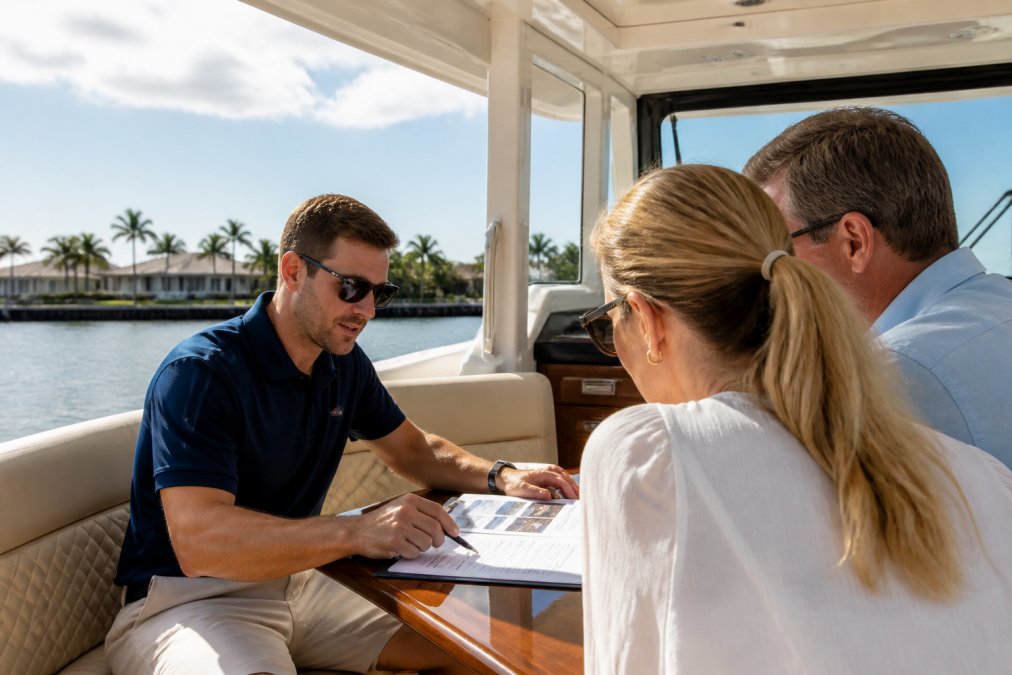
Start by identifying brokers who specialize in your specific market segment. Center console fishing yachts require different expertise than motor yachts or sailing vessels. A broker who knows the offshore fishing community, the actual performance characteristics you care about, the sea states you'll encounter, the fuel efficiency trade-offs, is worth far more than a generalist who can show you listings.
Ask directly about their experience with your vessel type. How many center consoles have they sold in the past two years? What do they know about hull design, engine reliability, and offshore capability? If they can't speak intelligently about these specifics, move on. The best brokers can discuss why a particular boat handles 3-foot seas differently than its closest competitor.
Verify their market access. A broker's value depends partly on their buyer network. Ask whether they have direct relationships with serious buyers in your price range. Do they attend major fishing tournaments and yacht shows? Do they advertise beyond their own website? A small, specialized brokerage with deep relationships often reaches more qualified buyers than a large firm with passive online presence.
Request references from recent sellers. Ask specifically whether the broker moved their boat faster than expected, whether communication was transparent throughout the process, and whether they handled unexpected issues professionally. A broker willing to connect you with past clients has confidence in their track record.
Understanding Yacht Brokerage Commission Rates and Fee Structures
Commission structures in yacht brokerage vary significantly, and transparency matters more than you might expect. Understanding how your broker is compensated helps you evaluate whether their incentives align with yours.
Most yacht brokers work on commission, typically ranging from 5-10% of the sale price depending on vessel size, market conditions, and whether the broker represents the buyer, seller, or both. Larger vessels sometimes command lower percentages due to higher absolute dollars. Some brokers charge flat fees for specific services like valuations or purchase consulting, while others bundle everything into a commission-based model.
The critical distinction is whether your broker represents you exclusively or works both sides of a transaction. A dual-agent broker (representing both buyer and seller) has a structural conflict of interest, they earn the same commission regardless of whether you get fair market value. An exclusive buyer's agent or seller's agent aligns their incentive with yours. Ask directly: "Who do you represent in this transaction?"
Hidden costs emerge in several areas. Some brokerages charge for yacht surveys, documentation preparation, or title transfer coordination. Others build these costs into their commission. Ask for a written fee schedule before signing any agreement. The phrase "reasonable out-of-pocket expenses" is too vague, you need specifics.
Concierge yacht brokerage services often include additional fees for ongoing support. Maintenance coordination, crew management, and provisioning logistics may be bundled into an annual retainer or charged à la carte. Pricing depends on quantity, dates, and delivery, and readers should be directed to Primo Yachts of Palm Beach's website for current prices or a quote.
| Service Type | Typical Structure | What to Clarify |
|---|---|---|
| Vessel sales | 5-10% commission | Who does broker represent? |
| Vessel purchase consulting | Flat fee or hourly | What's included in the scope? |
| Ongoing concierge support | Annual retainer or monthly fee | What services are covered? |
| Maintenance coordination | Per-service or bundled retainer | Are vendor markups included? |
| Provisioning and logistics | Commission on vendor services or flat fee | Who selects vendors? |
Conducting Yacht Purchase Due Diligence: A Practical Checklist
Buying a yacht without thorough due diligence is like buying a house without an inspection. The stakes are enormous, and problems discovered after closing become your responsibility. A competent concierge yacht brokerage will guide you through this process systematically.
Start with the vessel's documentation and ownership history. Verify the title is clear, check for liens or claims, and confirm the hull identification number matches all paperwork. Request the maintenance logs for the past five years. These records reveal whether the previous owner maintained the engines, generators, and critical systems properly. Gaps in maintenance history are warning signs.
Have a professional marine surveyor inspect the hull, deck, superstructure, and interior. This isn't optional, it's non-negotiable. The surveyor should evaluate structural integrity, osmotic blistering on the hull, delamination in composite materials, and corrosion in metal components. Ask the surveyor to test all systems: electrical, plumbing, HVAC, navigation electronics, and engine controls. A comprehensive survey can cost between $20 to $35 per foot of the vessel, with additional costs for haul-out and engine inspections. but it can save you from catastrophic expenses.
Engine and mechanical systems deserve specialized attention. Request a haul-out inspection where the vessel is lifted from the water. This allows examination of the hull bottom, through-hull fittings, and propeller condition. Have a marine engineer perform a sea trial to evaluate engine performance, transmission response, and fuel consumption. Listen for unusual noises or vibrations that suggest bearing wear or internal damage.
Check the vessel's compliance history with U.S. Coast Guard regulations. Request documentation of any safety violations, equipment deficiencies, or incident reports. Confirm the vessel meets current requirements for life jackets, fire extinguishers, navigation lights, and emergency signaling equipment. For fishing vessels, verify compliance with specific fishing industry regulations.
Evaluate the electronics and navigation systems. Modern yachts depend on integrated systems for GPS, radar, autopilot, and engine monitoring. Ask which systems are original equipment and which have been upgraded. Original systems may be outdated; upgrades may be incompatible with newer technology. Budget for potential electronics modernization.
Evaluating Specialized Expertise and Market Knowledge
Not all yacht brokers possess equal expertise. The difference between a generalist and a specialist becomes apparent when discussing vessel-specific details, market trends, and realistic pricing.
A specialist in center console yachts understands the nuances that matter to serious fishermen and offshore cruisers. They know which hull designs perform best in specific sea conditions, which engine packages deliver optimal fuel efficiency, and how hull age affects resale value. They can articulate why a 2018 model commands a different price than a 2022 equivalent, beyond simple depreciation. This knowledge comes from years of handling similar vessels, not from a database of listings.
Market knowledge includes understanding seasonal demand patterns, regional preferences, and emerging trends. Fishing yachts command different prices during tournament season than during off-season. Certain hull designs trend toward higher values in specific regions. A broker who understands these dynamics can time your sale strategically and position your vessel in the market where it will attract the most serious buyers.
Ask potential brokers how they stay current with market conditions. Do they attend industry conferences? Participate in fishing tournaments and yacht shows? Maintain relationships with captains and fishing guides who influence buyer decisions? Read technical publications about marine engineering and vessel design? The best brokers invest continuously in their knowledge base.
Evaluate their transparency about market realities. A good broker tells you when your asking price is unrealistic, when the market favors buyers over sellers, and when your vessel has characteristics that limit its appeal. They offer honest assessments, not just optimistic projections. If a broker promises to sell your boat for 20% above comparable sales, that's a red flag, they're either incompetent or misleading you.
Request their analysis of comparable sales. How many similar vessels sold in the past six months? What were the actual sale prices? How long did they take to sell? This data should inform your pricing strategy. A broker who can't provide this analysis lacks market intelligence.
Onboard Services and Concierge Support During Ownership
The purchase is just the beginning. True concierge yacht brokerage services extend throughout your ownership, handling the operational complexity that most boat owners underestimate.
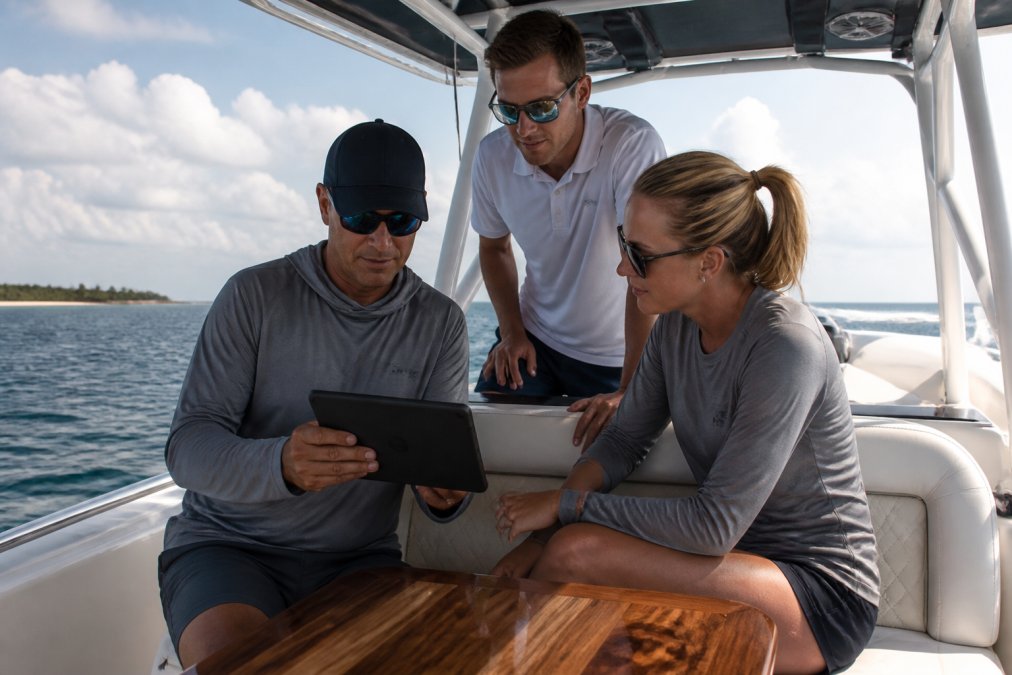
Onboard concierge support means having a dedicated team managing requests, coordinating logistics, and solving problems before they disrupt your enjoyment. This includes itinerary planning tailored to your preferences, whether you're fishing offshore, cruising to the Bahamas, or hosting clients. The concierge team coordinates with marinas, fuel docks, restaurants, and service providers along your planned route, ensuring everything is arranged before you arrive.
Guest request management becomes critical for high-use vessels. A professional concierge team handles special requests, provisioning preferences, entertainment arrangements, dietary accommodations, so your captain focuses on vessel operation and safety. They maintain detailed preference profiles for regular guests, remembering their favorite beverages, cabin configurations, and entertainment preferences.
Maintenance coordination prevents the chaos that emerges when vessels sit between uses. Regular systems checks, engine start-ups, battery conditioning, and preventive maintenance happen on schedule without you managing contractors. The concierge team maintains relationships with trusted service providers, negotiates fair pricing, and oversees quality. They track maintenance history and flag upcoming service intervals before problems develop.
Provisioning and logistics support handles everything from fuel and water to specialty provisions and equipment. For fishing vessels, this includes tackle provisioning, ice supply, and coordination with fishing guides. For cruising yachts, it means arranging provisioning at your destination ports. A professional concierge team knows local suppliers, understands quality standards, and manages vendor relationships.
Crew coordination becomes essential for larger vessels or complex operations. The concierge team communicates with your captain and crew about scheduling, training requirements, and operational needs. They arrange crew accommodations, manage payroll coordination, and handle the administrative complexity of marine employment.
Regulatory compliance and documentation support keeps your vessel operating legally. The concierge team tracks Coast Guard requirements, insurance renewals, registration updates, and any regulatory changes affecting your vessel type. They maintain documentation files, coordinate with maritime attorneys when needed, and ensure compliance with fishing regulations if applicable.
Access to a global network of service providers is where concierge value becomes tangible. Instead of researching unfamiliar vendors in new ports, you have trusted relationships established by your concierge team. Whether you need emergency engine repair in the Bahamas, specialized fishing equipment in Florida, or hull maintenance in a distant port, the concierge network delivers reliable service without the research and risk.
Hiring concierge yacht brokerage services transforms yacht ownership from a logistical nightmare into a manageable experience. The right broker doesn't just sell you a boat, they become your partner in navigating the complexity of premium vessel ownership, managing the details that allow you to actually enjoy your investment. At Primo Yachts of Palm Beach, we specialize in center console yachts and offshore fishing vessels, combining our market expertise with comprehensive concierge support that extends throughout your ownership. Our focus on specialized knowledge ensures you receive guidance from brokers who understand your vessel type intimately, from purchase through years of ownership. To understand industry best practices, and connect with a broker who prioritizes transparent communication and long-term relationships over transaction volume.
Frequently Asked Questions
What is the difference between a standard yacht broker and a concierge yacht brokerage service?
A standard yacht broker focuses primarily on listing and selling vessels. A concierge yacht brokerage service goes further, offering bespoke experiences, itinerary planning, crew coordination, provisioning, and 24/7 shore-side support. Concierge services manage guest requests, source rare luxury items, and handle vessel maintenance logistics, essentially providing luxury lifestyle management beyond the sale. Specialized brokers in the center console market, for example, understand the specific needs of fishing vessels and offshore conditions in ways general brokers cannot.
How much do concierge yacht brokerage services typically cost?
Concierge yacht brokerage pricing depends on vessel size, service scope, charter frequency, and management complexity. Commission structures typically range from 5-10% on sales, with management fees calculated as a percentage of the vessel's value or as fixed monthly programs. Charter-related concierge services may charge weekly rates or daily fees. Pricing varies significantly based on your specific needs. Contact Primo Yachts of Palm Beach directly for a custom quote tailored to your vessel and requirements.
What should I look for when hiring a yacht broker?
Evaluate brokers on specialized expertise in your vessel type, years of market experience, and verifiable track record with similar vessels. Ask about their global network of service providers, crew coordination capabilities, and 24/7 availability. Request references from recent clients and confirm they understand regulatory compliance and maritime logistics. For center console and fishing vessels, confirm hands-on knowledge of offshore conditions and vessel performance. Transparency about commission rates and fee structures is essential, avoid brokers with hidden fees or unclear pricing models.
What is a typical yacht brokerage fee or commission rate?
Standard yacht brokerage commissions typically range from 5-10% on the sale price, depending on vessel size and market conditions. Some brokers charge flat fees instead of percentages. Management fees for concierge services often run 5-15% of annual vessel value or are structured as monthly programs with fixed costs. Charter-related services may include weekly rates or daily fees plus a percentage of charter revenue. Always request a detailed fee breakdown before engaging a broker, and confirm whether additional costs exist for provisioning, crew coordination, or specialized services.
This article was written using GrandRanker