 ultimate-guide
Drone Videography for Yacht Listings: Benefits That Sell
Last Updated: November 4, 2026
Quick Summary
Professional drone videography lets yacht buyers see scale, deck layout and on-water character that static photos cannot show. Aerial footage reveals how a hull sits on the water and how the spaces connect, which helps serious buyers decide whether to book a viewing.
- Video makes up over 82% of global internet traffic, so buyers expect motion.
- Aerial views from 100 to 150 feet reveal a 60-foot hull's full beam and deck run.
- Shoot in the first two hours after sunrise or last two before sunset.
- Most effective listing reels run between 60 and 120 seconds.
- Commercial drone flights require a current FAA Part 107 remote pilot certificate.
Table of Contents
- Why Static Photos Fall Short for High-Value Yachts
- Showcasing Yacht Scale, Design and Layout From Above
- Capturing the On-Water Experience That Buyers Are Paying For
- Best Practices for Yacht Listing Videos
- Yacht Listing Video Duration: How Long Is Long Enough
- FAA Part 107 Requirements for Yacht Videography
- Booking Aerial Footage for Your Next Listing With Primo Yachts
- Frequently Asked Questions
Why Static Photos Fall Short for High-Value Yachts
Static photos show a boat. Video shows a buyer what it feels like to be aboard. For a yacht priced in the millions, that difference often decides whether a serious buyer books a viewing or scrolls past. At Primo Yachts, we have built our listing approach around that gap, and the drone videography we commission is central to it.
Video now dominates how people consume content online. Ocean Pacific Yachts analysis of video marketing for yacht listings reports that video makes up over 82% of global internet traffic, which means a buyer researching a luxury vessel is already expecting motion, not a gallery of stills.
Photos freeze a moment and force the buyer to imagine the rest. A static image cannot show how a hull sits on the water, how the transom opens onto the swim platform, or how the sightline runs from the helm to the bow. Those are exactly the questions a buyer asks before committing. Video answers them in seconds.
Quality matters as much as format. Buyers of premium center consoles and motor yachts are comparing listings side by side, and a low-resolution or poorly framed clip signals a seller who is not serious. Professional aerial footage, shot at the right altitude and light, communicates the same care the vessel itself was built with.
Showcasing Yacht Scale, Design and Layout From Above
The most useful thing a drone can do is reveal scale. A 60-foot hull looks compact in a dock photo taken from the pier. From 100 to 150 feet overhead, the same boat shows its full beam, deck run and the way the superstructure flows into the cockpit.
Aerial perspective also exposes layout in a way ground-level photography cannot. Buyers can see how the foredeck connects to the main deck, where the fishing cockpit sits relative to the bridge, and how much usable space the boat actually offers. For a buyer who has never walked the deck, that spatial read is the difference between curiosity and commitment.
Design details benefit too. Teak trim, paint finish, hardtop lines and the symmetry of a well-drawn bow are easier to appreciate when the camera moves slowly across them. We plan each shot around the features that differentiate the vessel, not around a generic checklist.
Capturing the On-Water Experience That Buyers Are Paying For
Buyers of high-performance boats are not paying for a hull alone. They are paying for the run out to the reef, the sunrise departure and the afternoon anchored in clear water. Drone footage is the only practical way to show that experience from a buyer's point of view, and it is also the part of a listing that does the most work before a buyer ever calls.
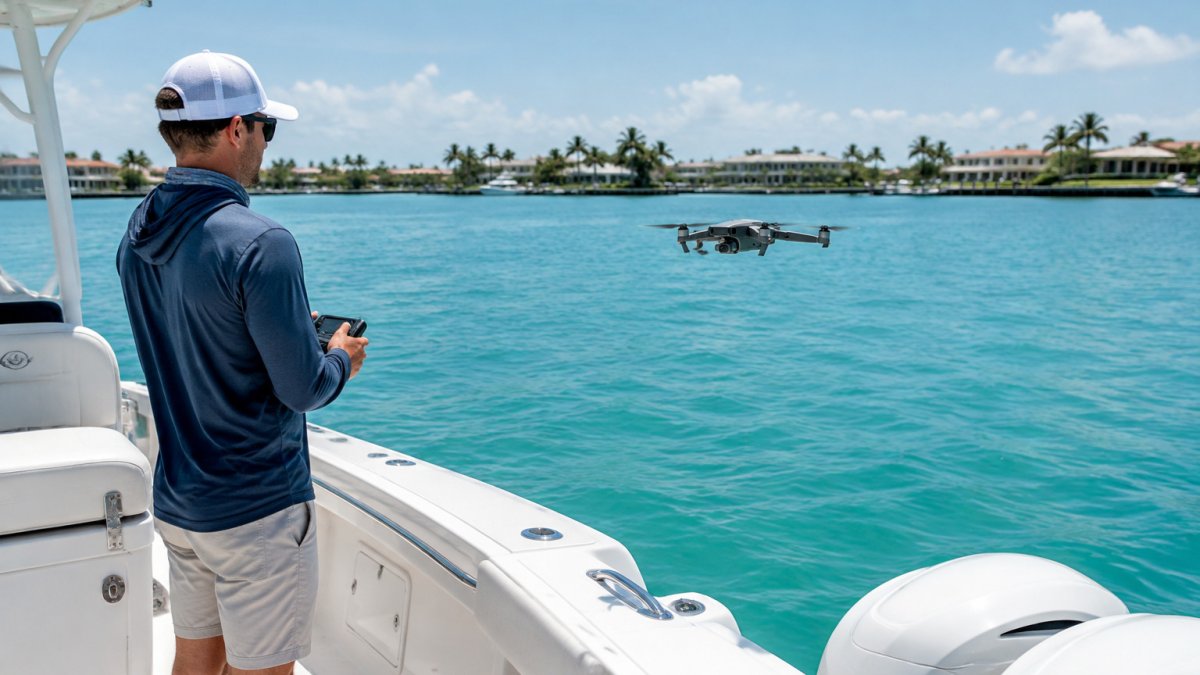
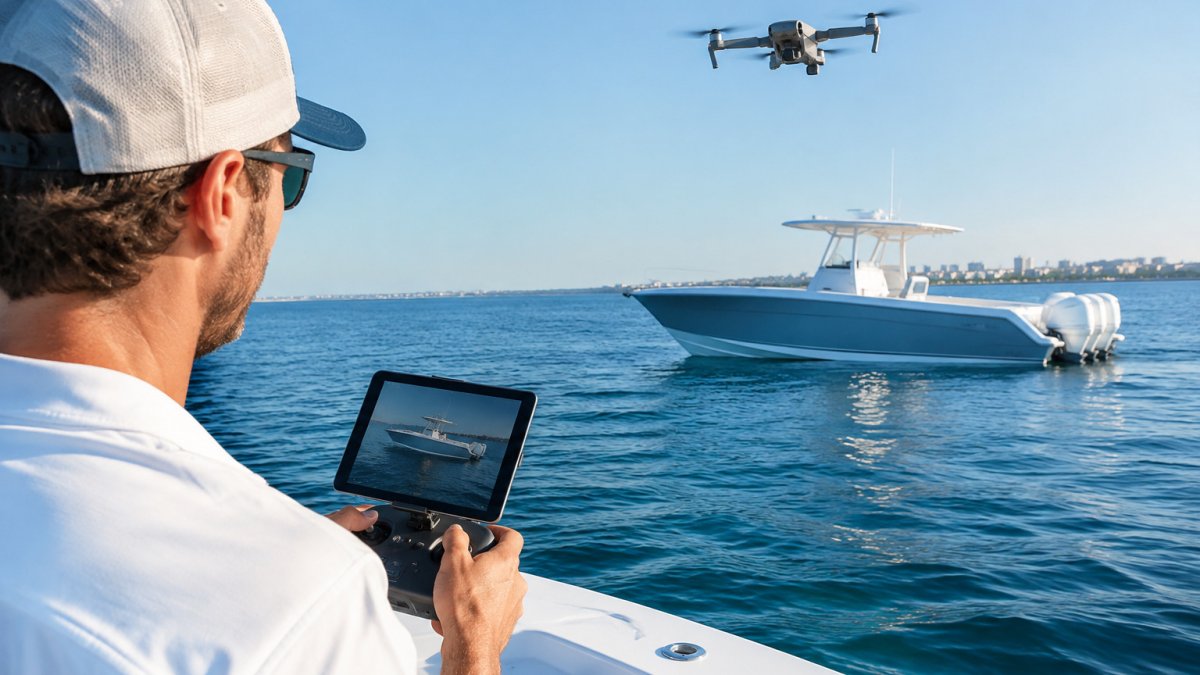
A professional pilot can follow the boat underway, circle it at anchor and rise above it at sunset. That footage conveys speed, sea state and the lifestyle attached to the vessel. It also makes the surrounding waterway part of the listing, which matters for buyers who plan to fish or cruise from South Florida.
The trade-off to plan for. Drone work near moving vessels demands skill. Launch and recovery on a deck in motion carry real risk, and an improperly managed flight can damage a listing or the boat itself. Water glare, spray on the lens and shifting light over a long run all degrade footage that looked fine on the controller screen. This is why we use experienced operators rather than treating aerial footage as a casual add-on, and why we review the raw footage before the edit rather than after.
Best Practices for Yacht Listing Videos
Strong listing videos follow a few disciplined habits:
Reach out now to see how we can help with your boating needs! →
- Shoot in the first two hours after sunrise or the last two before sunset, when light is low and warm
- Plan a sequence before launch: exterior hero shot, profile orbit, deck walkthrough, on-water run
- Keep movements slow and steady so buyers can read the design
- Capture the boat in clean water and free of clutter on the dock
- Pair aerial clips with close-up detail shots of hardware, electronics and finishes
The article recommends a few disciplined habits for shooting and planning yacht listing videos.
| Practice | Detail | Why it matters |
|---|---|---|
| Shoot timing | First two hours after sunrise or last two before sunset | Low, warm light |
| Shot sequence | Exterior hero, profile orbit, deck walkthrough, on-water run | Planned before launch |
| Camera movement | Slow and steady | Lets buyers read the design |
| Water and dock | Clean water, no dock clutter | Keeps focus on the vessel |
| Detail pairing | Aerial clips plus close-up hardware and finish shots | Adds finish-level detail |
Yacht Listing Video Duration: How Long Is Long Enough
There is no single correct length, but most effective listing videos run between 60 and 120 seconds for the main reel. That is long enough to show scale, layout and on-water character without losing a buyer who is watching on a phone between meetings.
Shorter cuts of 15 to 30 seconds work well for social posts and retargeting. A longer walkthrough of two to four minutes suits a buyer already serious about a specific vessel and willing to study the details. We typically produce all three versions from one shoot so each channel gets the right cut.
FAA Part 107 Requirements for Yacht Videography
Commercial drone work in the United States is governed by the Federal Aviation Administration. Under FAA Part 107 small unmanned aircraft rules, anyone flying a drone for business purposes, including filming a yacht for a sales listing, must hold a current Part 107 remote pilot certificate. The certificate confirms the pilot understands airspace classes, altitude limits, right-of-way rules and the restrictions on flight over people and moving vehicles. UAV Coach overview of Part 107 certification summarizes how the testing and recertification process works.
What most listing guides skip is that a yacht shoot is not a backyard flight. Three operational layers sit on top of the certificate:
- Airspace around marinas and ports. Coastal marinas can sit inside or adjacent to controlled airspace, and a Part 107 pilot must check current airspace and any active notices before launch.
- Operations over water and over people. Part 107 limits flight over people who are not directly participating in the operation, and operating from a moving vessel adds launch, recovery and line-of-sight challenges.
- Insurance and waivers. Ask for a current certificate of insurance showing aviation liability coverage, and confirm the policy responds to commercial operations rather than hobby flight.
Watch out: a pilot who holds a Part 107 certificate but has never launched from a boat deck may still struggle with the recovery, and a damaged drone or a scuffed gelcoat is a listing problem, not just an insurance claim. Confirm both the certificate and the marine operating experience before you book.
For brokers, the practical takeaway is to build compliance into the listing timeline. Confirm the operator's certificate and insurance at the listing appointment, and share the marina address and proposed shoot window early so airspace can be checked.
Booking Aerial Footage for Your Next Listing With Primo Yachts
If you are preparing a vessel for sale in South Florida, we can arrange professional aerial footage as part of the listing process. Our team coordinates the shoot, the sequence and the edit so the finished reel reflects the boat's scale, design and on-water character. Pricing depends on the vessel, the locations and the deliverables, so visit the Primo Yachts website for current pricing or to request a quote. book a listing consultation to discuss your vessel and what a professional aerial shoot would involve.
Frequently Asked Questions
Do you need a license to sell drone footage?
Yes, if the footage is produced for commercial purposes such as a yacht listing. Under FAA rules in the United States, commercial drone operations require the pilot to hold a Part 107 remote pilot certificate and to follow airspace and flight restrictions. A listing video shot for a brokerage counts as commercial use, so the pilot should hold the certificate and the drone should be registered with the FAA. Ask any videographer you hire to show proof of certification before you sign an agreement.
What are the FAA regulations for commercial drone operations over water?
Operations over water follow the same Part 107 framework as land operations, but pilots must still manage airspace classification, altitude limits and restricted zones near marinas and airports. Flying from a moving vessel adds risk, so experienced pilots plan takeoff and landing carefully and avoid people not involved in the shoot. A pilot who understands both airspace rules and maritime conditions reduces the chance of an incident during a listing shoot.
How does drone videography impact the time it takes to sell a yacht?
Aerial video gives prospective buyers a sense of the vessel's layout, scale and setting before they visit, which helps qualified buyers decide faster whether to request a showing. Primo Yachts can discuss how video fits into the marketing plan for a specific vessel.
What should yacht sellers look for when hiring a professional drone pilot?
Look for a Part 107 certificate, a portfolio of marine or waterfront work, and clear experience with takeoff and landing from moving vessels. Ask whether the pilot can deliver high-definition footage, edit for cinematic quality and provide the files in formats your listing platforms accept. Confirm insurance coverage and how the pilot handles weather delays. Pricing depends on the length of the shoot, the number of locations and the editing scope, so request a written quote from Primo Yachts or your chosen provider.
Whether you are selling a center console or a larger motor yacht, the right footage gives serious buyers a reason to act. Reach out now to see how we can help with your boating needs.