 how-to guide
Evaluating Yacht Marketing Photography Quality: A 2026 Guide
Table of Contents
- Why Yacht Marketing Photography Quality Directly Impacts Sales Velocity
- What You'll Need Before Evaluating Your Brokerage's Marketing Assets
- Step 1: Yacht Photoshoot Preparation, Auditing the Staging and Clutter Reduction
- Step 2: Evaluating Yacht Marketing Photography Quality, Technical Image Standards
- Step 3: Assessing Lighting Conditions, Time of Day, and Natural Light Use
- Step 4: Drone Yacht Photography, Evaluating Aerial and Cinematic Footage
- Step 5: Mobile-First Optimization and High-Resolution Imagery for Verified Listings
- Professional Yacht Photography Cost, What to Expect and How to Judge Value
Last Updated: August 1, 2026
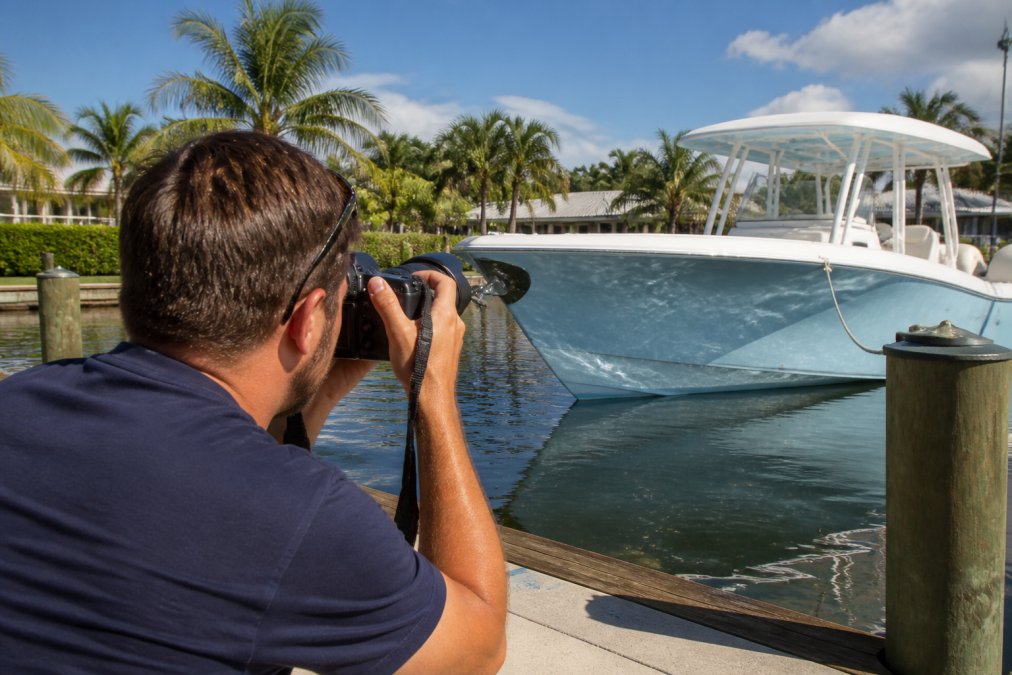
Evaluating brokerage yacht marketing photography quality is one of the most underappreciated factors in how fast a vessel sells and at what price. At Primo Yachts of Palm Beach, we've seen firsthand how exceptional yacht marketing photography generates immediate buyer interest, while identical vessels with mediocre images sit on the market for months. The difference isn't the boat. It's the visual story. Below, we'll show you exactly how to audit your brokerage's marketing assets against professional standards, step by step.
Buyer perception forms within seconds of viewing a listing. If those first images don't communicate vessel condition, luxury branding, and scale simultaneously, listing engagement drops before a buyer ever reads the specifications.
Why Yacht Marketing Photography Quality Directly Impacts Sales Velocity
Sales velocity is the speed at which a listed vessel moves from active to under contract. Yacht marketing photography quality is the single most controllable variable in that timeline. Listings with professional marine photography consistently attract more inquiries, shorter negotiation windows, and stronger opening offers than listings relying on amateur images.
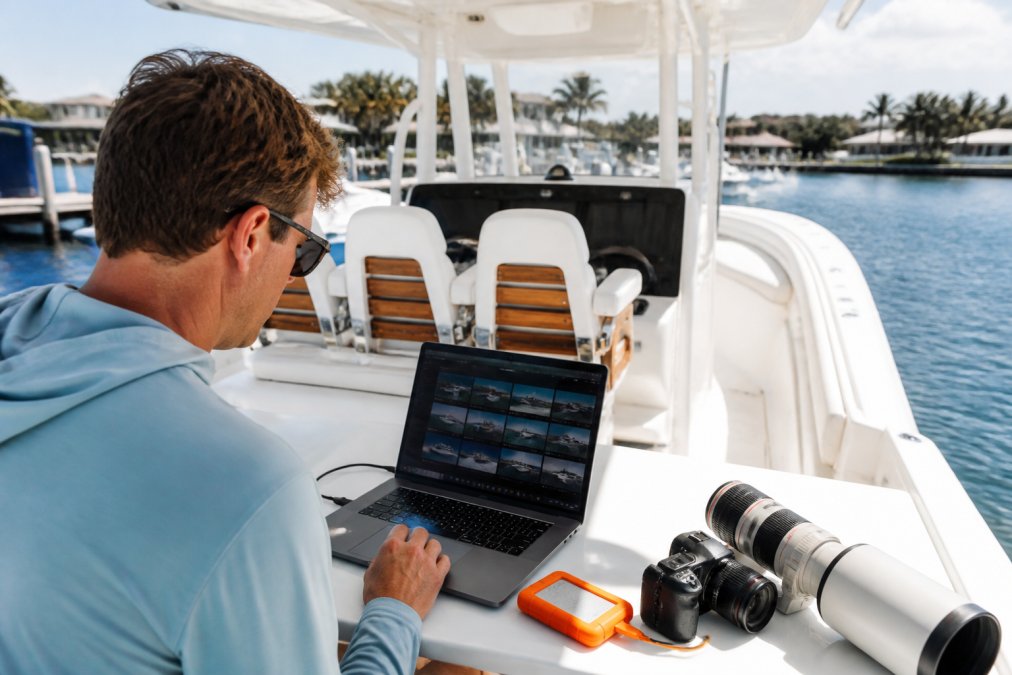
Affluent buyers shopping for premium center consoles or offshore fishing vessels make decisions based on digital assets before they ever set foot on a dock. If the listing presentation fails to communicate the vessel's true condition and character, qualified buyers self-select out.
According to National Association of Realtors research on visual marketing in property sales, listings with professional photography receive significantly more views and sell faster than those without. Strong yacht marketing photography communicates seriousness and builds the trust that moves buyers to schedule a sea trial.
What You'll Need Before Evaluating Your Brokerage's Marketing Assets
Pull up three to five comparable listings in your vessel class, length, and price range. This gives you an immediate visual benchmark more useful than any abstract standard. You'll also need access to your own listing's full image set in the highest resolution your brokerage uploaded.
Establishing a Baseline Benchmark for Your Vessel Class
Vessel class is the category defined by hull design, purpose, and size, such as center console, express cruiser, or offshore sportfish. Each class has visual conventions buyers expect to see satisfied. For center consoles and offshore fishing vessels, buyers expect to see the helm station, rod holders, livewells, and cockpit layout clearly. For express cruisers, the salon and sleeping quarters carry equal weight.
Step 1: Yacht Photoshoot Preparation, Auditing the Staging and Clutter Reduction
The most common failure in brokerage photography isn't technical. It's staging. A properly prepared vessel should look like a showroom model. Personal artifacts, fishing gear, coolers, dock lines, and fenders distract from features and date the images.
Interior Staging Checklist for Center Consoles and Offshore Vessels
Run through this checklist when auditing your brokerage's interior shots:
- Helm station is clear of personal items, sunglasses, hats, and loose electronics
- Upholstery is clean, free of visible stains, and properly positioned
- Bilge and storage compartments shown open are clean and organized
- Electronics are powered on and displaying clean screens where visible
- Livewells and coolers are closed or shown clean and empty
- All fishing rods, tackle bags, and personal gear are removed
- Grab rails and surfaces are wiped down with no water spots visible
Exterior Profile: Removing Personal Artifacts and Dock Distractions
The exterior profile shot defines buyer perception before any other image is viewed. It should show the vessel in open water or at a clean dock with no other boats, dock equipment, or marina infrastructure competing for visual attention.
A quality brokerage will schedule at-anchor photography or arrange for the vessel to be moved to an open-water shooting position. If your listing's hero shot shows a neighboring boat's stern or a fuel dock in the background, that's a staging failure.
Step 2: Evaluating Yacht Marketing Photography Quality, Technical Image Standards
Technical image quality moves from subjective to objective. There are measurable standards, and your listing's images either meet them or they don't.
Every image in a premium yacht listing should be sharp at full-screen display on a desktop monitor. Pixelation, motion blur, or soft focus on key features like the helm, engine compartment, or hull profile are disqualifying. High-resolution imagery is non-negotiable because buyers zoom in to examine gel coat condition, upholstery seams, and electronics brands.
Technical Checklist for Evaluating Raw Files and Post-Production Work
Requesting raw files reveals whether the photographer exposed correctly in-camera or relied on heavy post-production to salvage underexposed or overexposed shots. Excessive post-production creates unnatural color grading, blown-out highlights on white hulls, and crushed shadows in interior spaces.
Evaluate post-production work against these benchmarks:
| Image Element | Acceptable Standard | Common Failure |
|---|---|---|
| White hull exposure | Clean whites, no blown highlights | Overexposed hull losing gel coat detail |
| Interior shadow detail | Visible shadow areas without noise | Crushed blacks hiding upholstery condition |
| Color accuracy | True-to-life upholstery and teak tones | Oversaturated blues, artificial warmth |
| Horizon line | Level in all exterior shots | Tilted horizon suggesting amateur shooting |
| Wide-angle distortion | Minimal barrel distortion on interiors | Extreme fisheye making spaces look larger than reality |
| Sharpness | Crisp at 100% crop on key features | Soft focus on helm or engine bay |
Dynamic range handling is the most telling technical indicator. Marine environments combine bright sky, reflective water, and shaded interiors simultaneously. A photographer who manages this dynamic range either uses HDR blending subtly or exposes for the vessel and manages the background carefully. Aggressive HDR produces the artificial, over-processed look that signals low-quality post-production.
Photography Ethics and the Limits of Digital Manipulation
Digital manipulation in yacht marketing photography exists on a spectrum. Removing a dock line from a shot is standard practice and ethically sound. Digitally removing corrosion from a cleat, filling in a crack in the gel coat, or replacing an overcast sky with a dramatic sunset without disclosure is deceptive. According to FTC guidelines on deceptive advertising and digital alterations, marketing materials that create materially false impressions about a product's condition can constitute deceptive advertising under federal standards.
If a buyer arrives for a sea trial and the vessel looks meaningfully different from the listing images, the photography crossed an ethical line. Sellers should ask their brokerage directly whether images have been altered beyond standard color correction and exposure adjustment.
Step 3: Assessing Lighting Conditions, Time of Day, and Natural Light Use
Lighting separates competent marine photography from exceptional yacht marketing photography. Natural light at the right time of day does things that no amount of post-production can replicate.
The golden hours, roughly 45 minutes after sunrise and 45 minutes before sunset, produce warm, directional light that defines hull lines, creates depth in the cockpit, and renders water with texture and color. Midday shooting produces harsh overhead light that flattens the vessel's profile and turns white hulls into blown-out shapes with no detail.
Soft, directional shadows indicate correct time-of-day shooting. Harsh, straight-down shadows indicate midday shooting taken for convenience rather than quality. A quality photographer uses supplemental lighting or bounce flash to balance interior exposure with the exterior visible through windows and hatches. If your interior shots show blown-out windows with dark interiors, the photographer didn't manage the lighting balance.
At-anchor photography allows the photographer to position relative to the sun rather than being constrained by slip orientation. This flexibility marks a brokerage that invests in the process.
Step 4: Drone Yacht Photography, Evaluating Aerial and Cinematic Footage
Drone yacht photography has become a standard expectation for premium listings. The question is whether that footage is actually good.
According to FAA drone registration and commercial operation requirements, commercial drone operators must hold a Part 107 Remote Pilot Certificate. Confirming that the operator is FAA-certified is a baseline requirement. Unlicensed commercial drone operation creates liability exposure for everyone involved.
What Quality Drone Cinematography Should Deliver for Your Listing
Drone cinematography should establish the vessel's scale relative to its environment, show the hull profile from angles impossible from water level, and capture the vessel in motion for promotional videography when possible.
Evaluate aerial footage against these criteria:
- Altitude variety: Quality drone footage includes both high-altitude establishing shots and low-altitude detail passes.
- Movement quality: Smooth, intentional camera movements. Jerky or drifting footage signals poor drone control or unfavorable wind conditions.
- Vessel condition visibility: The aerial perspective should show the deck layout, hardtop or T-top condition, and hull sides clearly.
- Cinematic framing: The vessel should be compositionally centered or intentionally offset with the horizon visible.
Aerial clips perform well in social media distribution, which is how many premium vessel listings find buyers outside the immediate local market.
Step 5: Mobile-First Optimization and High-Resolution Imagery for Verified Listings
Most yacht listing platforms see the majority of their traffic from mobile devices. Images must be optimized for both mobile display and high-resolution desktop viewing simultaneously.
Mobile-first optimization means the listing's hero image loads quickly and reads clearly on a smartphone screen without requiring the buyer to zoom in. Portrait-oriented or square-cropped images often perform better in mobile listing feeds than traditional landscape photography.
For verified listings on major platforms, high-resolution imagery, typically a minimum of 2,000 pixels on the long edge, is required for listings to display correctly across all device types. Images below this threshold appear soft on modern high-density displays.
View your listing on your smartphone. If the images look sharp and the vessel's key features are immediately readable without zooming, the mobile optimization is adequate. If images appear soft or require zooming, the images need to be re-exported at higher resolution.
Professional Yacht Photography Cost, What to Expect and How to Judge Value
Professional yacht photography cost varies based on vessel size, location, scope of deliverables, and whether drone footage and promotional videography are included. Primo Yachts of Palm Beach recommends contacting your brokerage directly for current photography package details.
What you can evaluate independently is value relative to output. A photography investment that produces a complete set of high-resolution imagery, drone footage, and short-form promotional video is a different proposition than a session that delivers a handful of dock-shot images. The deliverables checklist below helps you assess whether you're getting full marketing coverage:
| Deliverable | Purpose | Minimum Quality Standard |
|---|---|---|
| Exterior hero shot | Primary listing image | Shot at golden hour, open water or clean dock |
| Interior detail set | Helm, salon, sleeping quarters | Balanced lighting, no blown windows |
| Engine compartment | Condition documentation | Clean, well-lit, sharp focus |
| Aerial drone stills | Scale and profile | Minimum 3 altitudes, smooth framing |
| Drone video clip | Social and platform distribution | Stabilized, cinematic movement |
| Sailing or running shots | Vessel in motion | Captures vessel performance character |
Post-production time often exceeds shoot time for a quality result. A photographer who delivers a full edited set within 24 hours of a complex shoot is either working very fast or delivering minimal editing. Quality color grading, HDR blending for interiors, and careful retouching of reflective surfaces take time.
For sellers who've been working with a general brokerage without results, the photography audit described in this guide is often where the problem surfaces. Specialist brokerages with deep knowledge of specific vessel classes understand which angles and details matter to their buyer pool. That knowledge directly shapes how a photoshoot is planned and executed.
Selling a premium vessel without exceptional marketing assets is the most common reason qualified boats sit unsold. Primo Yachts of Palm Beach has focused exclusively on the center console and offshore vessel market since 2009, which means our approach to listing presentation is built around what serious buyers in this category actually respond to. If your current listing isn't generating the engagement your vessel deserves, connect with the Primo Yachts of Palm Beach team to discuss how specialist brokerage expertise translates into faster, stronger results.
Frequently Asked Questions
What makes a yacht photo high quality for marketing purposes?
High-quality yacht marketing photography combines sharp focus, accurate color grading, strong dynamic range, and deliberate composition. Images should be captured in natural light during golden hour, use a wide-angle lens to convey interior space, and show a fully staged, clutter-free vessel. High-resolution imagery that renders clearly on both desktop and mobile screens is essential. Post-production should enhance the vessel's true condition without misleading digital manipulation that misrepresents what a buyer will see in person.
How much does professional yacht photography cost, and is it worth it?
Professional yacht photography cost varies based on vessel size, shoot duration, whether drone cinematography is included, and the photographer's experience level. Pricing depends on scope and deliverables, so always request an itemized quote. The investment is generally justified: listings with professional imagery consistently attract more qualified buyer inquiries and tend to reduce time on market. Contact your brokerage directly to understand what photography services are included in their marketing package before committing.
How should I prepare a yacht for a photoshoot to maximize listing quality?
Proper yacht photoshoot preparation is critical to listing presentation. Remove all personal artifacts, fishing gear, loose lines, and dock equipment. Clean and detail every surface, including upholstery, electronics, and hull. Stage the interior with minimal, neutral items. For center consoles and offshore vessels, ensure rod holders are empty, livewells are clean, and the cockpit is unobstructed. Schedule the shoot during optimal lighting conditions, typically early morning or late afternoon, to capture the vessel's exterior profile and interior lighting at their best.
What are the most common mistakes in brokerage yacht marketing photography?
The most common mistakes include shooting in harsh midday light that flattens detail, failing to remove personal items and clutter before the shoot, using low-resolution images that appear pixelated on modern screens, and over-editing photos to the point where the vessel condition looks unrealistic. Brokers also frequently skip drone yacht photography, losing the at-anchor and sailing shots that drive buyer engagement. Another overlooked error is delivering images sized for desktop only, ignoring mobile-first optimization for platforms where many buyers first discover listings.
How do I evaluate whether my broker's drone footage meets professional standards?
Quality drone yacht photography should include stable, cinematic footage with smooth transitions, not shaky or abruptly cut clips. Evaluate whether the drone captures the full exterior profile, reveals the vessel's scale against its surroundings, and includes at-anchor or underway shots that support visual storytelling. The footage should be graded consistently with the still photography. FAA Part 107 certification is required for commercial drone operators in the United States, so confirm your brokerage's photographer holds a valid commercial drone license.
This article was written using GrandRanker