 how-to
Managing Yacht Ownership Costs Effectively
Table of Contents
- Understanding Your Annual Operating Expenses
- Crew Salaries and Management Structure
- Fuel Consumption and Bunkering Strategy
- Yacht Refit Services for High-End Yachts
- Building Your Annual Yacht Operating Budget Template
- Insurance, Docking, and Hidden Costs
- Tax-Efficient Ownership and Charter Management
- Actionable Cost Reduction Strategies
Last Updated: August 22, 2026
Understanding Your Annual Operating Expenses
Managing yacht ownership costs effectively requires understanding that your annual operating expenses typically range from 10-25% of your vessel's value, though this varies significantly based on usage and outsourced services. Budget clarity separates owners who feel financially comfortable from those who struggle.
The 10-25% Rule and Beyond
The 10-25% annual operating expense benchmark captures the typical range for active owners who maintain their vessels professionally. A $2 million yacht might cost $200,000 to $500,000 annually to operate, while a $10 million vessel could run $1 million to $2.5 million per year.
Most owners apply this percentage uniformly without accounting for specific usage patterns. An owner who takes their yacht out 200 days per year faces dramatically different fuel and crew costs than someone who uses it 20 days annually. A vessel kept in saltwater requires more aggressive maintenance than one stored in a protected slip during off-season.
The percentage rule is a compass, not a destination. Use it to gauge whether you're in the ballpark, then build your actual budget from the ground up.
Breaking Down Major Cost Categories
Your annual yacht ownership costs break into distinct categories: fuel consumption (usage-dependent), crew payroll (largely fixed), maintenance and repairs (mixed), and docking fees, insurance, and regulatory compliance (unavoidable baseline). The owners who manage costs effectively accept fixed costs as the price of ownership and focus energy on optimizing variable ones.
Crew Salaries and Management Structure
Your crew represents one of the largest controllable expenses in yacht ownership. A captain alone might cost $80,000 to $150,000 annually depending on experience and vessel size, while a full crew (captain, first mate, engineer, steward) could easily exceed $400,000 per year when you factor in benefits, insurance, and training (bls.gov).
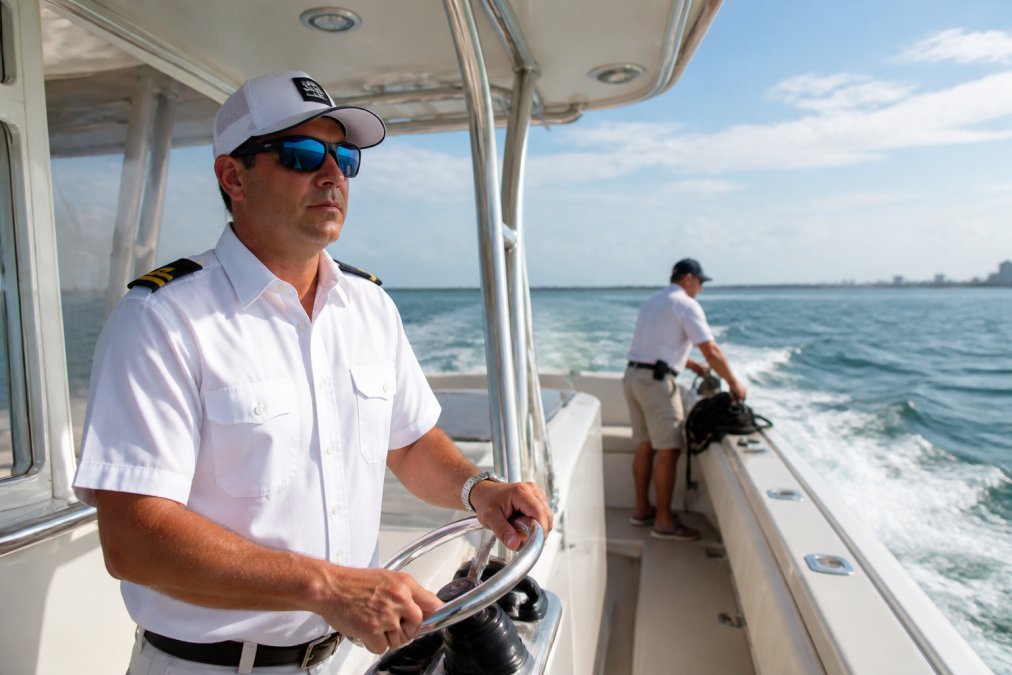
The staffing decision hinges on usage frequency and your comfort level operating the vessel. Owner-operators who hold captain's licenses can reduce crew requirements significantly. A single captain becomes viable if you're using the boat 50-100 days annually.
Hidden crew costs, payroll taxes, workers' compensation insurance, crew training and certification renewals, uniform allowances, and accommodations, can add 20-30% to base salary figures. Some owners also provide health insurance, retirement contributions, or bonuses.
The most cost-effective approach depends on your usage pattern. High-frequency users benefit from permanent crew who know the vessel intimately. Occasional users might hire captains on a per-trip basis through specialized maritime staffing companies, trading convenience for lower fixed costs.
Fuel Consumption and Bunkering Strategy
Fuel costs scale directly with engine hours and operational patterns. A center console running at 25 knots burns significantly more fuel than one cruising at 10 knots. A typical offshore fishing vessel might consume 50-150 gallons per hour at cruise speed depending on size and engine configuration (nmma.org). At current marine diesel prices, a 100-mile offshore run could cost $500-$1,200 in fuel alone.
Bunkering strategy affects both cost and convenience. Fueling at major marinas costs more than independent fuel docks. Some owners negotiate annual fuel contracts with preferred suppliers to lock in rates and earn volume discounts.
The real opportunity in fuel management is operating efficiently. Reducing speed from 25 knots to 15 knots cuts fuel consumption roughly in half. Planning routes to minimize distance and avoid rough water conditions reduces both fuel burn and engine stress.
Yacht Refit Services for High-End Yachts
A refit transforms a yacht's systems, aesthetics, and performance. Refits range from cosmetic updates (new upholstery, paint, electronics) to complete overhauls (new engines, structural repairs, systems replacement).
Preventative Maintenance vs. Emergency Repairs
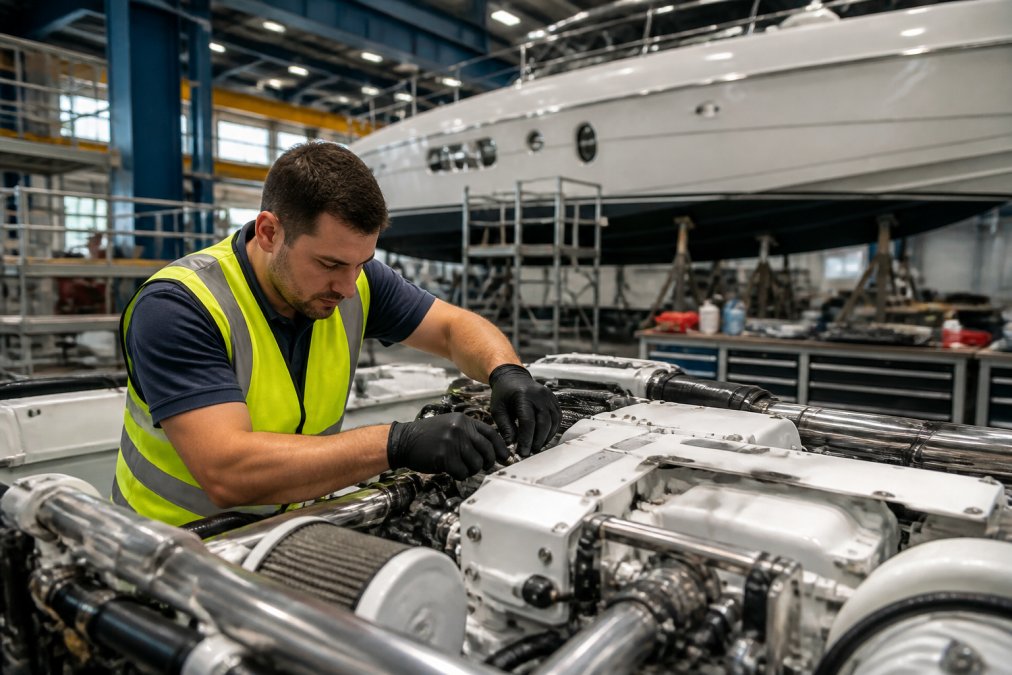
Preventative maintenance costs money upfront but prevents catastrophic failures that cost exponentially more. A captain who follows manufacturer service schedules keeps a yacht running reliably. Neglecting maintenance creates technical debt that compounds.
Emergency repairs happen when preventative work was skipped or when unexpected failures occur. A failed engine seal discovered mid-season forces you to cut a trip short and pay premium rates for emergency service. These situations often cost 3-5 times what preventative work would have cost.
Invest in preventative maintenance or pay dramatically more later. Most experienced captains prioritize scheduled service over deferred maintenance.
Dry Docking and Seasonal Winterization
Dry docking is essential maintenance that requires hauling the vessel out of water. Inspecting and servicing the hull, propeller, through-hull fittings, and underwater gear happens during dry dock. Depending on vessel size and yard rates, dry docking costs $5,000-$50,000 or more for labor and facility fees.
Many owners dry dock annually, while others do it every two years if the vessel is well-maintained and stored in freshwater. Saltwater vessels require more frequent attention to corrosion and marine growth.
Winterization for seasonal storage protects systems during cold months. This includes stabilizing fuel, flushing freshwater systems, protecting engines from freeze damage, and securing the vessel. Proper winterization prevents expensive damage.
Building Your Annual Yacht Operating Budget Template
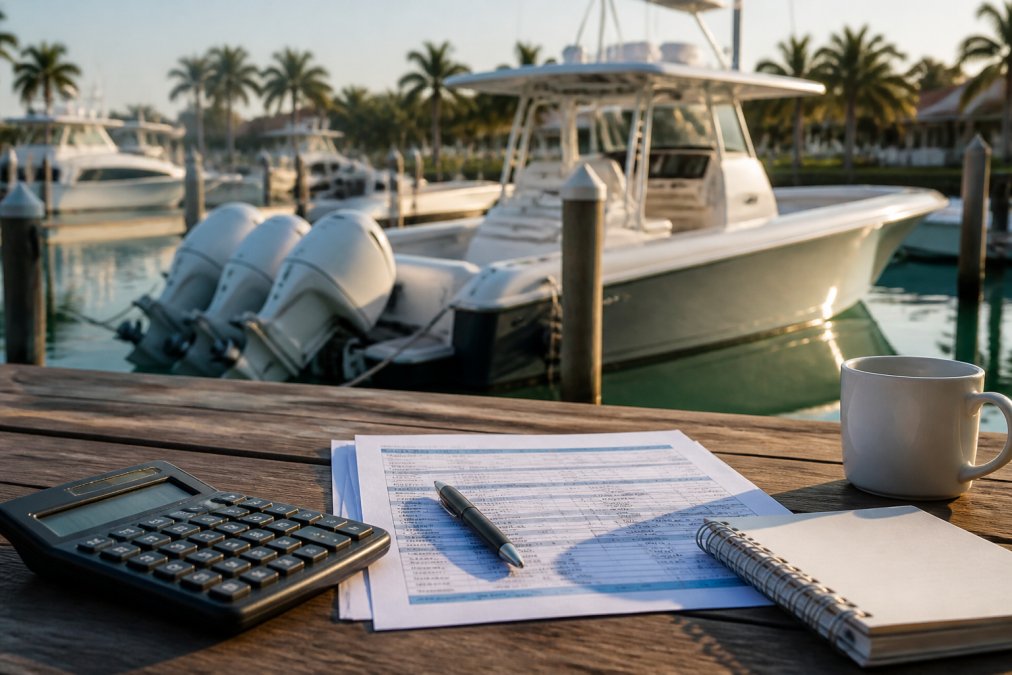
Creating a comprehensive operating budget forces you to confront your actual costs instead of guessing.
Essential Line Items and Reserve Funds
Start with fixed costs: insurance, docking or mooring fees, registration and documentation, and minimum crew. Then add variable costs tied to your expected usage: fuel, crew overtime, maintenance, and provisions.
Create separate line items for each major category rather than lumping expenses together. This granularity reveals which areas are growing and where you might find savings.
Include a contingency reserve, typically 15-25% of your total operating budget. Unexpected repairs, emergency haul-outs, or urgent system replacements happen. A reserve fund prevents these surprises from derailing your annual finances.
Tracking and Adjusting Your Budget
A budget that sits unused provides no value. Effective yacht owners review actual spending monthly against projections. This reveals patterns and allows real-time adjustments.
Many owners work with professional yacht management companies that handle this tracking. These managers provide monthly reports comparing actual to budgeted expenses and recommend adjustments. The fee for professional management typically runs 5-10% of your operating budget but often pays for itself through efficiency improvements and negotiated vendor rates.
Insurance, Docking, and Hidden Costs
Marine insurance protects your investment against catastrophic loss. Premiums vary based on vessel value, age, usage area, captain's experience, and claims history. Expect to pay 0.5-1.5% of your vessel's value annually for comprehensive coverage (iii.org).
Docking and berthing fees depend entirely on location and facility type. A slip at a premium marina in a major market might cost $1,500-$3,000 monthly for a mid-size vessel. A mooring ball in a less-developed area might cost $200-$500 monthly.
Hidden costs emerge once you own a yacht. Regulatory compliance, Coast Guard documentation, safety equipment inspections, and environmental compliance require ongoing attention. Professional surveying for insurance purposes costs $2,000-$10,000 depending on vessel size.
Many owners underestimate miscellaneous expenses: new fenders, replacement through-hull fittings, navigation system updates, electronics repairs, and upholstery work. A realistic budget allocates $5,000-$20,000 annually for miscellaneous maintenance and repairs depending on vessel age and condition.
Tax-Efficient Ownership and Charter Management
One of the most overlooked strategies for managing yacht ownership costs involves understanding the tax implications of your ownership structure. A yacht held personally versus through a business entity creates different tax consequences.
Chartering your yacht generates revenue that can offset operating expenses. Many owners recover 30-50% of their annual operating costs by chartering 60-100 days per year through professional charter management companies. These companies handle marketing, bookings, crew coordination, and insurance for a percentage of charter revenue (typically 20-30%).
The tax treatment of charter income requires professional guidance. Income from chartering is taxable, but you can deduct operating expenses against that income. Consulting with a tax professional familiar with maritime ownership is essential before purchasing.
Actionable Cost Reduction Strategies
Reducing yacht ownership costs doesn't mean sacrificing the experience. Strategic choices yield meaningful savings without compromising safety or enjoyment.
Optimize your usage pattern. Owners who use their yachts 60-100 days annually often find the per-day cost lower than those using them 20 days annually because fixed costs distribute across more usage.
Negotiate vendor contracts. Fuel suppliers, marinas, and service providers often offer volume discounts or annual contracts. Don't accept the posted rate.
Invest in preventative maintenance. A $5,000 annual engine service prevents $50,000 in emergency repairs. Stick to manufacturer service schedules religiously.
Consider professional management. Professional managers typically reduce overall expenses through vendor relationships, efficiency improvements, and preventative maintenance discipline.
Evaluate crew structure honestly. If you're using your yacht only occasionally, permanent crew may not make financial sense. Hire captains on a per-trip basis.
Monitor fuel efficiency. Track fuel consumption relative to engine hours and distance. A sudden increase signals mechanical problems needing attention.
Explore charter revenue. Even modest chartering, 20-40 days annually, generates revenue that offsets a meaningful portion of operating costs.
Time major expenses strategically. Dry docking, refits, and major repairs don't have to happen on a fixed schedule. Timing them during slower seasons reduces total downtime and associated costs.
| Cost Category | Annual Range (Mid-Size Vessel) | Control Method |
|---|---|---|
| Crew payroll | $80,000-$400,000+ | Adjust staffing to usage |
| Fuel | $30,000-$150,000+ | Optimize operating patterns |
| Maintenance & repairs | $20,000-$100,000+ | Preventative scheduling |
| Insurance | $10,000-$50,000+ | Shop annually, maintain records |
| Docking/mooring | $5,000-$50,000+ | Choose location strategically |
| Dry docking | $5,000-$50,000+ | Coordinate with other work |
| Miscellaneous | $5,000-$20,000+ | Budget conservatively |
The owners who manage yacht ownership costs effectively view their budget as a tool for understanding their actual financial situation. Once you know where your money goes, you can make informed decisions about where to spend and where to save.
Primo Yachts of Palm Beach works with yacht owners throughout the process of understanding their true costs of ownership. Whether you're evaluating a potential purchase or optimizing an existing yacht's operating budget, expert guidance on realistic expense projections makes the difference between an enjoyable ownership experience and a financial burden.
Start with a detailed budget built from the ground up, track actual expenses monthly against projections, and adjust as you learn your yacht's true operational profile. The discipline of budgeting separates owners who thrive from those who struggle with the financial realities of yacht ownership.
Frequently Asked Questions
What is the 10% rule for annual yacht maintenance costs?
The 10% rule suggests that annual maintenance and repairs should equal approximately 10% of your yacht's purchase price. However, this varies significantly based on vessel age, size, and usage patterns. Newer yachts typically run 8-12%, while older vessels may exceed 15-20%. This figure represents preventative maintenance, mechanical upkeep, and routine repairs, not major refits or capital improvements.
How does an annual yacht operating budget template help reduce ownership costs?
A structured annual yacht operating budget template tracks all expenses across crew payroll, fuel consumption, marina slip fees, insurance premiums, and maintenance reserves. By documenting each category and comparing actual spending against projections, you identify cost overruns early, spot inefficiencies in charter management or fuel consumption, and allocate capital expenditures strategically. This visibility allows you to negotiate better rates, defer non-critical refits, and optimize vessel usage.
Can yacht ownership costs be reduced through tax-efficient structures?
Yes. Owners can explore flag state requirements and registration options that align with tax strategy, charter management programs that generate offsetting income, and capital expenditure deductions for major refits and upgrades. Some ownership structures allow business use deductions, while charter programs can convert a personal yacht into a revenue-generating asset. Consult a tax professional familiar with marine regulations to determine which approach fits your situation.
What is the difference between preventative maintenance and dry docking costs?
Preventative maintenance includes routine upkeep, surveys, and mechanical repairs performed regularly to keep systems functioning, typically 2-4% of vessel value annually. Dry docking is a scheduled event where the yacht is hauled out for hull inspection, coating renewal, and major systems work, usually every 2-5 years and costing 5-10% of vessel value per haul-out. Proactive preventative maintenance reduces emergency repairs and extends the interval between costly dry docking events.
[EXTERNAL_LINK: U.S. Coast Guard vessel documentation and registration requirements | uscg.gov]
[EXTERNAL_LINK: IRS guidance on business use of vessels and charter income taxation | irs.gov]
[EXTERNAL_LINK: American Boat and Yacht Council standards for marine systems and safety | abycinc.org]
This article was written using GrandRanker